The Mohs hardness scale: how is the hardness of stones measured?
The Mohs scale ranks hardness from 1 (talc) to 10 (diamond) by which mineral scratches which. Home tests, uneven steps and common mistakes.
The Mohs hardness scale ranks how hard a mineral is, from 1 to 10, by which minerals it can scratch. The softest reference mineral is talc (1) and the hardest is diamond (10). A stone scratches anything softer than itself and is scratched by anything harder; Friedrich Mohs turned this simple idea into a scale in 1812, and it is still one of the most widely used identification tools in the field.
Ten steps: the reference minerals
Mohs gave each step a mineral that was easy to obtain. To find a stone’s hardness, you compare it with these minerals.
| Hardness | Reference mineral | Easy to remember |
|---|---|---|
| 1 | Talc | Easily scratched by a fingernail, feels soapy |
| 2 | Gypsum | Can be scratched by a fingernail |
| 3 | Calcite | Not scratched by a fingernail, easily scratched by a steel nail |
| 4 | Fluorite | Easily scratched by a steel nail |
| 5 | Apatite | Scratched by a steel knife with difficulty |
| 6 | Orthoclase (a feldspar) | Scratches glass with difficulty |
| 7 | Quartz | Scratches glass and steel easily |
| 8 | Topaz | Scratches quartz |
| 9 | Corundum (ruby and sapphire) | Scratches topaz |
| 10 | Diamond | Scratches every natural mineral |
The scale is relative: if a stone does not scratch quartz but does scratch orthoclase, its hardness lies between 6 and 7. That is why the hardness of many minerals is given as 5.5 or as a range such as 6–6.5.
The steps are not evenly spaced
The numbers on the Mohs scale are a ranking, not a unit of measurement. Going from 9 to 10 is not the same as going from 1 to 2. Values of absolute hardness, measured with scientific instruments, make this clear:
| Mohs | Mineral | Absolute hardness (approx.) |
|---|---|---|
| 1 | Talc | 1 |
| 3 | Calcite | 14 |
| 5 | Apatite | 48 |
| 7 | Quartz | 100 |
| 8 | Topaz | 200 |
| 9 | Corundum | 400 |
| 10 | Diamond | 1500 |
By this measure diamond is about four times harder than corundum, only one step below it, and the difference between talc and corundum is several hundredfold. So “sapphire is only slightly softer than diamond” is not true; there is a wide gap between them.
How to test hardness at home
If you have no reference minerals, everyday objects give a rough answer. Values vary a little between sources and with the exact material; these are widely used approximations:
| Object | Approximate hardness |
|---|---|
| Fingernail | 2.5 |
| Copper wire or sheet | 3 |
| Pocket knife blade (steel) | about 5.5 (depends on the steel) |
| Window glass | 5.5 |
| Steel file | 6.5 |
How to do it
- Choose a clean, flat spot on the stone that will not show.
- Press the point of the object firmly and draw a short line across the stone.
- Rub the line with your finger and look with a magnifier. What rubs off may be powder left by the softer object; a real scratch stays as a groove in the surface.
- Try it the other way round as well: use a sharp edge of the stone to try to scratch the glass.
A few warnings: do not do this on jewellery or on specimens you think might be valuable, because a scratch is permanent. Do not test minerals that crumble, give off dust or might be toxic. Earthy or fibrous specimens can give misleading results; the test works best on a clean crystal face. How to combine hardness with colour, streak and lustre is explained in How to identify a stone.
Hardness is not the same as durability
The Mohs scale measures only resistance to scratching. Whether a stone survives a knock is a separate property called toughness. The Gemological Institute of America (GIA) judges a gem’s durability by three things: hardness, toughness and stability (resistance to heat, light and chemicals).
- Diamond is the hardest gem but not the toughest. As GIA notes, it resists scratching extremely well, yet a hard blow can split or fracture it along its cleavage planes, flat directions in which the bonds between atoms are weaker.
- Jade, with a hardness of only 6–7, is among the toughest gem materials known thanks to its tightly interlocked fibrous structure.
- Topaz has a hardness of 8 but perfect cleavage in one direction, so a sharp knock can split it in two.
Hardness matters in daily life too. Household dust contains quartz grains with a hardness of 7, so stones softer than 7 (such as opal and pearl) can slowly lose their polish and pick up scratches in rings. This is worth keeping in mind when choosing a ring stone; see What is a gemstone? for more.
Hardness of well-known stones
Approximate Mohs hardness of the stones people ask about most (values from the stone pages on this site):
| Stone | Mohs hardness |
|---|---|
| Amber | 2–2.5 |
| Pearl | 2.5–3 |
| Marble | 3–4 |
| Malachite | 3.5–4 |
| Lapis lazuli | 5–5.5 |
| Turquoise | 5–6 |
| Opal | 5.5–6.5 |
| Pyrite | 6–6.5 |
| Amethyst and other quartz | 7 |
| Emerald (beryl) | 7.5–8 |
| Spinel | 7.5–8 |
| Ruby and sapphire | 9 |
Soft stones such as amber, pearl and malachite scratch easily, so they should not be stored loose in the same box as other jewellery.
Hardness can depend on direction
In some minerals hardness changes with the direction of the scratch. The best-known example is kyanite: a steel needle easily scratches its blade-shaped crystals lengthwise (about 4.5–5) but not crosswise (about 6.5–7). This is one reason a mineral’s hardness is sometimes given as a range rather than a single number.
A short history
Rubbing minerals against each other to see which is harder is a very old method. Theophrastus in ancient Greece (around 300 BC) and Pliny the Elder in Rome (around AD 77) both mention such comparisons. In 1812 Friedrich Mohs turned the idea into an orderly scale with ten reference minerals. Because the minerals he chose are easy to find, geologists, students and collectors have used the scale for more than two centuries.
Limits of the scale
- The Mohs scale is quick and cheap but coarse. Materials science uses methods such as Vickers or Knoop that measure hardness in numerical units.
- It is not enough to identify a stone on its own. Many minerals share the same hardness, so hardness should be read together with colour, streak, lustre, cleavage and specific gravity.
- Rocks are made of several minerals, so they have no single hardness. In a piece of granite, for example, the quartz grains scratch glass while the mica flakes next to them can be scratched with a fingernail. We explain this distinction in Mineral or rock?.
Quick questions, quick answers
What is the Mohs hardness scale?
It is a scale from 1 to 10 that ranks minerals by whether they can scratch one another. The softest reference mineral is talc (1) and the hardest is diamond (10). The German mineralogist Friedrich Mohs devised it in 1812.
Which is harder, diamond or sapphire?
Diamond. On the Mohs scale diamond is 10 and corundum, the mineral sapphire is made of, is 9. Because the steps are not evenly spaced, the gap is bigger than it looks: in absolute hardness measurements diamond is about four times harder than corundum.
What is the hardness of glass on the Mohs scale?
Ordinary window glass is about 5.5. That is why quartz (7) and topaz (8) scratch glass, while apatite (5) and softer minerals do not.
Which stones can be scratched with a fingernail?
A fingernail is about 2.5. Talc (1) and gypsum (about 2) can be scratched with a fingernail; calcite (3) cannot.
Diamond is the hardest stone, so is it unbreakable?
No. Hardness only describes resistance to scratching. Diamond has cleavage, a tendency to split along certain flat planes, so a hard knock can chip or crack it.
If a stone scratches glass, does that mean it is a diamond?
No. Quartz, topaz, corundum and many other minerals scratch glass too. Scratching glass only shows that a stone is harder than about 5.5.
Stones in this guide
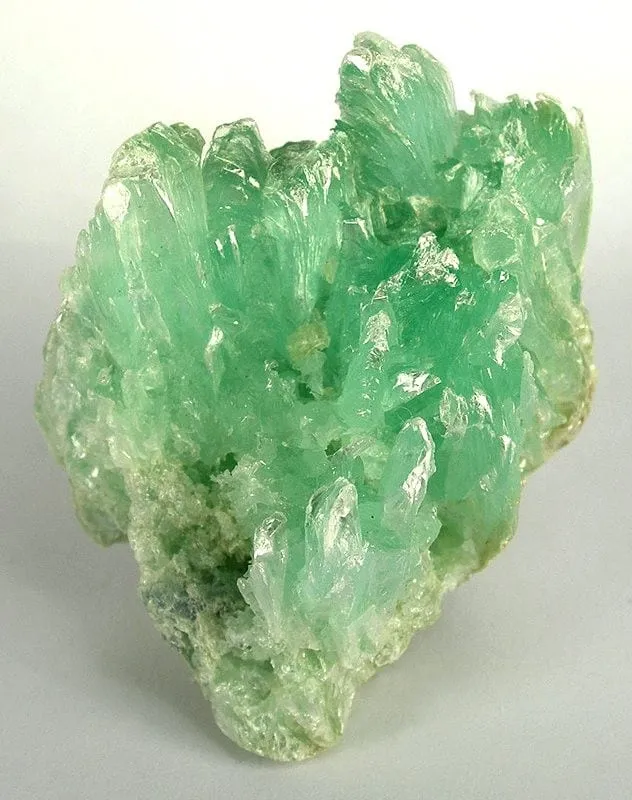
Talc
The softest mineral on the Mohs scale: scratched by a fingernail, soapy to the touch and used in everything from plastics to ceramics.
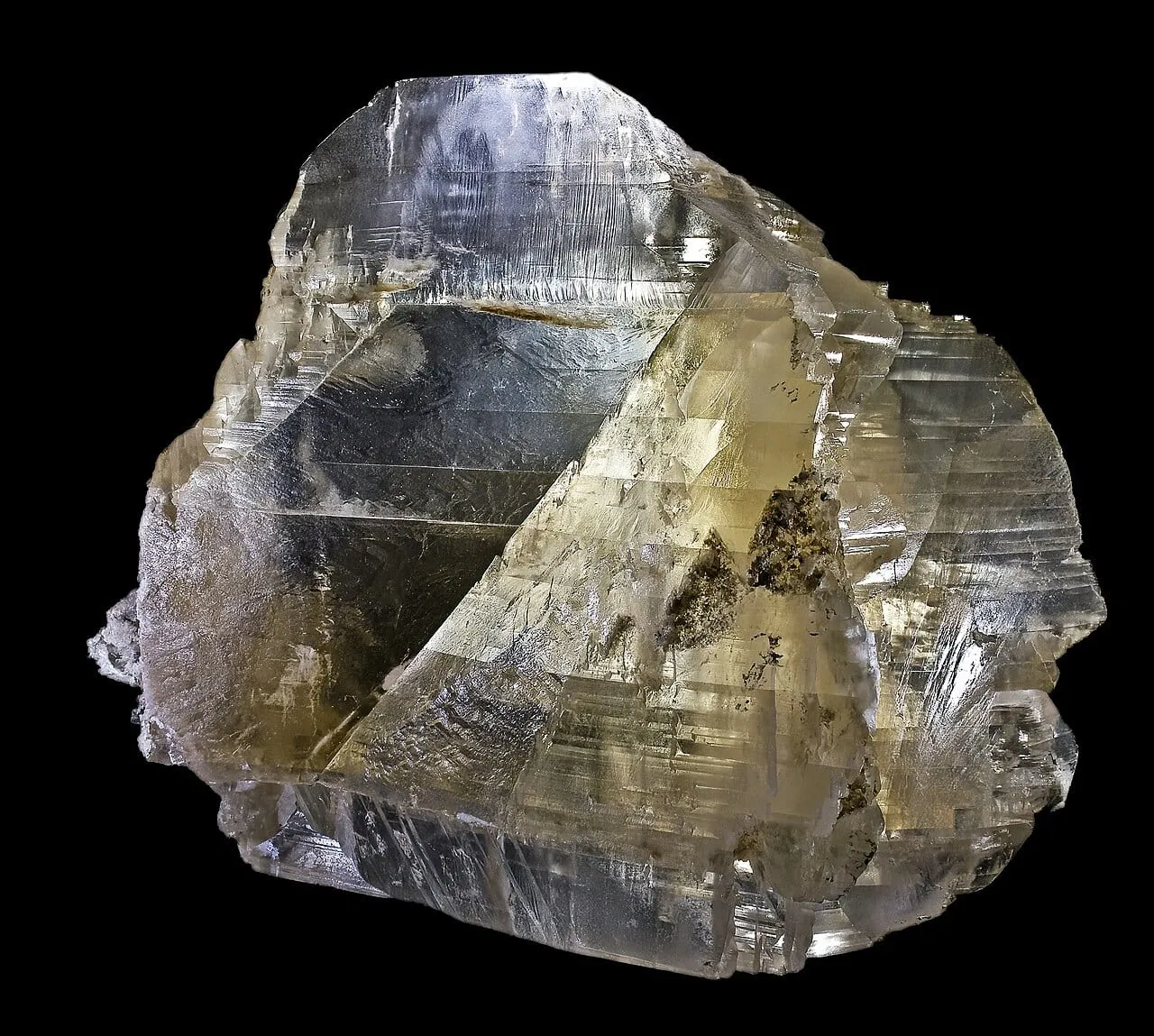
Gypsum
So soft a fingernail scratches it: the mineral behind plaster and plasterboard, which grows 11-metre giant crystals at Naica.
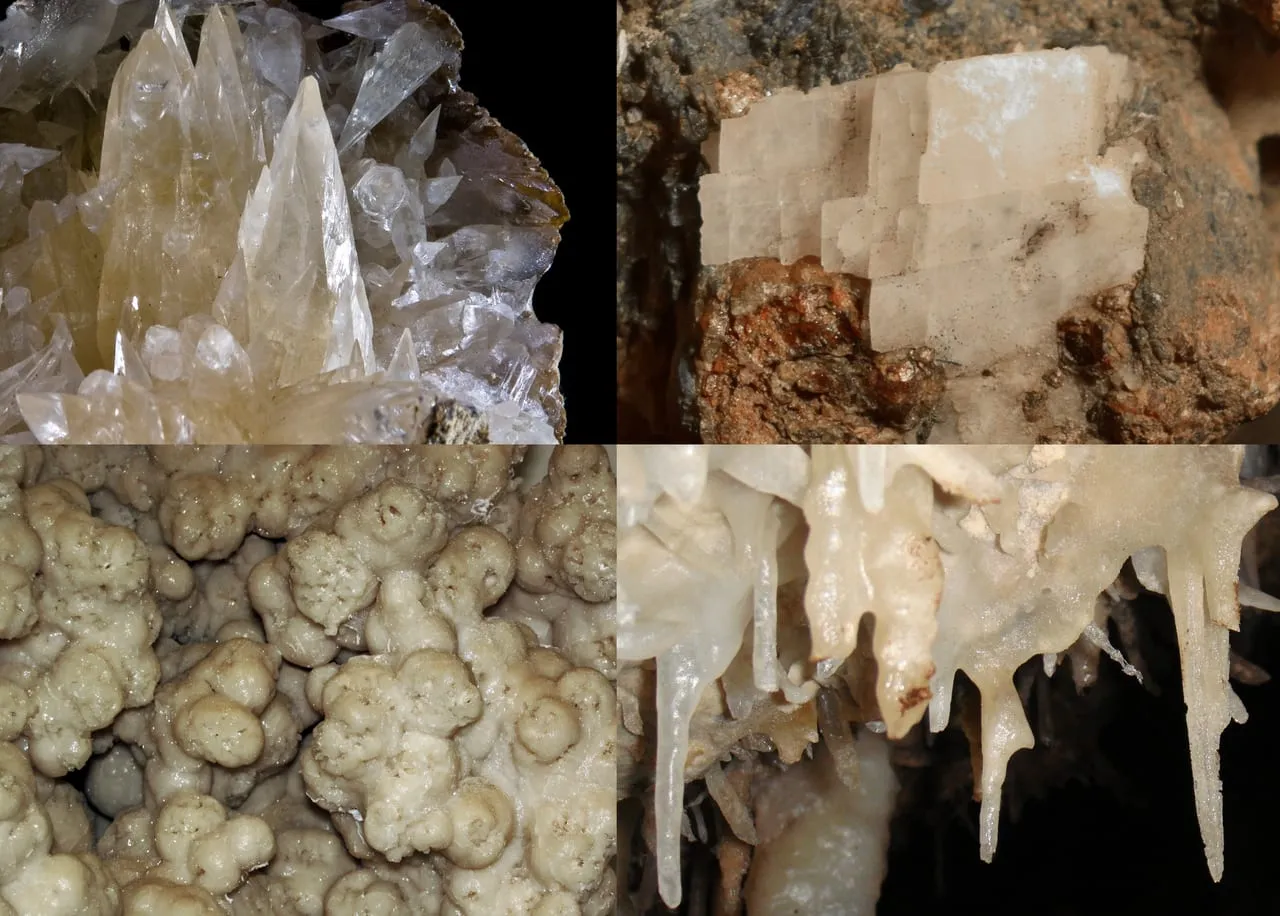
Calcite
The main mineral of limestone, marble and cave stalactites: it fizzes in acid, and its clear crystals show everything double.
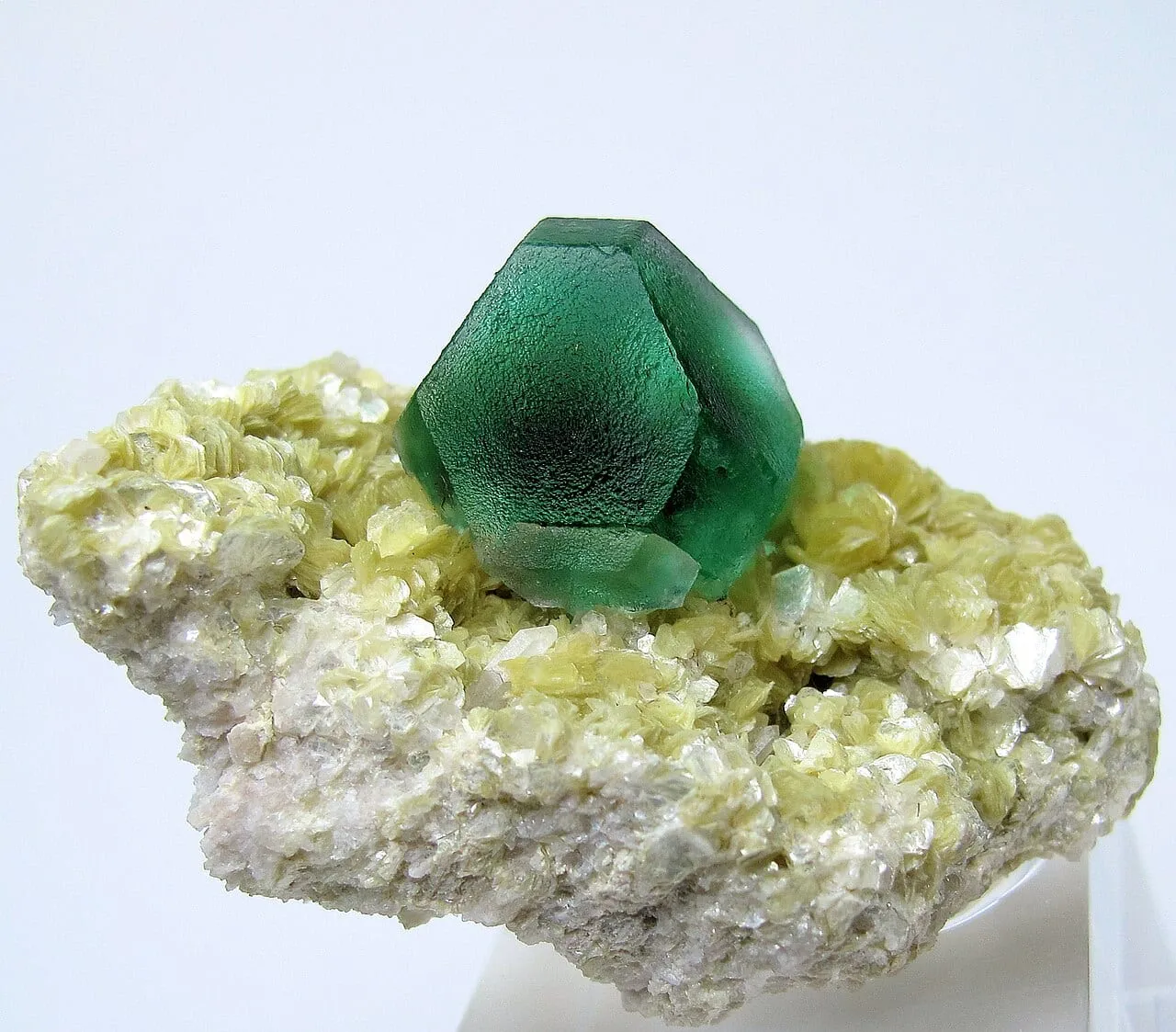
Fluorite
Number 4 on the Mohs hardness scale and the mineral that gave “fluorescence” its name, found in almost every colour from purple to green.
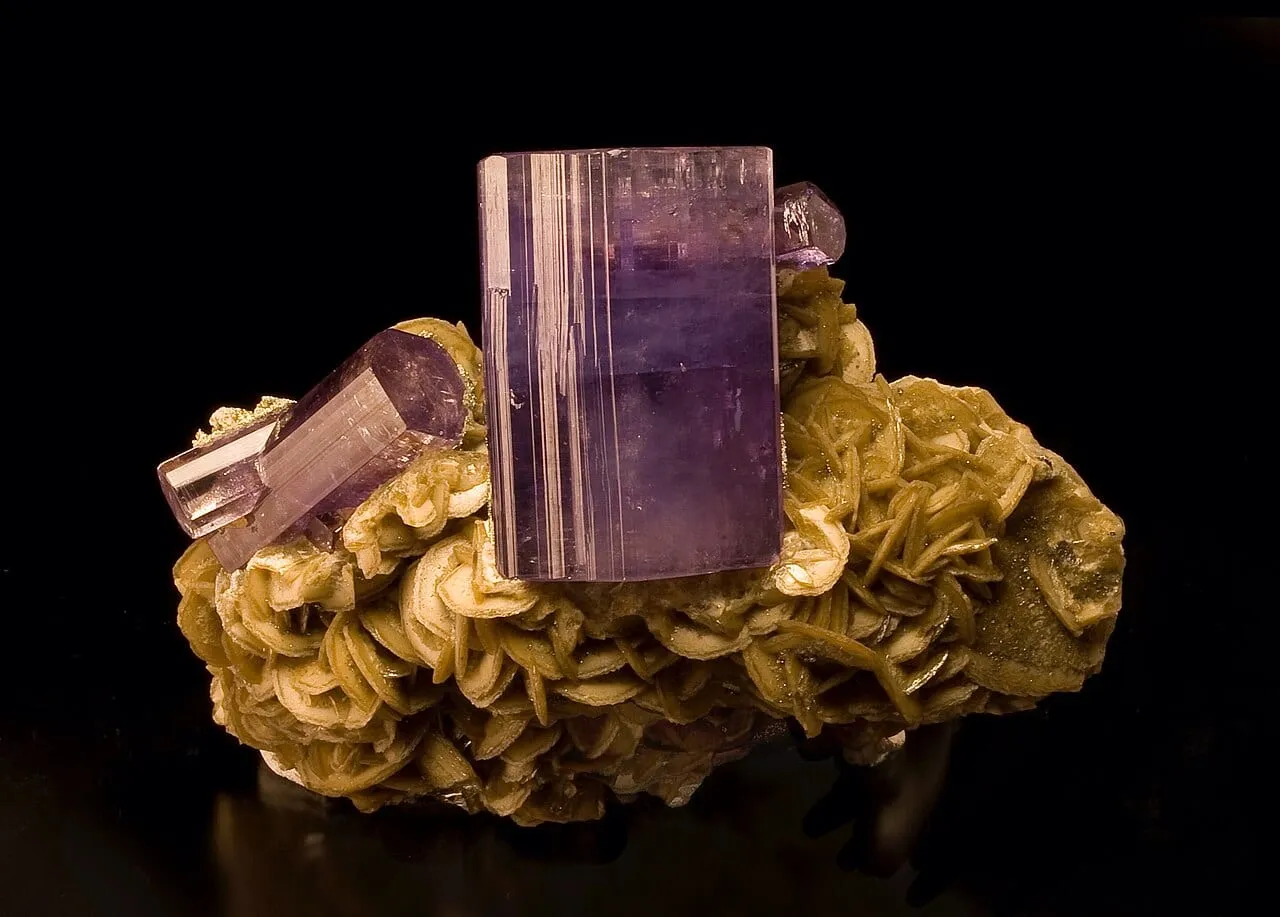
Apatite
A mineral cousin of our teeth and bones, the source of the phosphorus in fertilisers, and number 5 on the Mohs scale.
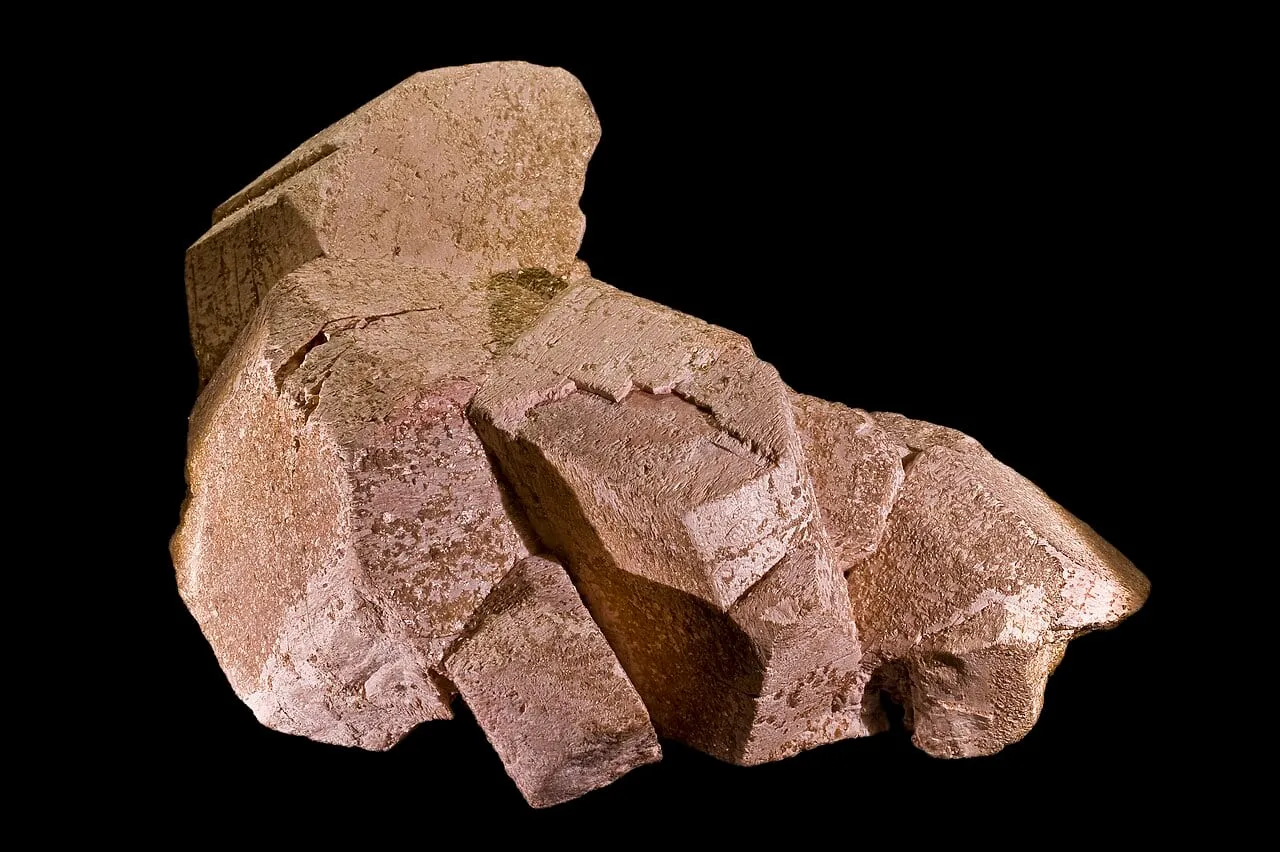
Orthoclase
The potassium feldspar that defines 6 on the Mohs scale: it gives many granites their pink colour and is a raw material for glass and ceramics.
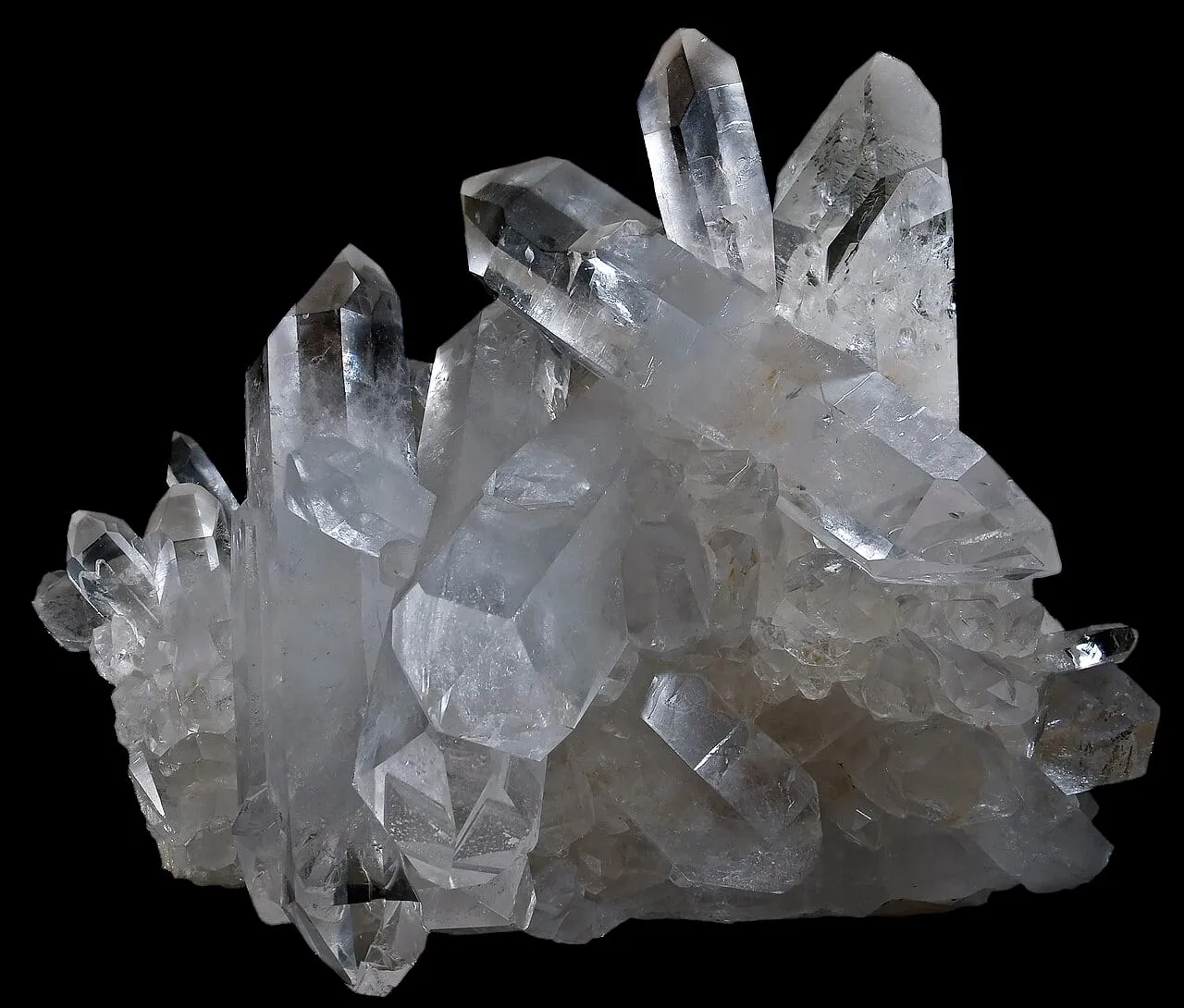
Quartz
The common root of sand, glass and amethyst — one of the most abundant minerals in Earth’s crust.
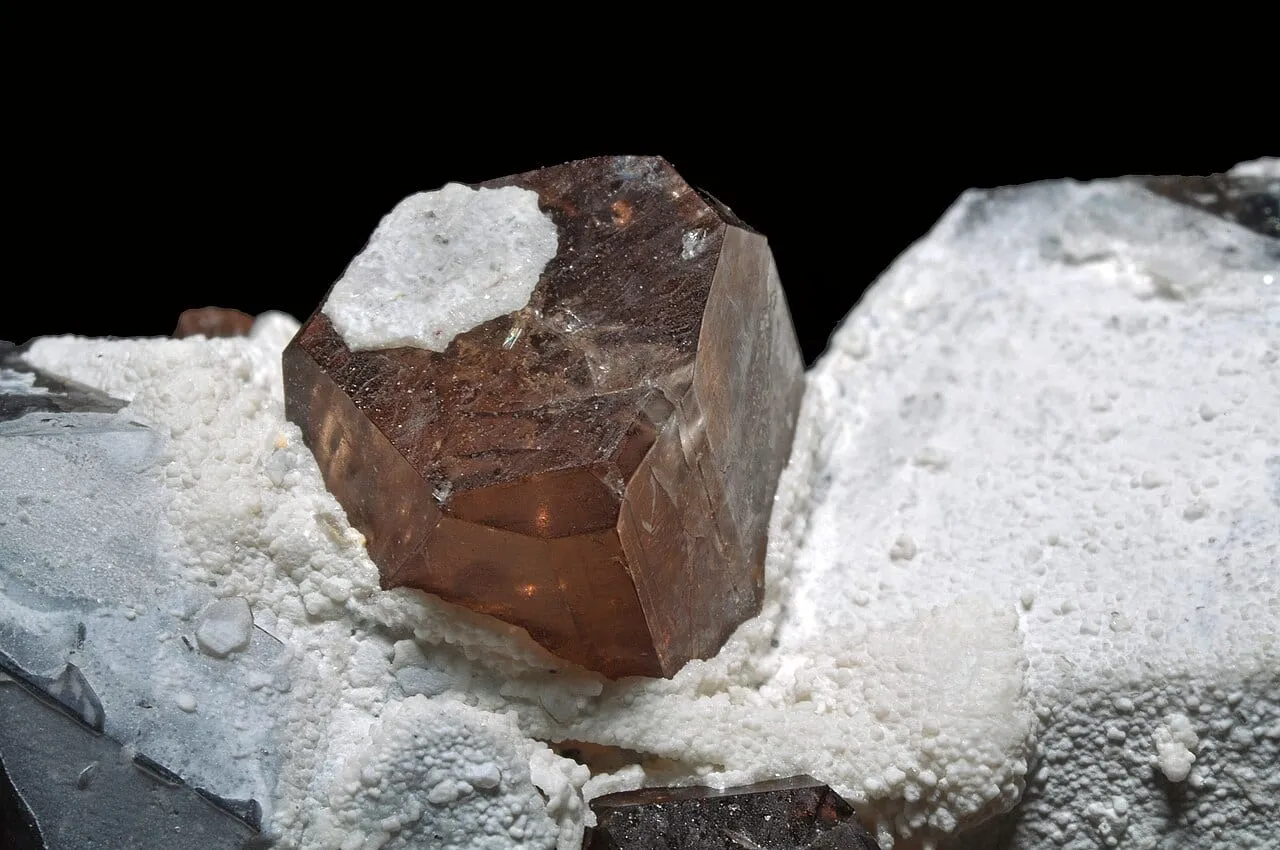
Topaz
The reference mineral for 8 on the Mohs scale: a hard, brilliant gem whose blue colour is almost always added by people.
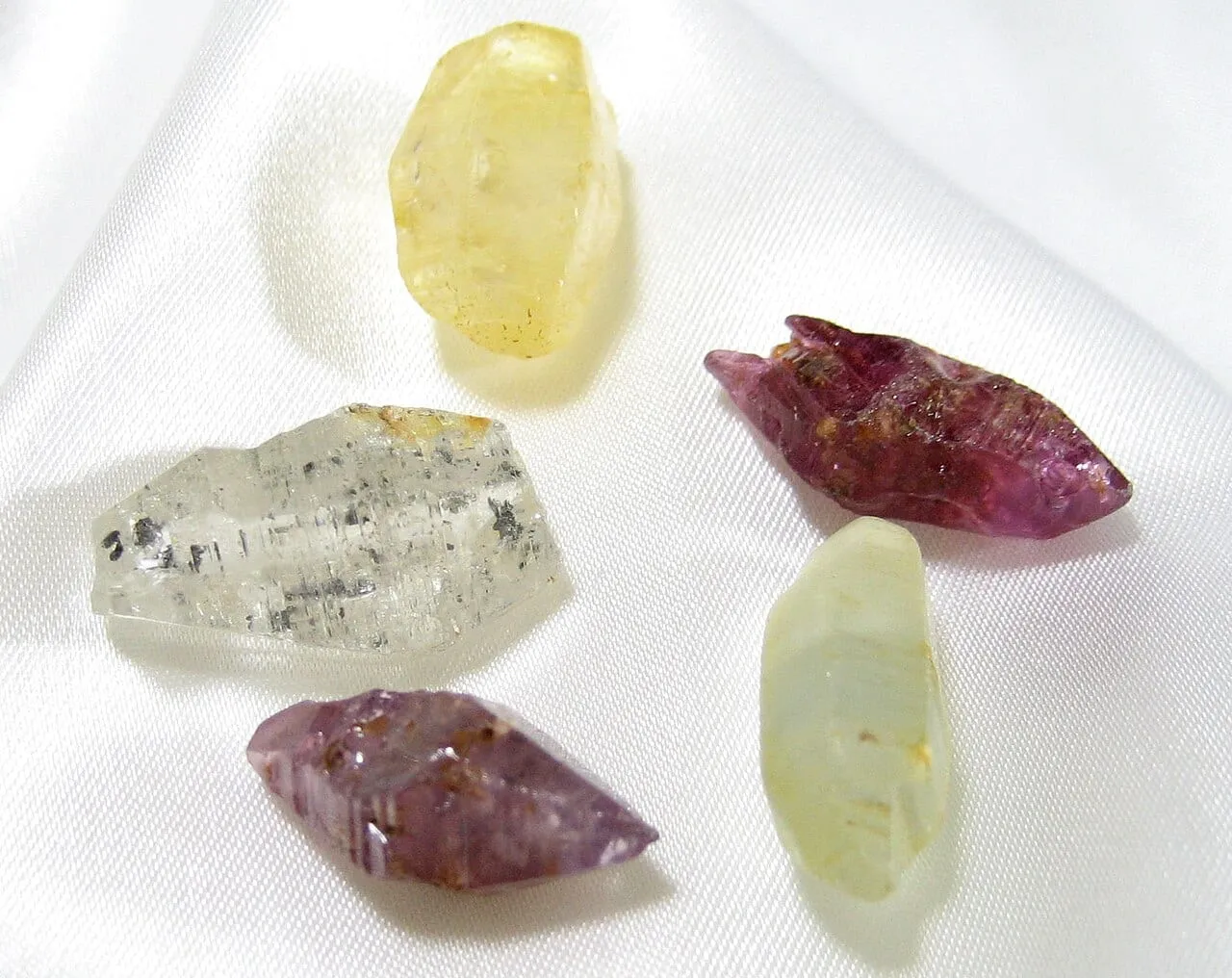
Corundum
The aluminium oxide that defines 9 on the Mohs hardness scale: its red form is ruby, all its other colours are sapphire.
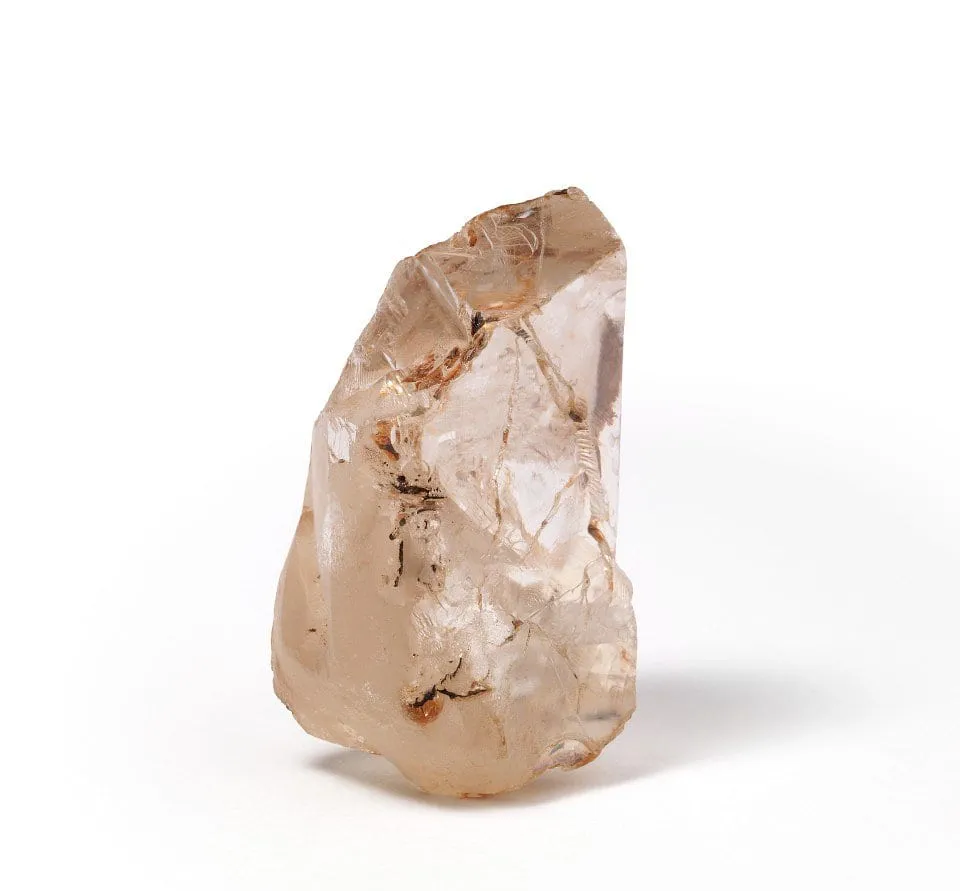
Diamond
Pure carbon and the hardest known natural mineral: it forms about 150–200 km deep and reaches the surface in volcanic eruptions.
Sources
- Mohs scale · Wikipedia
- Mohs Hardness Scale · Geology.com
- More than the Mohs Scale – Understanding Gem Durability · Gemological Institute of America (GIA), 2016
- Gemstone Hardness and Wearability (Donald Clark) · International Gem Society