Mineral
Fluorite
CaF₂Fluorit
Number 4 on the Mohs hardness scale and the mineral that gave “fluorescence” its name, found in almost every colour from purple to green.
Also known as: Fluorspar (industrial name) · Blue John (banded fluorite from Derbyshire)
- Industrial
- Ornamental
- Mohs scale mineral
- Important in Türkiye

In short
Fluorite is a mineral made of calcium and fluorine. It comes in a great range of colours, and bands of purple, green and yellow are often seen within a single crystal. Many fluorites glow under ultraviolet (UV) light, and this glow was named “fluorescence” after the mineral.
How does it form?
Fluorite mostly forms in hydrothermal veins left in rock cracks by hot waters; calcite, quartz, baryte, galena and sphalerite often accompany it. It also occurs in limestones and in deposits linked to granitic rocks. Pure fluorite is colourless; its colours come from trace elements in its crystal structure and from defects caused by natural radiation. As the crystal grows and the fluid’s composition changes, colour bands form.
In Türkiye
According to MTA, most of Türkiye’s fluorite deposits are in Central Anatolia, in the provinces of Eskişehir, Kırşehir and Yozgat. Around Kaman and Çiçekdağı in Kırşehir there are veins of coarsely crystalline purple, green, pink, white and yellow fluorite; production that began at Akçakent in 1958 continues today. The largest reserves, however, are in the Kızılcaören deposit in Eskişehir, where fluorite occurs in an ore that also contains baryte and rare earth elements.
What is it used for?
- Steel and aluminium: It is used to make slag flow more easily during smelting.
- Chemistry: It is the raw material for hydrofluoric acid, the basis of many fluorine compounds.
- Optics: Because it splits light into colours very little, lab-grown fluorite crystals are made into camera and telescope lenses.
- Ornamental stone: Colourful specimens are carved and used in jewellery.
How to recognise it
- 1
Crystals are usually cubes, sometimes octahedra; thanks to perfect cleavage in four directions it can be split into eight-sided pieces.
- 2
It has a hardness of 4 on the Mohs scale: a steel knife scratches it, and it scratches calcite (3) but not glass.
- 3
It does not fizz in vinegar or dilute acid, which tells it apart from similarly coloured calcite.
- 4
Many specimens glow blue or violet under a UV lamp.
Fakes and imitations
What shops usually don’t tell you:
- Cut fluorite may be offered in place of harder, more valuable gems such as amethyst, emerald or aquamarine. Being soft, it scratches easily in jewellery; for certain identification consult a gemmological laboratory.
- The neat fluorite “octahedra” sold in shops are usually not natural crystals but pieces split along cleavage planes and shaped.
- Because it is brittle, some fluorite, especially Blue John, is impregnated with resin before working to stabilise it; this treatment should be disclosed.
Safety
Fluorite is harmless to handle. However, it should not be heated or brought into contact with strong acids: reacting with strong acids such as sulfuric acid can release hydrogen fluoride, which is extremely toxic and corrosive. When using a UV lamp to see fluorite’s fluorescence, do not look directly into the lamp and do not keep the light on your skin for long.
Did you know?
In 1852 the Irish-born physicist George Gabriel Stokes studied the blue glow that fluorite gives off under UV light and named the effect “fluorescence”.
Its name comes from the Latin “fluere”, “to flow”, because it was first used as a flux that makes slag flow more easily when smelting metals.
Where is it found?
Loading map…
- Weardale, County Durham, England · Known localityGreen and purple crystals with strong fluorescence under ultraviolet light
- Castleton, Derbyshire, England · Historic sourceSource of the purple-and-yellow banded “Blue John” fluorite
- Cave-in-Rock, Illinois, USA · Historic sourceIllinois–Kentucky fluorspar district; large cubic crystals
- Kaman and Akçakent, Kırşehir, Türkiye · Known localityTürkiye’s main fluorite-producing area, mined since 1958; purple, green, pink, white and yellow veins
- Kızılcaören, Eskişehir, Türkiye · Known localityComplex deposit with fluorite, baryte and rare earth elements; Türkiye’s largest fluorite reserves are in the Eskişehir area
Locations are approximate to protect sites. Red dots mark places in Türkiye. Open in the big map →
Sources
- Handbook of Mineralogy: Fluorite · Mineralogical Society of America
- Dünyada ve Türkiye’de Florit (Maden Serisi 37) · MTA Genel Müdürlüğü, Fizibilite Etütleri Dairesi Başkanlığı, 2024
External links
Draft: awaiting expert reviewReport an error ↗
On the same step
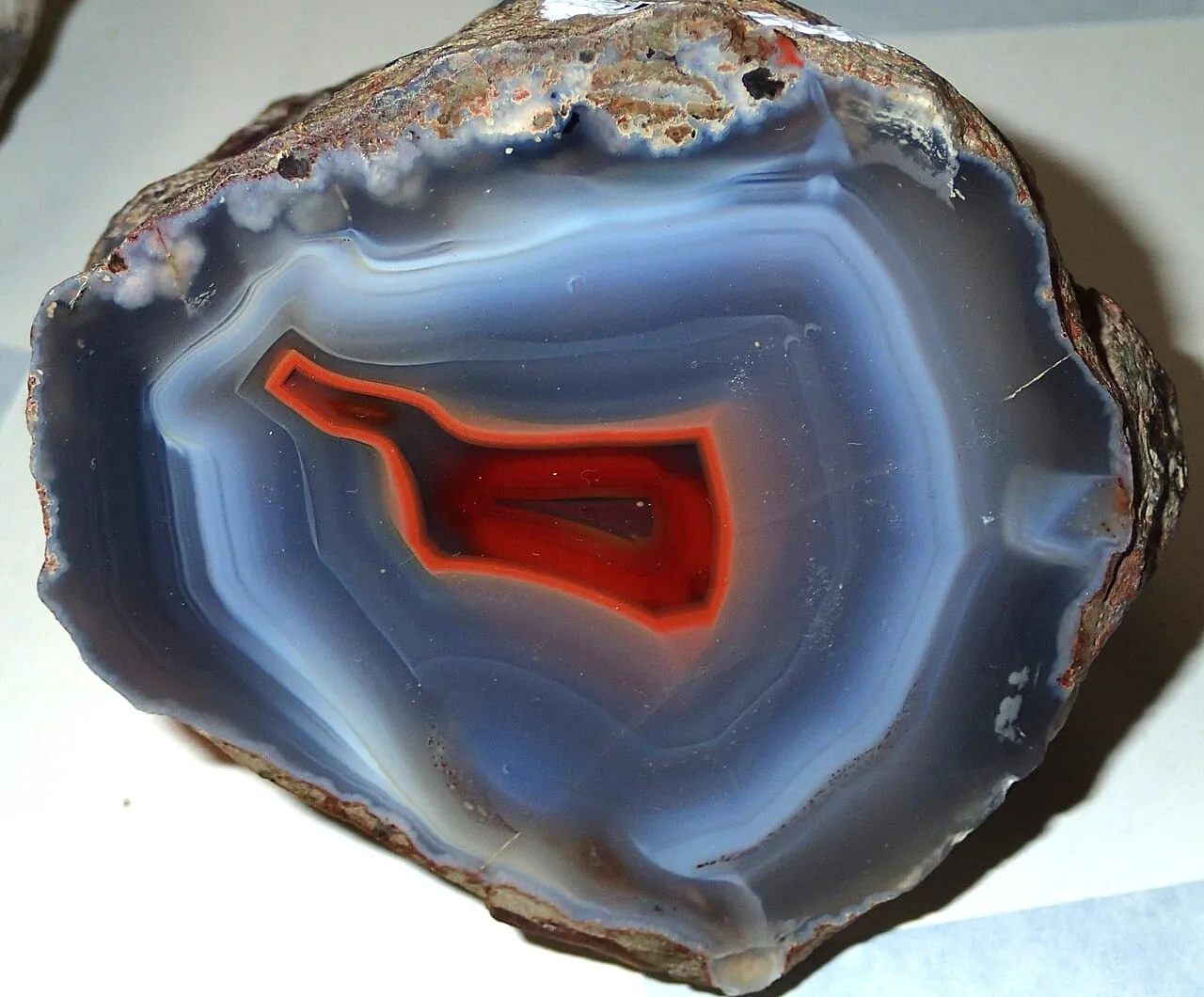
Agate
The banded variety of chalcedony: it grows layer by layer in hollows in volcanic rock and shows a new pattern every time it is cut.
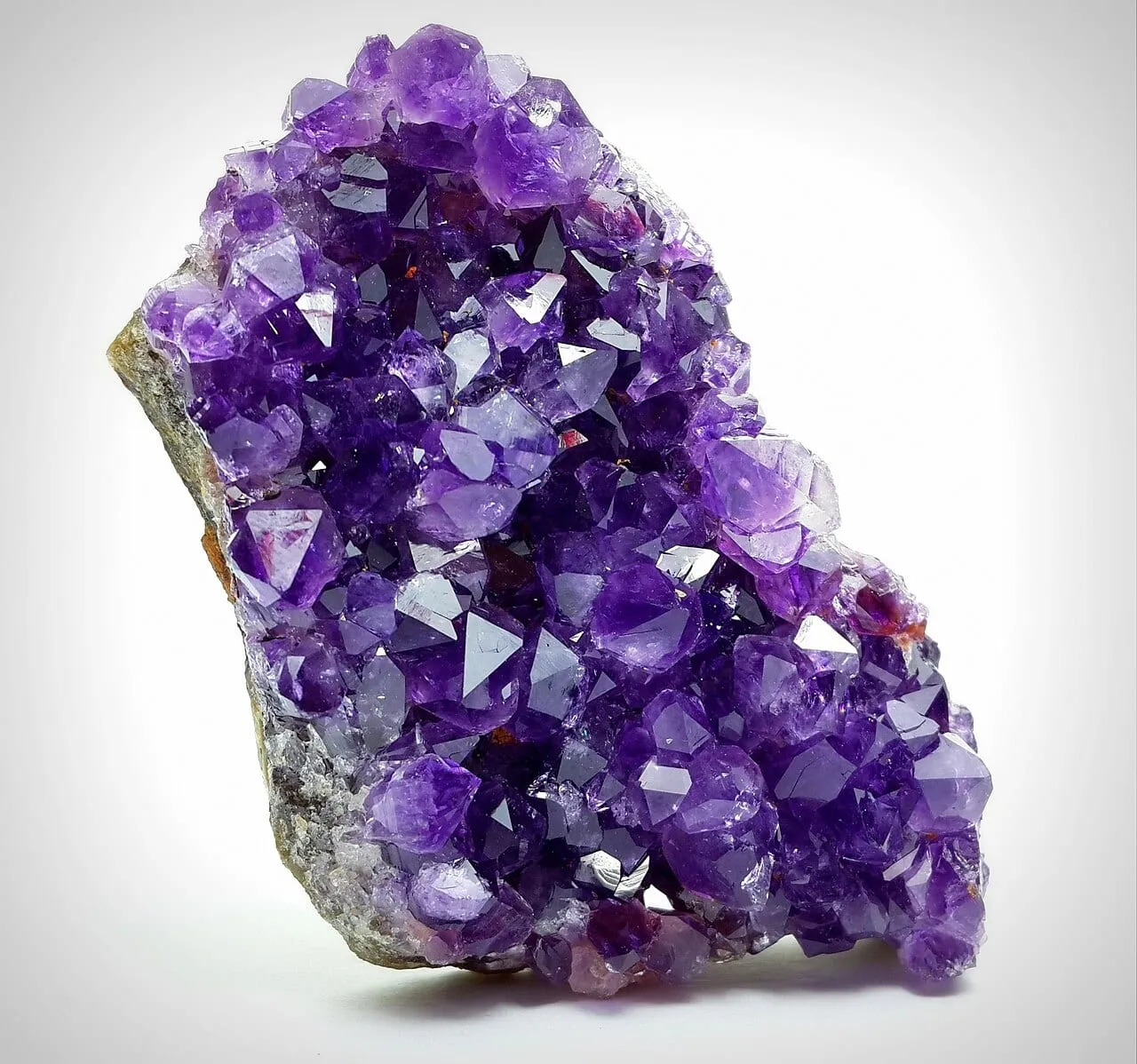
Amethyst
The purple variety of quartz, coloured by traces of iron working together with natural radiation.
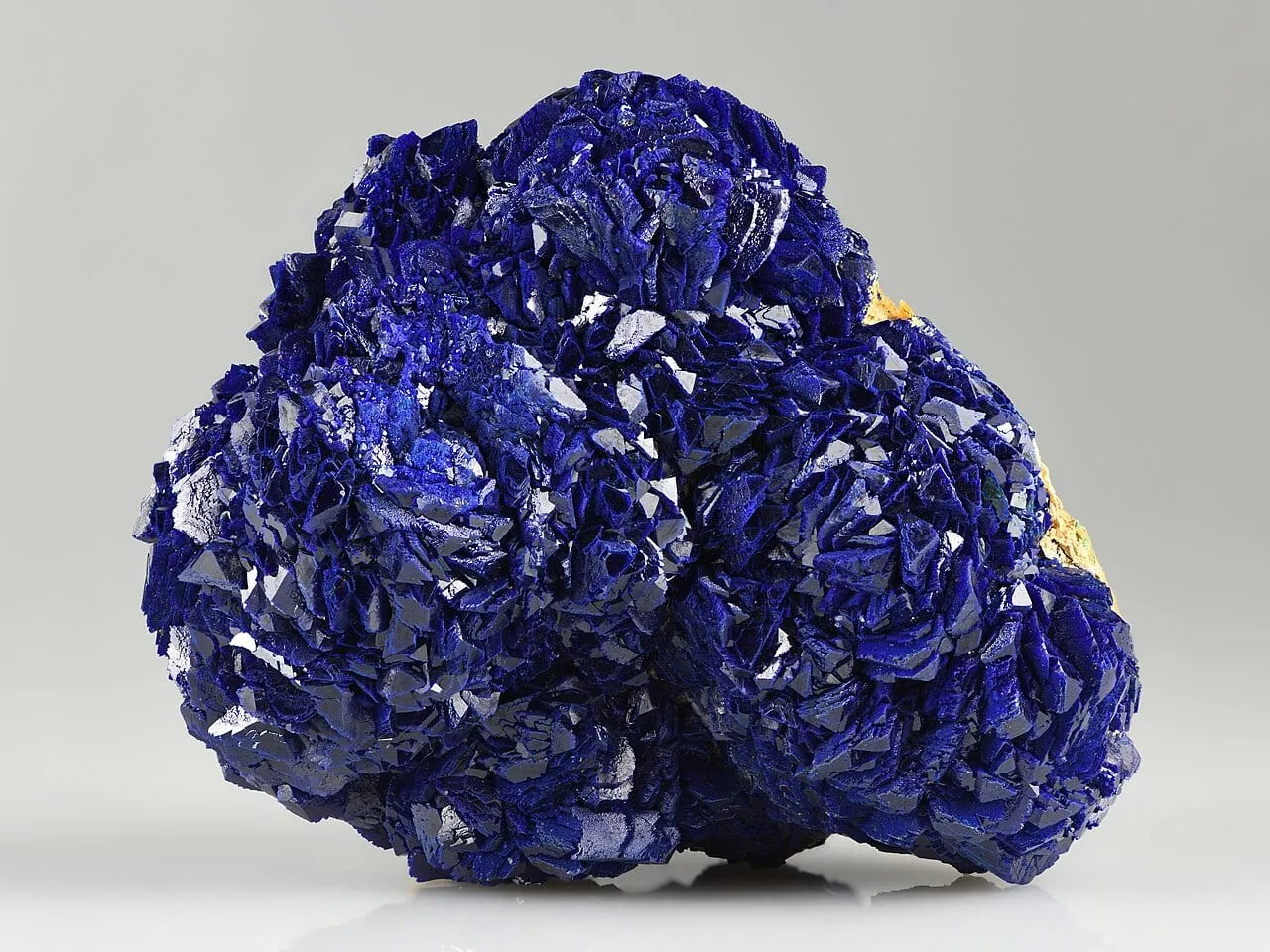
Azurite
A deep blue copper mineral that was the most important blue pigment of medieval and Renaissance painters.