Mineral
Turquoise
CuAl₆(PO₄)₄(OH)₈·4H₂OTurkuaz
A blue-green copper aluminium phosphate whose name means “Turkish stone”, prized as an ornamental stone for thousands of years.
Also known as: Turquois (older spelling)
- Gemstone
- Ornamental

In short
Turquoise is an opaque mineral containing copper and aluminium, in colours from sky blue to green. It forms slowly in dry regions when groundwater reacts with rocks. Because it is porous, it is easily affected by oils, sweat and cosmetics, and its colour can change over time.
How does it form?
Turquoise is a secondary mineral: it forms when existing rocks are altered. In dry regions, rainwater seeping through copper-rich rocks dissolves copper. When this water meets minerals containing phosphorus and aluminium, turquoise is deposited. That is why turquoise is usually found near copper deposits, as thin veins filling cracks or as nodules. Iran (Nishapur), the south-western USA (especially Arizona) and Hubei Province in China are major sources.
What makes it valuable?
The most sought-after colour is an even, vivid sky blue. Value rises when there is no host-rock veining at all, or when it forms a fine, even network (a “spiderweb” pattern). Hard, low-porosity and completely untreated stones are rare. Whether a stone has been treated, and where it comes from, strongly affect its value.
Care
Because turquoise is porous, soap, perfume, creams, oils and sweat can affect it, and its blue can turn green. It is best to put the jewellery on after applying cosmetics, keep it away from chemicals, high heat and ultrasonic cleaners, and wipe it only with a soft, damp cloth.
How to recognise it
- 1
It is opaque, lets no light through and has a waxy lustre.
- 2
Its hardness is 5–6: softer than quartz and easily scratched.
- 3
It often shows brown, black or golden veins of host rock (matrix). This is common in natural turquoise, but it can also be faked with dye.
- 4
Telling natural, treated and imitation turquoise apart with certainty needs a gem laboratory (for example infrared spectroscopy).
Fakes and imitations
What shops usually don’t tell you:
- Dyed howlite or magnesite: common white minerals dyed turquoise blue. White may show at the edges of bead holes or on chipped surfaces.
- Plastic and glass imitations: their surfaces look too uniform; plastic feels lighter and warmer in the hand.
- Stabilised turquoise: porous, soft turquoise impregnated with resin to make it more durable and deepen its colour. It is very common on the market, and the seller should disclose it.
- Material sold as “reconstituted” turquoise: some samples examined by GIA contained no turquoise at all, but dyed, plastic-impregnated gibbsite, a different mineral.
Did you know?
The name comes from the French “pierre turquoise”, meaning “Turkish stone”. The stone was mostly mined in Persia (Iran), but it reached Europe through Turkish lands. Its old Turkish name, “firuze”, comes from Persian.
The ancient Egyptians mined turquoise around Serabit el-Khadim on the Sinai Peninsula thousands of years ago.
Where is it found?
Loading map…
- Nishapur (Neyshabur), Khorasan, Iran · Major depositHistorically the most famous turquoise deposit, worked for centuries
- Serabit el-Khadim, Sinai, Egypt · Historic sourceWorked for turquoise by the ancient Egyptians
- Arizona, USA · Major depositDeposits linked to copper mines
- Hubei Province, China · Major deposit
Locations are approximate to protect sites. Red dots mark places in Türkiye. Open in the big map →
Sources
- Handbook of Mineralogy: Turquoise · Mineralogical Society of America
- Turquoise Description (Gem Encyclopedia) · GIA
- Technical Evolution and Identification of Resin-Filled Turquoise · GIA, Gems & Gemology, 2021
External links
Draft: awaiting expert reviewReport an error ↗
On the same step
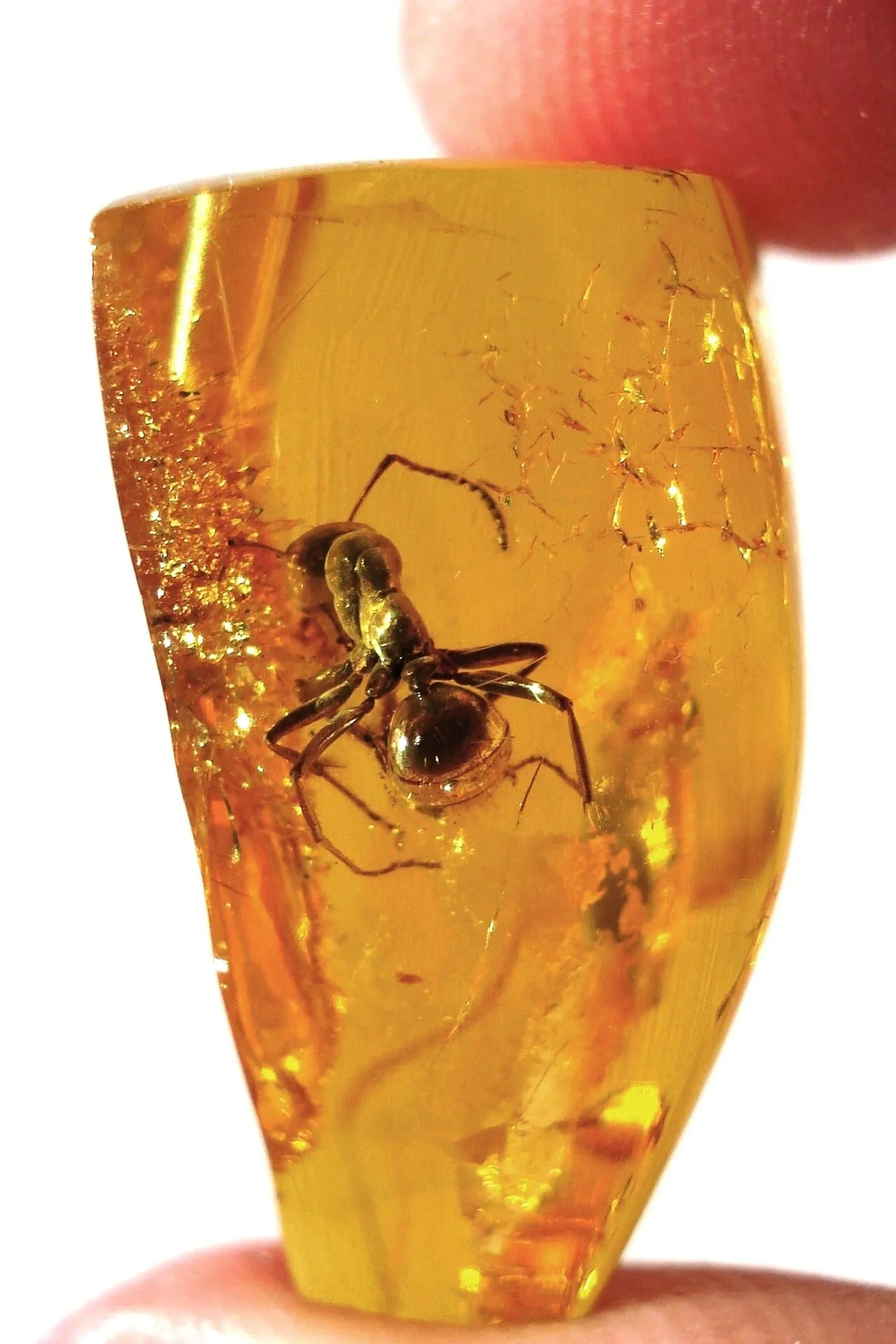
Amber
Tree resin fossilised over millions of years: a light, warm organic gem that sometimes holds prehistoric insects.
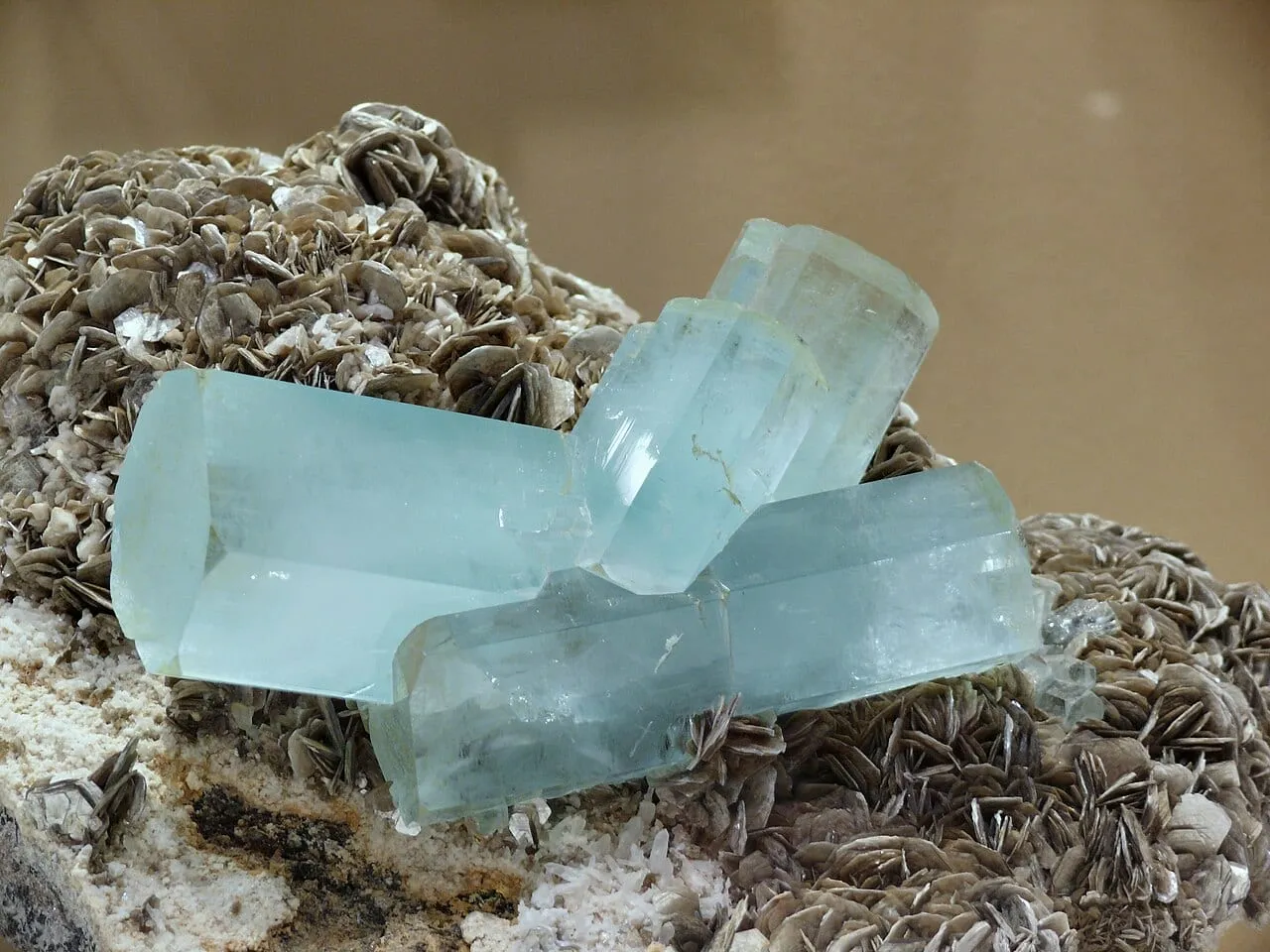
Aquamarine
The blue member of the beryl family, named after seawater: often found as large, clear, nearly flawless crystals.
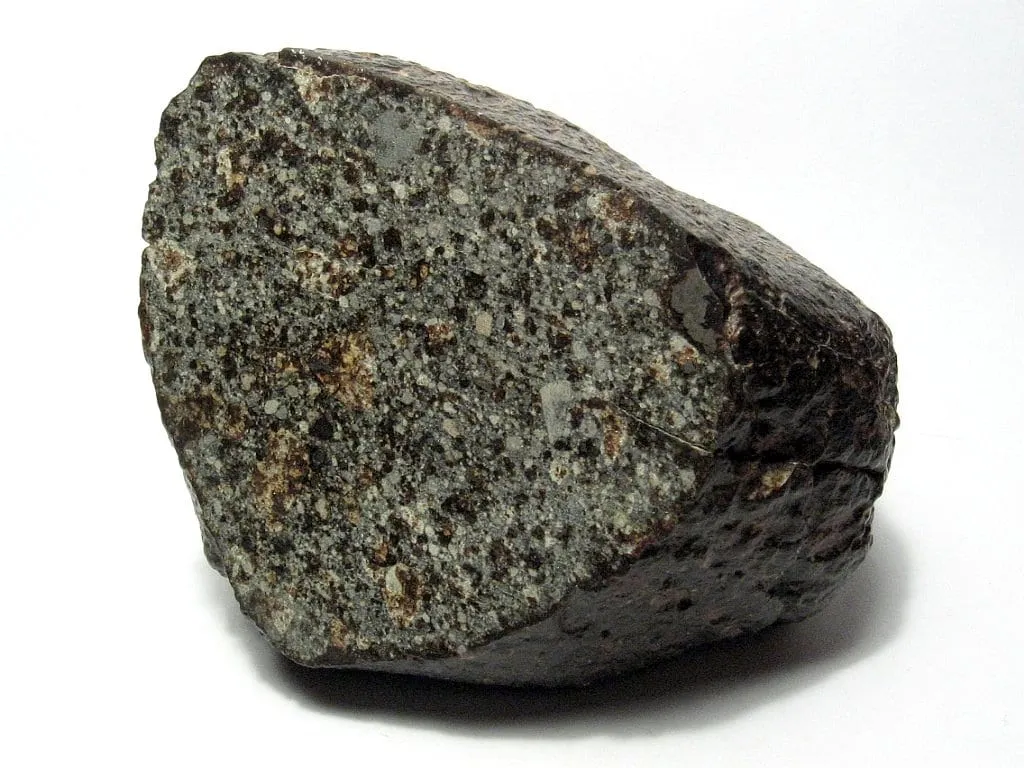
Chondrite
A leftover from the birth of the Solar System, full of tiny once-molten droplets, and the commonest kind of meteorite to fall to Earth.