Mineral
Kyanite
Al₂SiO₅Kiyanit (disten)
Blue, blade-shaped crystals whose hardness depends on direction: steel scratches them lengthwise but not across.
Also known as: Disthene · Cyanite (old spelling)
- Industrial
- Gemstone

In short
Kyanite is a mineral made of aluminium, silicon and oxygen that usually forms long, flat, blue crystals. It has an unusual property: it behaves as a soft mineral when scratched along the length of a crystal, but as a hard one when scratched across it. It is used to make materials that withstand very high temperatures.
How does it form?
Kyanite forms when clay-rich sedimentary rocks are transformed under high pressure (regional metamorphism), and it is found mostly in schists and gneisses. It is one of three minerals with the same chemical formula: andalusite is stable at low pressure, sillimanite at high temperature and kyanite at high pressure. By noting which of the three a rock contains, geologists can estimate the conditions under which it was transformed.
What is it used for?
When heated strongly, kyanite turns into mullite, a very heat-resistant material. That makes it an important raw material for refractories such as firebricks, kiln linings and technical porcelains. According to the USGS, about 90% of kyanite and mullite output in the United States goes into refractories, most of them for the iron and steel industry. Clear, deep blue crystals are occasionally cut as gemstones.
Why is it hard to cut?
Because of its perfect cleavage and direction-dependent hardness, kyanite breaks easily during cutting and is difficult to polish. Clean, well-cut kyanite gems are therefore scarce.
How to recognise it
- 1
It forms long, flat, blade-shaped crystals, which often look bent.
- 2
Its hardness depends on direction: a steel needle easily scratches a crystal lengthwise (about 4.5–5) but not across it (about 6.5–7).
- 3
Its colour is often unevenly distributed, with blue zones mixed with white or colourless ones.
- 4
It occurs in metamorphic rocks such as schist and gneiss, together with garnet, staurolite and mica.
Fakes and imitations
What shops usually don’t tell you:
- Cut blue kyanite can be confused with sapphire. Kyanite is much softer, shows cleavage and is lighter (specific gravity about 3.6, compared with about 4.0 for sapphire). For certain identification, consult a gem laboratory.
- Blue glass beads may be sold as kyanite; glass shows no cleavage and may contain air bubbles.
Did you know?
Its name comes from the Greek kyanos, “blue”. Its other name, disthene, means “two strengths” and refers to its direction-dependent hardness.
Mullite made from kyanite is an important raw material for heat-resistant porcelains such as the ceramic bodies of spark plugs.
Where is it found?
Loading map…
- Pizzo Forno, Ticino, Switzerland · Known localityClassic blue kyanite blades with staurolite in schist
- Willis Mountain, Virginia, USA · Major depositOpen-pit kyanite mining for the refractory industry
- Zillertal, Tyrol, Austria · Historic sourceClassic crystals from Mount Greiner
- Minas Gerais, Brazil · Known localityLarge crystals
Locations are approximate to protect sites. Red dots mark places in Türkiye. Open in the big map →
Sources
- Handbook of Mineralogy: Kyanite · Mineralogical Society of America
- Kyanite · Encyclopaedia Britannica
- Mineral Commodity Summaries 2025: Kyanite and Related Minerals · U.S. Geological Survey, 2025
External links
Draft: awaiting expert reviewReport an error ↗
On the same step
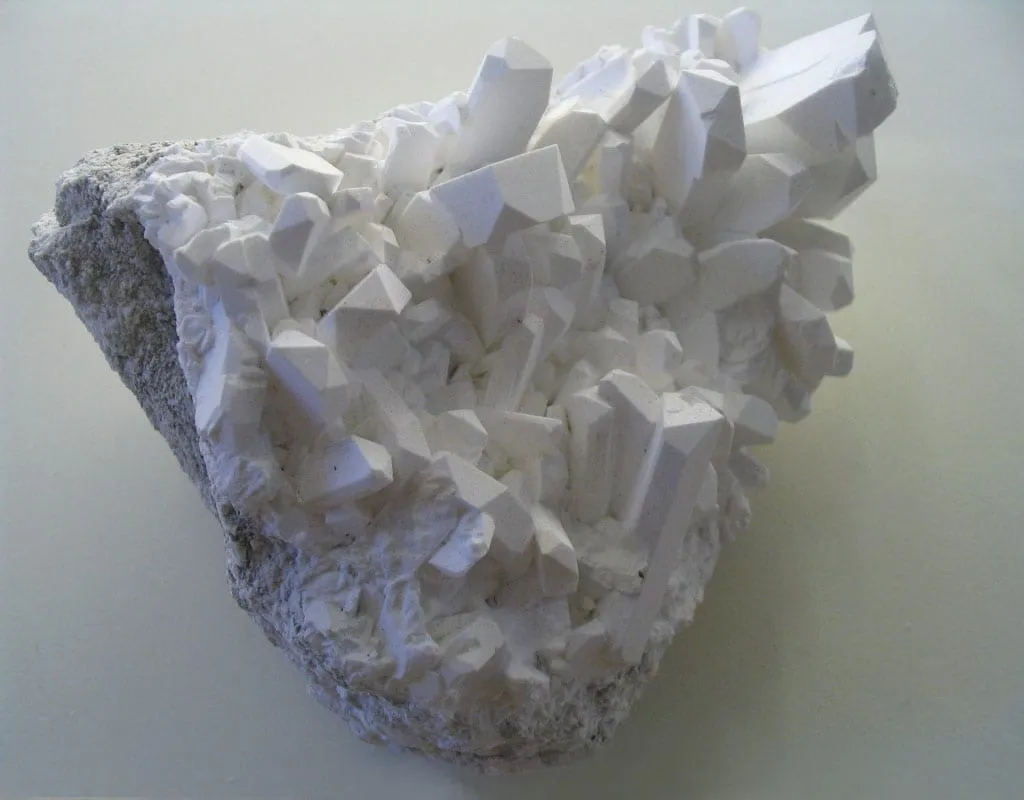
Borax (tincal)
A sodium borate that dissolves in water and crumbles to white powder in dry air; one of the world’s key tincal deposits is at Kırka in Eskişehir.
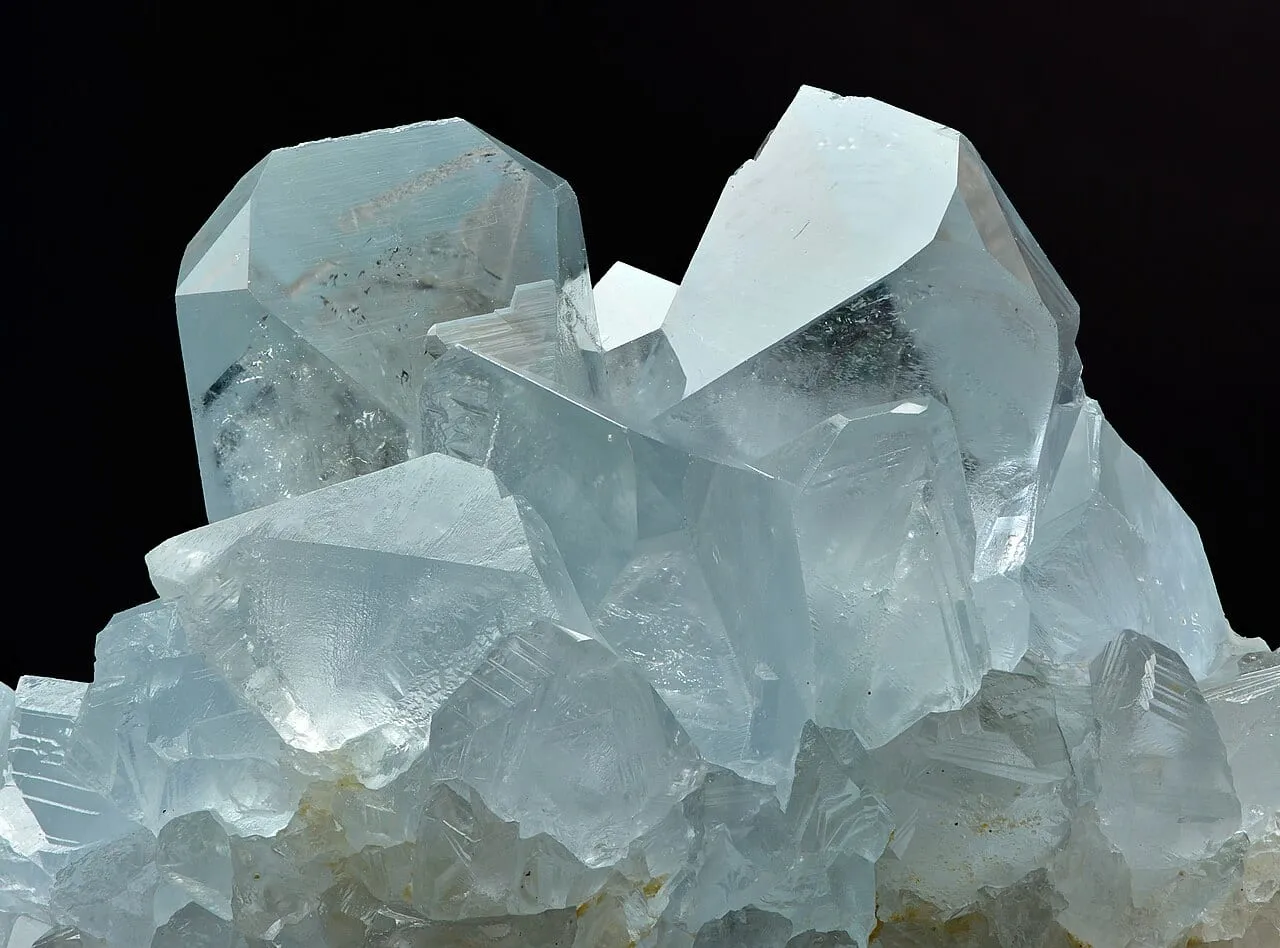
Celestine
A strontium mineral named after the sky, often forming pale blue crystals; the source of the red in fireworks.
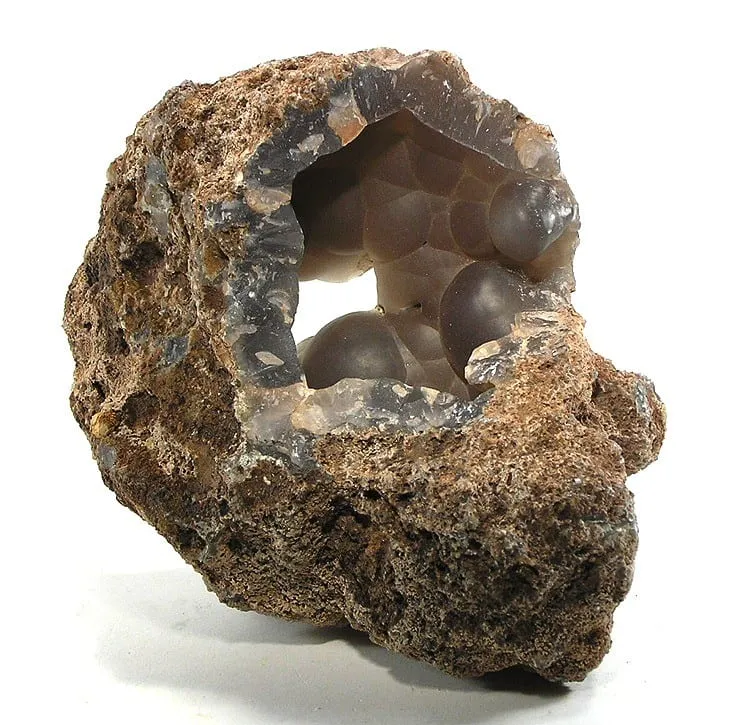
Chalcedony
A waxy-lustred stone made of quartz crystals far too small to see: the family name for agate, onyx and many other ornamental stones.