Fake gemstones guide: how to tell imitation, synthetic and treated stones apart
Glass imitations, dyed stones, glass-filled ruby, synthetics, the “onyx” name, fake Oltu stone and certificates: what to check at home, when to use a lab.
A “fake” gemstone is not one single thing. The stone in front of you may be an imitation (glass, plastic or a different stone dyed to look the part), a synthetic (made in a laboratory but the same mineral), a treated natural stone (heated, dyed, filled or coated), an assembled stone (a doublet or triplet), or simply a natural stone sold under a misleading name. You can catch some imitations at home with a loupe; synthetics and most treatments, however, can only be identified with certainty by a gemmological laboratory.
It is worth saying at the outset: the problem is usually not the treatment itself but hiding it. According to GIA, anyone selling a gemstone should disclose the treatments it has received.
Five kinds of “fake”
| Kind | What is it? | Example | Can you tell at home? |
|---|---|---|---|
| Imitation | Another material made to look like a natural gem | Glass “emerald”, dyed howlite “turquoise” | Often, yes |
| Synthetic | Lab-made, the same mineral as the natural stone | Synthetic ruby, lab-grown diamond | Usually not |
| Treated | A natural stone with altered colour or clarity | Heated sapphire, glass-filled ruby | Sometimes |
| Assembled | Two or three pieces glued together | Opal doublet, garnet-and-glass doublet | Sometimes, if unset |
| Misleading name | A natural stone sold under another stone’s name | Calling calcite “onyx” | With simple tests |
Imitations: glass, plastic and dyed stones
Glass can be made in any colour, which makes it the oldest imitation of all. Under a 10× loupe you may see round gas bubbles or swirling flow lines inside. Moulded glass has rounded rather than sharp facet edges. Glass has a hardness of about 5.5; because it is softer than quartz and harder gems, it gets scratched over time.
Plastic and resin imitations feel light and warm in the hand. Because they come out of a mould, the beads are identical to one another and may show a seam.
Dyed stones are trickier, because they are real stones made to pass as something else:
- White howlite and magnesite are the stones most often dyed to imitate turquoise. The white interior may show at the edges of drill holes or in cracks.
- Most plain black onyx in jewellery is dyed chalcedony. This is a very old and accepted treatment, but it should still be disclosed.
- Bright blue, green or pink slices of agate are usually dyed. The colour concentrates in cracks and along band boundaries.
Treated natural stones
- Heating: The blue of sapphire can be deepened by heating. According to GIA, most citrine on the market is amethyst that has been heated to turn it yellow. The result is permanent and the practice is widespread.
- Irradiation: Vivid blue topaz rarely occurs in nature in that colour; GIA states that such stones are assumed to have been irradiated.
- Filling: Cracks in emeralds are filled with oil or resin. The fractures of heavily cracked rubies can be filled with lead glass. A Japanese laboratory (GAAJ) first issued an alert about this treatment in early 2004, and it spread through the market quickly. In some stones there is so much glass that GIA describes the result as a manufactured product, a combination of ruby and glass. Even mild acids such as lemon juice can damage the filling.
- Impregnation: Porous turquoise is saturated with resin to make it more durable (stabilisation).
- Coating: The surface of colourless topaz can be coated with thin metal oxide layers to give it rainbow colours. The coating wears away at facet edges over time.
Assembled stones: doublets and triplets
A doublet is made by gluing two pieces together, a triplet three. They are very common in opal: a thin layer of precious opal is glued onto a dark backing, and a triplet adds a clear quartz or glass dome on top. Another long-standing example is the garnet-and-glass doublet: the thin garnet layer on top hides the bubbles in the glass below. Looking at the stone from the side may reveal a glue line; once the stone sits in a closed setting, however, the line is hidden.
Synthetic stones
A synthetic stone is made in a laboratory but has the same chemical composition and crystal structure as the natural stone. French chemist Auguste Verneuil announced in 1902 that he had produced synthetic ruby by melting powder in a flame; that method is still the source of inexpensive synthetic ruby and sapphire today. Under a microscope, curved growth lines and gas bubbles can give them away. Synthetic quartz, amethyst and laboratory-grown diamond are also common.
A synthetic stone is not “fake”; the deception lies in selling it as natural. Simulants such as cubic zirconia, by contrast, are entirely different materials from the gem they imitate.
Common cases in Türkiye
- “Onyx” or “Turkish onyx”: Most of the vases, ashtrays and jewellery carved as “onyx” in Cappadocia and Hacıbektaş are not chalcedony but banded travertine, that is, calcite. It is a beautiful natural stone in its own right; but it is far softer than true onyx, a knife scratches it, and a drop of vinegar on a hidden spot makes it fizz.
- Oltu stone imitations: Black plastic and resin (identical beads, mould marks), black glass (noticeably heavy and cold) and vulcanite (turns brownish with age and smells of rubber when warmed). According to its geographical indication certificate, genuine Oltu stone has a velvety touch, faint veining, leaves a brown powder when rubbed on sandpaper, and becomes charged by friction so that it attracts light objects such as scraps of paper.
- Meerschaum: “Pressed meerschaum”, made by moulding meerschaum dust with a binder, is not the same as a piece carved from a solid block. Ask the seller.
- Zultanite: The colour-change diaspore from Muğla has imitations too. In 2016 GIA reported that two stones purchased in Türkiye as “Zultanite” were in fact colour-change glass containing rare earth elements.
- “Magnetic hematite”: Shiny black beads that snap together like magnets are usually factory-made ferrite ceramic; natural hematite is not magnetic, or only very weakly so.
- “Meteorite”: Most stones sold online as meteorites are slag, magnetite or hematite. How to tell the difference is explained in Is my stone valuable?
Certificate fraud
The laboratory report that comes with a valuable stone can be faked as well. GIA notes that its reports carry security features such as a hologram and microprint lines, and that the report number can be checked against its own database (Report Check). It has also reported laboratory-grown diamonds whose girdles had been inscribed with the report number of a different, natural diamond. Practical rules:
- Look up the report number on the issuing laboratory’s own website; do not rely on a link sent by the seller.
- Check that the report matches the stone’s measurements and weight exactly.
- Before an expensive purchase, have the stone examined by a laboratory that is independent of the seller.
What you can check at home, and what needs a lab
At home (without damaging the stone):
- With a 10× loupe: bubbles, flow lines, mould marks, glue lines and dye collecting in cracks.
- Weight and temperature in the hand: plastic is light and warm.
- A coating worn away at facet edges.
- What the seller says about the stone: ask for claims such as “natural” or “untreated” in writing.
A lab is needed for: whether a stone is natural or synthetic, heat treatment, the extent of a filling, laboratory-grown diamond, and the country a stone came from.
Do not try scratching a stone, holding it in a flame or testing it with acid: these tests can damage it permanently. To learn how to recognise the stone itself, see how to identify a stone.
Quick questions, quick answers
How can I tell if a gemstone is fake?
Looking through a 10× loupe for gas bubbles, mould marks, glue lines and dye collecting in cracks exposes many imitations. Synthetic stones and treatments such as heating, however, can often be identified only by a gemmological laboratory.
Is a synthetic gemstone fake?
Not exactly. A synthetic stone is made in a laboratory but is the same mineral as the natural stone; synthetic ruby is still corundum. The fraud lies in selling a synthetic as natural.
Is the onyx sold in Türkiye real onyx?
Mostly not. The stone carved as “onyx” or “Turkish onyx” in Cappadocia and elsewhere is usually banded travertine, that is, calcite. True onyx is a variety of chalcedony; calcite is much softer and fizzes in vinegar.
How can I tell real Oltu stone?
Oltu stone feels surprisingly light in the hand, has a velvety touch and faint veining, and leaves a brown powder when rubbed on sandpaper. Identical beads and mould marks point to a plastic imitation; a heavy, cold feel suggests black glass.
Does heat treatment make a gemstone fake?
No, but the seller should disclose it. Heating sapphire, or heating amethyst to turn it into citrine, are common and accepted treatments. A treatment that is hidden misleads the buyer.
Can a gemstone certificate be fake?
Yes. That is why you should look up the report number on the issuing laboratory's own website; GIA reports, for example, can be verified through its Report Check service.
Stones in this guide
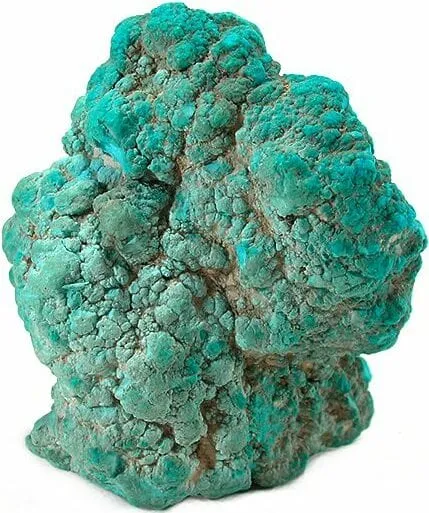
Turquoise
A blue-green copper aluminium phosphate whose name means “Turkish stone”, prized as an ornamental stone for thousands of years.
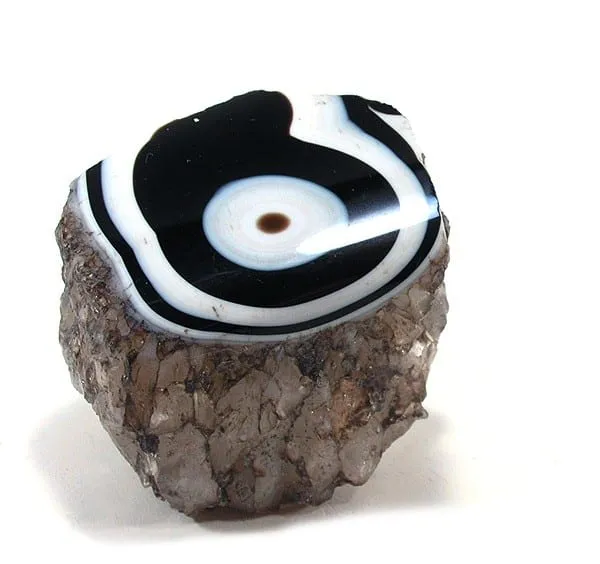
Onyx
Chalcedony with straight black and white bands. Most souvenirs sold as “onyx” in Türkiye, however, are really banded calcite.
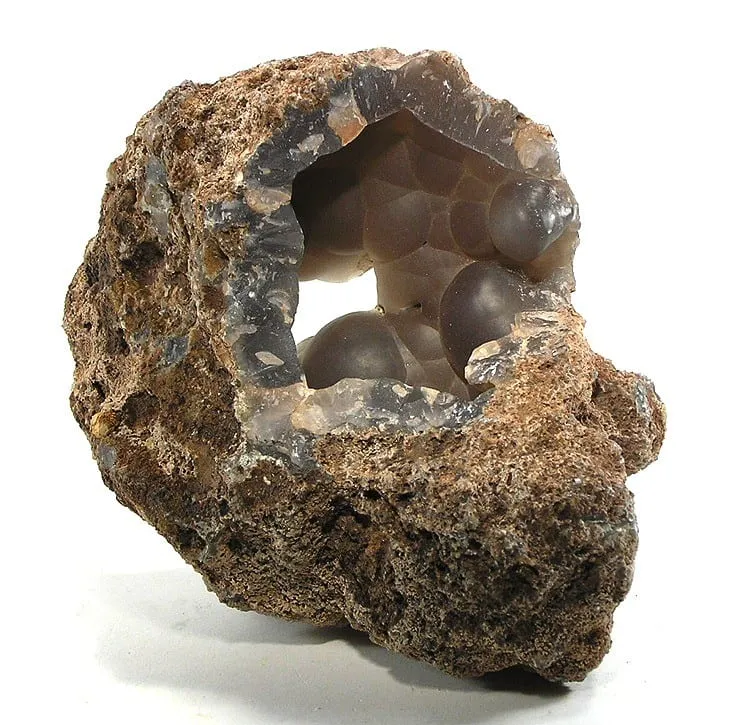
Chalcedony
A waxy-lustred stone made of quartz crystals far too small to see: the family name for agate, onyx and many other ornamental stones.
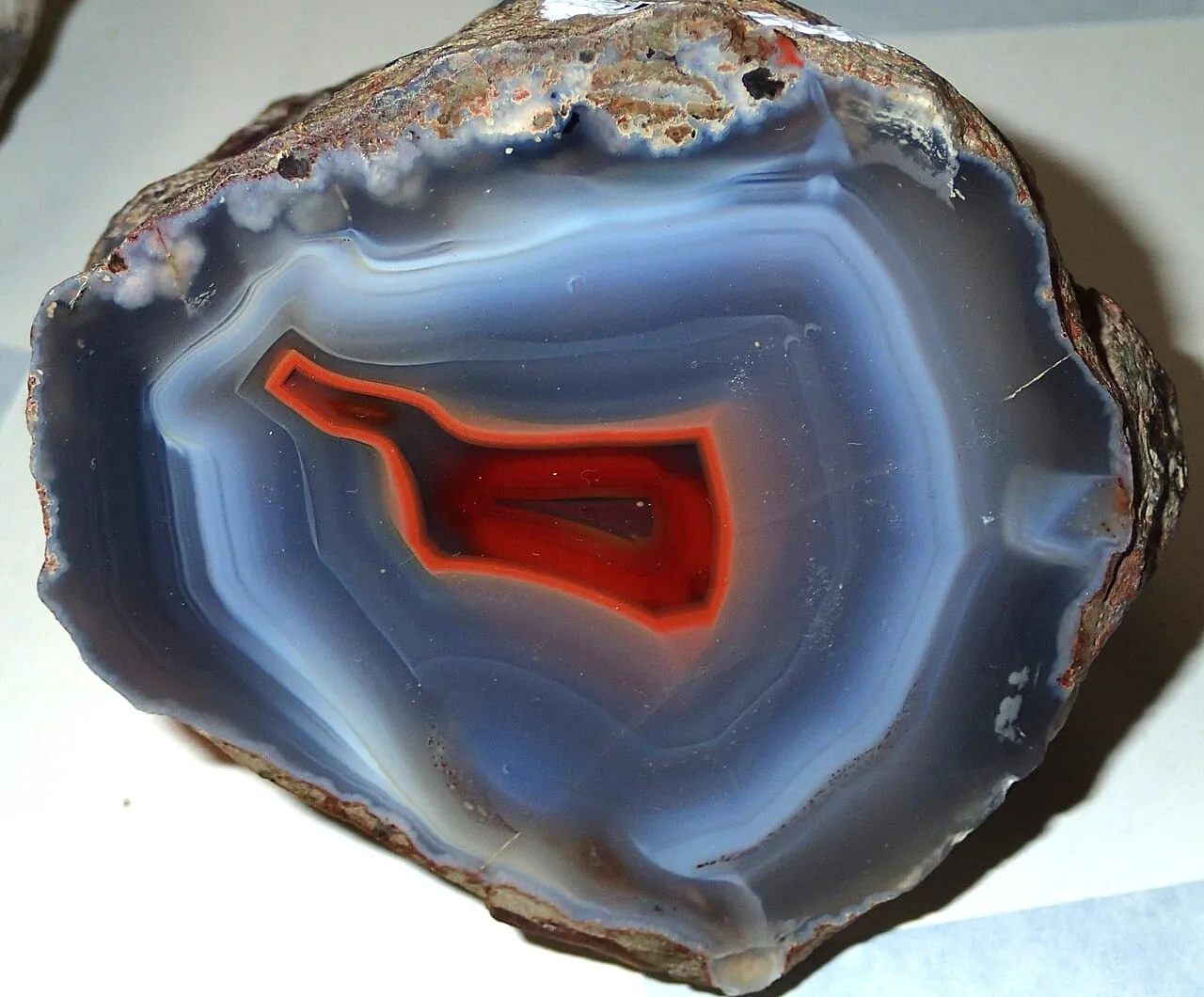
Agate
The banded variety of chalcedony: it grows layer by layer in hollows in volcanic rock and shows a new pattern every time it is cut.
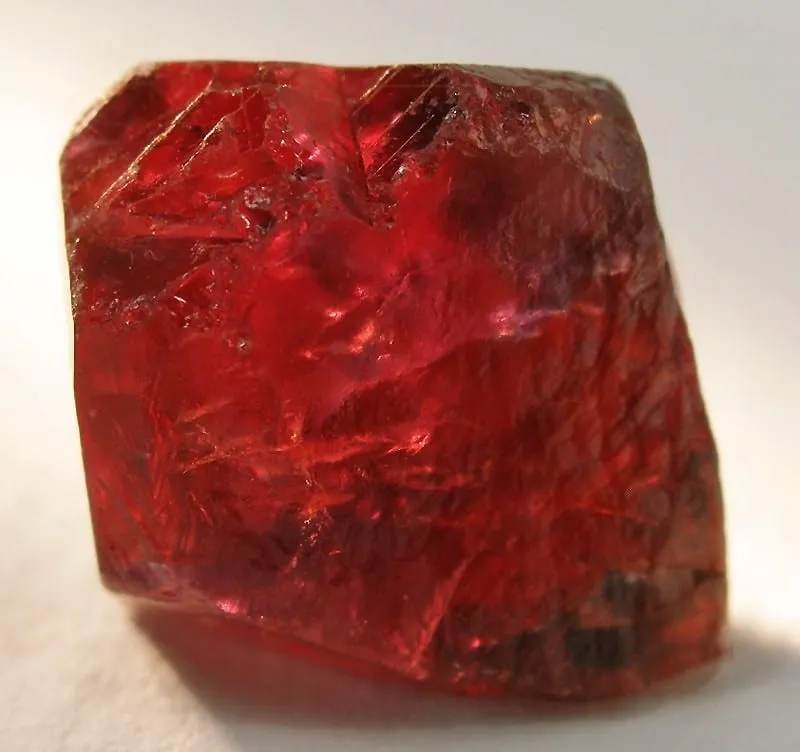
Ruby
Corundum coloured red by chromium: one of the world's most famous gems, able to glow red under ultraviolet light.
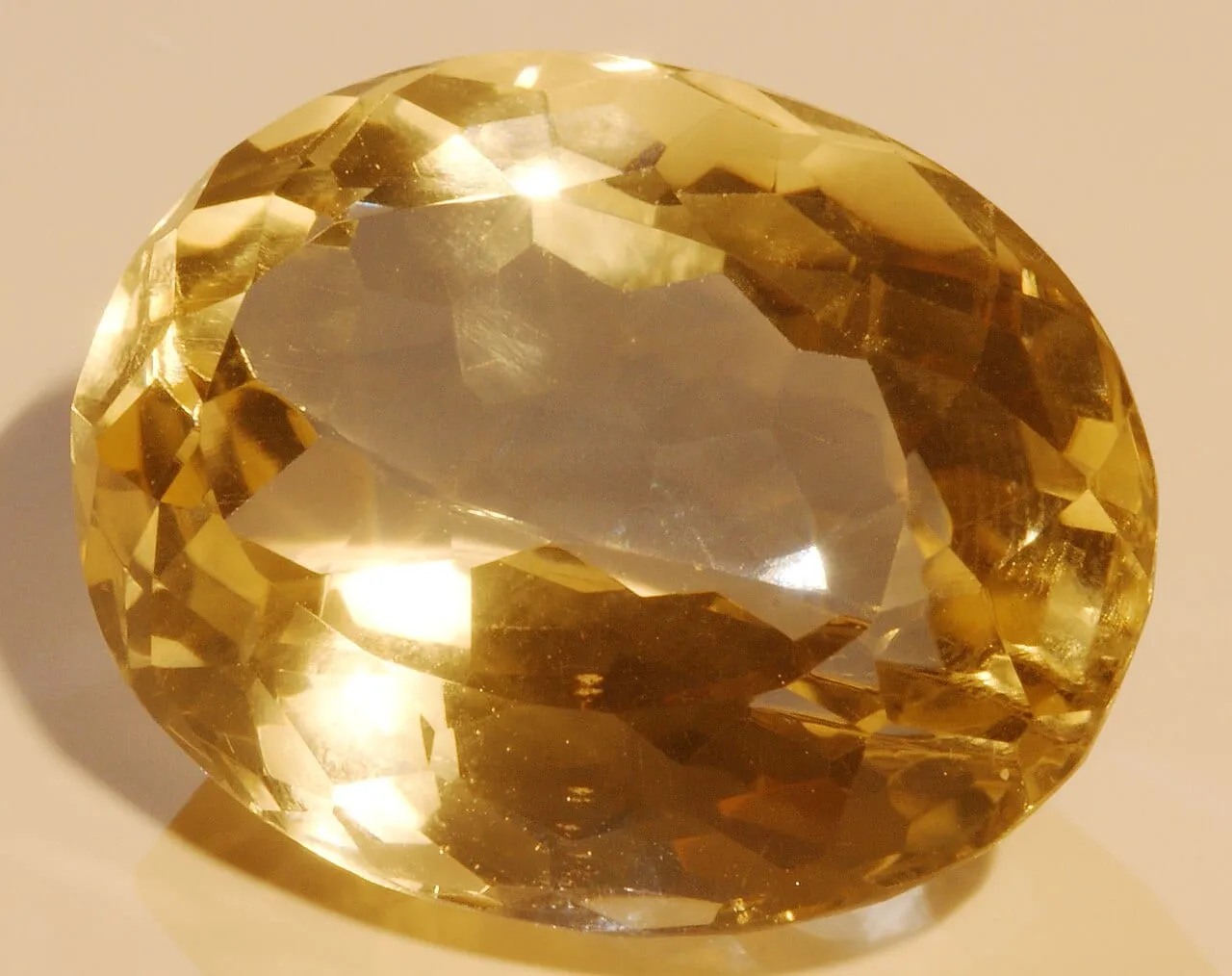
Citrine
The yellow to orange variety of quartz: rare in nature, so most of what is sold is heated amethyst.
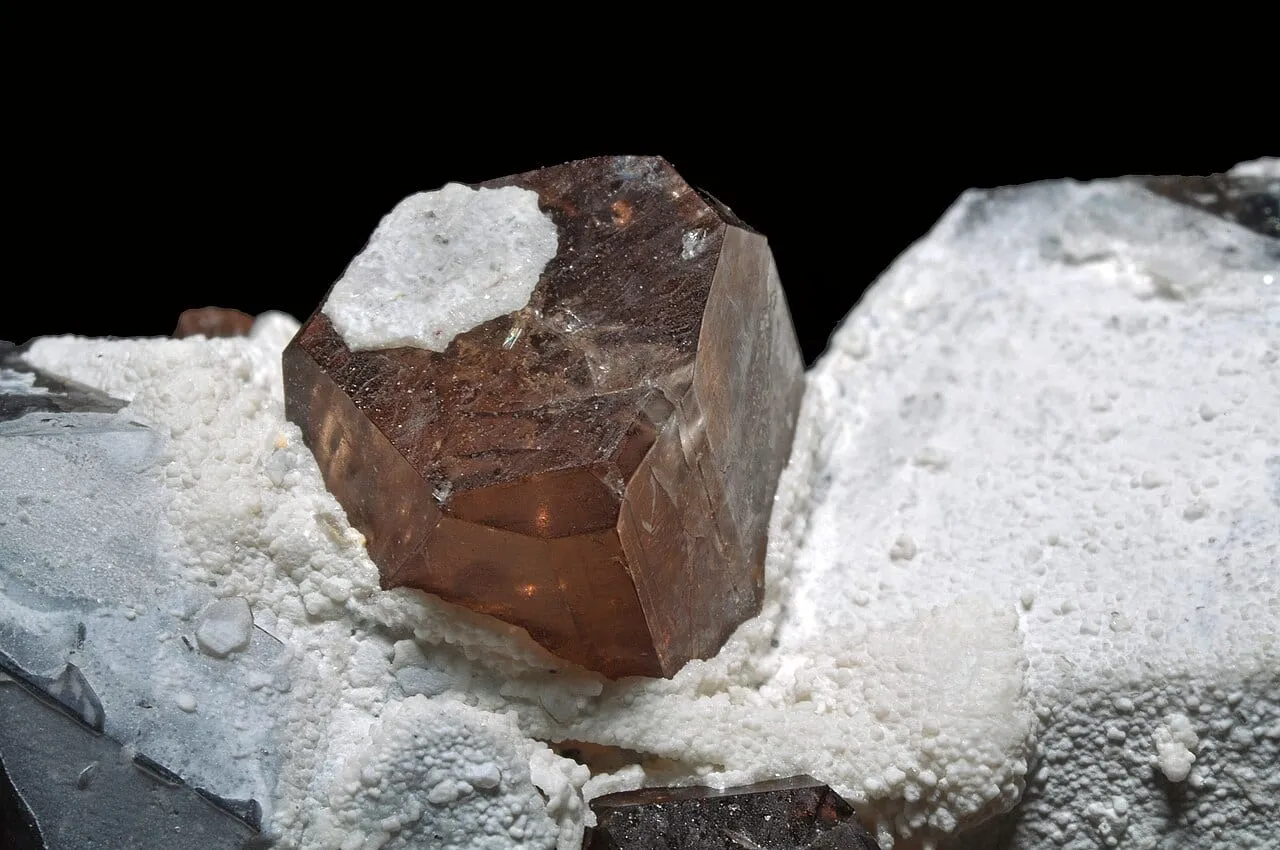
Topaz
The reference mineral for 8 on the Mohs scale: a hard, brilliant gem whose blue colour is almost always added by people.
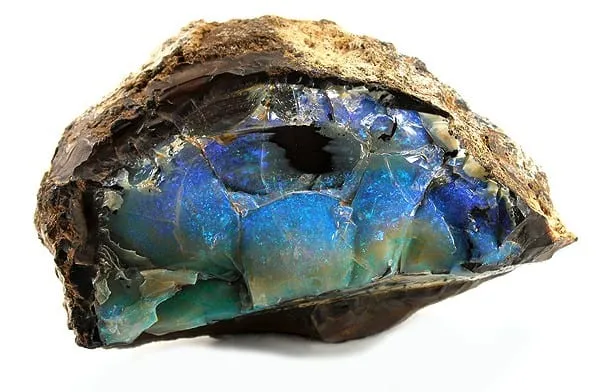
Opal
Water-bearing silica with no crystal structure: in precious opal, tiny stacked spheres split light into flashes of rainbow colour.
Oltu stone
Erzurum’s black treasure: a kind of jet made from coalified wood, famous for its prayer beads.
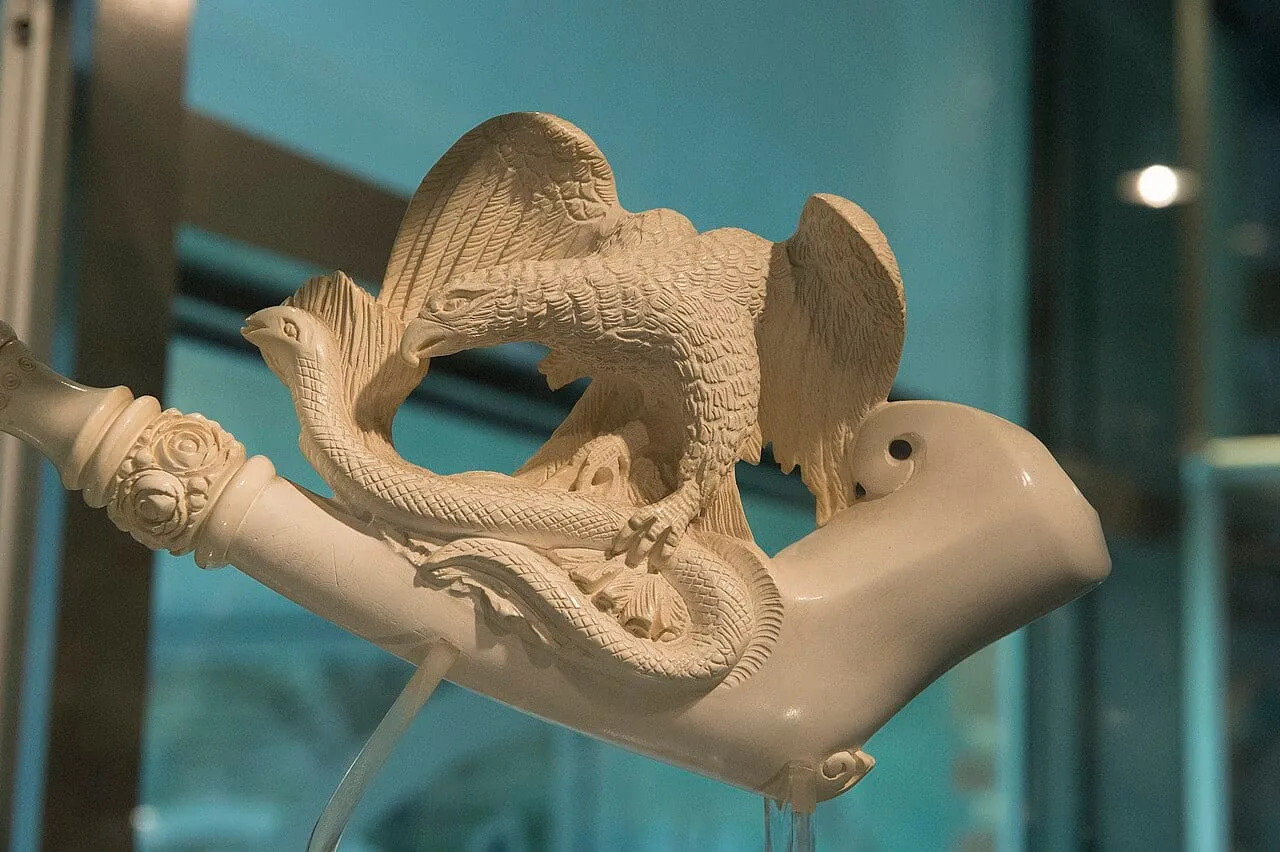
Meerschaum
A white stone light enough to float when dry and soft enough to carve: meerschaum, the raw material of Eskişehir's famous pipes.
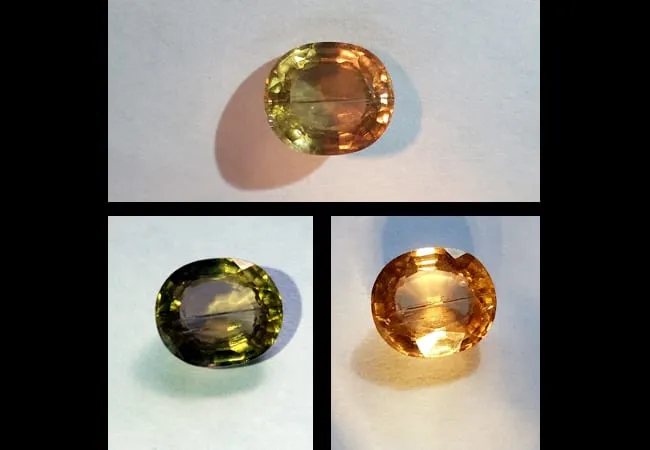
Diaspore
A rare mineral that looks greenish in daylight and pinkish under incandescent light; gem-quality material comes almost only from Muğla.
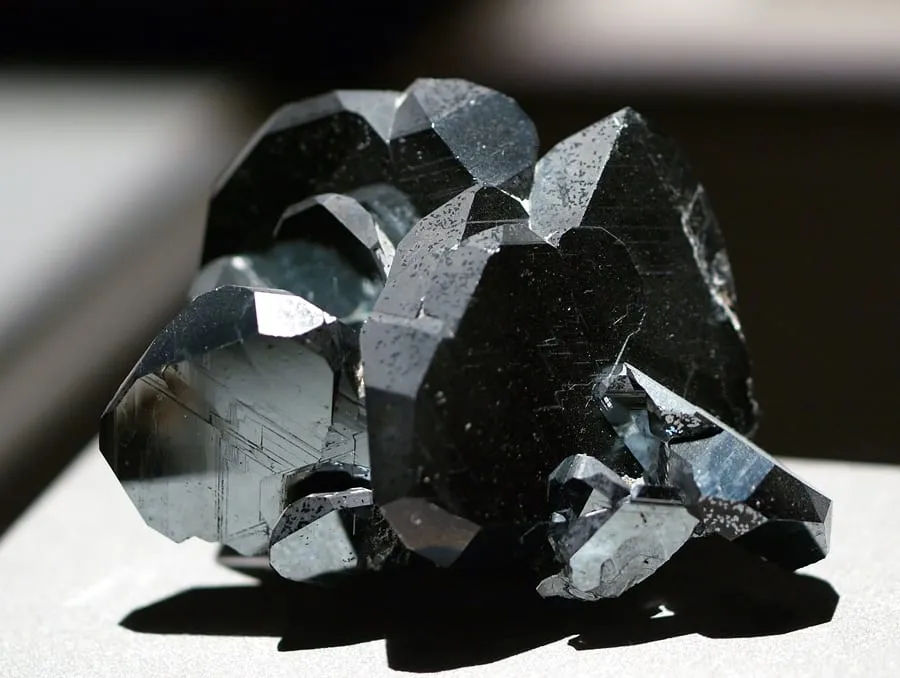
Hematite
Even when it looks black and metallic, its streak is blood red: one of the world’s most important iron ores.
Sources
- An Introduction to Gem Treatments · Gemological Institute of America (GIA)
- Identification and Durability of Lead Glass–Filled Rubies (McClure, Smith, Wang & Hall), Gems & Gemology · GIA, 2006
- An Introduction to Imitation Diamonds & Other Gems · GIA
- Color-Change Glass as a Zultanite Imitation · GIA, Gems & Gemology, 2016
- How can I be sure that a GIA grading report is authentic? · GIA
- CVD Laboratory-Grown Diamond with Counterfeit GIA Inscription (Lab Notes) · GIA, Gems & Gemology, 2021
- Is citrine treated? · GIA
- Verneuil method · Wikipedia
- Onyx · Wikipedia
- Turquoise · Wikipedia
- Oltu Taşı — Geographical Indication Registration Certificate (No. 192) · TÜRKPATENT (Turkish Patent and Trademark Office), 2012