Rock
Marble
Mermer
Limestone reborn by heat and pressure — the favourite stone of sculptors and architects for thousands of years.
- Everyday
- Building stone
- Ornamental
- Important in Türkiye

In short
Marble is a rock that forms when limestone deep underground is changed by high temperature and pressure without melting. During this change the tiny grains in the stone grow and lock together, which is why a broken surface sparkles like sugar. It is easy to carve and takes a beautiful polish, so it is used for statues, buildings and floors.
Photos

How does it form?
Marble is a metamorphic rock that forms when limestone or dolomite is recrystallised, without melting, by high temperature and pressure deep in Earth’s crust. This can happen over wide areas during mountain building (regional metamorphism) or around a hot body of magma (contact metamorphism). Recrystallisation largely wipes out the fossils and layering of the original limestone. Pure marble is snow-white; impurities such as clay, iron oxides or graphite give it grey, pink, green or black veins.
What is it used for?
- Sculpture: Easy to carve and able to hold fine detail, it has been a favourite of sculptors since antiquity.
- Architecture and interiors: It is used for cladding, floors, stairs, bathrooms and worktops.
- Industry: Ground marble is used as a calcium carbonate filler in paints, plastics and paper.
Marble is sensitive to acids: lemon juice, vinegar and acid rain slowly dull its polished surface.
Marble in Türkiye
Türkiye is one of the world’s leading marble producers. The Proconnesus quarries on Marmara Island have been worked since antiquity; their grey-veined white marble was used in many buildings, including Hagia Sophia in Istanbul. The ancient Dokimeion quarries at İscehisar in Afyonkarahisar were famous in Roman times for purple-and-white “pavonazzetto”, and the area is still an important marble-producing centre today.
How to recognise it
- 1
A broken surface shows interlocking crystals that sparkle like grains of sugar.
- 2
It fizzes when a drop of dilute acid is added; dolomitic marble fizzes clearly only when powdered.
- 3
A steel knife can scratch it, but it cannot scratch glass, which easily tells it apart from granite.
- 4
Light passes a little way into thin edges, so white marble seems to glow softly from within.
Fakes and imitations
What shops usually don’t tell you:
- In the stone trade “marble” is used for many calcium-rich rocks that take a polish, so some stone sold as marble is really limestone, travertine or serpentinite.
- Banded “onyx marble” is usually a travertine-like calcite deposit; it has nothing to do with true onyx, which belongs to the quartz family.
- Cultured (synthetic) marble is made by mixing marble powder with resin and casting it in moulds; it feels warmer to the touch and its pattern is uniform.
- On marble-look porcelain tiles the pattern is only printed on the surface and repeats every few tiles.
Did you know?
Marmara Island takes its name from the Greek word mármaros, “shining stone”; the English “marble” and the Turkish “mermer” come from the same root.
Michelangelo’s famous David was carved from a single block of marble quarried at Carrara in Italy.
Where is it found?
Loading map…
- Carrara, Tuscany, Italy · Major depositWhite marble quarried since Roman times; Michelangelo's David was carved from Carrara marble.
- Marmara Island (Proconnesus), Balıkesir, Türkiye · Major depositQuarried from antiquity to the present day; white, grey-veined Proconnesian marble was shipped across the Mediterranean in Roman and Byzantine times. The marble gave its name to the island, the sea and the region.
- İscehisar (Dokimeion), Afyonkarahisar, Türkiye · Historic sourceSource of the purple-and-white “pavonazzetto” and of white marble in Roman times; still an important quarrying centre today.
- Mount Pentelicus, Athens, Greece · Historic sourceSource of the Pentelic marble used to build the Parthenon.
Locations are approximate to protect sites. Red dots mark places in Türkiye. Open in the big map →
Sources
- Marble · Encyclopaedia Britannica
- Place: Marmara Adası · The Art of Making in Antiquity (King's College London)
- Place: Iscehisar · The Art of Making in Antiquity (King's College London)
External links
Draft: awaiting expert reviewReport an error ↗
On the same step
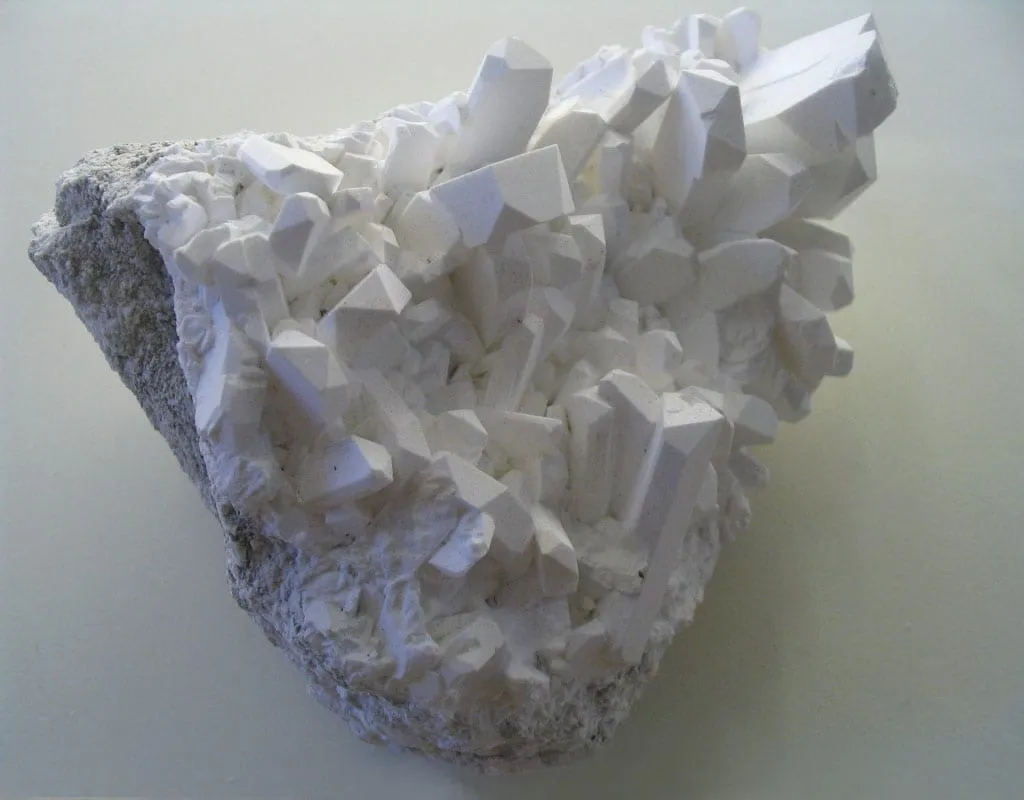
Borax (tincal)
A sodium borate that dissolves in water and crumbles to white powder in dry air; one of the world’s key tincal deposits is at Kırka in Eskişehir.
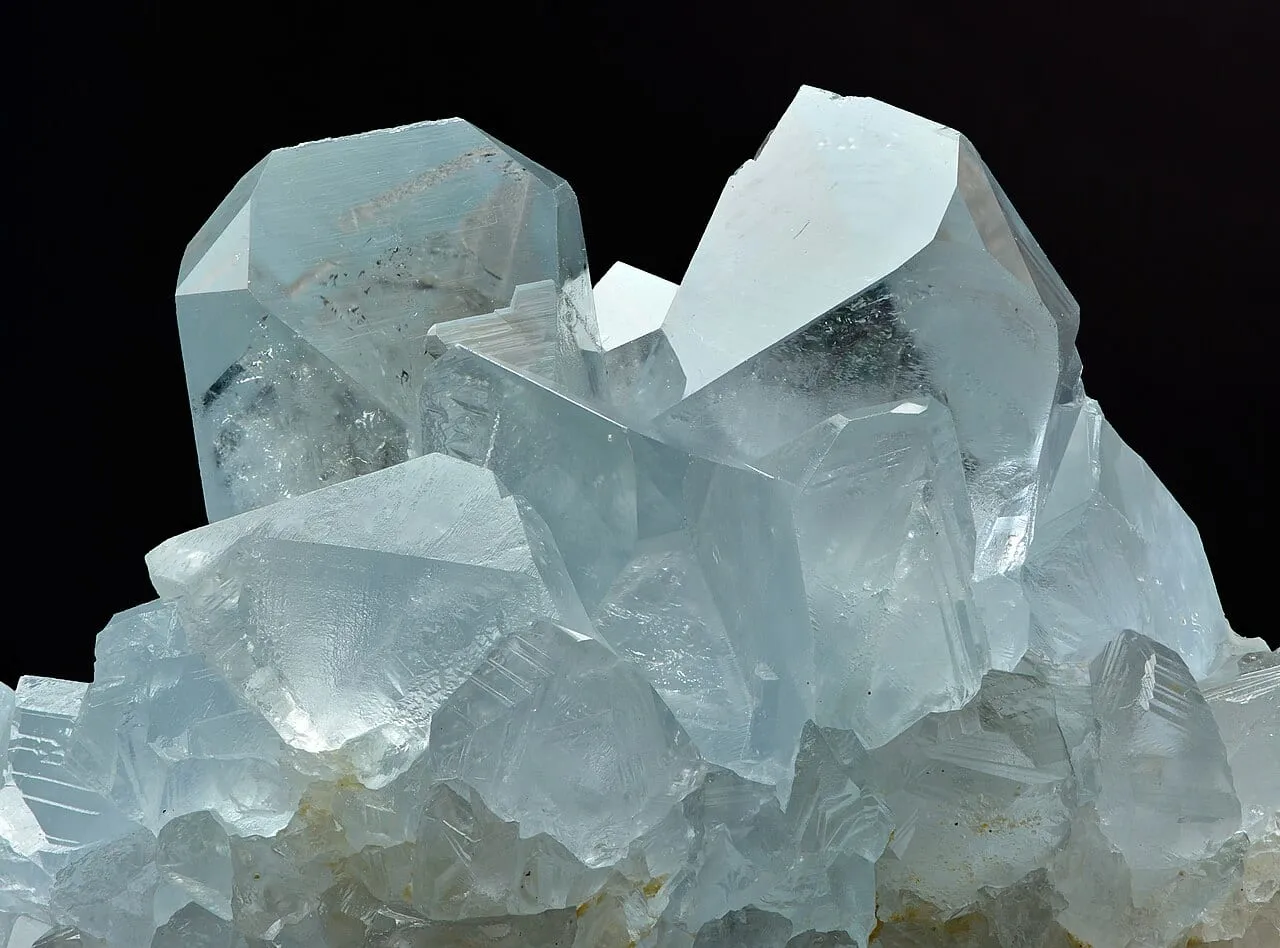
Celestine
A strontium mineral named after the sky, often forming pale blue crystals; the source of the red in fireworks.
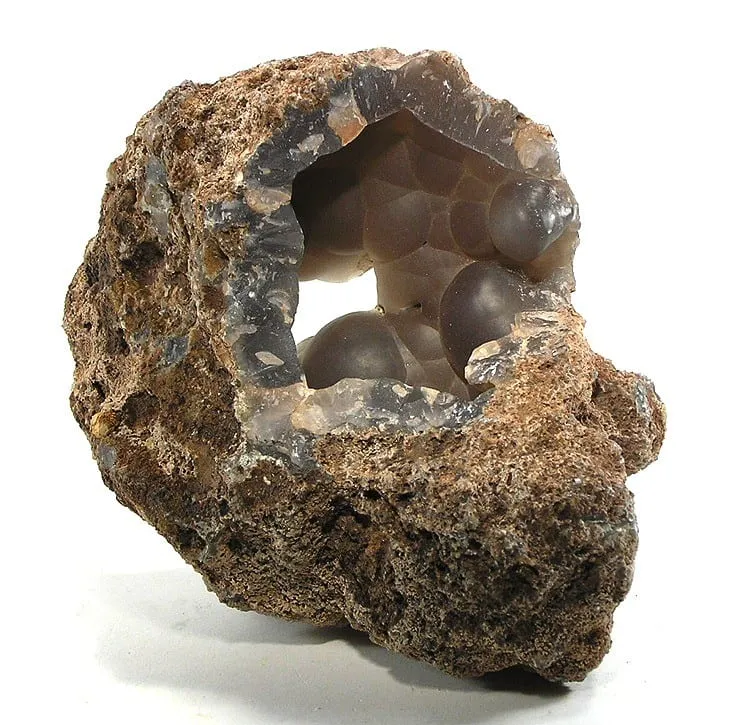
Chalcedony
A waxy-lustred stone made of quartz crystals far too small to see: the family name for agate, onyx and many other ornamental stones.