Mineral
Talc
Mg₃Si₄O₁₀(OH)₂Talk
The softest mineral on the Mohs scale: scratched by a fingernail, soapy to the touch and used in everything from plastics to ceramics.
Also known as: Talcum (powder) · Soapstone / steatite (talc-rich rock) · French chalk
- Everyday
- Industrial
- Mohs scale mineral

In short
Talc is a very soft mineral made of magnesium, silicon, oxygen and hydrogen. It is number 1 on the Mohs hardness scale, the softest reference mineral, and a fingernail scratches it easily. Ground into powder, it feels slippery and silky.
How does it form?
Talc forms when magnesium-rich rocks are altered by hot fluids and metamorphism. Ultramafic rocks can turn first into serpentine and then, through the action of silica-rich fluids, into talc; this process is called steatitisation. Magnesium-bearing carbonate rocks such as siliceous dolomite can also turn into talc at relatively low temperatures. A dense, talc-rich rock that is easy to carve is called soapstone (steatite).
What is it used for?
- Plastics and paint: Talc is used as a filler. According to the U.S. Geological Survey (USGS), about a third of the talc sold in the United States in 2025 went into plastics and about a fifth into paint.
- Ceramics and paper: It is used in ceramic tiles, in the ceramic bodies of car catalytic converters and in papermaking.
- Cosmetics: It is used in face powders and make-up; stricter testing of these products for asbestos contamination is under discussion.
- Soapstone: Because it carves easily and holds heat well, soapstone is used for sculptures, vessels and stoves.
Why is it so soft?
Talc’s atoms are arranged in thin layers held together by very weak bonds. The layers slide over one another even under a rubbing finger, which explains why talc feels slippery and can be scratched with a fingernail.
How to recognise it
- 1
A fingernail scratches it easily (hardness 1), and it feels slippery, as if coated with soap or grease.
- 2
It is usually white, light green or grey, with a pearly or greasy shine.
- 3
It can split into thin flakes, but the flakes stay bent instead of springing back, which tells it apart from the elastic micas.
- 4
It does not fizz in dilute acid, which tells it apart from calcite, another soft-looking white mineral.
Fakes and imitations
What shops usually don’t tell you:
- Carvings sold as “soapstone” (steatite) are not pure talc but a talc-rich rock that may also contain chlorite, serpentine or carbonate minerals.
- Pyrophyllite, an aluminium-bearing mineral, looks very much like talc and replaces it in some uses; telling them apart reliably needs laboratory analysis.
- Ready-made powders may use other powders such as cornstarch instead of talc; check the ingredient list on the package to see whether a product contains talc.
Safety
Talc is harmless to handle. However, talc deposits sometimes form next to asbestos minerals, and asbestos contamination of talc products has been documented. In 2024 the International Agency for Research on Cancer (IARC) of the World Health Organization classified talc as “probably carcinogenic to humans” (Group 2A); talc containing asbestos counts as part of asbestos and is in Group 1, “carcinogenic to humans”. Avoid breathing talc dust and wear a suitable dust mask for dusty work with talc.
Did you know?
When Friedrich Mohs drew up his hardness scale in 1812, he put talc on the lowest step, number 1.
One kind of traditional tailor's chalk, used to mark lines on fabric, is made of pressed talc.
Where is it found?
Loading map…
- Trimouns, Luzenac, Ariège, France · Major depositLarge open-pit talc quarry in the Pyrenees
- Zillertal, Tyrol, Austria · Known localityGood crystals and pure material around Mt. Greiner
- Göpfersgrün, Bavaria, Germany · Historic source
- Fowler, St. Lawrence County, New York, USA · Known locality
Locations are approximate to protect sites. Red dots mark places in Türkiye. Open in the big map →
Sources
- Handbook of Mineralogy: Talc · Mineralogical Society of America
- IARC Monographs Volume 136: Talc and Acrylonitrile — Questions and Answers · International Agency for Research on Cancer (WHO), 2024
- Mineral Commodity Summaries 2026: Talc and Pyrophyllite · U.S. Geological Survey, 2026
External links
Draft: awaiting expert reviewReport an error ↗
On the same step
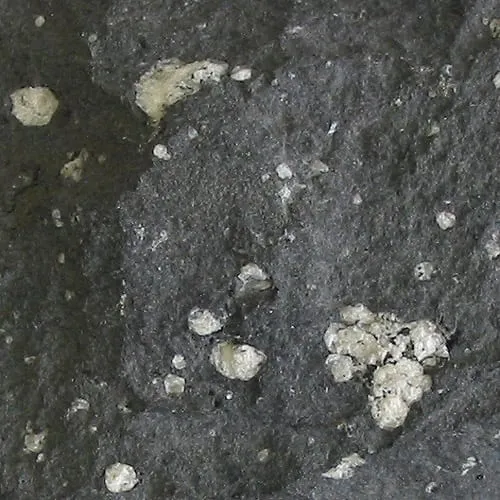
Andesite
The rock of volcanic arcs, named after the Andes — and the pink-grey stone of Ankara Castle.
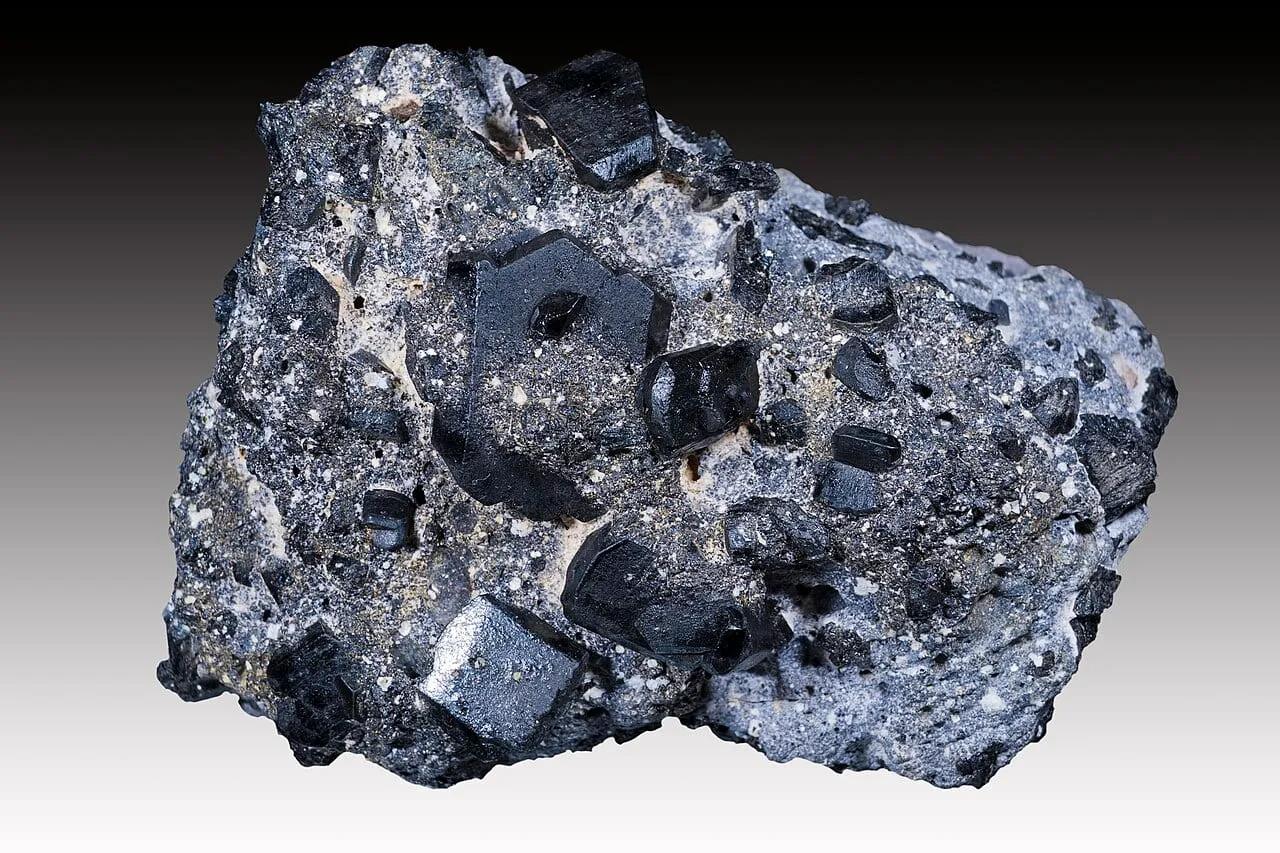
Augite (pyroxene)
The most common pyroxene, which darkens basalt and gabbro: inconspicuous, yet one of the key building blocks of Earth’s crust.
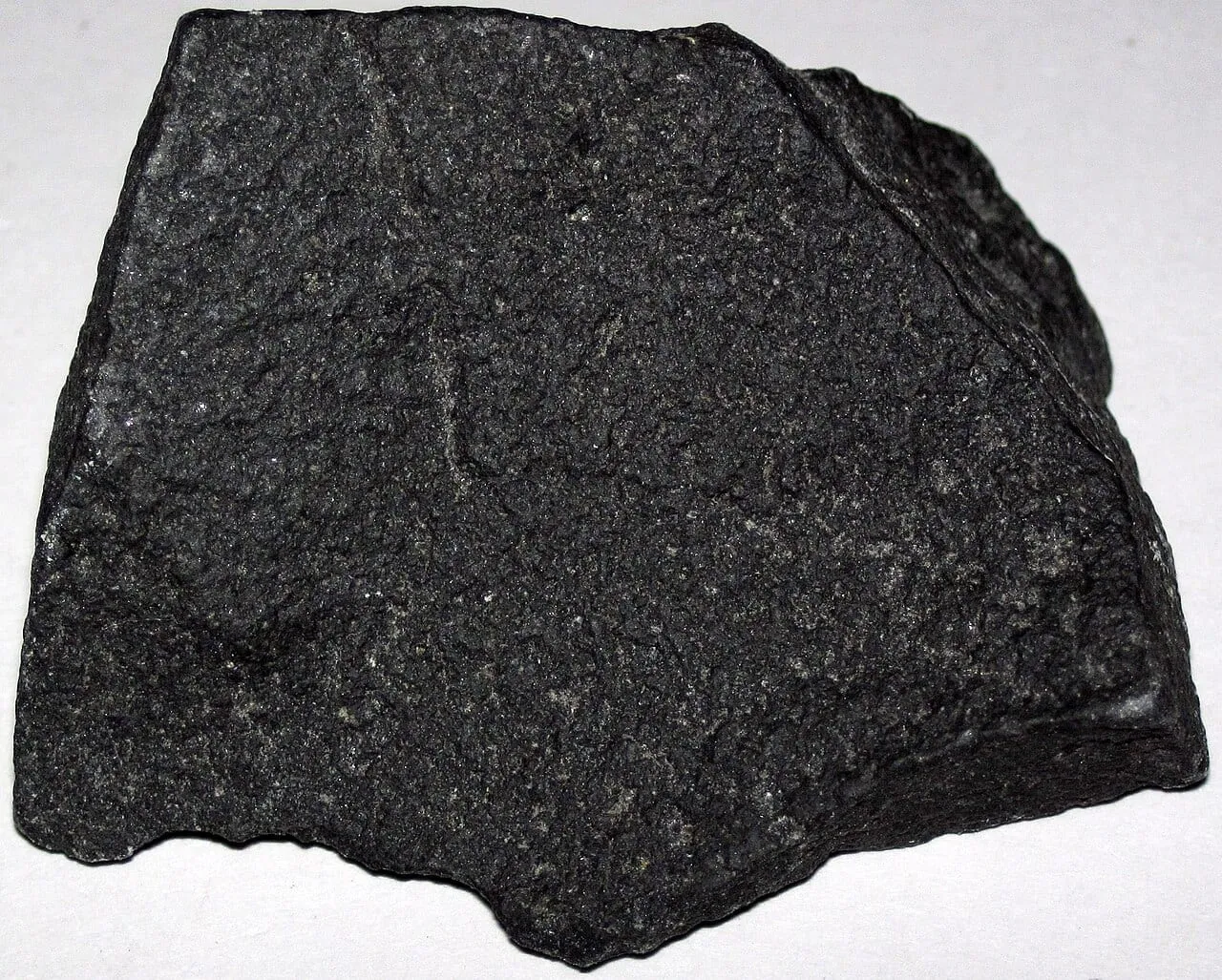
Basalt
The rock of the ocean floors and the Moon’s dark plains — the most common volcanic rock on Earth.