Mineral
Orthoclase
KAlSi₃O₈Ortoklaz
The potassium feldspar that defines 6 on the Mohs scale: it gives many granites their pink colour and is a raw material for glass and ceramics.
Also known as: Orthoclase feldspar · Potassium feldspar (one of the K-feldspars)
- Everyday
- Industrial
- Mohs scale mineral
In short
Orthoclase is a feldspar mineral made of potassium, aluminium, silicon and oxygen. Feldspars are the most abundant mineral family in Earth's crust. Orthoclase is the reference mineral for number 6 on the Mohs hardness scale and forms the pink or white grains in many granites.
How does it form?
Orthoclase is one of the common feldspars of granites, granite pegmatites and syenites. It crystallises together with quartz and plagioclase as magma cools slowly. It also forms in high-grade metamorphic rocks such as gneiss and through the action of potassium-rich hot fluids. When orthoclase weathers it turns into clay minerals, especially kaolinite; much of the world’s porcelain clay formed from weathered feldspars.
What is it used for?
Feldspar is a basic raw material of the glass and ceramics industries. It is used as a flux that lowers the melting temperature of the mix. According to the U.S. Geological Survey (USGS), about half of the feldspar used in the United States goes into ceramics, pottery and other uses, and the rest into glass. Transparent yellow orthoclase is cut as a collector’s gem.
Feldspar in Türkiye
According to the 2025 estimates in the USGS 2026 report, Türkiye is the world’s second-largest feldspar producer after India, and it supplied 93% of the feldspar imported by the United States in 2021–2024. However, most of Türkiye’s feldspar is not potassium-bearing orthoclase but sodium feldspar, albite, mined in the Çine–Milas area between Aydın and Muğla. Albite is the sodium-rich end of the plagioclase series.
How to recognise it
- 1
It scratches glass, while a steel knife scratches it only with difficulty or not at all (hardness 6).
- 2
It breaks along smooth surfaces in two directions at right angles (cleavage); turn a specimen in the light and these flat faces flash like mirrors.
- 3
It is usually white, cream or flesh-coloured. Unlike plagioclase, its cleavage faces do not show fine parallel lines.
- 4
Telling orthoclase apart with certainty from microcline and sanidine, which have the same composition, needs a microscope or X-ray study.
Fakes and imitations
What shops usually don’t tell you:
- Most stones sold as moonstone are feldspars made of very thin layers of orthoclase and albite. Imitations such as glass, white chalcedony and synthetic spinel may be sold under the same name.
- The stone sold as “rainbow moonstone” is not orthoclase but a white labradorite, which is a plagioclase.
- Green amazonite is also a potassium feldspar, but it is microcline, not orthoclase.
Did you know?
Its name comes from the Greek for “straight fracture”, describing how its two cleavage planes meet at a right angle.
Common twin growths in orthoclase crystals are named after places with classic specimens: Carlsbad, Baveno and Manebach twins.
Where is it found?
Loading map…
- Itrongay, near Betroka, Madagascar · Major depositTransparent, gem-quality yellow orthoclase
- Karlovy Vary (Carlsbad), Czechia · Historic sourceGives its name to the “Carlsbad twin”
- Baveno, Piedmont, Italy · Historic sourceFine orthoclase crystals in its pink granite; gives its name to the “Baveno twin”
- St. Gotthard, Ticino, Switzerland · Known locality
Locations are approximate to protect sites. Red dots mark places in Türkiye. Open in the big map →
Varieties
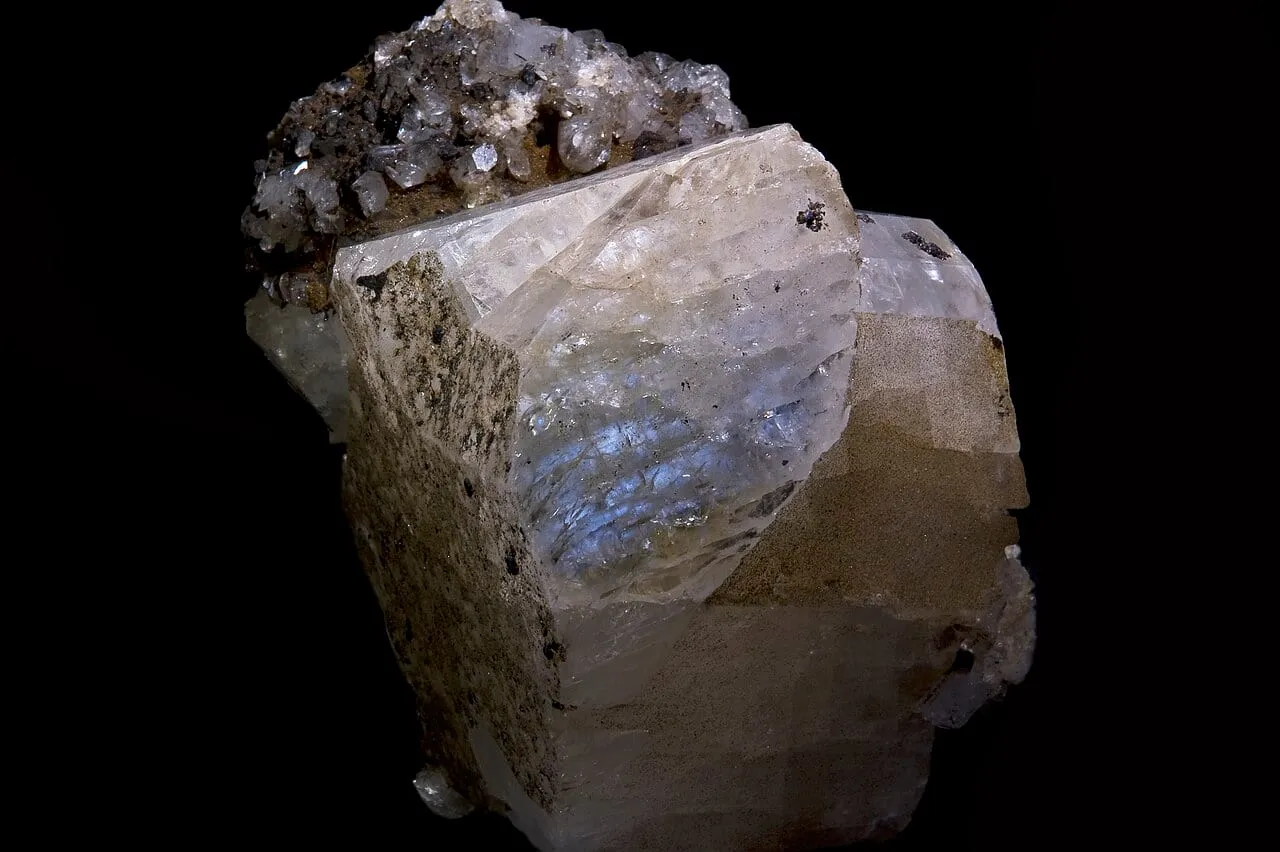

Sources
- Handbook of Mineralogy: Orthoclase · Mineralogical Society of America
- Mineral Commodity Summaries 2026: Feldspar and Nepheline Syenite · U.S. Geological Survey, 2026
- Çine asmasifi (GB-Anadolu) albit yataklarının jeolojisi ve kökeni (Uygun & Gümüşçü), MTA Dergisi 122: 25–32 · MTA Genel Müdürlüğü, 2000
External links
Draft: awaiting expert reviewReport an error ↗
On the same step
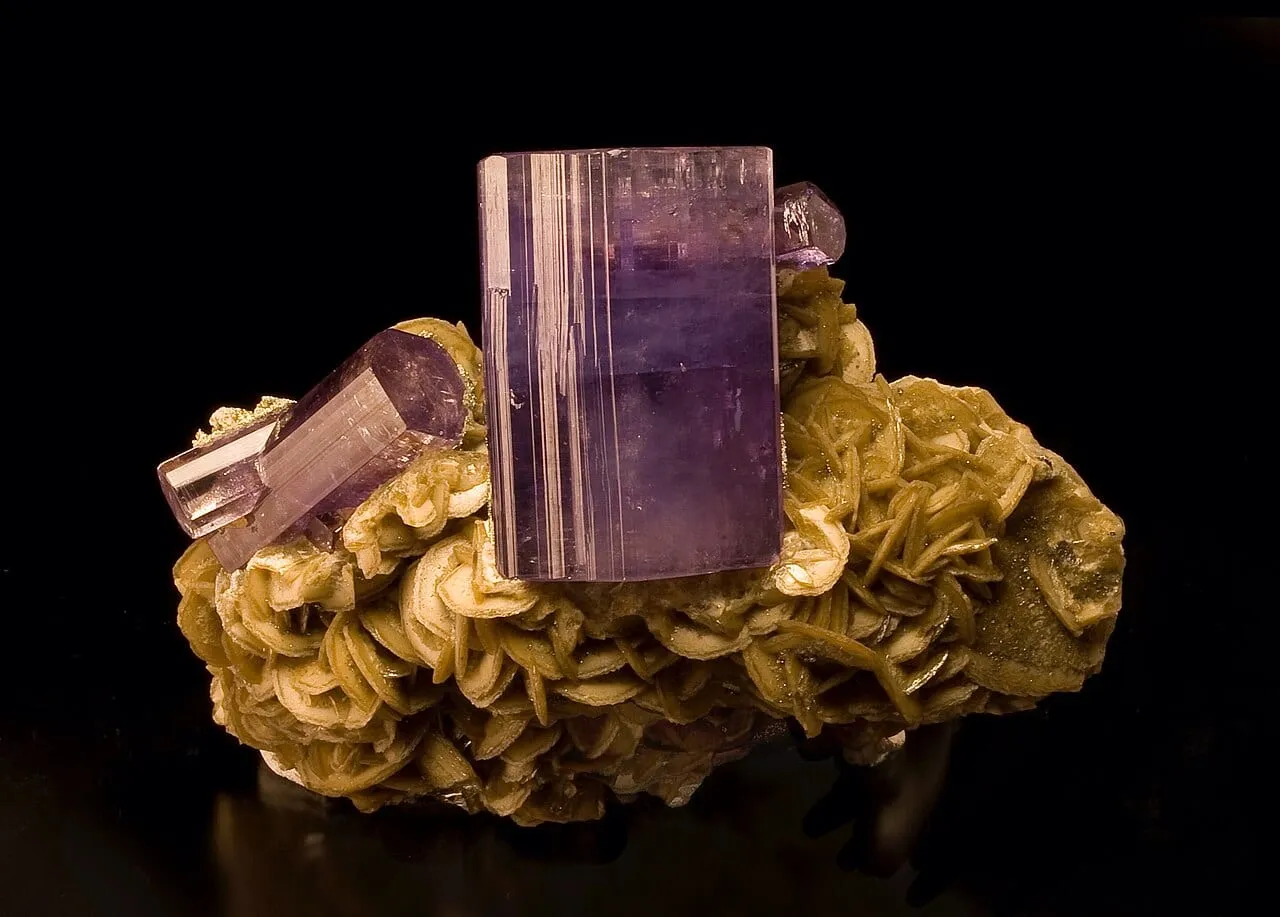
Apatite
A mineral cousin of our teeth and bones, the source of the phosphorus in fertilisers, and number 5 on the Mohs scale.
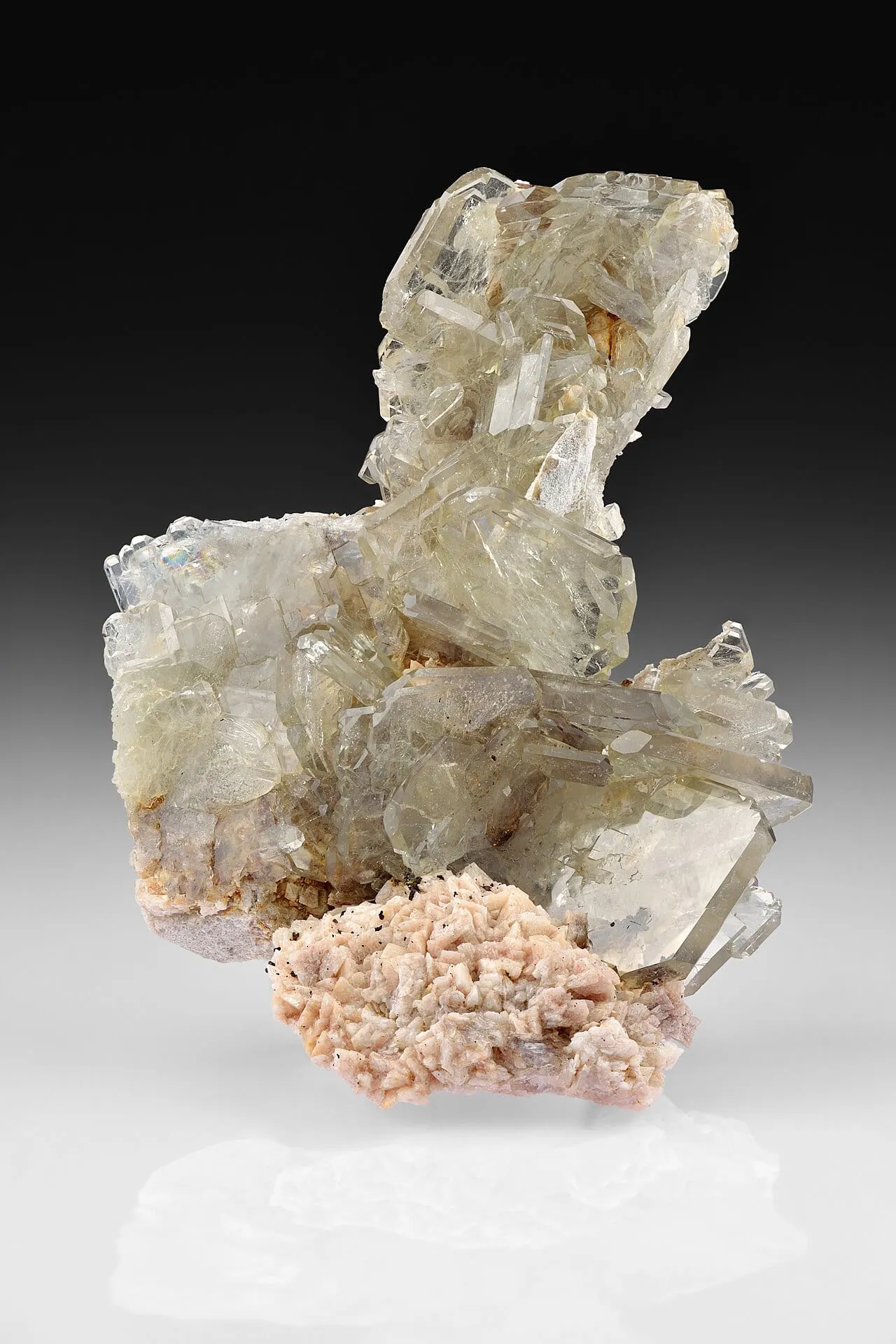
Baryte
A pale barium mineral that feels surprisingly heavy in the hand; even its name comes from the Greek word for heavy.
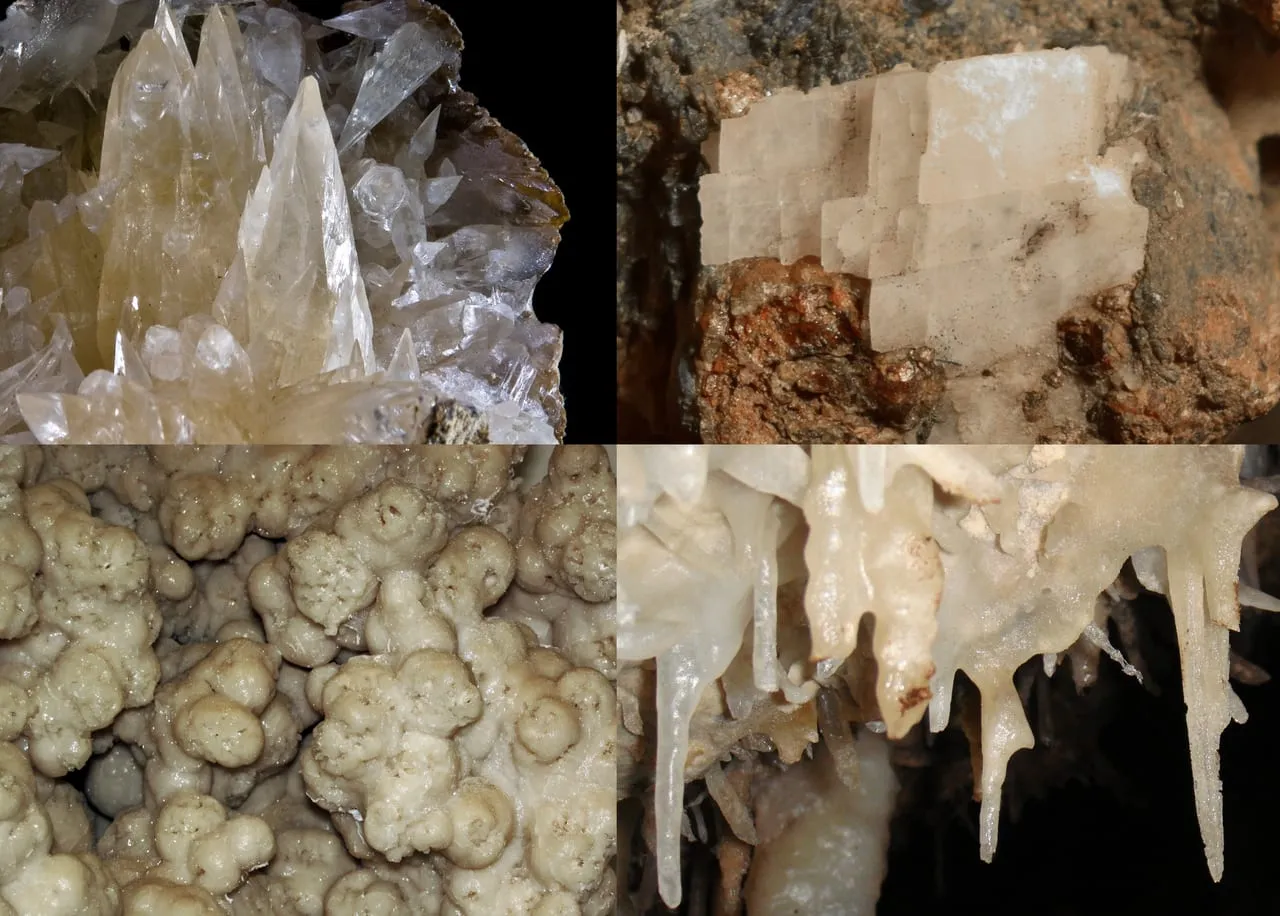
Calcite
The main mineral of limestone, marble and cave stalactites: it fizzes in acid, and its clear crystals show everything double.