Is my stone valuable? Rocks mistaken for gold, diamonds and meteorites
Most stones people find have no sale value. Pyrite or gold, quartz or diamond, slag or meteorite: simple tests, where to get a stone checked, and scam warnings.
The honest answer is this: the vast majority of stones found in nature have no sale value. The shiny yellow “gold” is usually pyrite, the clear “diamond” is quartz, and the heavy black “meteorite” is most often slag or an iron mineral. Still, a few simple tests at home will rule out the most common mistakes, and a stone you genuinely suspect can be examined by a geological institute or a university.
This article does not value your stone or quote prices. Its aim is to explain what to look for and whom to ask, and to protect you from scammers who tell you your stone is “worth millions”.
What makes a stone valuable?
Being beautiful and being valuable are not the same thing. For a stone to find a buyer, it usually needs:
- Rarity: Quartz, agate and calcite are abundant all over the world.
- Gem quality: It must let light through, have an attractive colour, be free of cracks and be large enough to cut. Most coloured stones found in nature are cloudy and fractured.
- Crystal quality: For collectors, well-formed, undamaged crystals and a known locality matter.
- A confirmed identity: Nobody pays much for a stone whose identity has not been documented by a laboratory.
Your stone may still have scientific or sentimental value even without a sale value. A genuine meteorite matters to science regardless of its size. For what “precious” really means, see what is a gemstone.
The most common mix-ups
| Thought to be | Usually is | How to tell |
|---|---|---|
| Gold | Pyrite, chalcopyrite, weathered mica | Streak colour and the pin test |
| Diamond | Quartz (rock crystal), glass | Crystal shape; scratching glass proves nothing |
| Meteorite | Slag, magnetite, hematite, iron oxide concretions, basalt | Streak colour, bubbles, fusion crust |
| Ruby, emerald, sapphire | Coloured glass, especially worn bottle glass from the beach | Gas bubbles under a loupe |
Pyrite and “gold”
According to the U.S. Geological Survey (USGS), “fool’s gold” can be one of three minerals: most often pyrite, then chalcopyrite, and weathered mica that glitters like gold (flakes of biotite, for example). Telling them apart is easy:
- Streak test: Rub the stone on unglazed porcelain (the back of a tile, for instance). Gold leaves a golden-yellow streak, pyrite and chalcopyrite dark green to black, and mica white.
- Pin test: Gold is as soft as lead; pressed with a metal point, it dents and gouges. Pyrite and chalcopyrite flake or crumble to powder, and mica peels off in flakes.
- Shape: Pyrite often forms sharp-edged cubes. Native gold usually appears as irregular flakes, grains or thin specks in a quartz vein.
Quartz and “diamond”
Almost all the clear, sparkling crystals found in nature are quartz. Quartz usually grows as six-sided prisms with pointed tips. Even the clear, double-pointed crystals sold in the United States as “Herkimer diamonds” are in fact quartz.
The belief that “if it scratches glass, it’s a diamond” is wrong: quartz is harder than glass and scratches it easily (see our Mohs hardness scale article for how hardness works). Whether a stone is a diamond can only be confirmed with a gemmologist’s instruments.
Is it a meteorite? Six tests
Arizona State University’s Center for Meteorite Studies reports that more than 90% of the people who contact it believing they have found a meteorite have actually found Earth rocks coated in dark desert varnish, slag, or iron ores such as magnetite and hematite. The tests below rule out most of these “meteor-wrongs”:
- Magnet: According to meteorite expert Randy Korotev of Washington University in St. Louis, about 95% of meteorites attract an ordinary magnet, because most contain iron-nickel metal. But rocks containing magnetite, and slag, attract a magnet too; this test only screens.
- Fusion crust: As a meteorite passes through the atmosphere its surface melts, leaving a thin, dark crust. The crust is rarely thicker than 1–2 mm and rusts to brown over time. Shallow dents resembling thumbprints (regmaglypts) may also cover the surface. Korotev notes that if a stone has no fusion crust, it is probably not a meteorite.
- Streak: Rub it on unglazed porcelain. Hematite leaves a reddish-brown streak, magnetite a grey-black one. A fresh meteorite leaves no streak; weathered ones may leave a faint orange-brown mark. A stone that leaves no streak but is full of bubbles inside is often slag.
- Bubbles: Very few stony meteorites have holes. A spongy, porous stone is most likely slag or a volcanic rock such as pumice.
- Weight: Meteorites are usually heavier than ordinary stones of the same size. Weight alone is not enough, though; iron oxide concretions and some Earth rocks are very heavy too.
- Interior: When a small corner is ground flat with a file, a real meteorite shows shiny flecks of metal inside. Chondrites, which make up about 86% of meteorites that fall, usually contain round grains 0.5–1 mm across (chondrules). Be careful, though: many Earth rocks contain round grains as well.
None of these tests is proof on its own. What shows that a stone is a meteorite is a laboratory analysis of its nickel content and minerals. A new meteorite receives an official name with the approval of the international Meteoritical Society, and the institution that classifies it keeps a small piece permanently (20 grams or 20% of the total mass, whichever is smaller). Iron meteorites, by contrast, are almost entirely metal and feel astonishingly heavy in the hand.
A real example from Türkiye: Sarıçiçek
On 2 September 2015 a meteorite shower fell on the village of Sarıçiçek in Bingöl province. According to a study published in 2019, 343 pieces with a total mass of 15.24 kg were documented, making it the first documented fall of a “howardite” meteorite; the pieces are thought to come from the asteroid Vesta. The meteorite hunt that followed in the village had a dark side: according to news reports from 2016, fake buyers took about 300 grams of fragments from villagers on the pretext of “taking samples” and disappeared.
Where can you get your stone checked?
- MTA Gemmology Laboratory (Türkiye): The Mineralogy-Petrography and Gemmology Unit of the Şehit Cuma Dağ Natural History Museum, run by the General Directorate of Mineral Research and Exploration (MTA) in Ankara, offers paid gemmological analysis of cut and rough stones. According to MTA’s paid services page, the application form, payment receipt and sample are sent by courier, and the report and sample are returned by post. Photographs of a sample can be emailed to gemoloji.lab@mta.gov.tr for a preliminary look. MTA also offers mineralogical and petrographic analyses for unidentified rocks.
- Universities: The geology department of your nearest university may recognise a stone at a glance or point you to the right specialist. Meteorite researchers in Türkiye are also based at universities.
- Outside Türkiye: Natural history museums, national geological surveys and university geology departments are the usual places to ask.
Before you ask, do the following:
- Do not break the stone or clean it with acid or a wire brush. These can destroy a meteorite’s fusion crust.
- Photograph every side clearly next to a ruler or a coin, and weigh it.
- Note where and when you found it. The find location is scientifically very valuable for a meteorite.
Scam warnings
- Do not trust “buyers” who value your stone from a photo. Nobody can determine a stone’s value from a picture; its identity must first be confirmed by a laboratory.
- Beware of anyone asking for money up front. People who say they will buy your stone but first ask you to pay an “analysis”, “certificate” or “appraisal” fee are a common scam. Arrange any analysis directly with an official institution.
- Do not hand your stone, or pieces of it, to strangers. As in Sarıçiçek, pieces taken as “samples” may never come back. If you leave a sample with an institution, ask for a written receipt.
- Check that a report is genuine. Fake laboratory reports circulate too; how to check one is explained in our fake gemstones guide.
- Be cautious when buying “meteorites” online. Many stones sold under that name are slag, magnetite or hematite.
Whether you may legally collect and sell what you found depends on the type of stone and where you found it; see is collecting stones legal? for the situation in Türkiye. If you would like to try identifying your stone yourself, our guide on how to identify a stone is a good place to start.
Quick questions, quick answers
How can I tell if a stone I found is valuable?
The honest answer first: the vast majority of stones found in nature have no sale value. Simple tests with a streak plate, a magnet and a loupe rule out the most common mistakes; to be sure, have the stone examined by a gemmological laboratory or a university geology department.
How can I tell gold from pyrite?
Rub the stone on unglazed porcelain: gold leaves a golden-yellow streak, pyrite a greenish-black one. Gold is soft and dents under a pin point; pyrite is hard and brittle and crumbles.
Is the rock I found a meteorite?
Most likely not. More than 90% of people who contact Arizona State University's meteorite centre believing they have found a meteorite have actually found Earth rocks such as slag, magnetite or hematite. Most real meteorites attract a magnet, have a thin black fusion crust and are not bubbly.
If a rock sticks to a magnet, is it a meteorite?
Not on its own. About 95% of meteorites attract a magnet, but so do slag and Earth rocks containing magnetite. A stone that does not attract a magnet at all, however, is unlikely to be a meteorite.
If a stone scratches glass, is it a diamond?
No. Quartz is also harder than glass and scratches it. Clear, six-sided crystals found in nature are almost always quartz; a diamond can only be confirmed with a gemmologist's instruments.
Where can I get my stone identified in Türkiye?
The gemmology laboratory of MTA's Şehit Cuma Dağ Natural History Museum in Ankara offers paid gemmological analysis of rough and cut stones and accepts photographs for a preliminary look. University geology departments can also help. Elsewhere, try a natural history museum, a geological survey or a university.
Stones in this guide
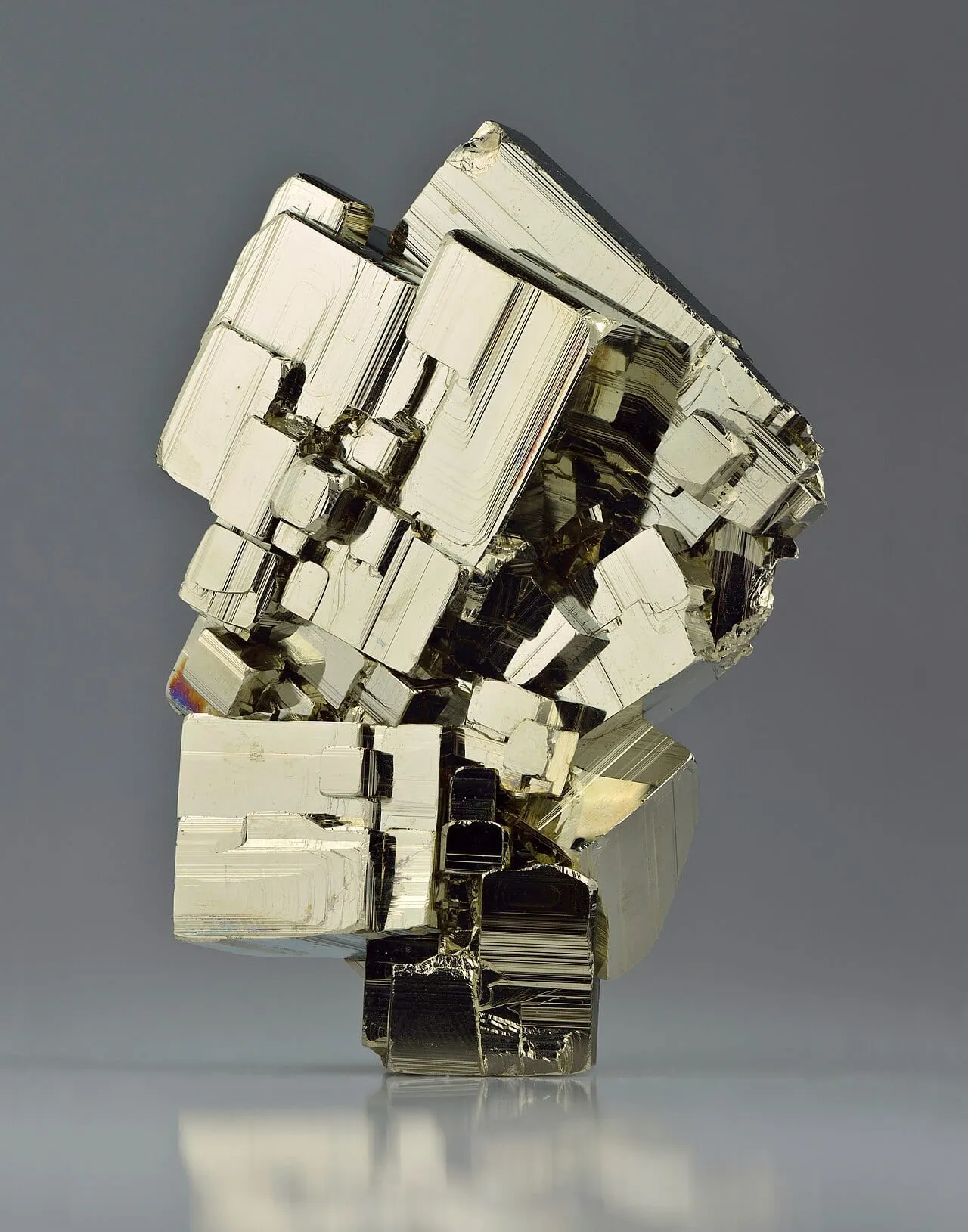
Pyrite
“Fool’s gold”: the most common sulfide mineral on Earth, looking like gold but far harder, more brittle and lighter.
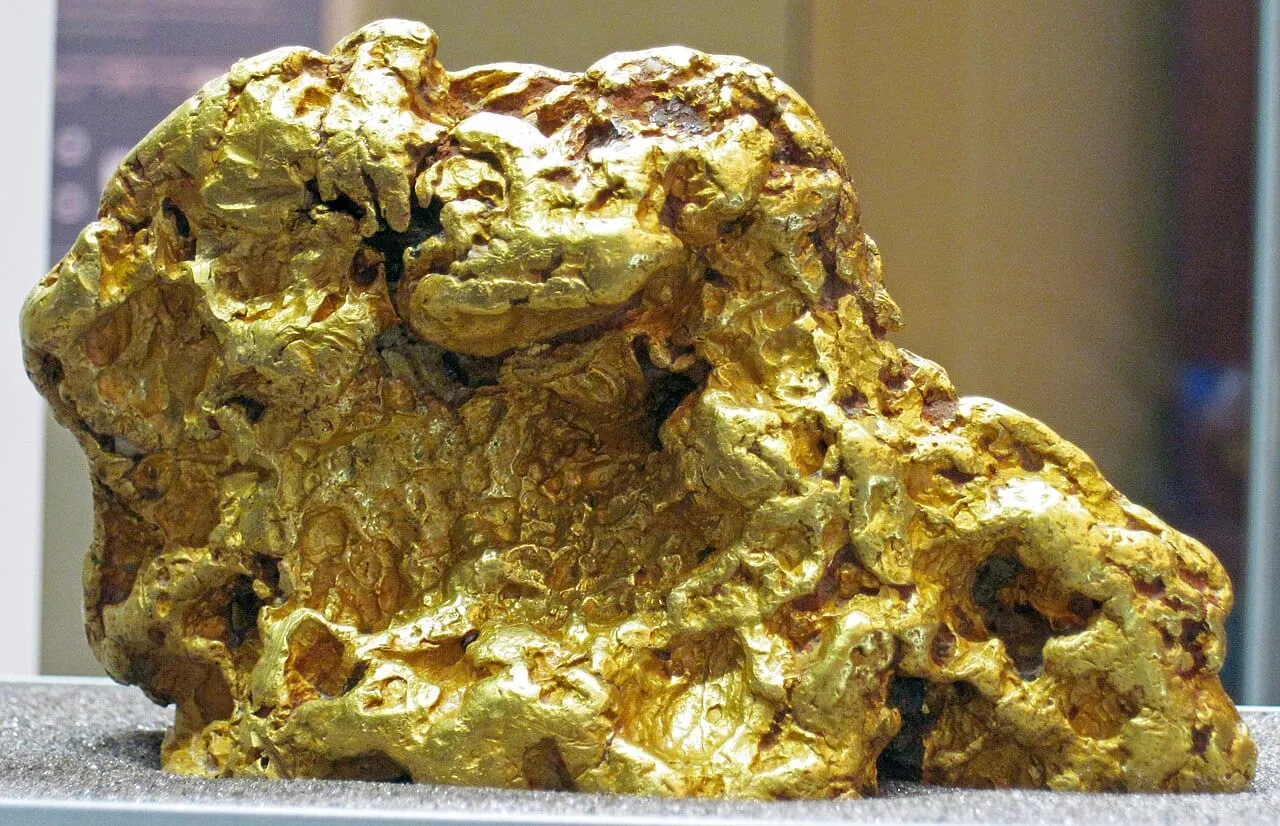
Gold
A heavy, bright yellow metal that occurs pure in nature, never tarnishes and can be hammered into sheets or drawn into wire.
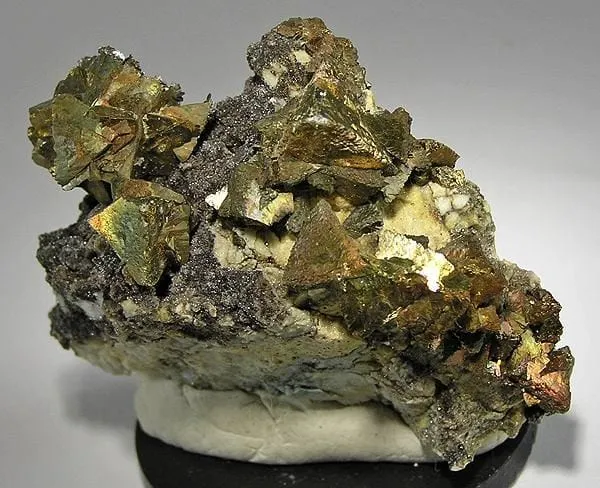
Chalcopyrite
The world’s most important source of copper: a brass-yellow sulfide that resembles gold and often tarnishes to rainbow colours.
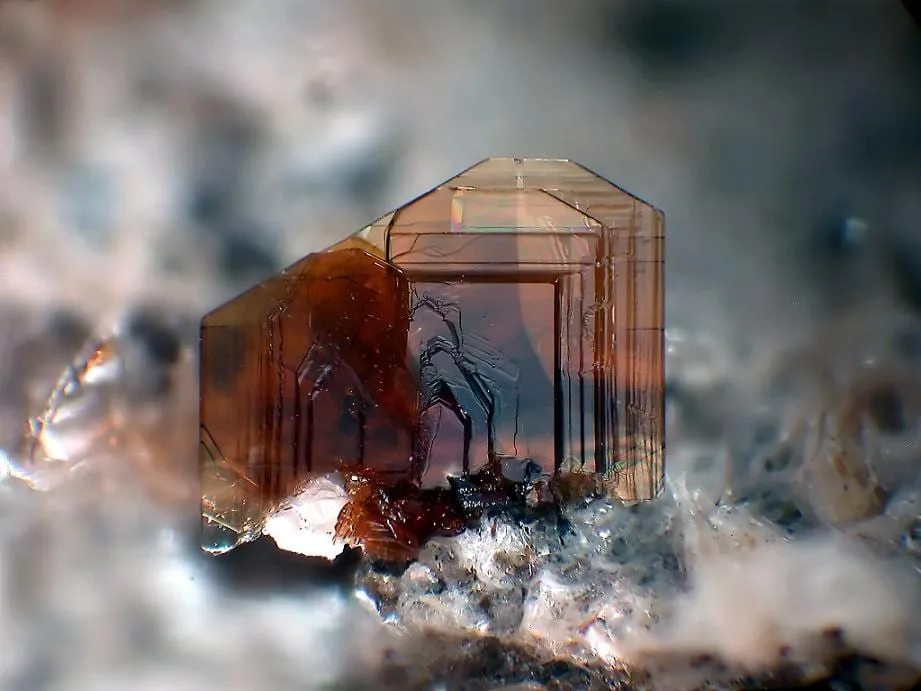
Biotite
The shiny black flakes in granite: a dark mica that peels into thin sheets and can glitter like gold as it weathers.
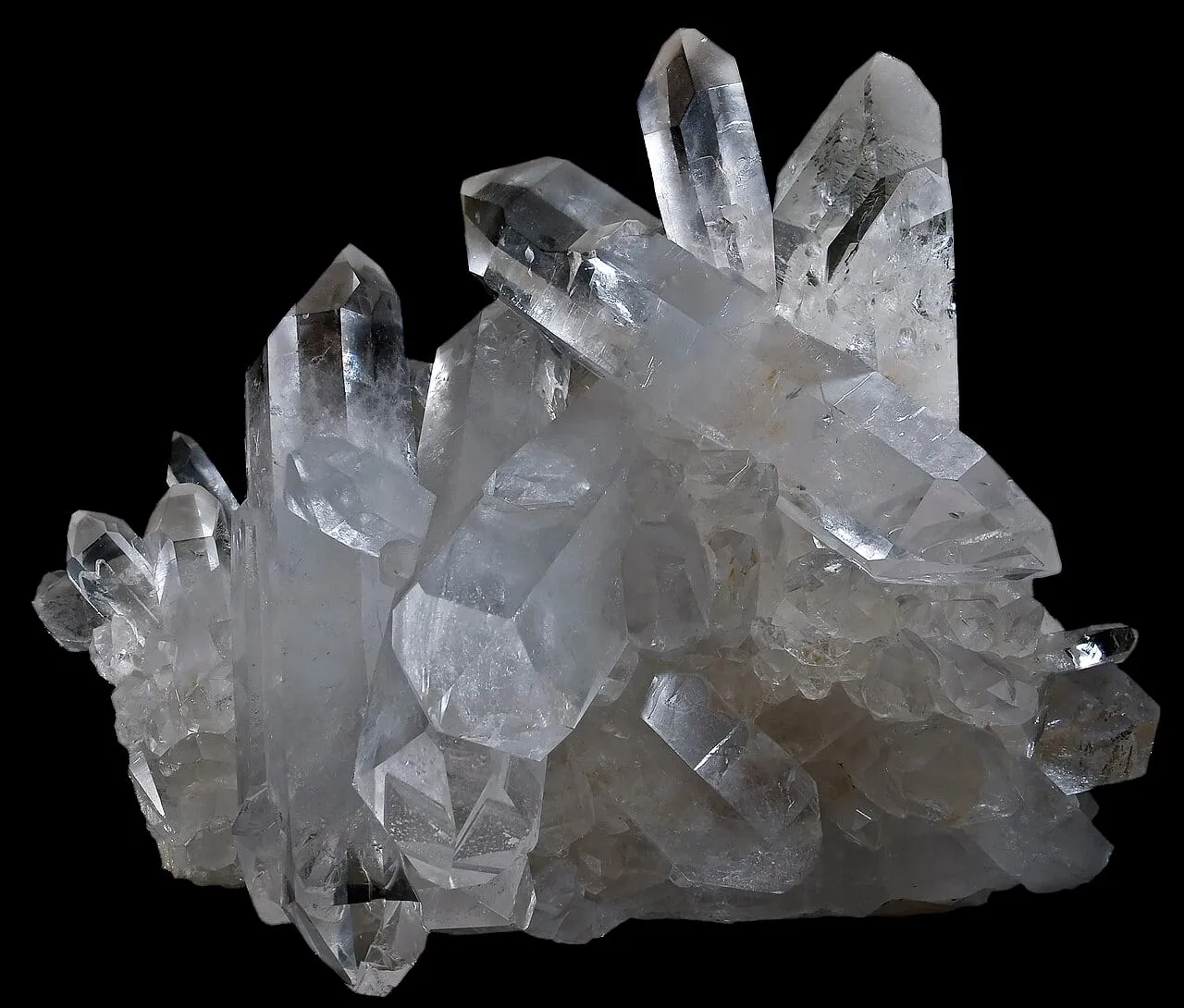
Quartz
The common root of sand, glass and amethyst — one of the most abundant minerals in Earth’s crust.
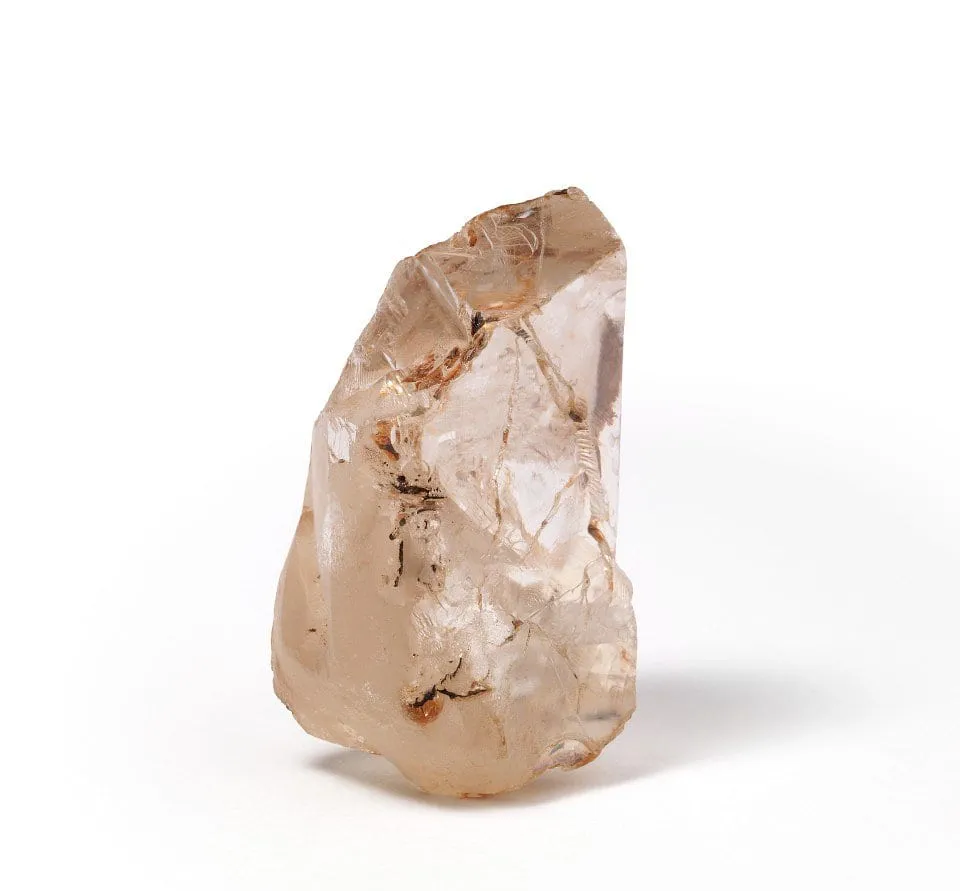
Diamond
Pure carbon and the hardest known natural mineral: it forms about 150–200 km deep and reaches the surface in volcanic eruptions.
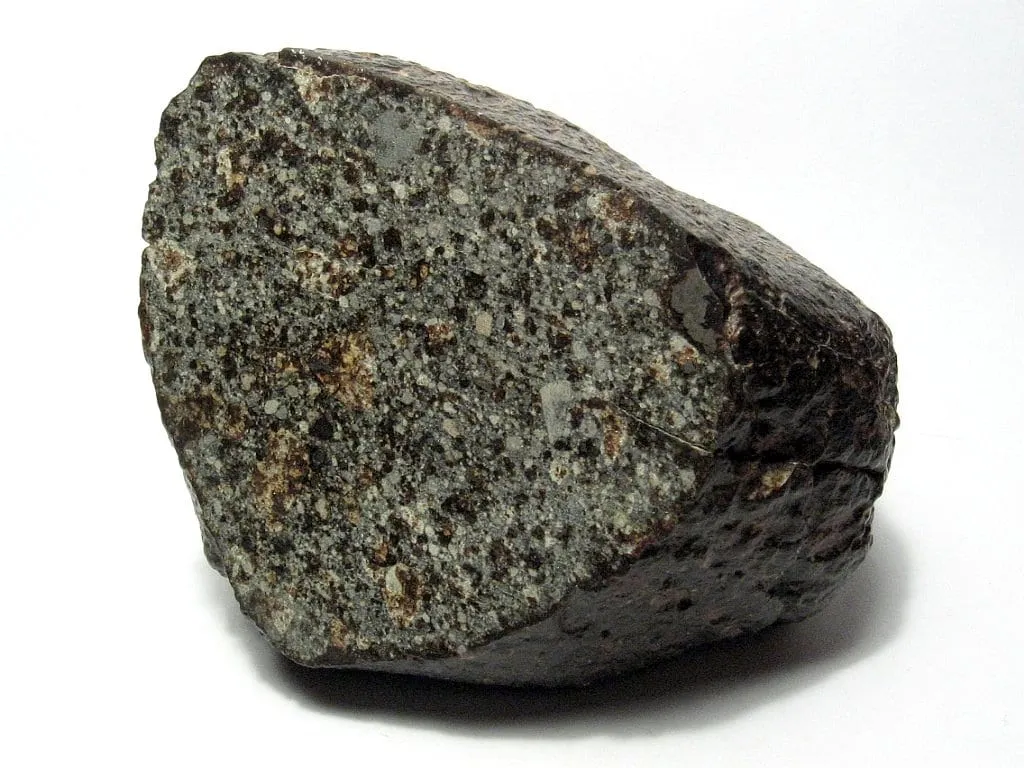
Chondrite
A leftover from the birth of the Solar System, full of tiny once-molten droplets, and the commonest kind of meteorite to fall to Earth.
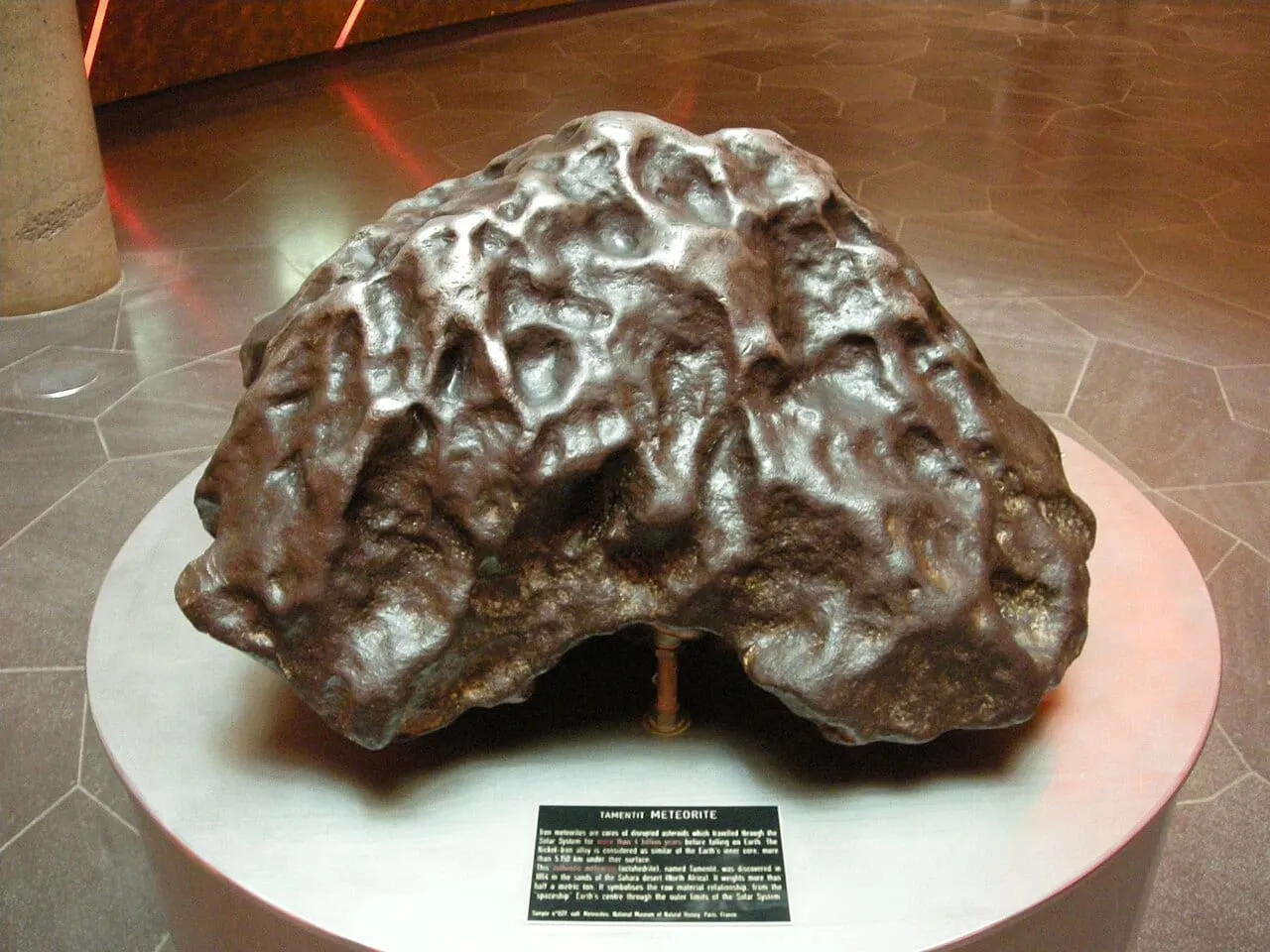
Iron meteorite
Masses of iron–nickel from the cores of shattered asteroids that reveal a unique crystal pattern when etched with acid.
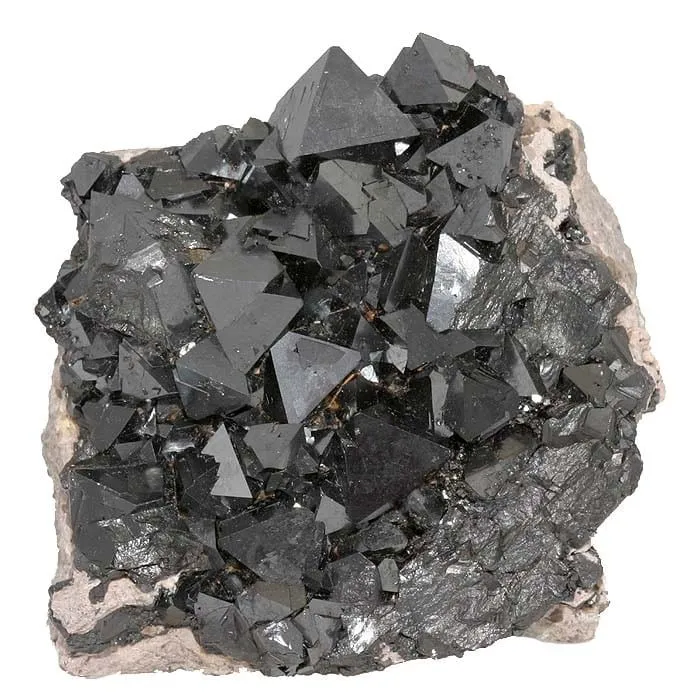
Magnetite
The black iron mineral that sticks to a magnet: its naturally magnetised pieces were the first magnets people knew.
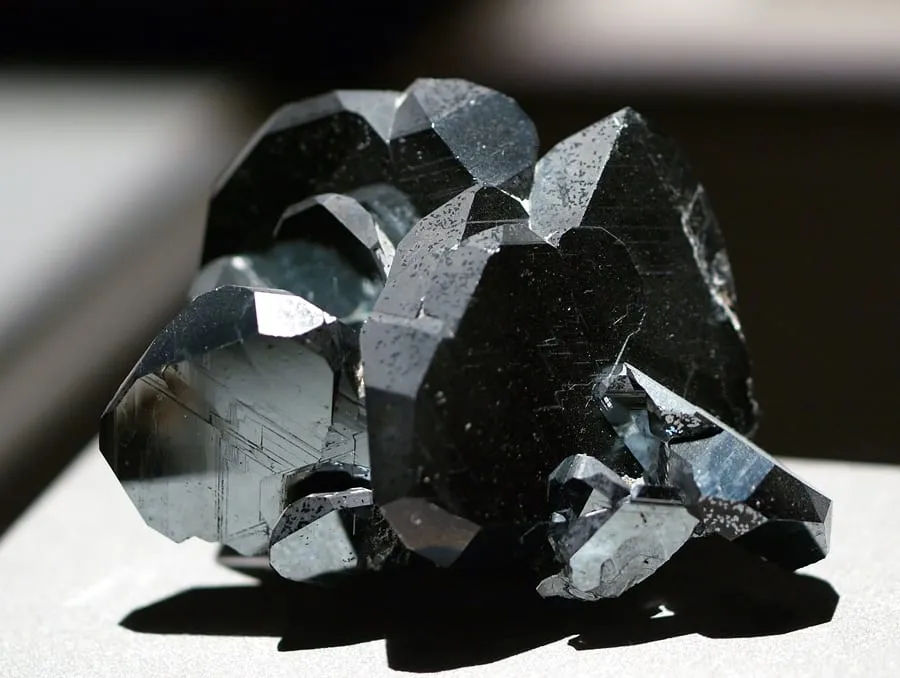
Hematite
Even when it looks black and metallic, its streak is blood red: one of the world’s most important iron ores.
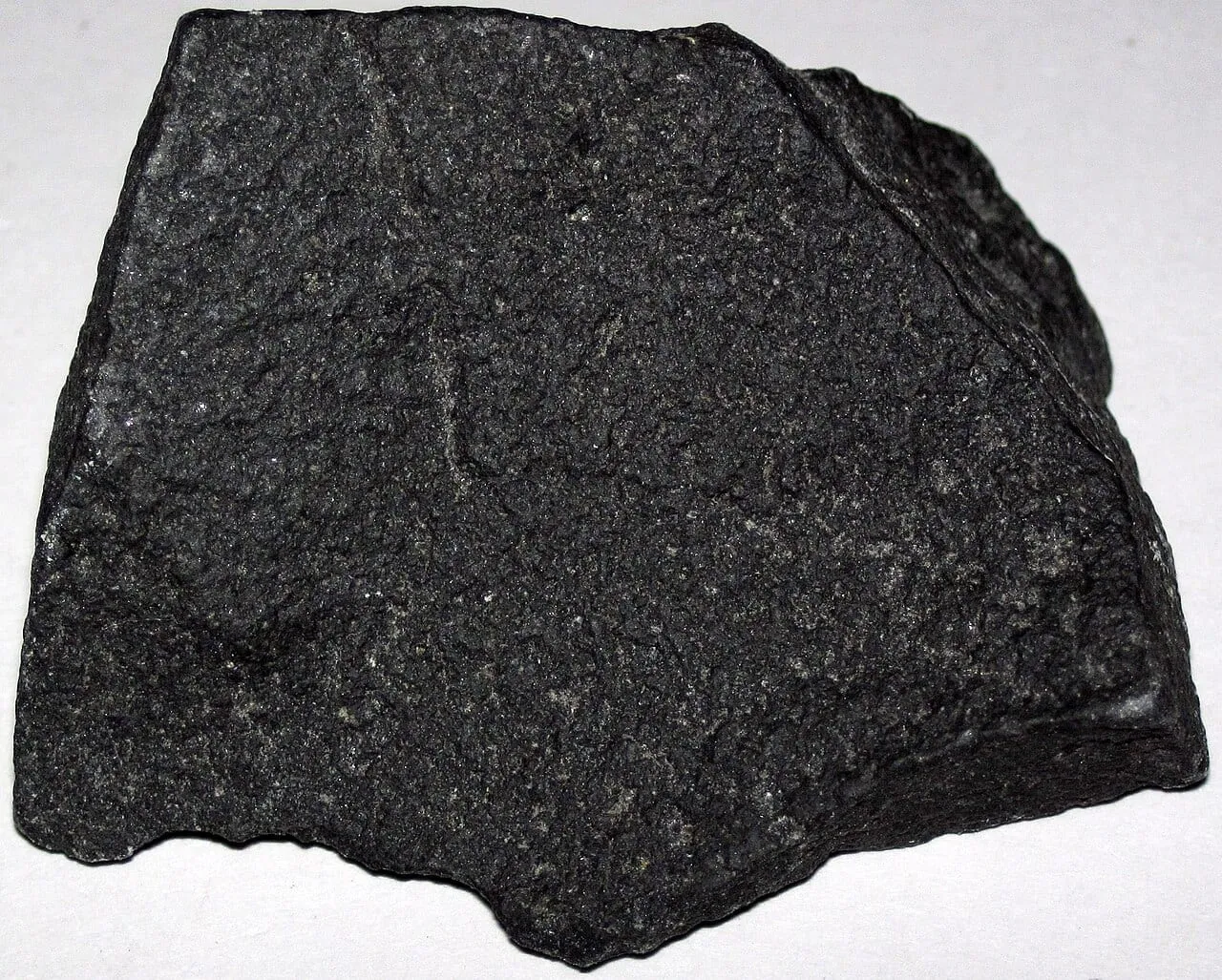
Basalt
The rock of the ocean floors and the Moon’s dark plains — the most common volcanic rock on Earth.
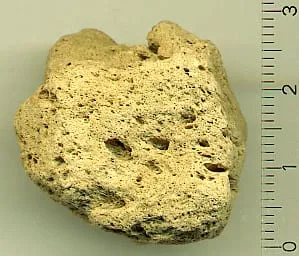
Pumice
The stone that floats: volcanic glass frothed up by gas in an eruption and frozen full of holes.
Sources
- What is fool's gold? · U.S. Geological Survey (USGS)
- Pyrite · Geology.com
- How can I find a meteorite? · Arizona State University, Buseck Center for Meteorite Studies
- Some meteorite realities (Randy Korotev) · Washington University in St. Louis
- Chondrite · Wikipedia
- Classification info (type specimen requirements) · University of Minnesota, Meteorite Collection
- The Sariçiçek howardite fall in Turkey: Source crater of HED meteorites on Vesta and impact risk of Vestoids (Unsalan et al.), Meteoritics & Planetary Science 54(5) · Meteoritics & Planetary Science, 2019
- Göktaşı ellerinde kaldı (The meteorites were left on their hands) · Haber7, 2016
- Ücretli İşler: Gemological analysis and application process · General Directorate of Mineral Research and Exploration (MTA), 2026
- Herkimer diamond · Wikipedia