Mineraloid
Opal
SiO₂·nH₂OOpal
Water-bearing silica with no crystal structure: in precious opal, tiny stacked spheres split light into flashes of rainbow colour.
Also known as: Precious opal (the form showing play-of-colour) · Fire opal (yellow to red form)
- Gemstone
- Ornamental
- Important in Türkiye

In short
Opal is a natural form of silica that contains some water and has no regular crystal structure, so it counts as a mineraloid rather than a mineral. Most opal is a single plain colour such as milky white, yellow or brown. Precious opal, however, shows patches of colour that change as the stone moves; this is called play-of-colour.
Where does play-of-colour come from?
Under an electron microscope, precious opal turns out to be made of tiny silica spheres of equal size, stacked in regular layers. The spheres and the gaps between them diffract light and, much like the surface of a CD, split white light into rainbow colours. The size of the spheres decides which colours appear. This structure was discovered by Australian scientists in the 1960s. “Common opal”, whose spheres are irregularly packed, shows no play-of-colour.
Where is it found?
Australia has long been the main source of precious opal: most black opal comes from Lightning Ridge in New South Wales, Coober Pedy and Andamooka in South Australia are major precious opal centres, and in Queensland opal fills cracks in ironstone boulders (“boulder opal”). In Australia, opal formed when silica left behind by evaporating water collected in cracks in the rock during dry periods; sometimes it replaced bones and shells to form opalised fossils. In the deposits found in Ethiopia in 2008 and in Mexico, opal forms inside volcanic rocks.
Opal in Türkiye
Yellow, orange and red fire opal found in rhyolitic volcanic rocks around Simav and Şaphane in Kütahya is known as “Simav fire opal”. Red and orange opal nodules of gem interest also occur in volcanic rocks of the Gümüldür area of İzmir.
Because opal contains water, it may crack with sudden changes in temperature or humidity, so it should be stored with care.
How to recognise it
- 1
In precious opal the colour patches change and shift with the viewing angle; this “play-of-colour” is opal's most distinctive feature.
- 2
It is softer than quartz (5.5–6.5) and feels noticeably lighter in the hand.
- 3
Fire opal is transparent to translucent, yellow, orange or red, and often shows no play-of-colour.
- 4
Looking at the side of a stone can reveal glued layers (doublets, triplets). Telling synthetic and imitation opal from natural opal with certainty needs a gem laboratory.
Fakes and imitations
What shops usually don’t tell you:
- Doublets and triplets: a thin slice of precious opal is glued onto a dark backing (doublet); a triplet adds a clear cap of quartz, glass or plastic on top. They must always be disclosed when sold.
- Synthetic opal: produced commercially since 1974. Under magnification its colour patches can look too regular, like “lizard skin” or “chicken wire”.
- Plastic (resin) and glass imitations: man-made materials that mimic play-of-colour; some are very convincing.
Did you know?
Opal was proclaimed Australia's national gemstone in 1993.
In 2008 NASA announced that opal had also been found on Mars; because opal forms with water, this is evidence that the planet once had water.
Where is it found?
Loading map…
- Lightning Ridge, New South Wales, Australia · Major depositSource of most of the world's black opal
- Coober Pedy, South Australia · Major depositOne of the best-known centres of precious opal mining
- Wollo, Amhara Region, Ethiopia · Major depositVolcanic deposits found in 2008; today a main opal source alongside Australia
- Querétaro, Mexico · Major depositThe most famous source of fire opal, in rhyolite
- Simav–Şaphane area, Kütahya, Türkiye · Known locality“Simav fire opal” in rhyolitic volcanic rocks; documented in scientific studies
Locations are approximate to protect sites. Red dots mark places in Türkiye. Open in the big map →
Sources
- Opal Description (Gem Encyclopedia) · GIA
- Opal · Australian Museum
- Australian national gemstone · Australian Government, Department of the Prime Minister and Cabinet
- Characteristics of opals from Simav, Turkey (Esenli, Kumbasar, Eren & Uz), Neues Jahrbuch für Mineralogie, Monatshefte 2001(3) · Schweizerbart, 2001
- The Gümüldür Fire Opal: Mode of Occurrence and Mineralogical Aspects (Karacık, Genç, Esenli & Göller), Turkish Journal of Earth Sciences 20(1) · TÜBİTAK, 2011
External links
Draft: awaiting expert reviewReport an error ↗
On the same step
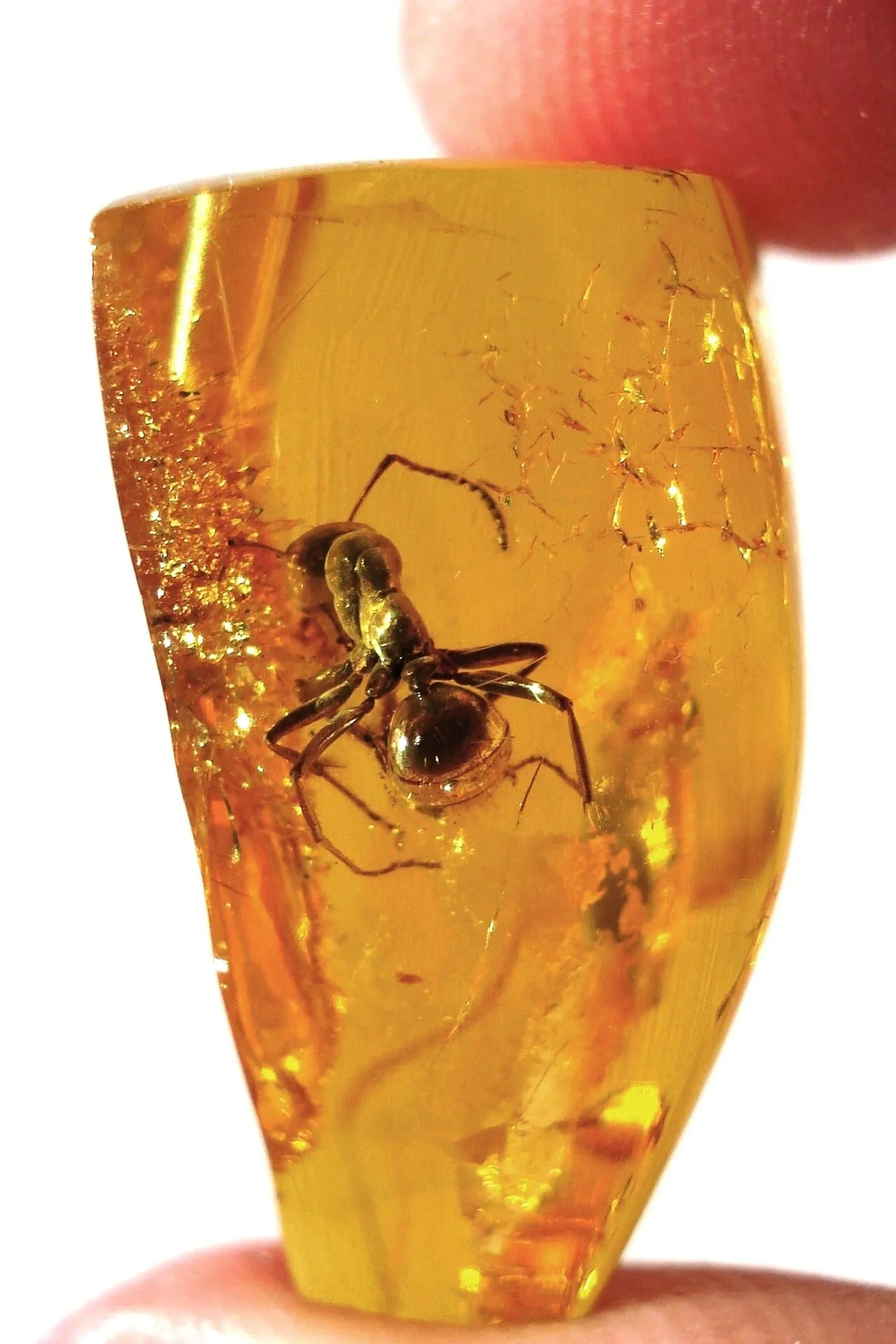
Amber
Tree resin fossilised over millions of years: a light, warm organic gem that sometimes holds prehistoric insects.
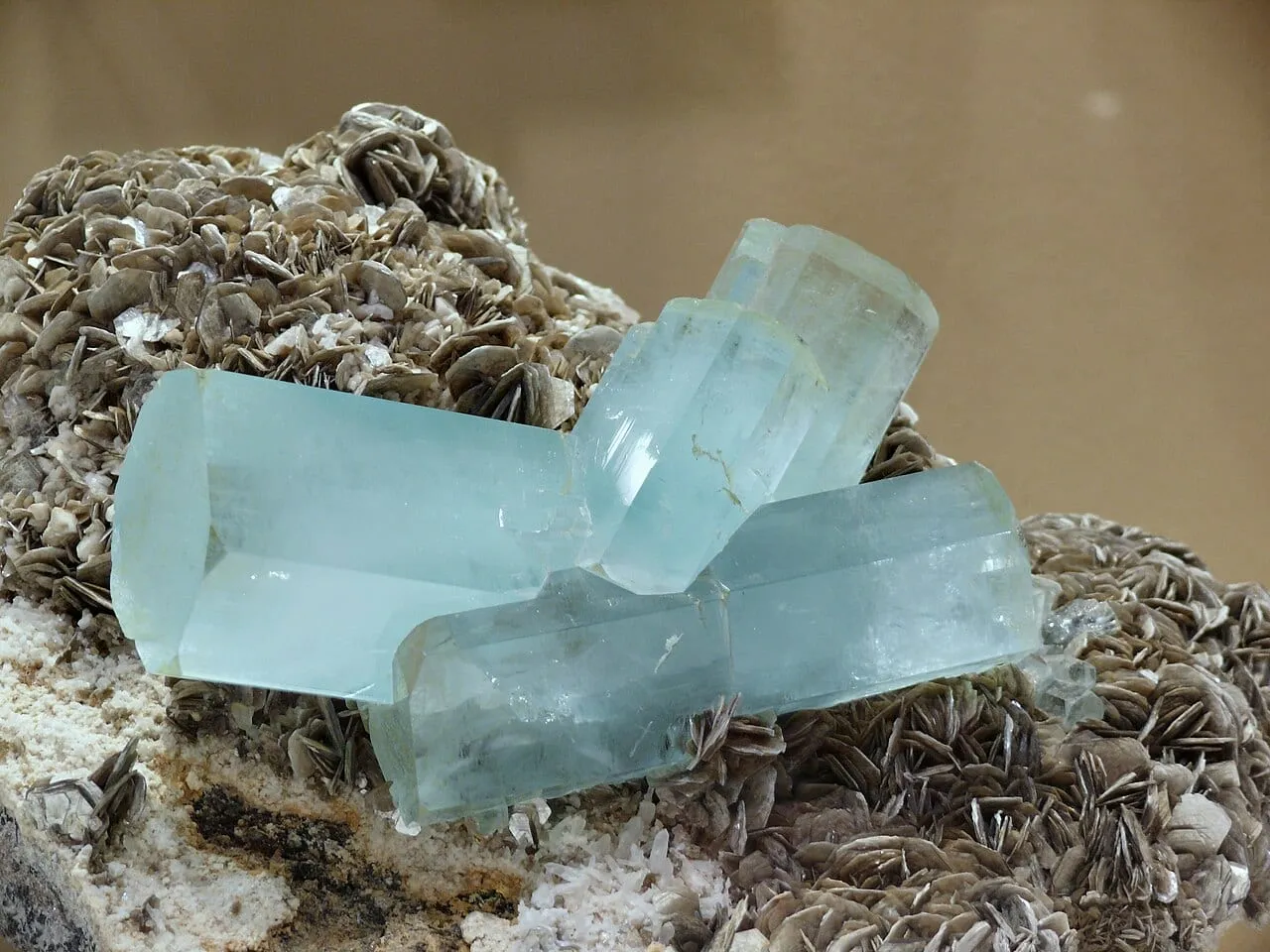
Aquamarine
The blue member of the beryl family, named after seawater: often found as large, clear, nearly flawless crystals.
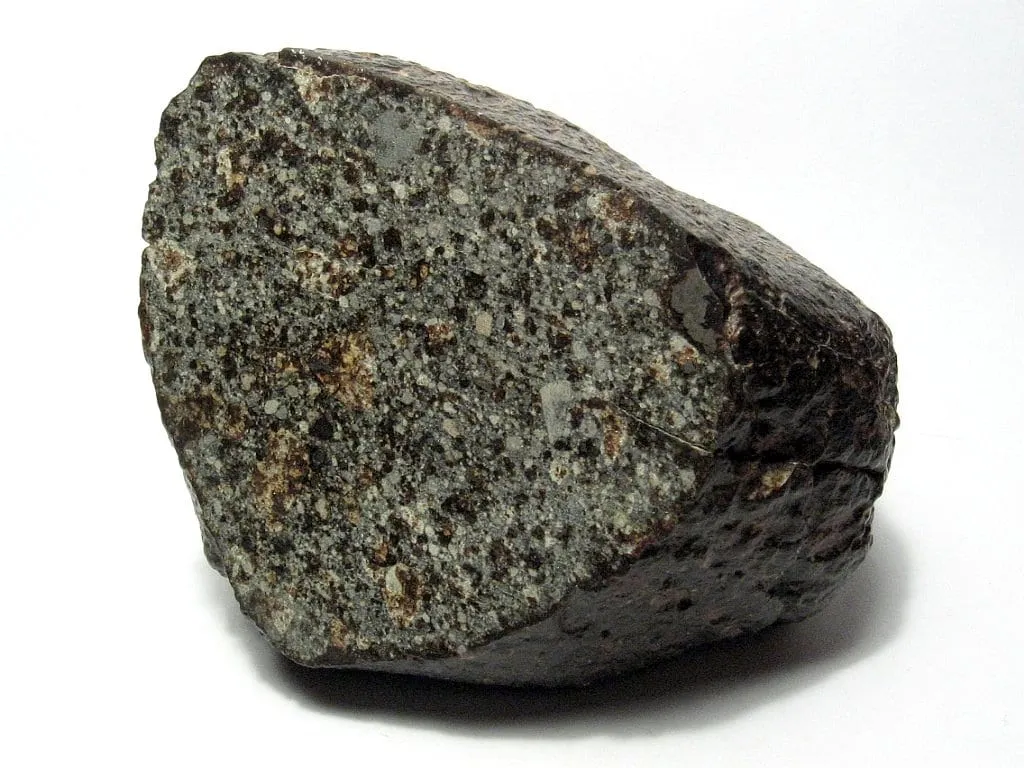
Chondrite
A leftover from the birth of the Solar System, full of tiny once-molten droplets, and the commonest kind of meteorite to fall to Earth.