Mineral
Gypsum
CaSO₄·2H₂OJips (alçıtaşı)
So soft a fingernail scratches it: the mineral behind plaster and plasterboard, which grows 11-metre giant crystals at Naica.
Also known as: Selenite (transparent crystals) · Satin spar (fibrous) · Alabaster (fine-grained, massive) · Desert rose (rosette-shaped clusters)
- Everyday
- Industrial
- Building stone
- Mohs scale mineral
- Important in Türkiye

In short
Gypsum is a soft mineral made of calcium sulfate and water. It usually forms when seawater or lake water evaporates. Heated to drive off most of its water, it becomes plaster; mixed with water again, the plaster hardens. This is where wall plaster and plasterboard come from.
How does it form?
Gypsum is found mostly in evaporite layers formed by the evaporation of water in enclosed seas, lagoons and lakes. When buried deep, it can lose its water and turn into anhydrite; when anhydrite comes back near the surface and takes up water, it becomes gypsum again. Gypsum also forms in sulfide ore deposits and through the action of volcanic gases.
What is it used for?
According to the U.S. Geological Survey (USGS), most of the gypsum consumed in the USA is used in plasterboard and plaster products, in cement production (to control setting) and in agriculture (as a soil conditioner). The name “plaster of Paris” comes from the old gypsum quarries of Montmartre hill in Paris.
In Türkiye
According to the USGS, Türkiye is among the world’s leading gypsum producers. About 5% of Türkiye’s land surface is covered by gypsum, and its largest area is the Sivas Basin. Because gypsum dissolves much faster than limestone, an impressive gypsum karst has developed there, with countless dolines (bowl-shaped hollows), sinkholes and caves.
How to recognise it
- 1
A fingernail scratches it (hardness 2); it is the reference mineral for 2 on the Mohs scale.
- 2
It has a perfect cleavage in one direction: transparent crystals (selenite) split into thin sheets that bend but do not spring back.
- 3
It does not fizz in acid, which tells it apart from calcite, which can look similar.
- 4
It feels warm and light in the hand; the fibrous variety (satin spar) has a silky sheen.
Fakes and imitations
What shops usually don’t tell you:
- Most of the silky sticks sold as “selenite” are actually satin spar, the fibrous variety of gypsum. Both are gypsum, but the naming is misleading.
- The name “alabaster” has historically been used for two different stones: fine-grained gypsum and banded calcite, used especially in ancient Egypt (“Egyptian alabaster”). Gypsum alabaster can be scratched with a fingernail; calcite cannot, and it fizzes in acid.
- “Desert rose” is used for rosette-shaped crystal clusters made of either gypsum or baryte.
Did you know?
The Cave of the Crystals in Mexico’s Naica mine contains selenite crystals up to 11 metres long. These giants grew extremely slowly in water at about 58 °C.
White Sands in the USA is the world’s largest gypsum dune field; its brilliant white dunes are made of gypsum grains, not quartz.
Where is it found?
Loading map…
- Naica, Chihuahua, Mexico · Known localityCave of the Crystals: giant selenite crystals up to 11 m long
- Sivas Basin, Türkiye · Major depositThe largest area of gypsum in Türkiye; gypsum karst with many dolines and sinkholes
- Montmartre, Paris, France · Historic sourceOld gypsum quarries behind the name “plaster of Paris”
- White Sands, New Mexico, USA · Known localityThe world’s largest gypsum dune field
Locations are approximate to protect sites. Red dots mark places in Türkiye. Open in the big map →
Sources
- Handbook of Mineralogy: Gypsum · Mineralogical Society of America
- Mineral Commodity Summaries 2026: Gypsum · U.S. Geological Survey, 2026
- Formation of natural gypsum megacrystals in Naica, Mexico · Geology 35 (4), 327–330 (García-Ruiz et al.), 2007
- Stratigraphy, Geochemistry and Depositional Environment of the Celestine-bearing Gypsiferous Formations of the Tertiary Ulaş-Sivas Basin, East-Central Anatolia (Turkey) · Turkish Journal of Earth Sciences 10 (1) (E. Tekin), 2001
- Relationships between rock mass properties of gypsum and doline formation · EGU General Assembly 2010, Geophysical Research Abstracts 12 (Keskin & Yılmaz), 2010
- White Sands National Park · U.S. National Park Service
External links
Draft: awaiting expert reviewReport an error ↗
On the same step
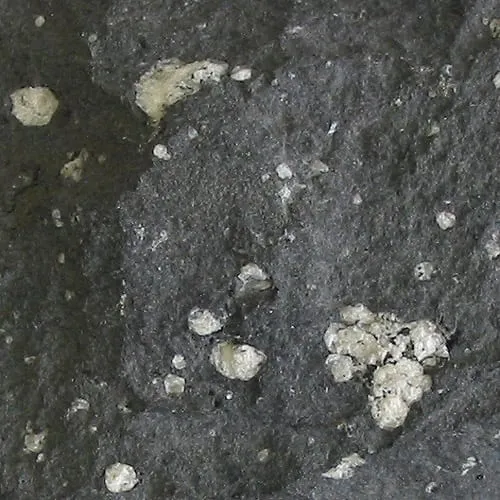
Andesite
The rock of volcanic arcs, named after the Andes — and the pink-grey stone of Ankara Castle.
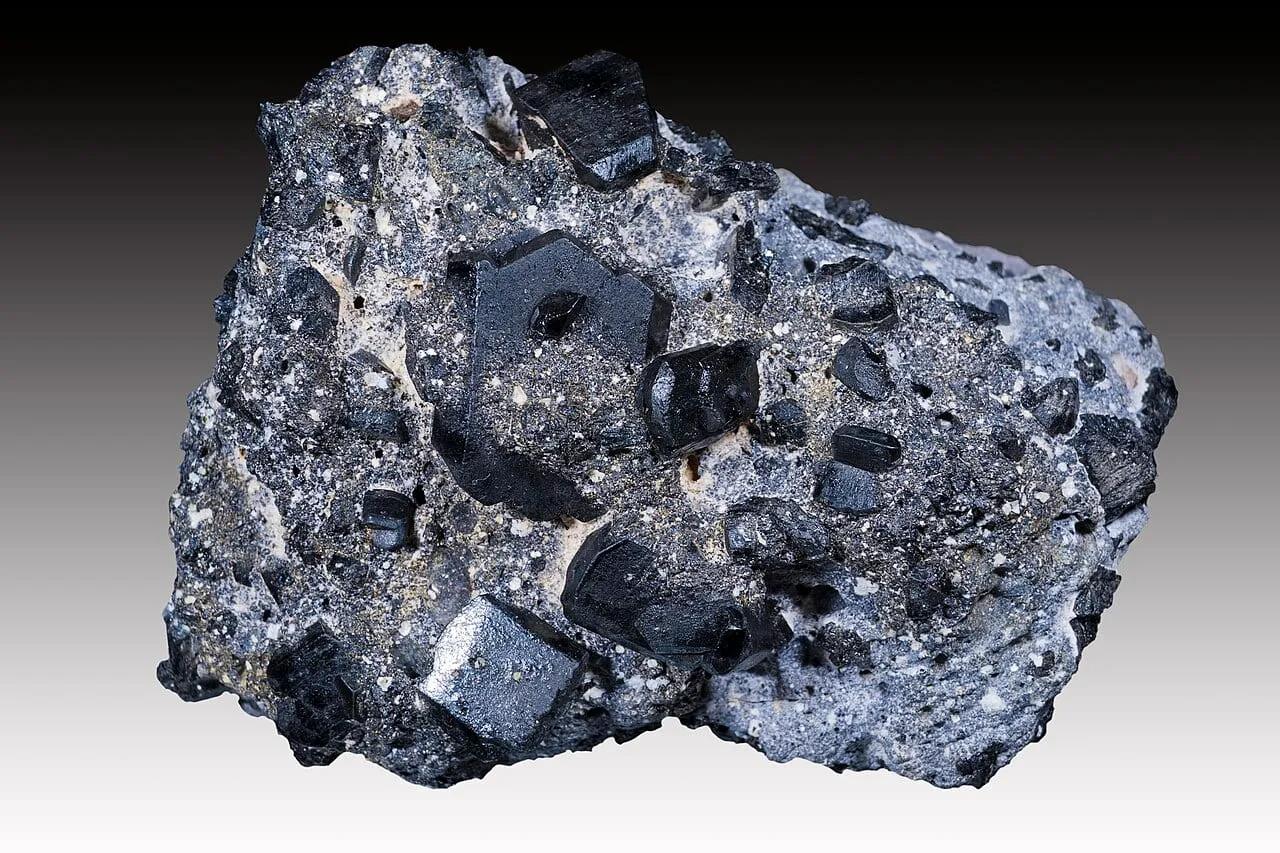
Augite (pyroxene)
The most common pyroxene, which darkens basalt and gabbro: inconspicuous, yet one of the key building blocks of Earth’s crust.
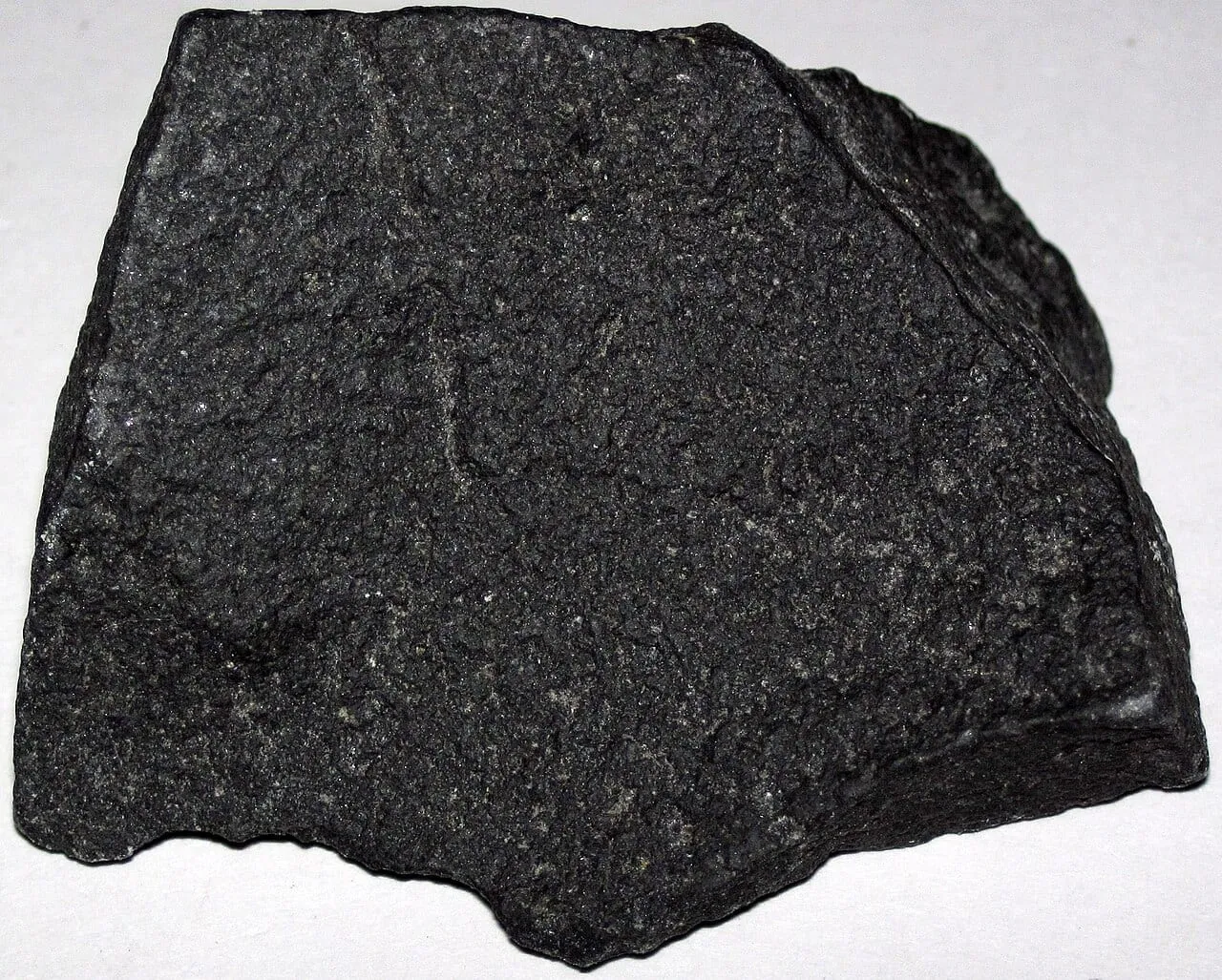
Basalt
The rock of the ocean floors and the Moon’s dark plains — the most common volcanic rock on Earth.