Rock
Travertine
Traverten
Hot springs turned to stone: the rock of Pamukkale's snow-white terraces and the walls of the Colosseum.
- Building stone
- Ornamental
- Important in Türkiye

In short
Travertine is a rock made of limy deposits left by spring water rich in calcium. When the water reaches the surface, carbon dioxide escapes into the air and lime settles out layer by layer. You can watch this happen today at Pamukkale in Denizli, and polished travertine is used in buildings and floors.
Photos

How does it form?
Groundwater picks up carbon dioxide and becomes slightly acidic, dissolving the limestone it flows through. This calcium-rich water often rises to the surface along faults as hot springs. As the pressure drops and the water cools, carbon dioxide escapes; the water can no longer hold all its dissolved calcium carbonate, and calcite settles out layer by layer. The flowing water builds little rims and pools, which is how the terraces of Pamukkale formed. Gas bubbles and plant remains trapped between the layers leave the cavities typical of travertine.
A more porous, softer variety that forms in cool water on mosses and plants is called tufa.
Travertine in Türkiye
In Türkiye, travertine means Denizli. The white terraces of Pamukkale, together with ancient Hierapolis, were inscribed on the UNESCO World Heritage List in 1988, and travertine is still forming there today.
Elsewhere in the province, thick beds of travertine laid down by ancient hot springs are quarried. Known for its cream and brown shades, the stone is registered as a designation of origin under the name “Denizli Traverteni”. Linear structures that quarrymen call “water paths”, visible on faces cut across the layers, are characteristic. Travertine from the Gölemezli area is mostly onyx-like, in honey and yellowish-green colours.
How to recognise it
- 1
Its surfaces and cut faces show holes (pores) of many sizes lined up along the layers.
- 2
It is banded in cream, beige and brown; depending on how it is cut, it shows a striped or a cloudy pattern.
- 3
It fizzes straight away when a drop of dilute hydrochloric acid is added.
- 4
A steel knife can scratch it, but it cannot scratch glass.
Fakes and imitations
What shops usually don’t tell you:
- Polished travertine is often sold as “marble” or “travertine marble”. In geology, though, marble is a metamorphic rock, while travertine is sedimentary.
- The holes in travertine slabs are commonly filled with coloured resin or cement (filled travertine). This is a widespread, accepted treatment, but sellers should state it clearly.
- Translucent, banded calcite stone in honey, yellow and green shades is sold as “onyx” or “onyx marble”; true onyx is a much harder variety of chalcedony (quartz).
- On travertine-look porcelain tiles the pattern is only on the surface and repeats every few tiles.
Did you know?
The name “travertine” comes from “lapis Tiburtinus”, “stone of Tibur”, the Roman name for the stone quarried near Tivoli (ancient Tibur).
The outer walls of the Colosseum in Rome are built largely of travertine.
Where is it found?
Loading map…
- Pamukkale, Denizli, Türkiye · Major depositSnow-white travertine terraces left by calcium-carbonate-rich water flowing from hot springs; travertine is still forming today. Inscribed on the UNESCO World Heritage List together with ancient Hierapolis in 1988.
- Denizli travertine basins (Honaz, Kocabaş), Türkiye · Major depositRegistered as a designation of origin, “Denizli Traverteni” (geographical indication no. 151); quarried around Ballık, Kocabaş, Gürlek, Karateke, Yenicekent and Gölemezli.
- Tivoli, Lazio, Italy · Historic sourceSource of the travertine the Romans called “lapis Tiburtinus”; the outer walls of the Colosseum are built of it.
- Mammoth Hot Springs, Yellowstone, USA · Known localityTerraced slopes where hot springs are depositing travertine today.
Locations are approximate to protect sites. Red dots mark places in Türkiye. Open in the big map →
Sources
- Travertine · Encyclopaedia Britannica
- Hierapolis-Pamukkale · UNESCO World Heritage Centre
- Denizli Traverteni — Coğrafi İşaret Tescil Belgesi (No. 151, Menşe Adı) · TÜRKPATENT
External links
Draft: awaiting expert reviewReport an error ↗
On the same step
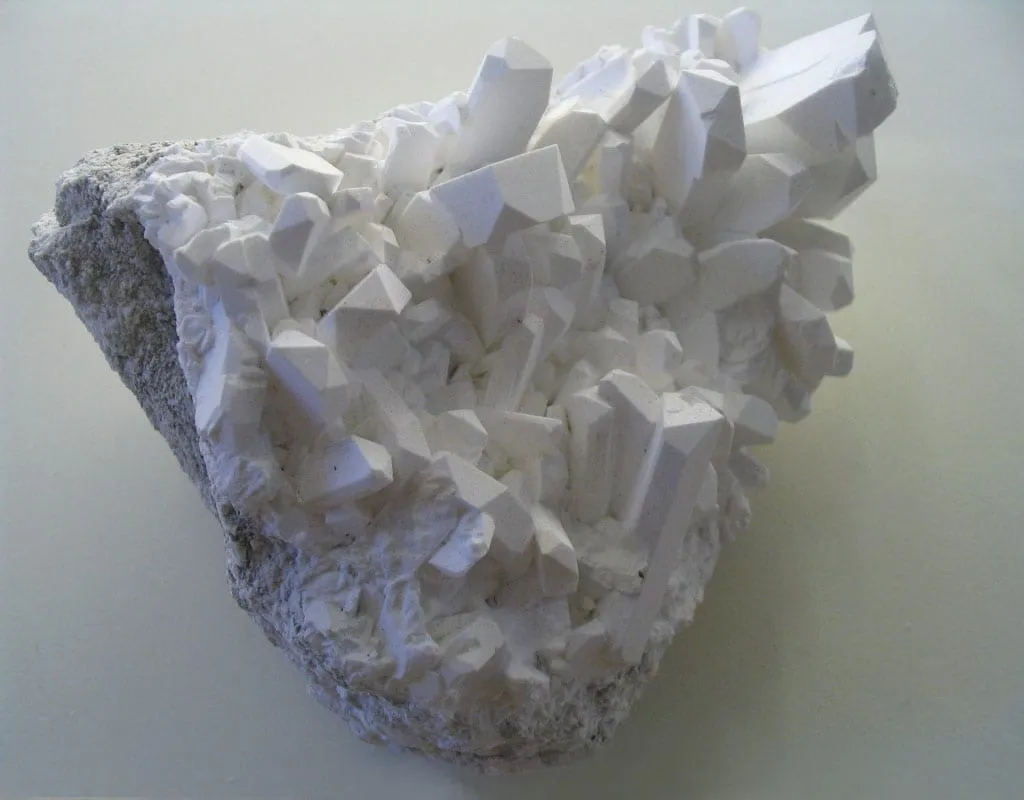
Borax (tincal)
A sodium borate that dissolves in water and crumbles to white powder in dry air; one of the world’s key tincal deposits is at Kırka in Eskişehir.
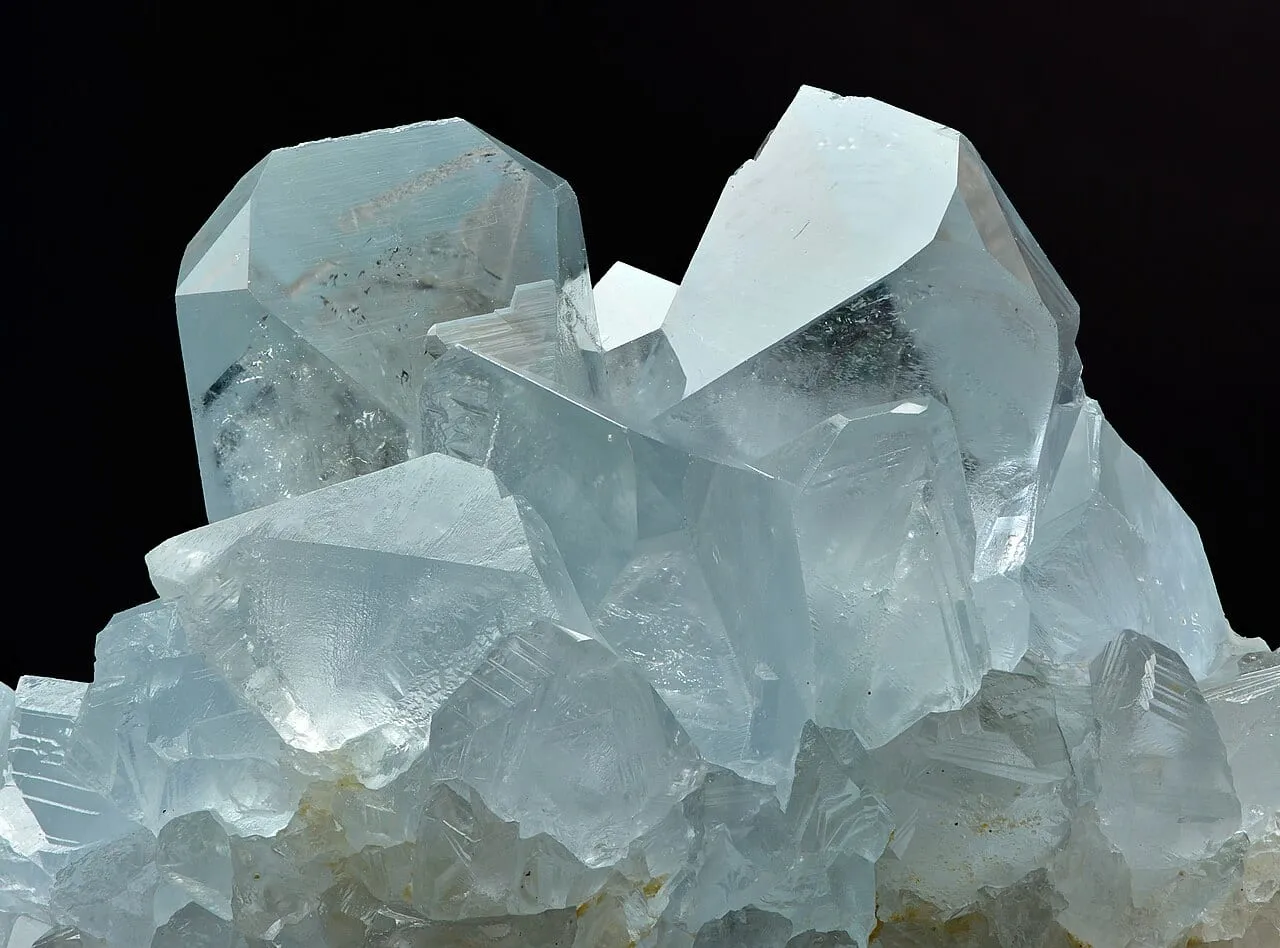
Celestine
A strontium mineral named after the sky, often forming pale blue crystals; the source of the red in fireworks.
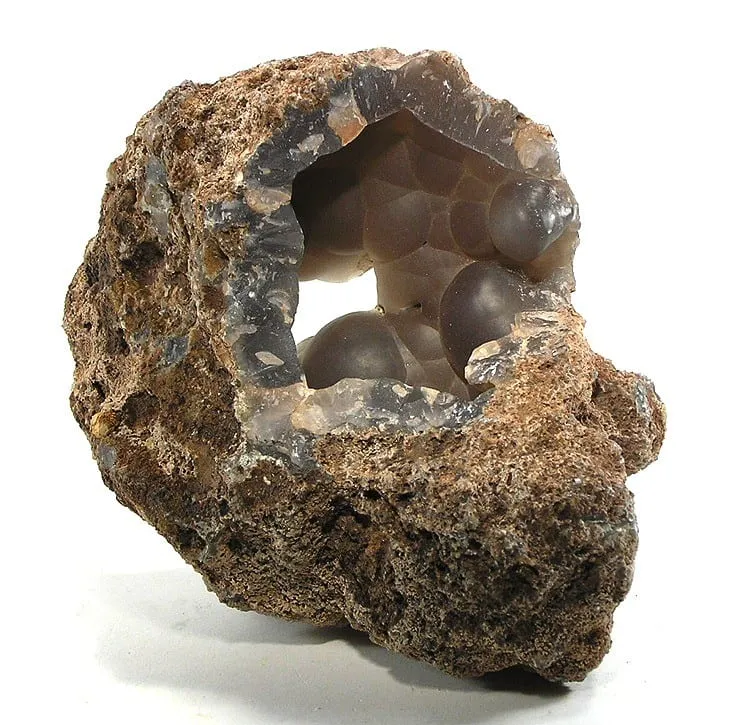
Chalcedony
A waxy-lustred stone made of quartz crystals far too small to see: the family name for agate, onyx and many other ornamental stones.