VarietyA variety of Quartz
Chalcedony
SiO₂Kalsedon
A waxy-lustred stone made of quartz crystals far too small to see: the family name for agate, onyx and many other ornamental stones.
Also known as: Microcrystalline quartz
- Ornamental
- Gemstone
- Important in Türkiye

In short
Chalcedony is a variety of quartz made of tiny, fibrous quartz crystals that are hard to make out even under a microscope. It has no flat crystal faces and occurs as nodules, veins and cavity fillings. It is translucent with a waxy lustre, and its banded forms are called agate and onyx.
How does it form?
Chalcedony forms when silica-rich waters seep into cracks and hollows in rocks. The silica is first deposited as a disordered, gel-like material and then turns into very fine quartz fibres, growing layer by layer. This produces nodules that fill gas cavities in volcanic rocks, veins that fill cracks, and bubbly crusts. When the layers vary in colour and transparency the stone is called agate; when the bands are straight and parallel it is called onyx.
How is it different from quartz?
Chalcedony is quartz too, but its crystals are so small that they can only be seen with a microscope. That is why it has a waxy lustre instead of the glassy lustre of large quartz crystals, is usually translucent, and has a slightly lower density. It is a little softer than quartz but much tougher and does not break easily. Tiny pores between its fibres soak up dye, so it is easy to colour.
Chalcedony in Türkiye
The deposit in the Sündiken Mountains near Mayıslar, in the Sarıcakaya district of Eskişehir, is the largest and richest source of the translucent blue chalcedony also known on the world market as “Turkish blue chalcedony”; it is reported to have been worked since ancient times. Violet chalcedony, chrysoprase and agate nodules occur in the same area. The Tokat region is also known for ornamental stones such as chalcedony, agate and jasper.
How to recognise it
- 1
It is almost as hard as quartz (6.5–7): it scratches glass, and a steel knife cannot scratch it.
- 2
Broken surfaces look waxy or dull; when polished it takes on a glassy shine. Light passes through its thin edges.
- 3
It shows no crystal faces and occurs as rounded nodules, bubbly (botryoidal) crusts or veins.
- 4
It does not fizz in dilute acid, which separates it from similar-looking banded stones made of calcite or aragonite.
Fakes and imitations
What shops usually don’t tell you:
- Dyed chalcedony: because it is porous it takes dye easily, and the colour of commercial chalcedony is often changed by dyeing or heating. Very vivid blues, greens, pinks and purples are usually dyed and should be disclosed.
- Banded calcite and aragonite (“onyx marble”): can look like chalcedony, but a steel knife scratches it easily and it fizzes in acid.
- Glass imitations: softer than chalcedony and may show round air bubbles inside.
Did you know?
Its name is thought to come from the ancient city of Chalcedon, today the Kadıköy district of Istanbul.
Most chalcedony also contains moganite, a mineral with the same composition as quartz but a different crystal structure, which slowly turns into quartz over time.
Where is it found?
Loading map…
- Sarıcakaya (Mayıslar–Sündiken Mountains), Eskişehir, Türkiye · Major depositThe largest and richest deposit of the translucent blue chalcedony known as “Sarıcakaya blue chalcedony”; violet chalcedony, chrysoprase and agate nodules also occur nearby.
- Rio Grande do Sul, Brazil · Major depositChalcedony and agate filling cavities in basalt lava flows
- Khambhat (Cambay) area, Gujarat, India · Historic sourceAn ancient centre of carnelian and agate bead-making
Locations are approximate to protect sites. Red dots mark places in Türkiye. Open in the big map →
Varieties
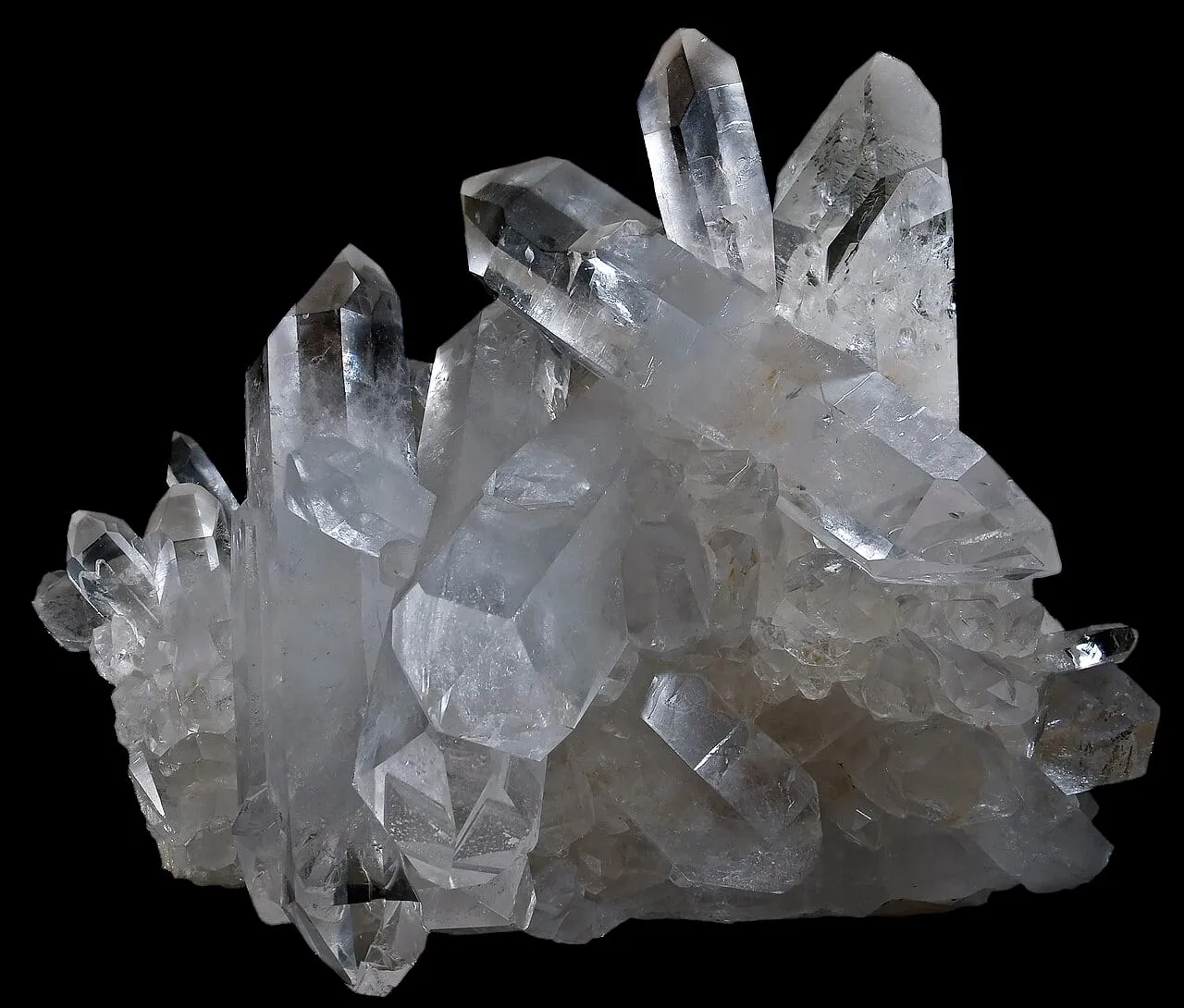
Quartz
The common root of sand, glass and amethyst — one of the most abundant minerals in Earth’s crust.
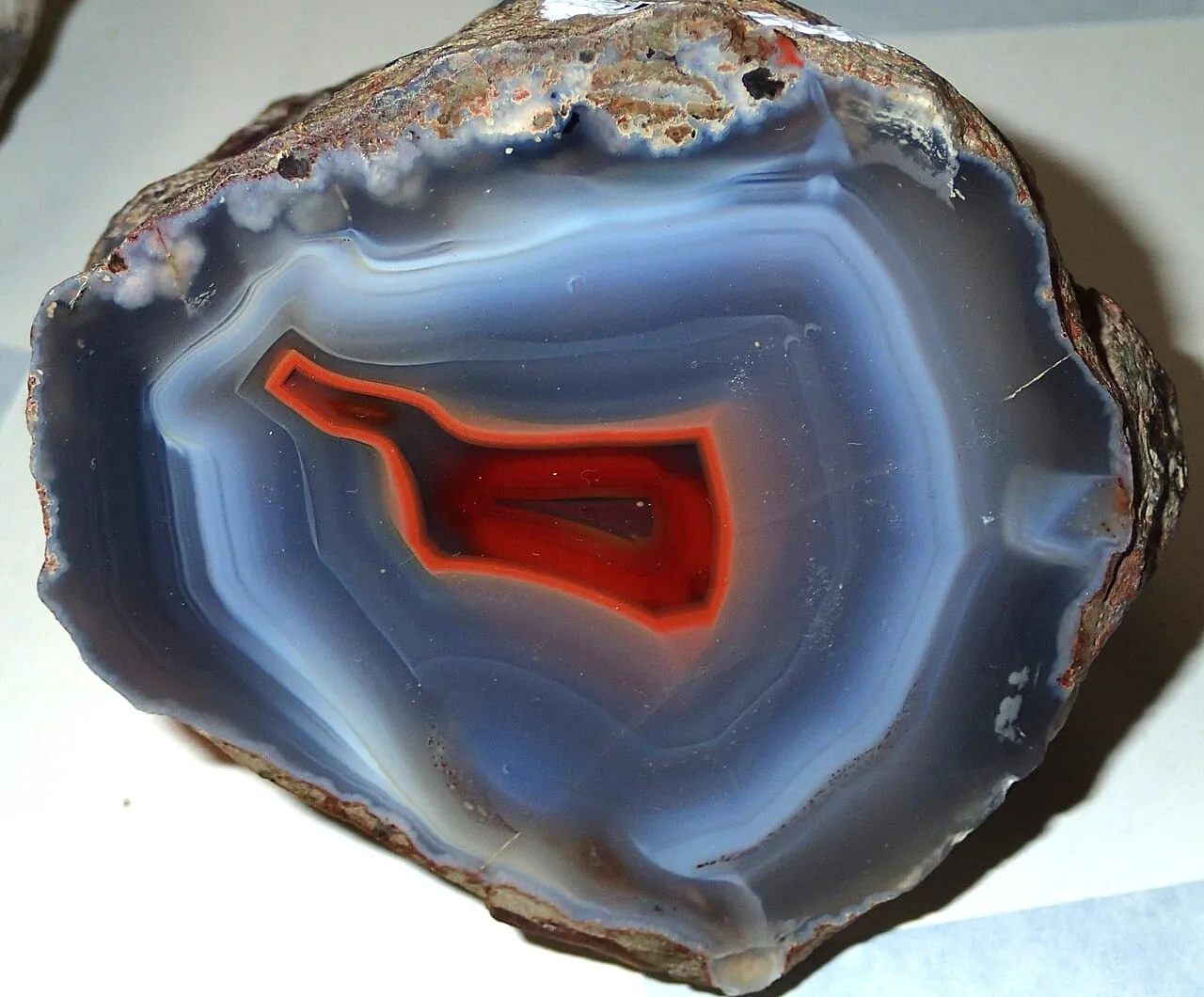
Agate
The banded variety of chalcedony: it grows layer by layer in hollows in volcanic rock and shows a new pattern every time it is cut.
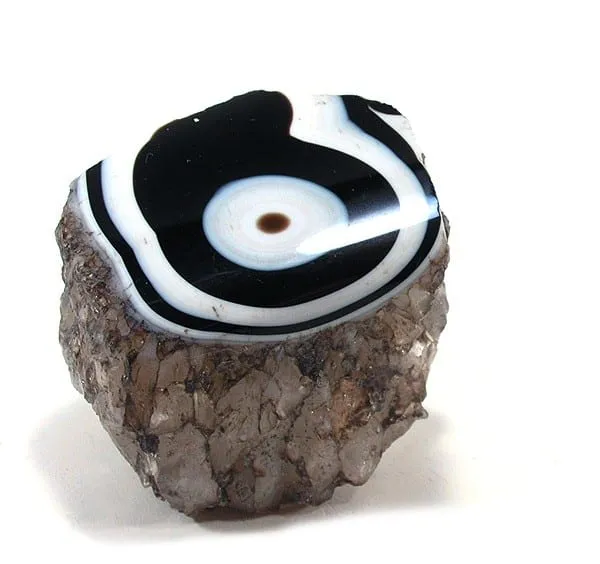
Onyx
Chalcedony with straight black and white bands. Most souvenirs sold as “onyx” in Türkiye, however, are really banded calcite.
Sources
- Chalcedony · Encyclopaedia Britannica
- Mineralizations in the Sündikendağı deposit in the Mayıslar-Sarıcakaya (Eskişehir) Region; Gem Blue Chalcedony and Metallic Ore Outcrops (Hatipoğlu, Kibici & Chamberlain) · TMMOB Jeoloji Mühendisleri Odası
- Authentic Semi-precious and Precious Gemstones of Turkey: Special Emphasis on the Ones Preferred for Prayer Beads (Çiftçi, Selim & Sendir) · Springer Proceedings in Earth and Environmental Sciences, 2019
- Döllük ve Gümenek (Tokat-Türkiye) Kalsedonlarının Jeokimyasal Özellikleri (Arık & Ruşen), Türkiye Jeoloji Bülteni 65(3) · TMMOB Jeoloji Mühendisleri Odası, 2022
External links
Draft: awaiting expert reviewReport an error ↗
On the same step
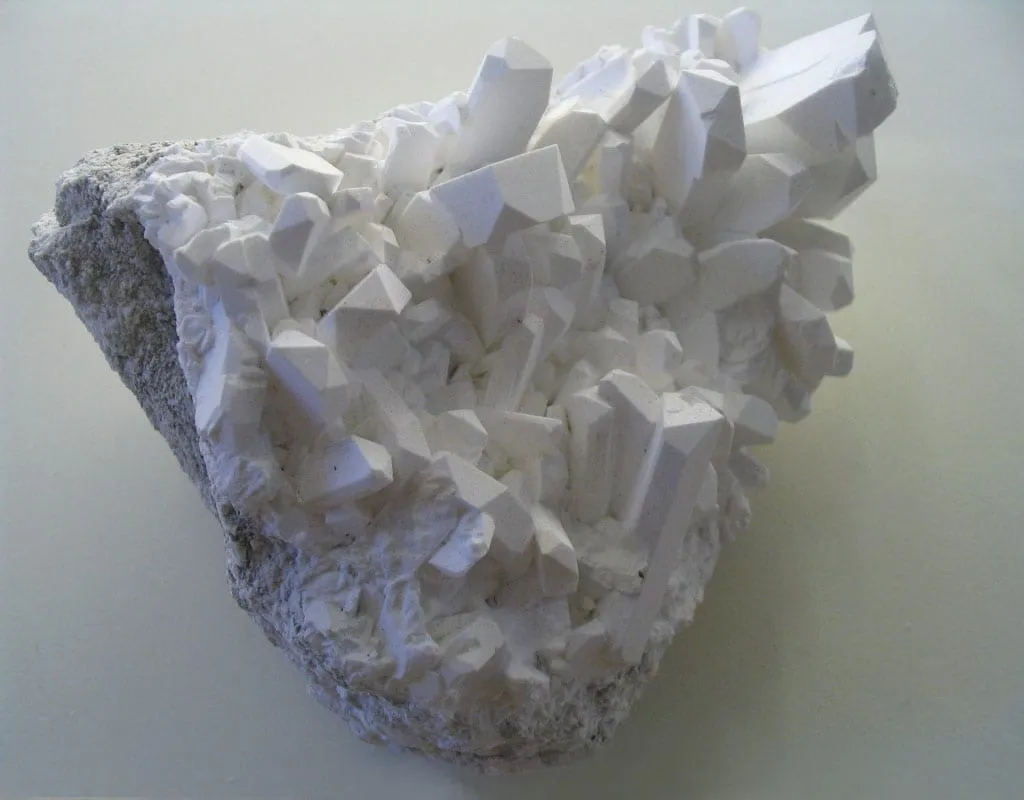
Borax (tincal)
A sodium borate that dissolves in water and crumbles to white powder in dry air; one of the world’s key tincal deposits is at Kırka in Eskişehir.
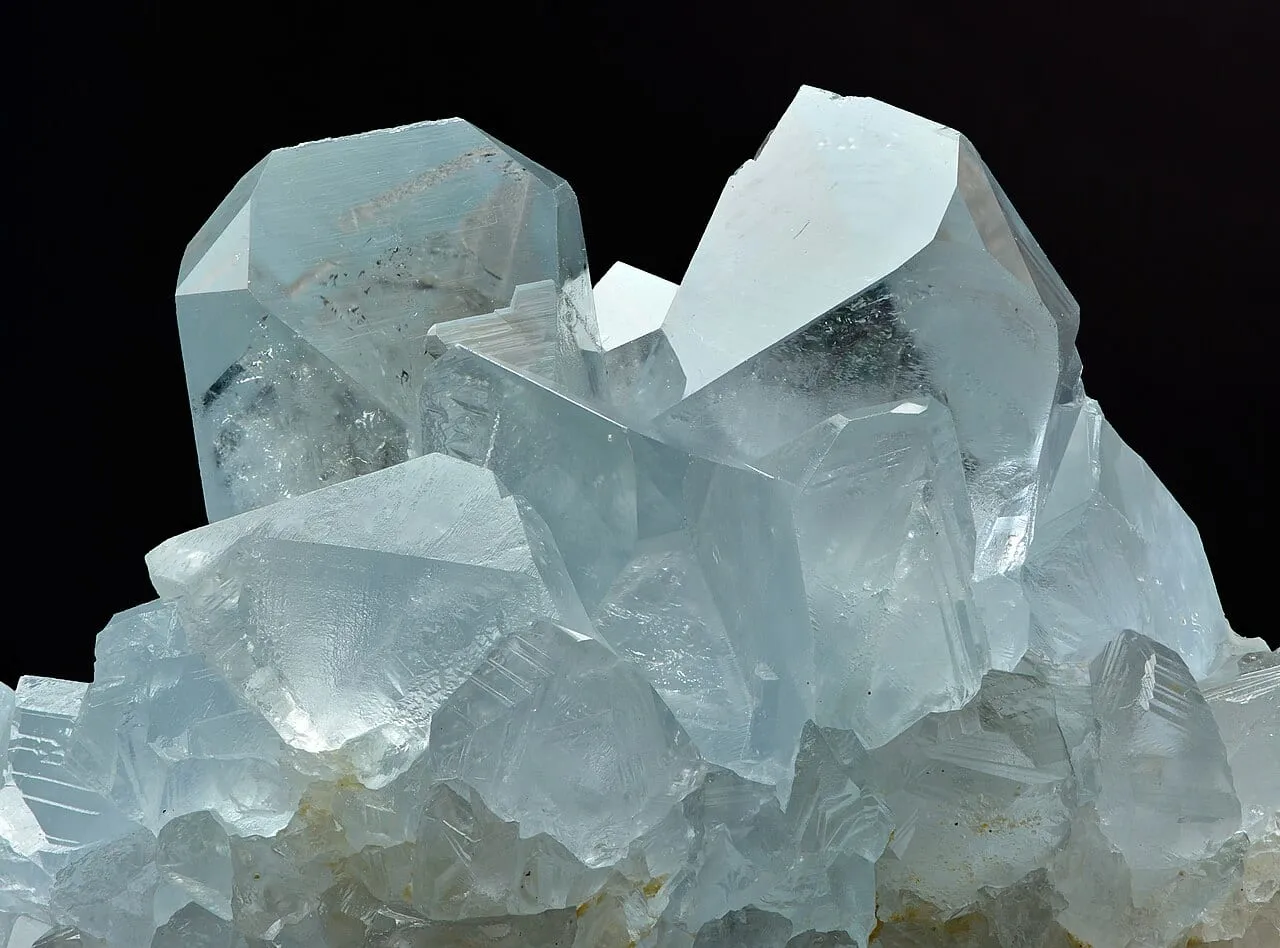
Celestine
A strontium mineral named after the sky, often forming pale blue crystals; the source of the red in fireworks.
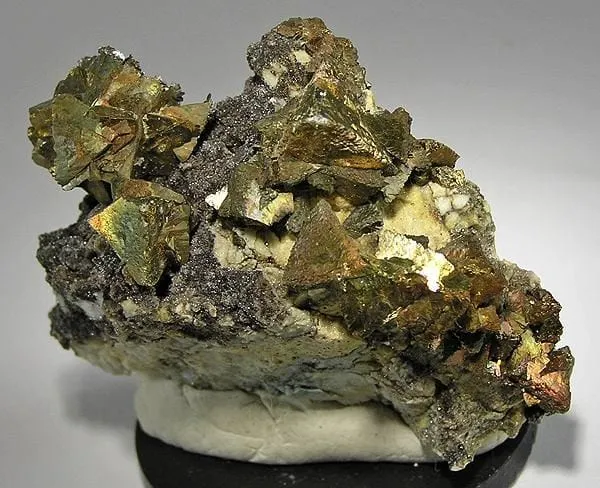
Chalcopyrite
The world’s most important source of copper: a brass-yellow sulfide that resembles gold and often tarnishes to rainbow colours.