VarietyA variety of Chalcedony
Agate
SiO₂Akik
The banded variety of chalcedony: it grows layer by layer in hollows in volcanic rock and shows a new pattern every time it is cut.
Also known as: Banded chalcedony
- Ornamental
- Gemstone
In short
Agate is a variety of chalcedony made of coloured, translucent bands. It usually forms when silica-rich water seeps into gas holes in old lava rocks and deposits silica layer by layer. That is why, when it is cut and polished, it shows rings inside rings or wavy bands.
How does it form?
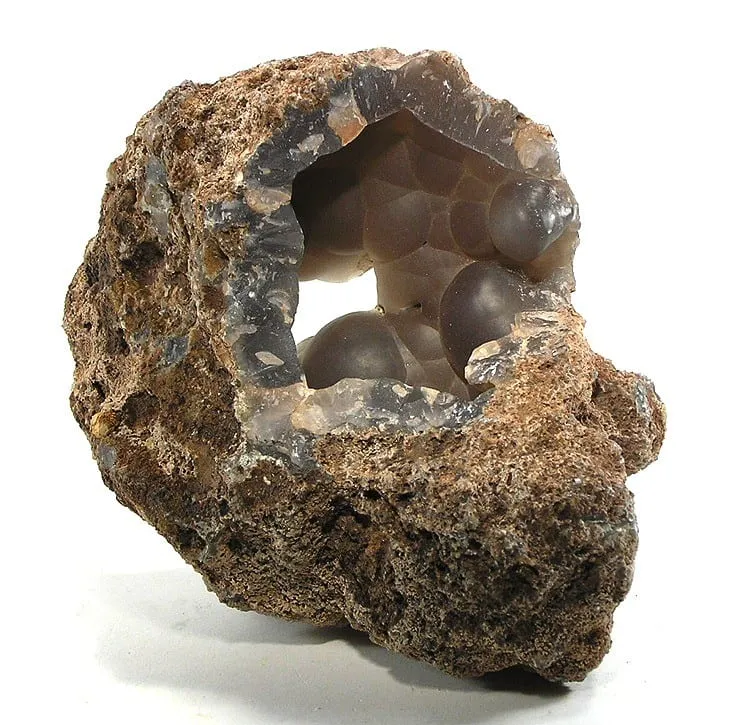
As lava cools, trapped gas bubbles leave hollows in the rock. Later, silica-rich waters seep into these hollows and deposit silica layer by layer, filling the cavity from the outside inwards. As the water’s chemistry changes over time, so do the colour and transparency of the layers; iron compounds give red, brown and yellow tones. If the hollow does not fill completely, a geode lined with quartz or amethyst crystals may remain in the centre. Agate can also form in cracks and nodules in other rocks.
Why is it dyed?
Some bands of agate are more porous than others and soak up more dye. This has long been used to deepen the stone’s colours or change them completely. As a result, most commercial agate is dyed; unnaturally vivid colours are a giveaway.
Agate in Türkiye
White and purple-blue banded agates from the Yozgat area are sought after on the gem market. A study published in 2022 showed that the purple-blue colour comes from iron-related colour centres similar to those in amethyst, combined with the very small size of the grains in those bands. Agate nodules also occur alongside blue chalcedony in the Sarıcakaya district of Eskişehir.
How to recognise it
- 1
It belongs to the quartz family and is hard (6.5–7): it scratches glass, and a steel knife cannot scratch it.
- 2
A cut surface shows bands that follow one another, one inside the next; light passes through the edges of thin slices.
- 3
Rough agate nodules often look like ordinary bumpy, crusty stones on the outside; the pattern appears only when they are cut.
- 4
Very saturated, neon-bright blue, pink, purple or green agates have most likely been dyed; the dye collects mainly in the more porous bands.
Fakes and imitations
What shops usually don’t tell you:
- Dyed agate: very common. Most commercial agate is dyed to brighten its colours. This is an accepted practice, but the seller should disclose it.
- Glass and plastic imitations: their bands can look too regular, almost printed; glass may show air bubbles, and plastic feels noticeably light.
- In the trade, the name “agate” is sometimes also used for unbanded, single-coloured chalcedony and for red carnelian. These are chalcedony too, but not banded agate.
Did you know?
Its name comes from the river Achates in Sicily, mentioned by the ancient Greek naturalist Theophrastus.
Brazil and Uruguay have supplied most commercial agate since about 1900, while agate cutting and dyeing traditionally centred on Idar-Oberstein in Germany.
Where is it found?
Loading map…
- Rio Grande do Sul, Brazil · Major depositAgates formed in cavities in basalt lava flows; together with Uruguay it has supplied most commercial agate since about 1900
- Artigas, Uruguay · Major deposit
- Idar-Oberstein, Rhineland-Palatinate, Germany · Historic sourceHistoric local agate deposits; the traditional centre of agate cutting and dyeing
- Yozgat, Türkiye · Known localityIts white and purple-blue banded agates have been studied in scientific research
Locations are approximate to protect sites. Red dots mark places in Türkiye. Open in the big map →
Family
_(32734668126).jpg)
Sources
- Agate · Encyclopaedia Britannica
- Atomic and microstructural origin of banded colours in purple-blue variety of agate from Yozgat Province, Turkey (Lorenzi et al.), Physics and Chemistry of Minerals 49 · Springer, 2022
- Mineralizations in the Sündikendağı deposit in the Mayıslar-Sarıcakaya (Eskişehir) Region; Gem Blue Chalcedony and Metallic Ore Outcrops (Hatipoğlu, Kibici & Chamberlain) · TMMOB Jeoloji Mühendisleri Odası
External links
Draft: awaiting expert reviewReport an error ↗
On the same step
Amethyst
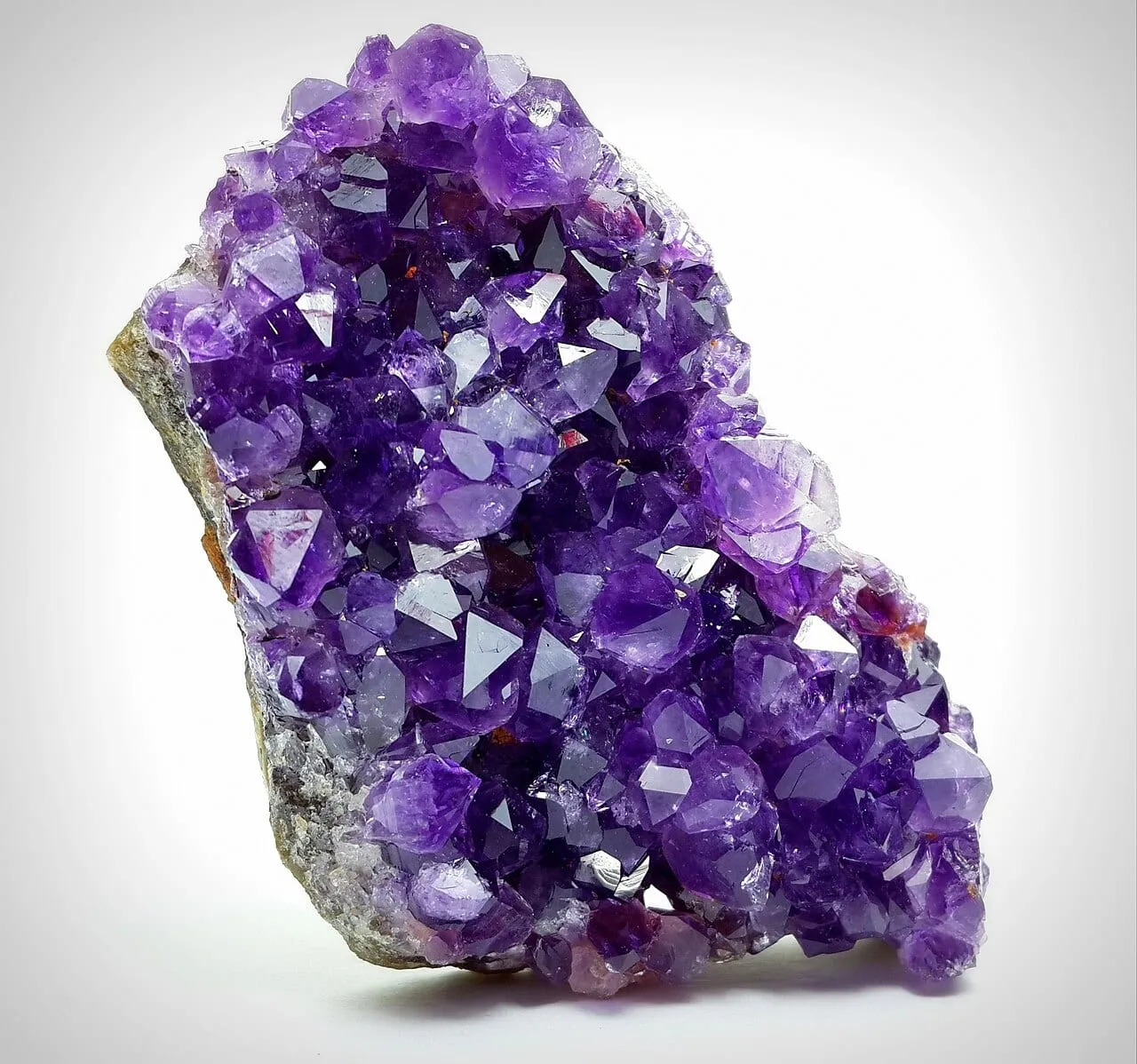
The purple variety of quartz, coloured by traces of iron working together with natural radiation.
Azurite
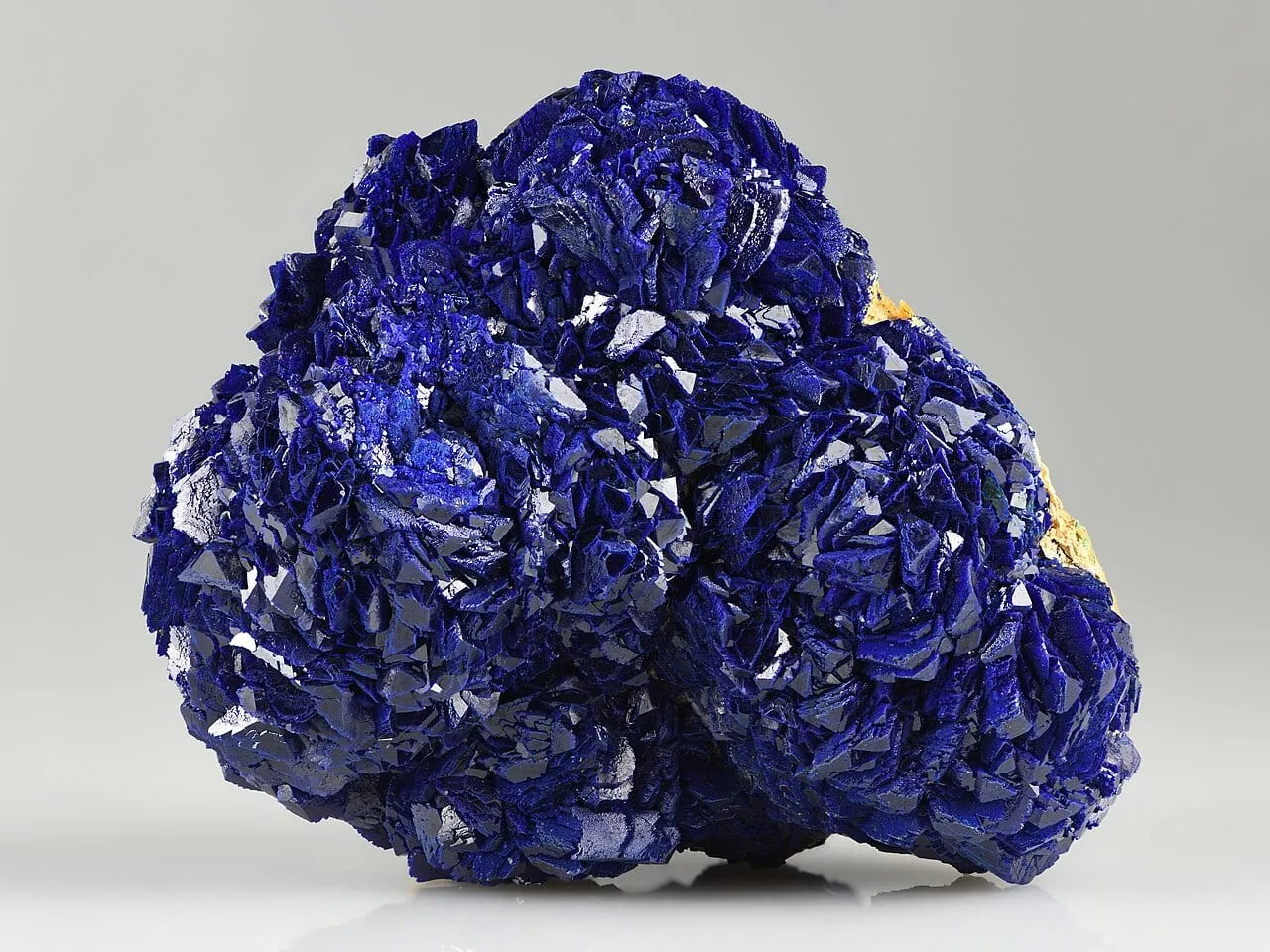
A deep blue copper mineral that was the most important blue pigment of medieval and Renaissance painters.
Beryl
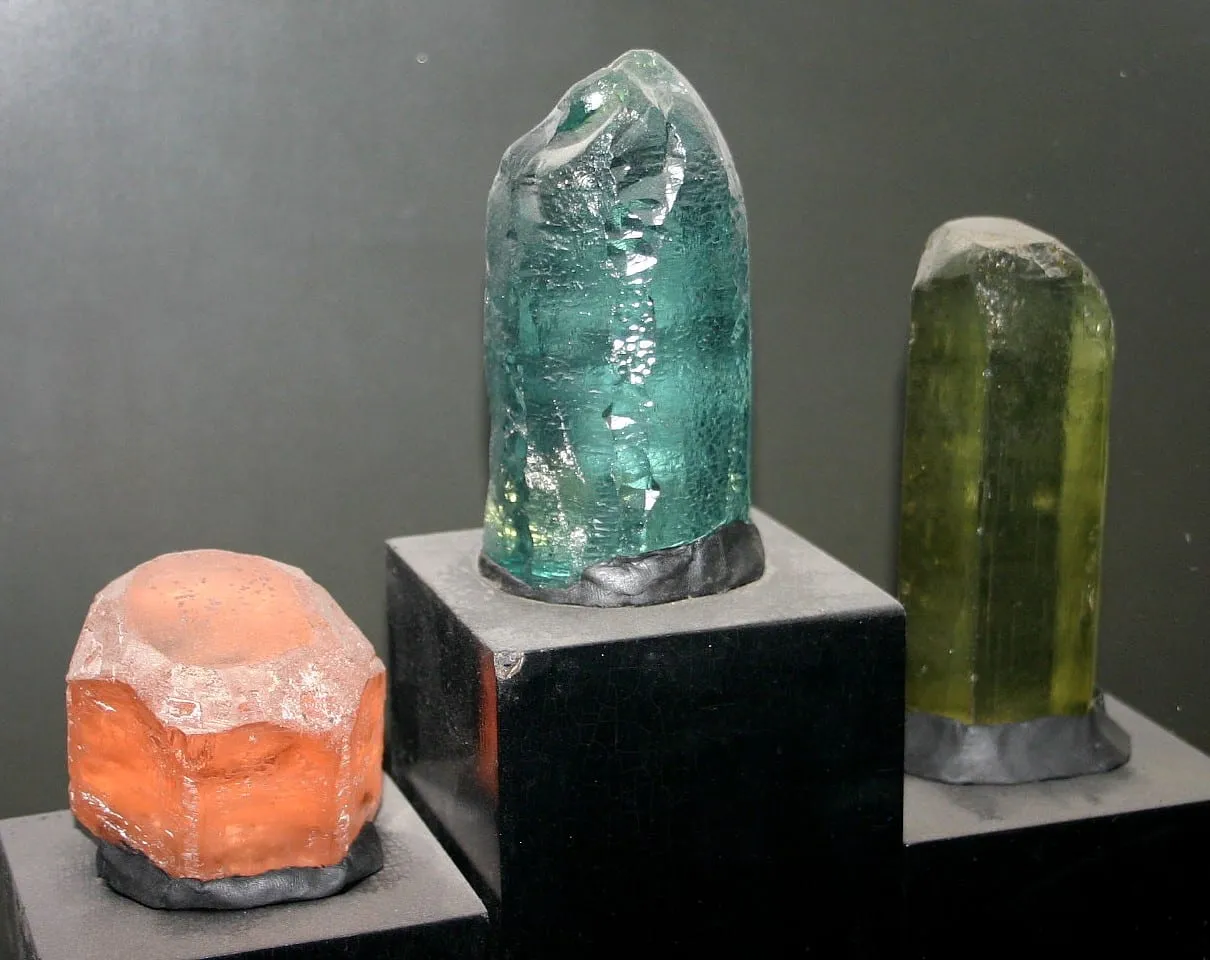
The mineral behind emerald and aquamarine: a gem family running from colourless to green, blue and pink, and an ore of beryllium.