Mineral
Hematite
Fe₂O₃Hematit
Even when it looks black and metallic, its streak is blood red: one of the world’s most important iron ores.
Also known as: Haematite · Specularite (specular hematite) · Kidney ore (kidney-shaped masses)
- Ore
- Industrial
- Ornamental

In short
Hematite is a mineral made of iron and oxygen. It can look shiny black, steel grey or earthy red, but rubbed on unglazed porcelain it always leaves a reddish mark. Most of the iron used to make steel comes from hematite and magnetite.
How does it form?
Hematite forms in many different settings. The world’s largest iron ore deposits lie in banded iron formations, most of them more than two billion years old, in which iron-rich layers alternate with silica-rich layers. Hematite also forms at volcanic gas vents, in hot-water veins and when iron-bearing minerals weather in contact with air. The colour of red soils and red rocks usually comes from fine-grained hematite.
What is it used for?
- Iron and steel: Together with magnetite, hematite is the main mineral of iron ore. The Pilbara region of Australia and the state of Minas Gerais in Brazil are among the main producing areas.
- Pigment: Red ochre, one of the oldest paints used by humans, takes its colour from hematite. The red tones in prehistoric cave paintings mostly come from iron oxides like this.
- Ornamental stone: Polished hematite shines like metal and is used for beads and ring stones.
In Türkiye
The iron deposits of Divriği in Sivas Province are among Türkiye’s most important sources of iron ore. Magnetite dominates there; the hematite formed partly from later alteration of the magnetite.
How to recognise it
- 1
On unglazed white porcelain it leaves a cherry-red to reddish-brown streak, even when the piece looks black and metallic.
- 2
It reacts to an ordinary magnet weakly or not at all. A black mineral that sticks strongly to a magnet is most likely magnetite.
- 3
It feels heavy for its size (specific gravity about 5.3).
- 4
Its hardness is 5–6; a steel knife scratches it only with difficulty.
Fakes and imitations
What shops usually don’t tell you:
- Shiny black beads sold as “magnetic hematite”, which attract each other like magnets, are usually not natural hematite but factory-made ferrite ceramics. Natural hematite is non-magnetic or only very weakly magnetic.
- Beads sold under trade names such as “hematine” and “hemalyke” are manufactured imitations; a name that sounds like hematite does not make them natural stone.
Did you know?
Its name comes from the Greek word for blood, after the red colour of its powder.
NASA’s Opportunity rover found small, round grains of hematite on Mars. Scientists read them as part of the evidence that water once existed on the Red Planet.
Where is it found?
Loading map…
- Hamersley Basin, Pilbara, Western Australia · Major depositOne of the world’s largest iron ore regions, in banded iron formations
- Itabira, Minas Gerais, Brazil · Major depositThe hematite-rich rock “itabirite” is named after this town
- Rio Marina, Elba, Italy · Historic sourceIron mines worked since antiquity; lustrous hematite crystals
- Cleator Moor, Cumbria, England · Known localityKidney-shaped hematite masses (“kidney ore”)
- Divriği, Sivas, Türkiye · Known localityMagnetite-dominated iron deposits; hematite formed partly by alteration of magnetite
Locations are approximate to protect sites. Red dots mark places in Türkiye. Open in the big map →
Sources
- Handbook of Mineralogy: Hematite · Mineralogical Society of America
- Mineral Commodity Summaries 2026: Iron Ore · U.S. Geological Survey, 2026
- Geochronology and stable isotope signature of alteration related to hydrothermal magnetite ores in Central Anatolia, Turkey · Mineralium Deposita 43, 111–124 (Marschik, Spikings & Kuşcu), 2008
- Mineralogical, geochemical and isotopic investigation of the Akdag (Divrigi-Sivas) iron deposit, Turkey · EGU General Assembly 2015, Geophysical Research Abstracts 17 (Varol & Ünlü), 2015
External links
Draft: awaiting expert reviewReport an error ↗
On the same step
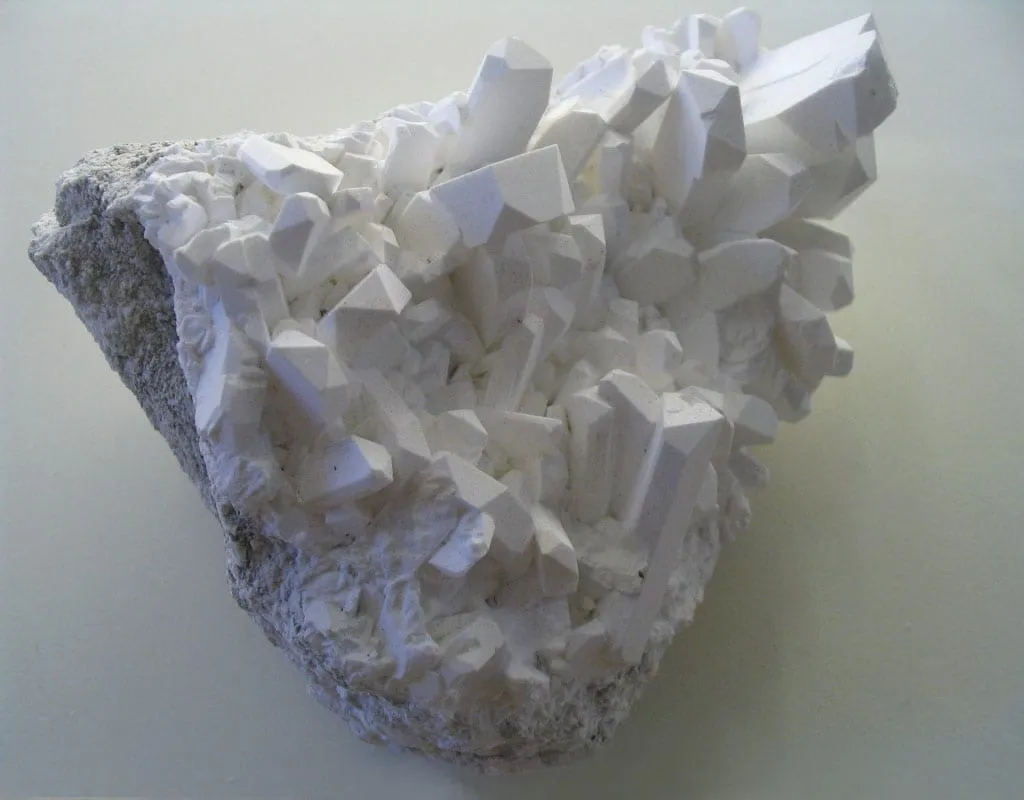
Borax (tincal)
A sodium borate that dissolves in water and crumbles to white powder in dry air; one of the world’s key tincal deposits is at Kırka in Eskişehir.
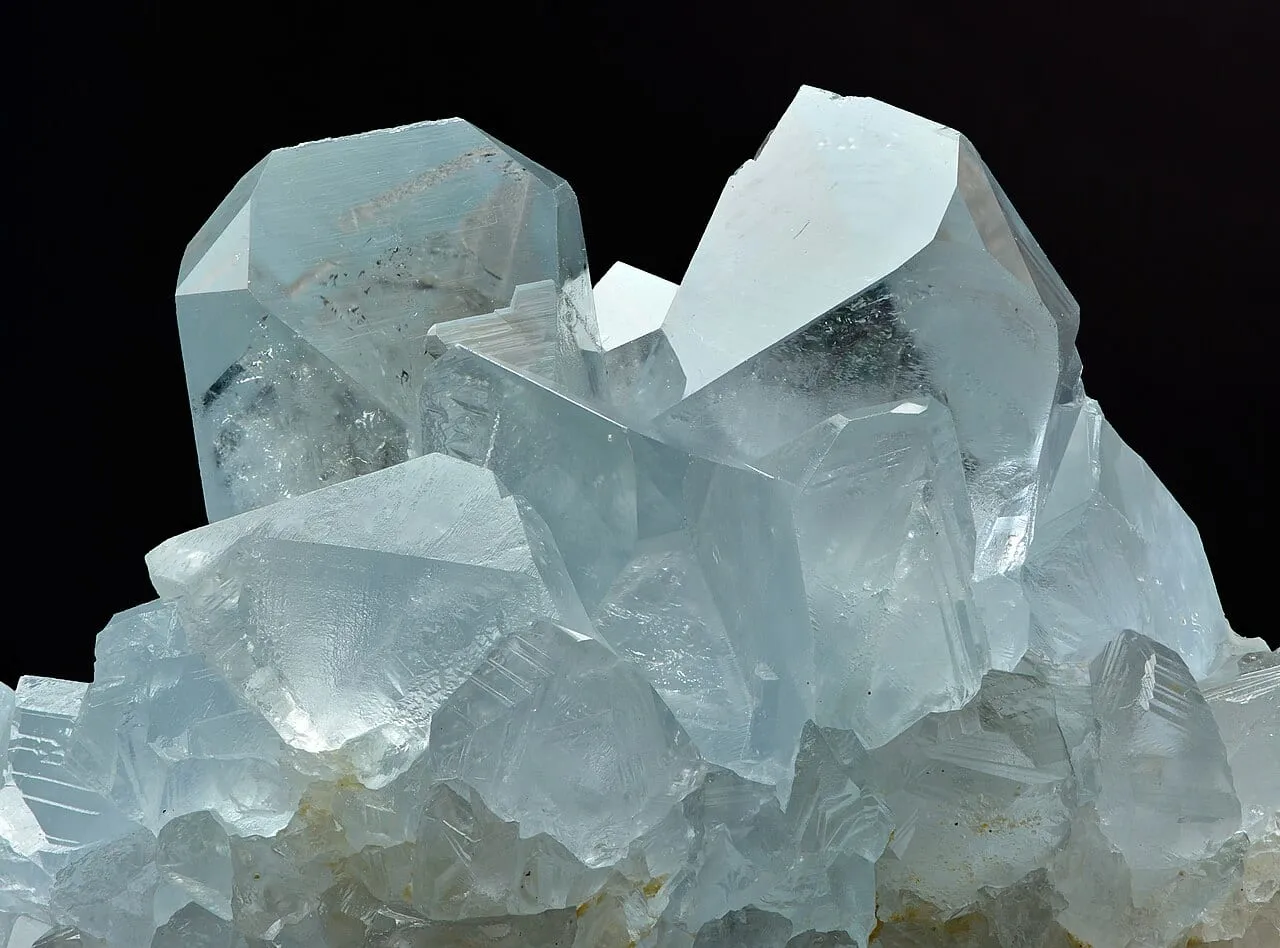
Celestine
A strontium mineral named after the sky, often forming pale blue crystals; the source of the red in fireworks.
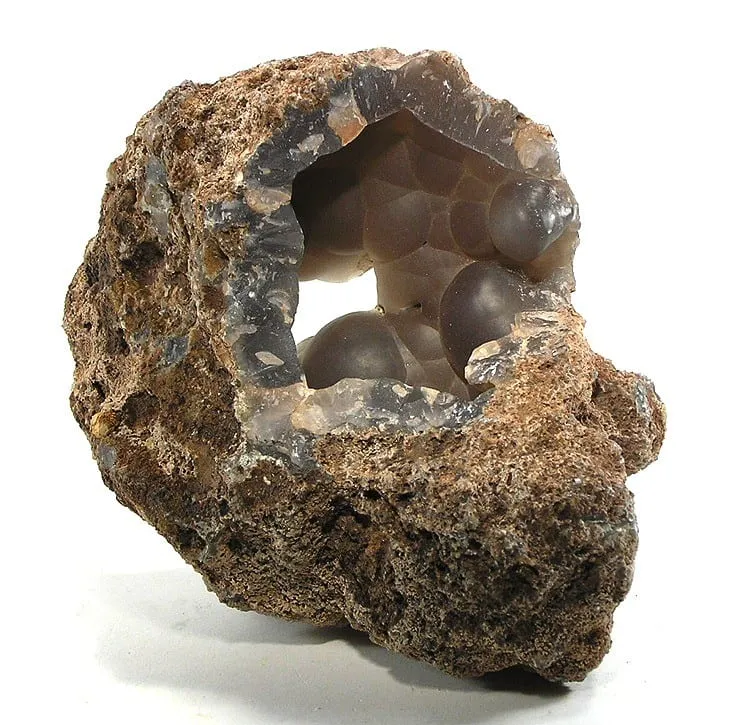
Chalcedony
A waxy-lustred stone made of quartz crystals far too small to see: the family name for agate, onyx and many other ornamental stones.