Mineral
Magnetite
Fe²⁺Fe³⁺₂O₄Manyetit
The black iron mineral that sticks to a magnet: its naturally magnetised pieces were the first magnets people knew.
Also known as: Lodestone (naturally magnetised magnetite)
- Ore
- Industrial

In short
Magnetite is a heavy black mineral made of iron and oxygen. It is the most magnetic mineral found in nature: even small grains stick to a magnet. Some pieces of magnetite are magnets themselves; these are called lodestones.
How does it form?
Magnetite occurs as small grains in most igneous and metamorphic rocks. As magma cools, sinking magnetite grains sometimes build thick layers of ore, and iron carried by hot fluids can also be deposited as large magnetite masses. Because magnetite is tough and heavy, its grains collect in rivers and along shores when rocks wear away. The black sand on some beaches is largely magnetite; you can collect the grains by moving a magnet through the sand.
What is it used for?
- Iron and steel: Together with hematite it is the most important iron ore. Kiruna in Sweden is one of the world’s largest underground iron mines.
- Compasses: In early compasses, iron needles were magnetised by rubbing them on a lodestone.
- Reading Earth’s past: As lava cools, its magnetite grains “record” the direction of the magnetic field at that moment. These records showed that Earth’s magnetic poles have reversed many times and that the ocean floor spreads.
In Türkiye
The iron deposits of Divriği in Sivas Province are among Türkiye’s main sources of iron ore. The A-kafa orebody there consists of massive magnetite.
How to recognise it
- 1
It is strongly attracted to a magnet, the easiest way to tell it from other black minerals that look similar.
- 2
It leaves a black streak on unglazed porcelain. Hematite’s streak is red and chromite’s is brown.
- 3
Its crystals are usually eight-sided (octahedra).
- 4
It is heavy (specific gravity about 5.2) with a metallic to submetallic lustre.
Fakes and imitations
What shops usually don’t tell you:
- Shiny black beads sold as “magnetic hematite” that attract each other are usually manufactured ferrite ceramics, neither natural magnetite nor natural hematite.
- Magnetite can be magnetised afterwards with a strong magnet, so you cannot tell by looking whether a piece sold as “lodestone” became magnetic naturally.
Did you know?
Its name is thought to come from Magnesia, a region where lodestones were found in ancient times.
Some bacteria grow tiny magnetite crystals inside their cells and use them like a compass to orient themselves in Earth’s magnetic field.
Where is it found?
Loading map…
- Kiruna, Norrbotten, Sweden · Major depositOne of the world’s largest underground iron mines
- Divriği, Sivas, Türkiye · Major depositMassive magnetite in the A-kafa orebody; one of Türkiye’s main iron ore deposits
- Magnitogorsk, Southern Urals, Russia · Historic sourceThe city is named after Mount Magnitnaya, rich in magnetite
- Magnet Cove, Arkansas, USA · Known locality
Locations are approximate to protect sites. Red dots mark places in Türkiye. Open in the big map →
Sources
- Handbook of Mineralogy: Magnetite · Mineralogical Society of America
- Mineral Commodity Summaries 2026: Iron Ore · U.S. Geological Survey, 2026
- Geochronology and stable isotope signature of alteration related to hydrothermal magnetite ores in Central Anatolia, Turkey · Mineralium Deposita 43, 111–124 (Marschik, Spikings & Kuşcu), 2008
External links
Draft: awaiting expert reviewReport an error ↗
On the same step
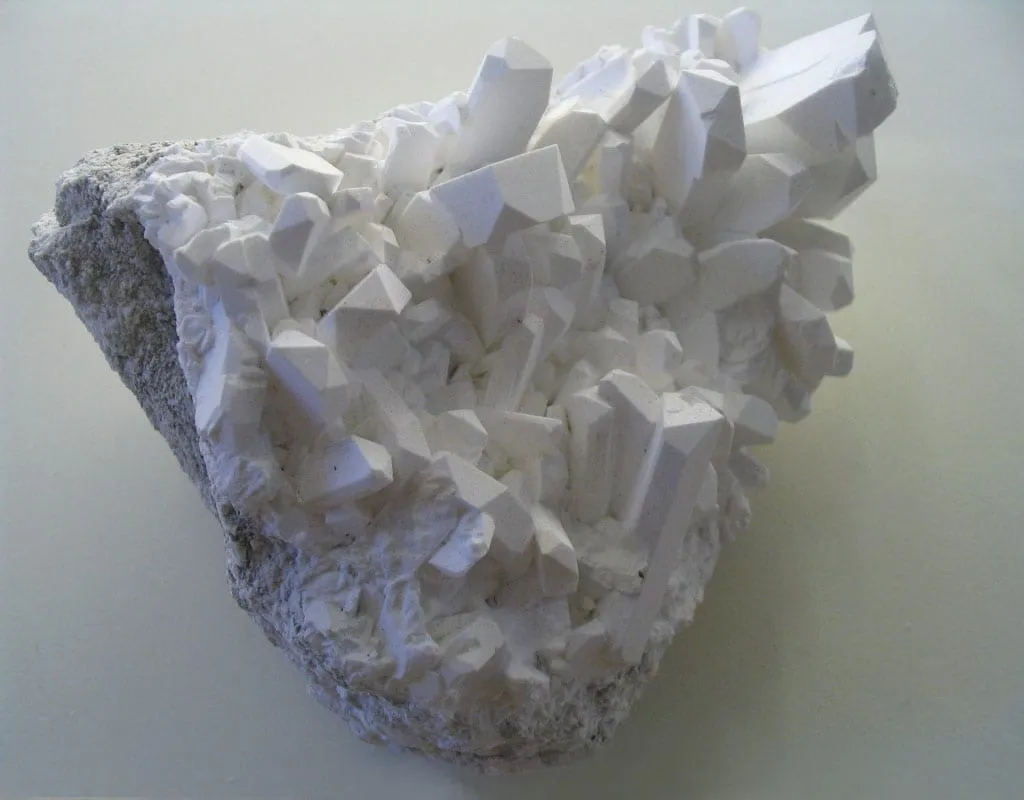
Borax (tincal)
A sodium borate that dissolves in water and crumbles to white powder in dry air; one of the world’s key tincal deposits is at Kırka in Eskişehir.
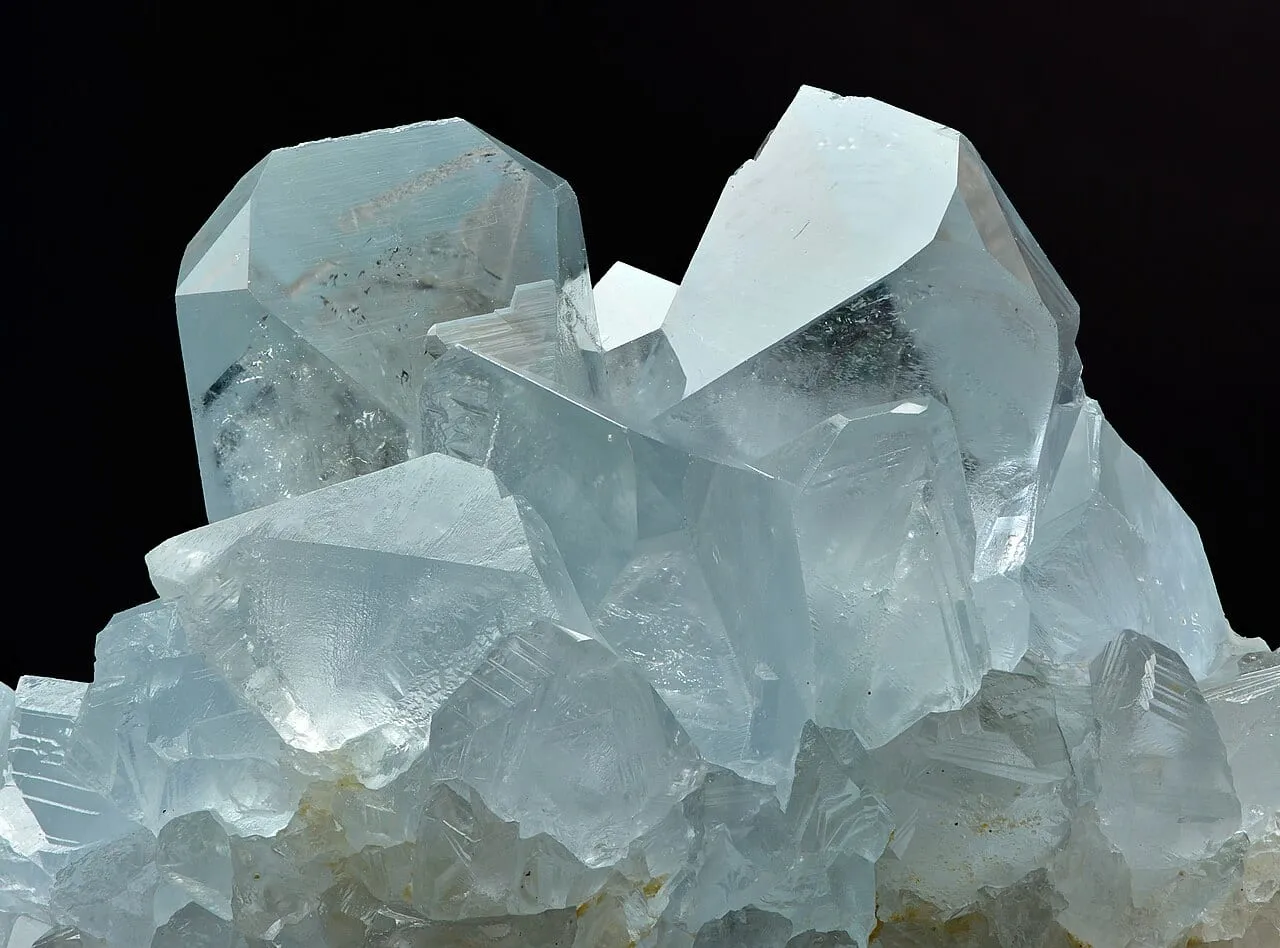
Celestine
A strontium mineral named after the sky, often forming pale blue crystals; the source of the red in fireworks.
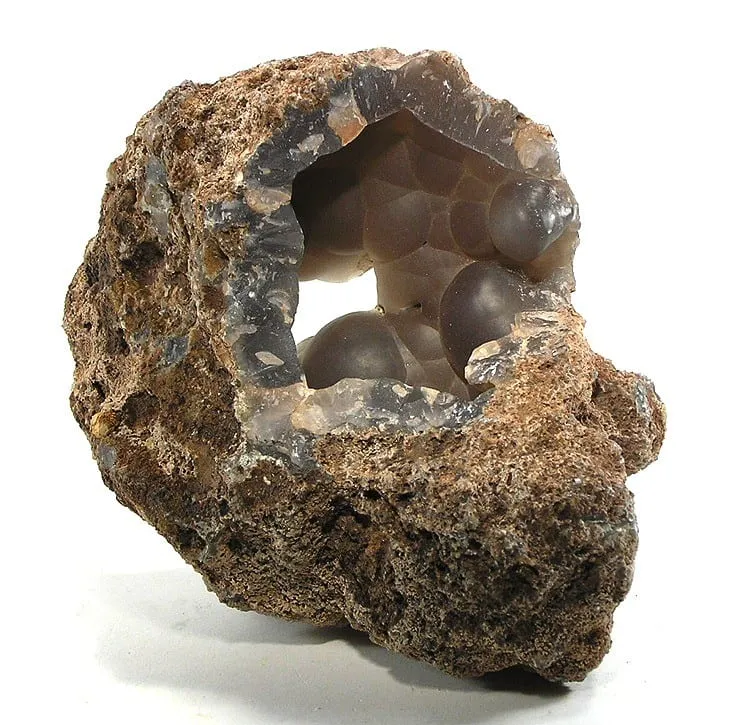
Chalcedony
A waxy-lustred stone made of quartz crystals far too small to see: the family name for agate, onyx and many other ornamental stones.