Meteorite
Iron meteorite
Demir meteorit
Masses of iron–nickel from the cores of shattered asteroids that reveal a unique crystal pattern when etched with acid.
Also known as: Octahedrite, hexahedrite, ataxite (structural classes)
- Ornamental

In short
Iron meteorites are lumps of metal from space made almost entirely of iron and nickel. They broke off the cores of asteroids that melted long ago and eventually fell to Earth. When they are cut and etched with acid, a pattern of criss-crossing bands appears that cannot be recreated in a laboratory.
How does it form?
During the first few million years of the Solar System, some asteroids melted from the heat of short-lived radioactive elements. Heavy iron and nickel sank to the centre to form a metal core, while silicate rock stayed on the outside. These cores then cooled extremely slowly over millions of years. When such asteroids were later shattered by collisions, pieces of their cores were set loose, and they now fall to Earth as iron meteorites. Earth’s own core is also made largely of iron–nickel alloy.
The Widmanstätten pattern
Iron meteorites are made of two iron–nickel alloys: nickel-poor kamacite and nickel-rich taenite. During very slow cooling these alloys separate into thin, interlocking bands. When a cut and polished surface is etched with nitric acid, kamacite is eaten away faster than taenite and the pattern appears. It was first observed by William Thomson in 1804 but is named after Alois von Beckh Widmanstätten, who studied it in 1808. Iron meteorites with this pattern are called octahedrites; nickel-poor ones with fine Neumann lines are hexahedrites, and very nickel-rich ones without a pattern are ataxites.
Famous iron meteorites
Hoba in Namibia, weighing more than 60 tonnes, is the largest known meteorite. Slices of the Gibeon meteorite, also from Namibia, are used in jewellery for their striking pattern. The Inuit used the Cape York meteorite in Greenland to make tools for centuries.
How to recognise it
- 1
It is very heavy, about three times as heavy as an ordinary rock of the same size, and strongly attracts a magnet.
- 2
The outside is usually black, dark brown or rusty and may show shallow thumbprint-like hollows (regmaglypts). There are no gas bubble holes.
- 3
Grinding a small corner reveals shiny, silvery metal underneath.
- 4
A definite identification needs a nickel analysis: iron meteorites usually contain more than 5% nickel. A Widmanstätten pattern on an etched surface is strong evidence, but not every iron meteorite shows one.
Fakes and imitations
What shops usually don’t tell you:
- Slag and foundry waste: may attract a magnet, but is full of bubble holes and contains no nickel.
- Man-made iron and steel: rusty machine parts, old cannonballs and cast-iron pieces contain no nickel and show no Widmanstätten pattern when etched; they may show casting or machining marks.
- Iron ores such as magnetite and hematite: heavy, but not metal; on unglazed porcelain magnetite leaves a blackish-grey streak and hematite a reddish-brown one.
Safety
The nitric acid and ferric chloride solutions used to reveal the Widmanstätten pattern are corrosive; etching should not be done without proper protective equipment and ventilation. Some countries protect meteorites by law: in Namibia, for example, meteorites are treated as national monuments and must not be removed from where they are found.
Did you know?
Chemical analyses have shown that the iron dagger found in Tutankhamun’s tomb was made of meteoritic iron.
Iron meteorites make up only about 5% of meteorites seen to fall, but because they resist weathering and are easy to recognise, most of the known mass of meteorites belongs to irons.
Where is it found?
Loading map…
- Hoba, near Grootfontein, Namibia · Known localityFound in 1920, the Hoba ataxite, weighing more than 60 tonnes, is the largest known meteorite and has never been moved from where it lies. Declared a national monument in 1955.
- Gibeon, Great Namaqualand, Namibia · Major depositA fine octahedrite of group IVA whose fragments are scattered over an area of about 390 × 120 km. The Nama people used its iron for tools and weapons. Its striking Widmanstätten pattern also makes it popular in jewellery.
- Cape York, near Savissivik, Greenland · Historic sourceAn iron meteorite the Inuit used for centuries to make tools; its 31-tonne Ahnighito fragment is on display at the American Museum of Natural History in New York.
- Sikhote-Alin Mountains, Primorye, Russia · Known localityAn iron meteorite seen to fall on 12 February 1947; it broke up in the air and blasted out many small craters.
Locations are approximate to protect sites. Red dots mark places in Türkiye. Open in the big map →
Sources
- Iron meteorites · Buseck Center for Meteorite Studies, Arizona State University
- Types of meteorites · Natural History Museum, London
- Meteorite · Encyclopaedia Britannica
- Meteorite ID · Buseck Center for Meteorite Studies, Arizona State University
External links
Draft: awaiting expert reviewReport an error ↗
On the same step
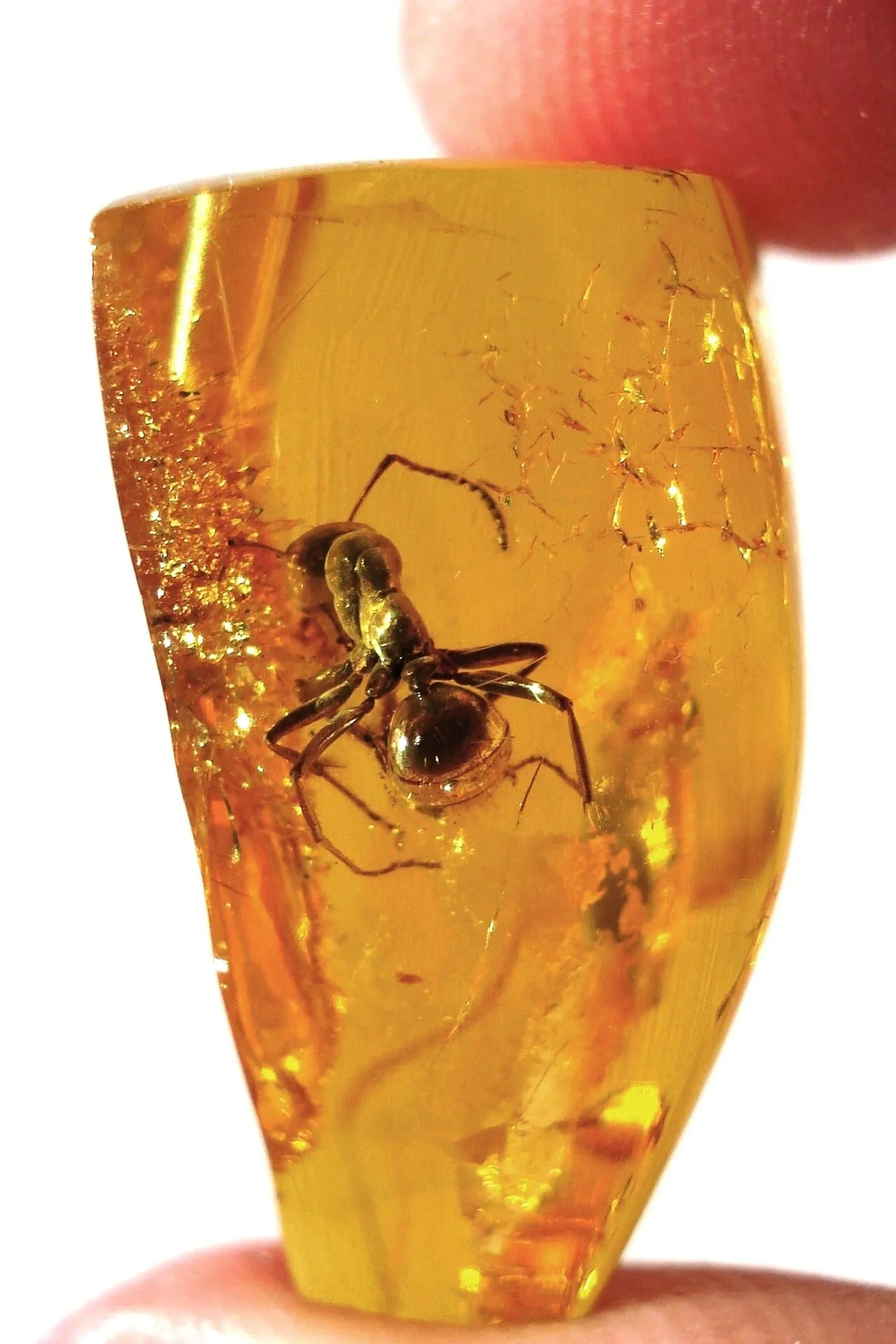
Amber
Tree resin fossilised over millions of years: a light, warm organic gem that sometimes holds prehistoric insects.
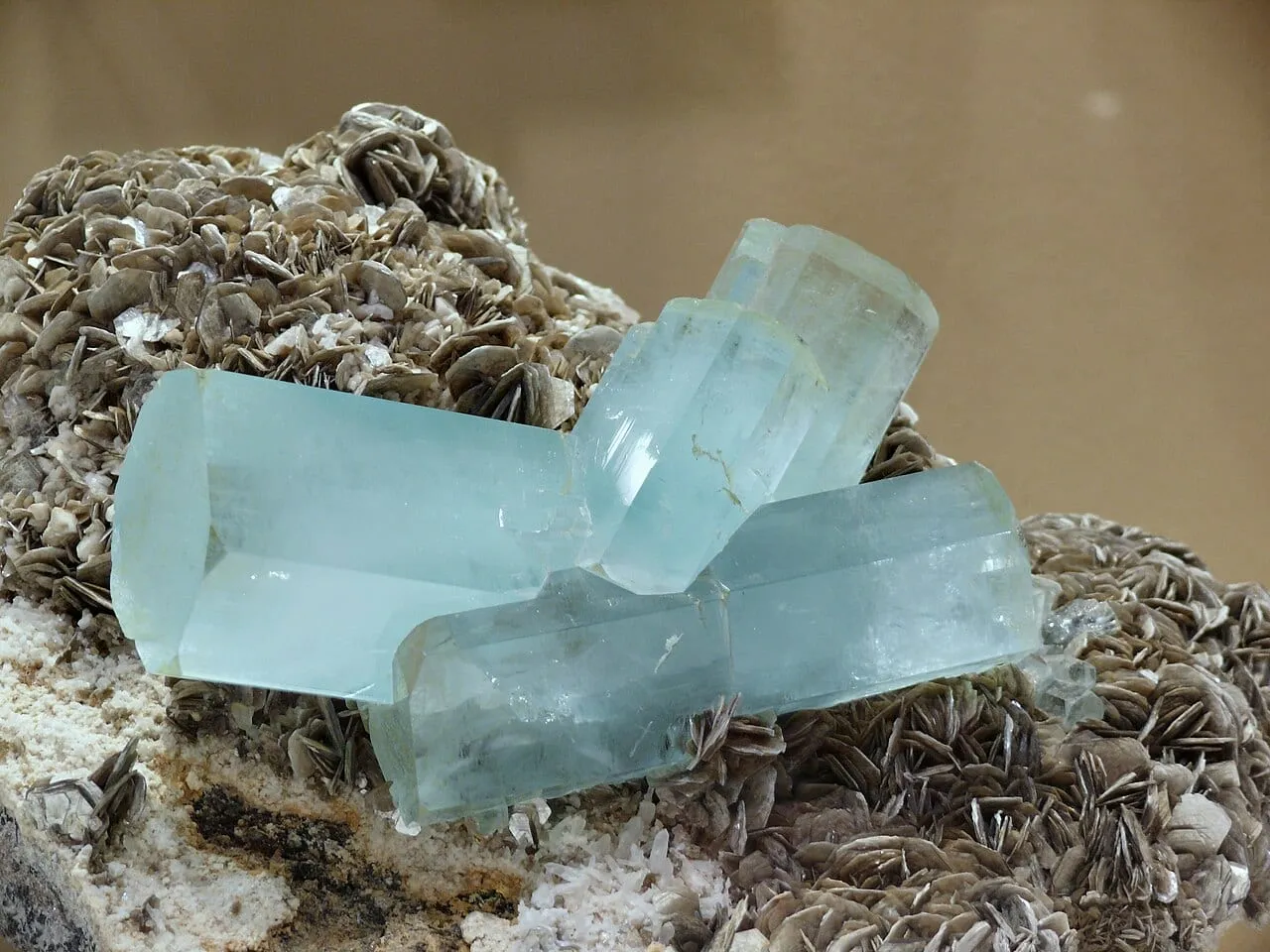
Aquamarine
The blue member of the beryl family, named after seawater: often found as large, clear, nearly flawless crystals.
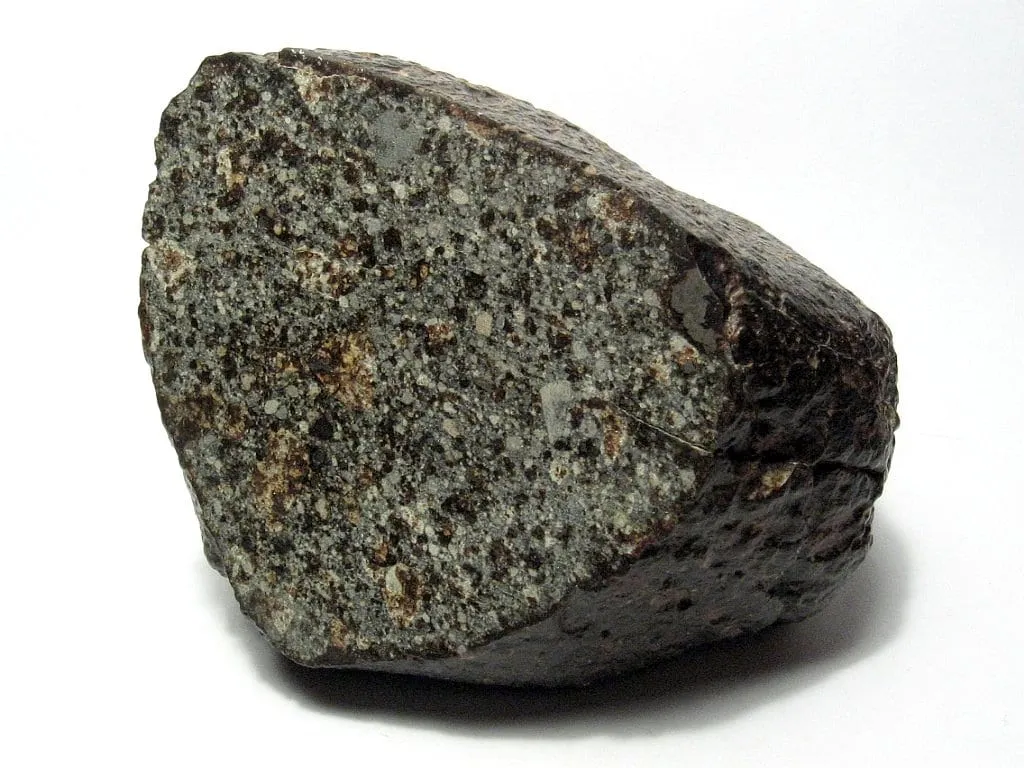
Chondrite
A leftover from the birth of the Solar System, full of tiny once-molten droplets, and the commonest kind of meteorite to fall to Earth.