Rock
Basalt
Bazalt
The rock of the ocean floors and the Moon’s dark plains — the most common volcanic rock on Earth.
- Building stone
- Industrial
- Important in Türkiye
.jpg)
In short
Basalt is a dark rock that forms when runny lava from volcanoes cools quickly at the surface. Because it cools fast, its crystals are tiny and hard to see. Most of the ocean floor is made of basalt, and on land it is used for everything from roads to buildings.
How does it form?
Basalt comes from runny, silica-poor magma produced by partial melting of the mantle beneath Earth’s crust. When this magma erupts as lava and cools quickly, it forms fine-grained basalt. New ocean floor is constantly made this way at mid-ocean ridges, and hotspot volcanoes such as those of Hawaii also erupt basalt lava.
As a thick lava flow cools it shrinks and cracks into columns, most of them six-sided. The Giant’s Causeway in Northern Ireland is the most famous example.
What is it used for?
- Aggregate: Crushed basalt is used in road building, concrete and railway ballast.
- Paving and cladding: Hard and wear-resistant, it is used for pavements and exterior walls.
- Stone wool: Basalt is melted and spun into fibres to make heat and sound insulation.
Basalt in Türkiye
The Kula-Salihli UNESCO Global Geopark in Manisa protects scoria cones, lava flows and basalt columns formed very recently in geological terms, during the Pleistocene and Holocene. In the south-east, lavas from the Karacadağ volcano form a broad basalt plateau. Diyarbakır is built on the edge of this plateau; its walls of dark basalt are on the UNESCO World Heritage List together with the Hevsel Gardens.
How to recognise it
- 1
It is dark grey to black and feels heavy for its size.
- 2
Its grains are very fine; even with a magnifying glass the crystals are hard to make out. Sometimes it contains green grains of olivine.
- 3
Its surface may have small holes left by gas bubbles in the lava.
- 4
It does not fizz in vinegar or dilute acid; surfaces exposed for a long time may turn brownish as the iron in the rock rusts.
Fakes and imitations
What shops usually don’t tell you:
- Dark andesite looks very similar to basalt, and in Türkiye both are used as paving and cladding stone. Telling them apart reliably needs a thin section or chemical analysis.
- Some slabs sold as “black granite” are basalt or its coarse-grained relatives, gabbro and diabase.
- “Lava stone” beads in jewellery are usually porous basalt or scoria; brightly coloured ones have been dyed.
Did you know?
The ancient Greek geographer Strabo described the blackened lava fields around Kula as “Katakekaumene”, the “Burnt Land”.
The dark patches you can see on the Moon with the naked eye (the “seas”) are vast plains of basalt lava that flowed billions of years ago.
Where is it found?
Loading map…
- Giant's Causeway, Northern Ireland · Major depositMade of some 40,000 basalt columns; inscribed on the UNESCO World Heritage List in 1986.
- Kula-Salihli UNESCO Global Geopark, Manisa, Türkiye · Major depositYoung scoria cones and basalt lava flows of Pleistocene and Holocene age; Türkiye's first UNESCO Global Geopark (2013).
- Diyarbakır and Karacadağ, Türkiye · Historic sourceThe city stands on the basalt plateau that stretches from Karacadağ to the Tigris; its dark basalt walls were inscribed on the UNESCO World Heritage List in 2015.
- Kīlauea, Hawaii, USA · Known localityOne of the world's most active volcanoes, erupting basalt lava.
Locations are approximate to protect sites. Red dots mark places in Türkiye. Open in the big map →
Sources
- Basalt · Encyclopaedia Britannica
- Giant's Causeway and Causeway Coast · UNESCO World Heritage Centre
- Diyarbakır Fortress and Hevsel Gardens Cultural Landscape · UNESCO World Heritage Centre
- Volcanic Monument of Western Anatolia: Kula-Salihli UNESCO Global Geopark (Aytaç & Demir) · Geoconservation Research, 2023
External links
Draft: awaiting expert reviewReport an error ↗
On the same step
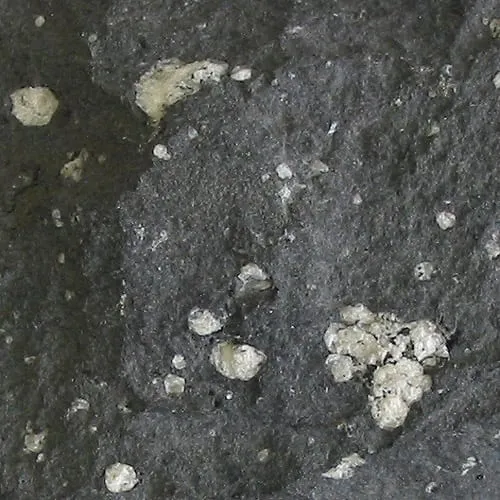
Andesite
The rock of volcanic arcs, named after the Andes — and the pink-grey stone of Ankara Castle.
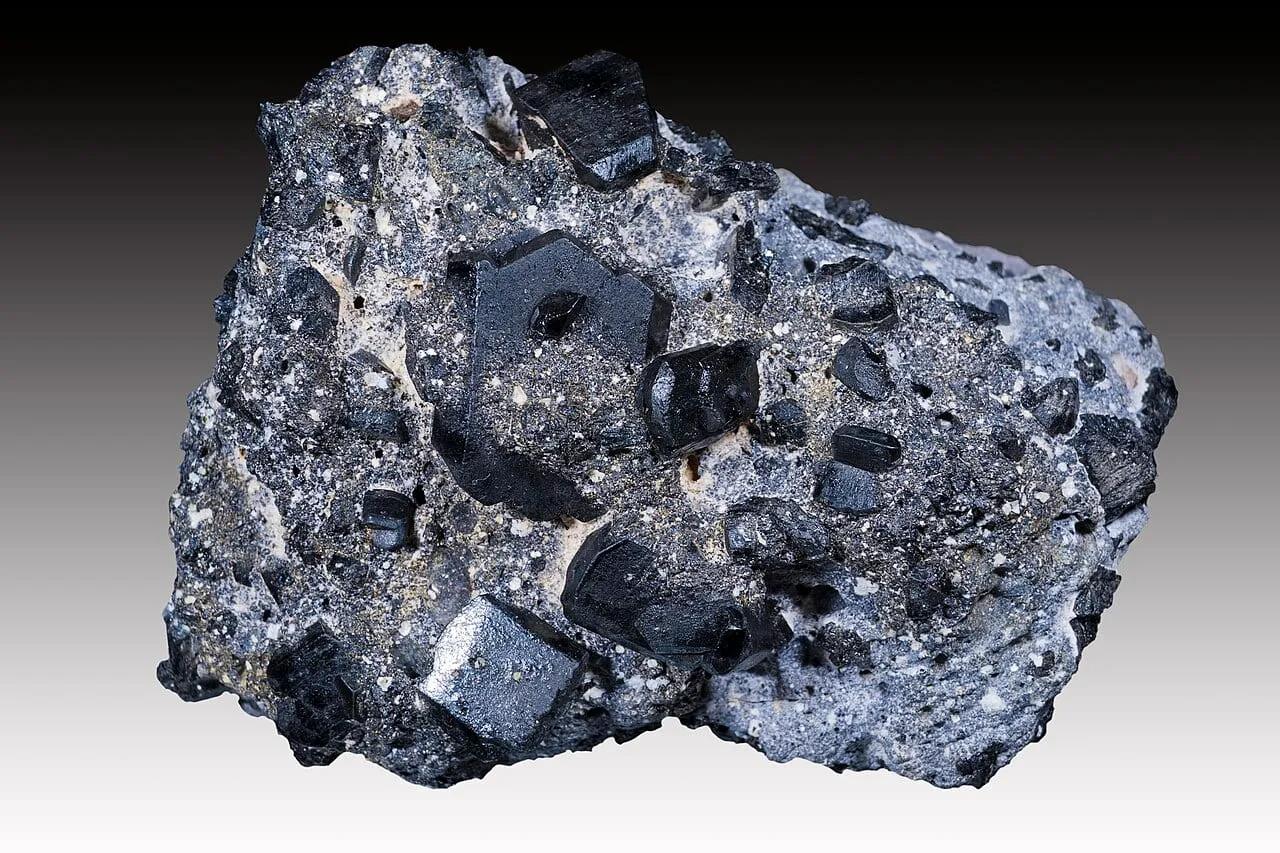
Augite (pyroxene)
The most common pyroxene, which darkens basalt and gabbro: inconspicuous, yet one of the key building blocks of Earth’s crust.
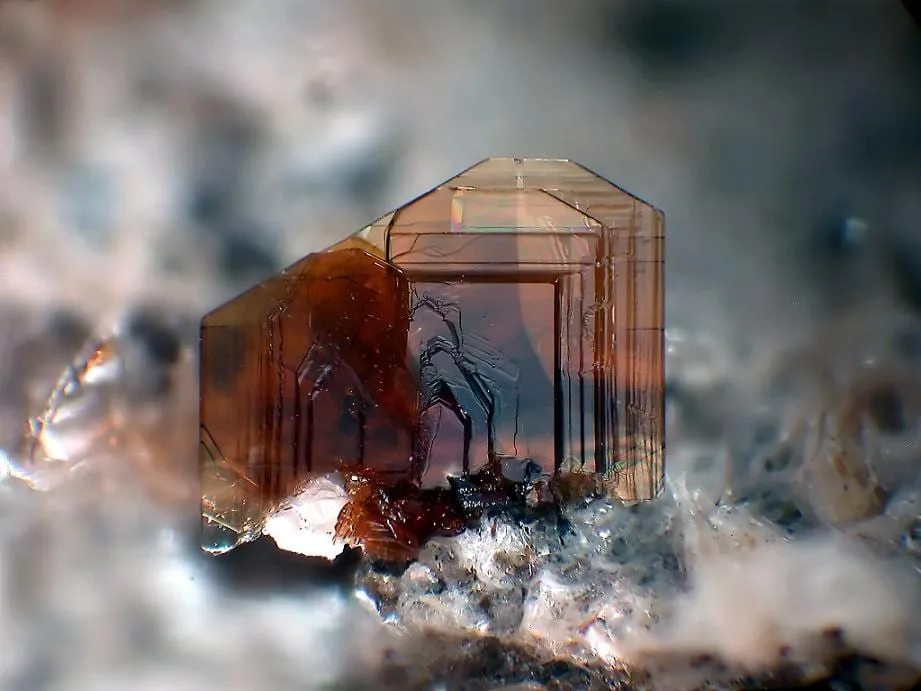
Biotite
The shiny black flakes in granite: a dark mica that peels into thin sheets and can glitter like gold as it weathers.