Mineral
Gold
AuAltın
A heavy, bright yellow metal that occurs pure in nature, never tarnishes and can be hammered into sheets or drawn into wire.
Also known as: Native gold · Electrum (natural gold with at least 20% silver)
- Ore
- Important in Türkiye
_4_(16848647509).jpg)
In short
Gold is one of the few metals found in nature on its own, not combined with other elements. It turns up as grains, flakes and nuggets in quartz veins or in the sand of riverbeds. Because it does not tarnish, gold jewellery thousands of years old still shines as on the day it was made.
How does it form?
Most gold forms in quartz veins left in cracks by hot waters circulating deep underground. The gold in a vein is often in grains too small to see and may hide inside sulfide minerals such as pyrite. When the rocks weather away, the freed gold is so heavy that it collects at the bottom of riverbeds; these accumulations are called placer deposits. At Witwatersrand in South Africa, the world’s most important gold district, the gold lies in very old conglomerate beds.
In Türkiye
Anatolia’s connection with gold is ancient. The electrum in the sands of the Pactolus (today’s Sart Çayı), which flowed past the Lydian capital Sardis, was the raw material of the first coins. In the Republican era, the first official gold production began in 2001 at the Ovacık mine in Bergama, İzmir, followed by Kışladağ in Uşak in 2006 and other mines in later years. Because the gold in such ores is mostly invisible, it is usually recovered today by dissolving it with cyanide.
What is it used for?
- Jewellery and savings: It does not tarnish and is easy to work, so it has served as jewellery and money for thousands of years.
- Electronics: It conducts electricity well and does not oxidise, so it is used as a thin plating on connectors and circuit boards.
- Dentistry and medicine: It does not react with the body, so it is used in some fillings and crowns.
How to recognise it
- 1
Rubbed on unglazed white porcelain it leaves a golden-yellow streak; pyrite and chalcopyrite leave a greenish-black streak.
- 2
It is very soft (hardness 2.5–3): a needle point marks it, and a hammer blow flattens it instead of breaking it. Pyrite shatters and chalcopyrite crumbles.
- 3
It is extremely heavy: pure gold has a specific gravity of 19.3, pyrite about 5 and chalcopyrite about 4.2. Silver-bearing natural gold is lighter but still several times heavier than these minerals, and it sinks to the bottom when swirled with water in a pan.
- 4
It looks golden even in shade. Yellow flakes that sparkle in sunlight but turn dull in shade are often weathered mica, which splits into thin sheets and crumbles easily.
Fakes and imitations
What shops usually don’t tell you:
- “Fool’s gold”: pyrite, chalcopyrite and weathered, yellowish mica flakes are often mistaken for gold; streak, hardness and weight tests tell them apart easily.
- Fake bars and nuggets can be made by plating metals such as lead, brass or tungsten with gold. Tungsten has almost the same density as gold, so weighing alone is not enough.
- In jewellery, purity is given in carats (24 carat is pure gold). A hallmark and, where necessary, an assay by an authorised laboratory are the reliable ways to confirm it.
Safety
Gold itself is not toxic. However, small-scale (artisanal) gold mining uses mercury to collect the gold; heating the mercury–gold mixture releases mercury vapour, which can permanently damage the nervous system and kidneys. Cyanide, used in industrial gold extraction, is also highly toxic and must only be handled in licensed plants under strict control. Never try these methods at home or in the field; in many countries prospecting and mining also require an official permit.
Did you know?
The world’s first known coins were struck in the 7th century BC in the Kingdom of Lydia in western Anatolia, from electrum, a natural alloy of gold and silver.
Gold can be beaten into leaf so thin that light passes through it; held up to the light, such thin gold leaf looks bluish green.
Where is it found?
Loading map…
- Witwatersrand, South Africa · Major depositThe world’s most important gold district; the gold occurs as fine grains in ancient conglomerate beds
- Kalgoorlie, Western Australia · Major depositGold telluride ores and very large alluvial nuggets
- Sart (Sardis), Salihli, Manisa, Türkiye · Historic sourceOn the ancient Pactolus (Sart Çayı); the source of Lydia’s electrum
- Ovacık, Bergama, İzmir, Türkiye · Known localityFirst official gold production of the Republic of Türkiye (2001)
- Kışladağ, Eşme, Uşak, Türkiye · Known localityA large open-pit gold mine; production began in 2006
Locations are approximate to protect sites. Red dots mark places in Türkiye. Open in the big map →
Sources
- Handbook of Mineralogy: Gold · Mineralogical Society of America
- Dünyada ve Türkiye’de Altın · MTA Genel Müdürlüğü, Fizibilite Etütleri Daire Başkanlığı, 2020
- Electrum · Encyclopaedia Britannica
External links
Draft: awaiting expert reviewReport an error ↗
On the same step
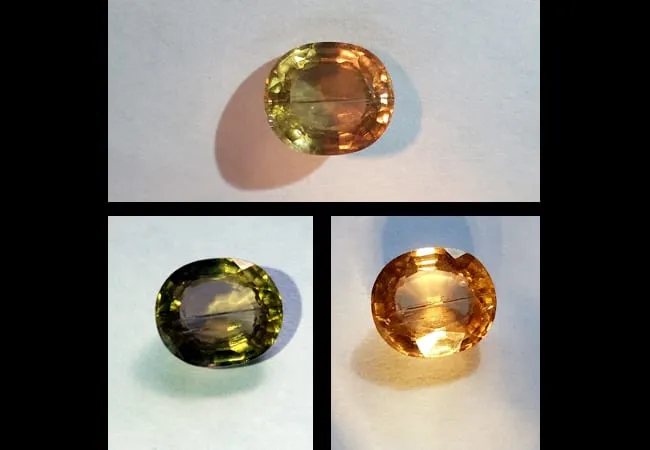
Diaspore
A rare mineral that looks greenish in daylight and pinkish under incandescent light; gem-quality material comes almost only from Muğla.
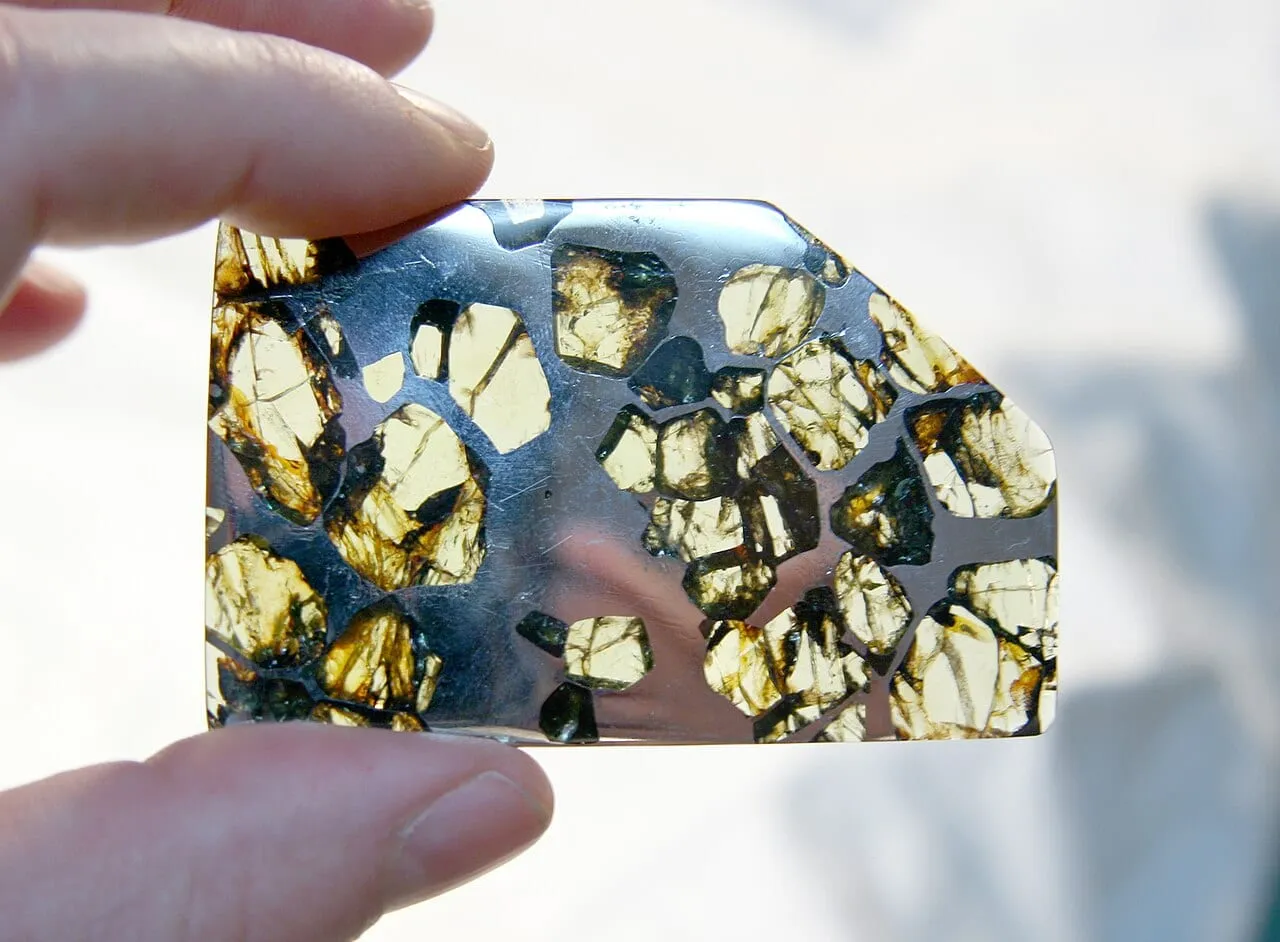
Pallasite
A rare stony-iron meteorite with golden-green olivine crystals set in shining iron–nickel metal, counted among the most beautiful meteorites.
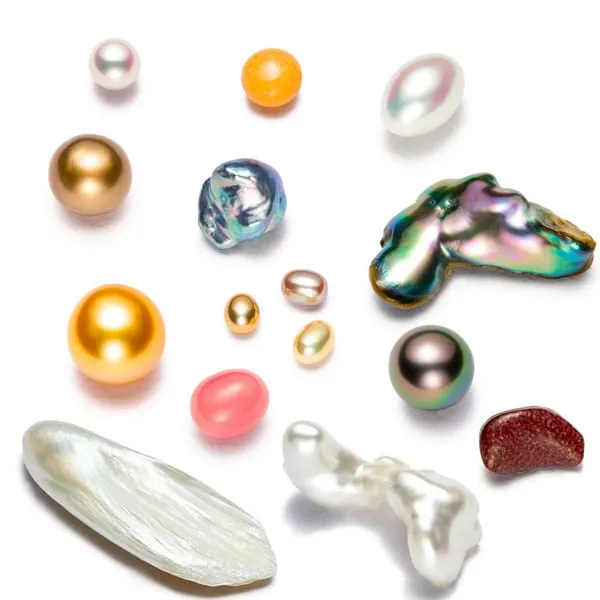
Pearl
An organic gem that grows layer by layer inside oysters and mussels and glows without any cutting or polishing.