VarietyA variety of Opal
Black opal
SiO₂·nH₂OSiyah opal
Play-of-colour glowing against a dark grey or black body: the rarest and usually most valuable kind of opal, mostly from Lightning Ridge in Australia.
Also known as: Lightning Ridge opal · Black fire opal (Virgin Valley, Nevada)
- Popularly: Semi-precious stone
In short
Black opal is precious opal whose play-of-colour appears against a background ranging from dark grey to bluish black. The dark background makes the flashes of red, green and blue look far more vivid, which is why black opal is considered the rarest and usually the most valuable kind of opal. Most of the world's black opal comes from Lightning Ridge in the Australian state of New South Wales; dark-bodied opal is also found in Nevada in the USA, in Ethiopia and in Honduras. Because the look of black opal is often imitated with glass, plastic, layered stones and darkening treatments, it calls for care.
Photos
How does it form?
Like other precious opal, black opal forms when groundwater carrying dissolved silica seeps into cracks and cavities in rock and slowly evaporates. If the silica left behind settles into a structure of tiny spheres stacked in regular layers, play-of-colour appears. What sets black opal apart is that this play-of-colour develops within a dark grey or black opal body. At Lightning Ridge the opal forms within sedimentary rocks.
Elsewhere black opal grows in different settings. At the Stayish mine in Ethiopia’s Wollo region, dark and black opal occurs as nodules 2–10 centimetres long where volcanic rock meets clay-rich layers. Around Erandique in Honduras, precious opal fills tiny gas cavities in basalt flows, producing a black-bodied “matrix” opal.
What is it used for?
- Jewellery: it is mostly cut as a cabochon (a dome) and set in rings, necklaces and earrings. Being softer than quartz, it needs protective settings and careful wear.
- Collections and museums: large, bright stones are displayed in museums; the 2,585-carat uncut “Roebling opal” at the Smithsonian came from Nevada.
- Science: the opalised fossils of Lightning Ridge are an important source for studying Australia’s Cretaceous life.
- Symbol: the state of Nevada chose the black fire opal of Virgin Valley as its official state precious gemstone.
Beware of imitations and treatments
Because black opal is costly and rare, there are many ways to imitate its look. In the past, light-coloured opals were darkened with ink or burnt oil. Today the commonest methods are gluing a thin slice of opal onto a black backing (doublets and triplets), treating porous opal with sugar and acid so that carbon builds up inside it, smoking it or dyeing it. According to GIA, natural Ethiopian black opal is told apart from such treated stones because it shows no staining in surface pits and cracks and its dark colour is evenly spread through the stone.
Where is it found?
Most of the world’s black opal comes from Lightning Ridge in the Australian state of New South Wales. In the USA, Virgin Valley in northern Nevada is the only place in North America where black opal occurs in significant quantity. Dark and black opal has been mined in Ethiopia’s Wollo region since 2013, and the Erandique area of Honduras is known for black-bodied matrix opal in basalt. Mintabie in South Australia has also yielded black opal in the past. For opal as a whole, see the opal page.
What determines its value?
The value of black opal depends above all on the brightness and vividness of its play-of-colour; since a dark background shows those colours off most strongly, value generally rises as the background darkens. The range of colours (traditionally red is the most sought after), the beauty of the pattern, the thickness and size of the stone and freedom from cracks also count. Doublets, triplets, sugar-acid or smoke darkening and dyeing lower value greatly and must always be disclosed. Origin matters too: Lightning Ridge black opal is the best-known and most sought-after source.
This information is educational, not buying, selling or investment advice. Value varies enormously with quality and treatment.
How to recognise it
- 1
As the stone moves, flashes of colour change and shift across a dark background. The background is dark grey, bluish black or black; a black stone without play-of-colour is not precious opal.
- 2
Look at the side of the stone: layers glued together along a straight line give away a doublet or triplet, in which a thin slice of opal sits on a dark backing.
- 3
If a loupe shows black stains or fine black dots on the surface or in cracks, the stone may have been darkened with smoke, dye, or sugar and acid. In natural black opal the dark colour is spread evenly through the stone.
- 4
It is softer than quartz (5.5–6.5) and contains water, so it is sensitive to knocks, sudden changes of temperature and drying out. A certain identification needs a gemmological laboratory.
Fakes and imitations
What shops usually don’t tell you:
- Doublets and triplets: a thin layer of precious opal is glued onto a black backing to give the look of black opal; triplets add a clear cap on top. They must be disclosed at sale.
- Sugar-acid darkened opal: porous Andamooka matrix opal is soaked in a sugar solution and treated with acid; carbon deposited in the pores darkens the background and imitates Lightning Ridge black opal. Black dots show under a loupe.
- Smoked and dyed opal: Ethiopian opals in particular, which absorb water, can be darkened with smoke or dye; the dark colour leaves stains on the surface and in cracks.
- Synthetic opal and plastic or glass imitations are also made to look like black opal.
Myths and misconceptions
MythBlack opal is a black stone without play-of-colour.
FactThe name black opal describes the stone's background colour: bright play-of-colour appears against a background between dark grey and black. A black or dark grey opal without play-of-colour is common opal, not precious opal.
MythEvery opal with a dark background is natural black opal.
FactThe look of black opal is also produced with doublets and triplets, sugar-acid treatment, smoking and dyeing. These are far cheaper than natural black opal; to tell them apart, check the side and surface of the stone and, if needed, a laboratory report.
What is it believed to be good for?
This section reports beliefs; it is not health information. There is no scientific evidence for these claims and no stone replaces medical treatment.
The meanings people give this stone, and who holds them:
- According to Kunz in 1913, while some regarded opal as unlucky, black opal was considered an exceptionally lucky stone.
What science says
There is no scientific evidence that black opal brings luck; like the belief that opal is unlucky, it is a popular superstition. The stone's colours come from tiny silica spheres inside it diffracting light; the dark background simply sets those colours off.
Did you know?
The first opal shafts at Lightning Ridge were sunk in 1905. Charlie Nettleton, regarded as the founder of the black opal industry, walked some 700 kilometres from White Cliffs to see the stones.
The world's largest uncut black opal is known as the “Halley's Comet Opal”.
Kunz wrote in 1913 that, before natural deposits of black opal were found, light-coloured opals were passed off as black opal by dipping them in ink or by heating them and letting burnt oil seep into the cracks.
The opal beds of Lightning Ridge have also yielded opalised fossils, such as those of the early egg-laying mammal Steropodon galmani.
In 1987 Nevada declared the black fire opal of Virgin Valley its official state precious gemstone.
Where is it found?
Loading map…
- Lightning Ridge, New South Wales, Australia · Major depositSource of most of the world’s black opal; the first shafts were sunk in 1905
- Virgin Valley, Humboldt County, Nevada, USA · Known localityThe only place in North America with black opal in significant quantity; the 2,585-carat “Roebling opal” at the Smithsonian came from here in 1917. The point is approximate
- Stayish mine, near Gashena, Wollo, Ethiopia · Known localityA deposit at about 3,000 metres that has yielded mostly dark and black opal since 2013; the point is approximate
- Erandique, Lempira, Honduras · Known localityBlack-bodied “matrix” opal with countless pinfire flashes, filling tiny gas cavities in basalt flows; mined for over a century
- Mintabie, South Australia · Historic sourceDuring the First World War, Aboriginal people traded black opals found in this area at Coober Pedy
Locations are approximate to protect sites. Red dots mark places in Türkiye. Open in the big map →
Frequently asked questions
What is black opal?
Black opal is precious opal whose play-of-colour appears against a background ranging from dark grey to bluish black. The dark background makes the flashes of red, green and blue look far more vivid, which is why black opal is considered the rarest and usually the most valuable kind of opal. Most of the world's black opal comes from Lightning Ridge in the Australian state of New South Wales; dark-bodied opal is also found in Nevada in the USA, in Ethiopia and in Honduras. Because the look of black opal is often imitated with glass, plastic, layered stones and darkening treatments, it calls for care.
What is black opal used for?
Jewellery: it is mostly cut as a cabochon (a dome) and set in rings, necklaces and earrings. Being softer than quartz, it needs protective settings and careful wear. Collections and museums: large, bright stones are displayed in museums; the 2,585-carat uncut “Roebling opal” at the Smithsonian came from Nevada. Science: the opalised fossils of Lightning Ridge are an important source for studying Australia's Cretaceous life. Symbol: the state of Nevada chose the black fire opal of Virgin Valley as its official state precious gemstone.
How hard is black opal?
It has a hardness of 5.5–6.5 on the Mohs scale. It can scratch glass; a steel knife scratches it only with difficulty. Its specific gravity is 1.9–2.3 g/cm³.
Where is black opal found?
Its best-known localities: Lightning Ridge, New South Wales, Australia; Mintabie, South Australia; Virgin Valley, Humboldt County, Nevada, USA; Stayish mine, near Gashena, Wollo, Ethiopia; Erandique, Lempira, Honduras.
How can you tell if black opal is real?
As the stone moves, flashes of colour change and shift across a dark background. The background is dark grey, bluish black or black; a black stone without play-of-colour is not precious opal. Look at the side of the stone: layers glued together along a straight line give away a doublet or triplet, in which a thin slice of opal sits on a dark backing. If a loupe shows black stains or fine black dots on the surface or in cracks, the stone may have been darkened with smoke, dye, or sugar and acid. In natural black opal the dark colour is spread evenly through the stone. Doublets and triplets: a thin layer of precious opal is glued onto a black backing to give the look of black opal; triplets add a clear cap on top. They must be disclosed at sale.
Is black opal valuable?
On the “street to diamond” value ladder it sits on step 7 of nine: Precious stone. The value of black opal depends above all on the brightness and vividness of its play-of-colour; since a dark background shows those colours off most strongly, value generally rises as the background darkens. The range of colours (traditionally red is the most sought after), the beauty of the pattern, the thickness and size of the stone and freedom from cracks also count. Doublets, triplets, sugar-acid or smoke darkening and dyeing lower value greatly and must always be disclosed. Origin matters too: Lightning Ridge black opal is the best-known and most sought-after source.
What is black opal good for?
According to Kunz in 1913, while some regarded opal as unlucky, black opal was considered an exceptionally lucky stone. There is no scientific evidence that black opal brings luck; like the belief that opal is unlucky, it is a popular superstition. The stone's colours come from tiny silica spheres inside it diffracting light; the dark background simply sets those colours off. This section reports beliefs; it is not health information. There is no scientific evidence for these claims and no stone replaces medical treatment.
Family


Sources
- Opal Description (Gem Encyclopedia) · GIA
- Opal Quality Factors · GIA
- Opal · Australian Museum
- New Deposit of Black Opal from Ethiopia (L. Kiefert, P. Hardy, T. Sintayehu, B. Abate, G. Woldetinsae), Gem News International, Gems & Gemology 50(4) · GIA, 2014
- Sugar/Heat-Treated Opal (T. Hsu, L. Kennedy), Gem News International, Gems & Gemology 58(1) · GIA, 2022
- Opal · Wikipedia
- Lightning Ridge, New South Wales · Wikipedia
- Mintabie, South Australia · Wikipedia
- Erandique · Wikipedia
- Pinfire Opal · Geology.com
- Nevada State Precious Gemstone: Virgin Valley Black Fire Opal · State Symbols USA
- The Curious Lore of Precious Stones (G. F. Kunz) · J. B. Lippincott Company; Project Gutenberg, 1913
Draft: awaiting expert reviewReport an error
On the same step

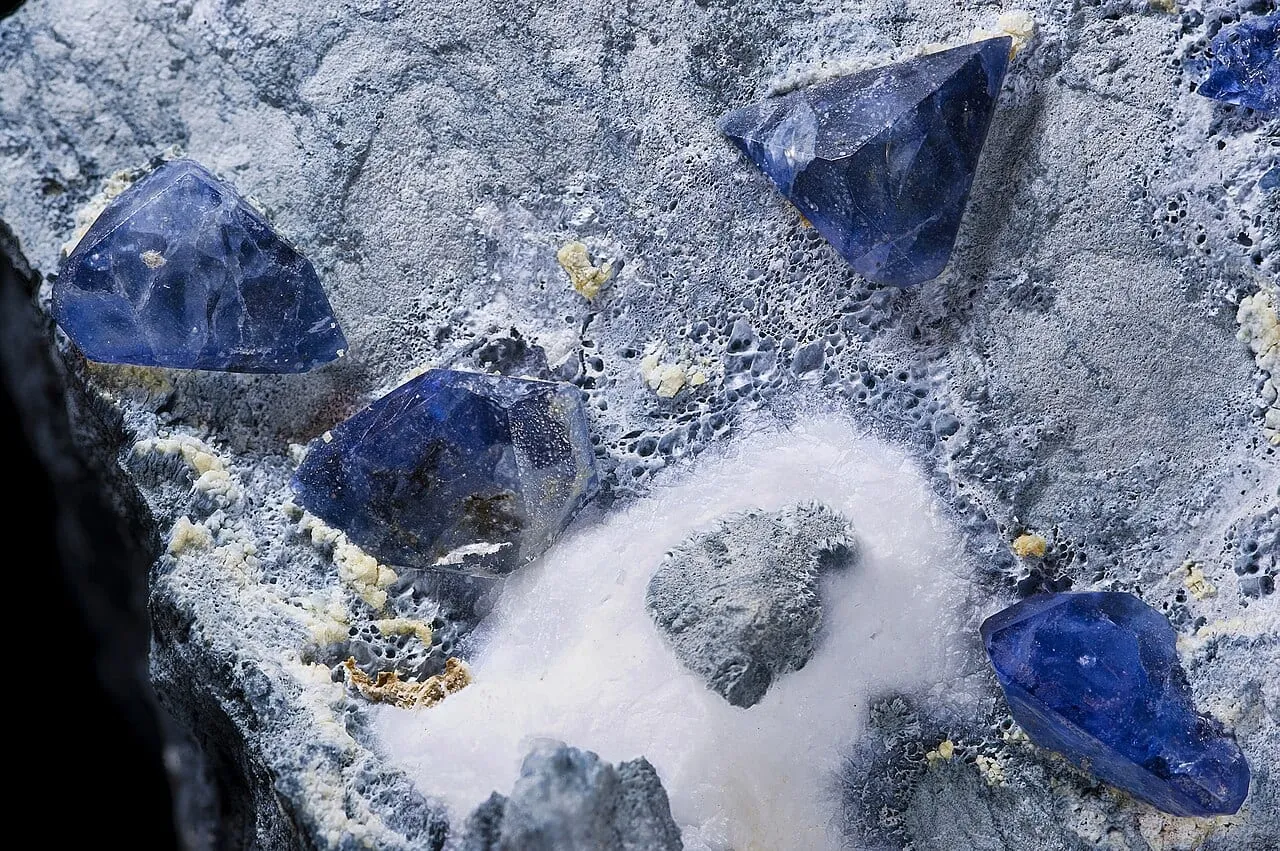
Benitoite
A sapphire-like blue stone whose gem crystals come from a single mine in the world: the official state gem of California.
Cat's-eye chrysoberyl
Chrysoberyl that shows a sharp band of light gliding across its domed surface: the gem meant when people simply say “cat's eye”.

Demantoid
Its name means “diamond-like”: an emerald-green garnet that splits light more than diamond does, known since the 1850s from the Urals; a rare and valuable stone.