VarietyA variety of Opal
Hyalite
SiO₂·nH₂OHiyalit
Opal as clear as glass, forming bubbly, grape-like crusts: it glows bright green under ultraviolet light, and sometimes even in daylight.
Also known as: Müller's glass · Water opal · Glass opal · Jalite · Electric opal (trade name for daylight-fluorescent Zacatecas hyalite)
- Popularly: Semi-precious stone
In short
Hyalite is the colourless or very pale, glass-clear and glassy form of opal; its name comes from the Greek hyalos, “glass”. It occurs in cracks and cavities in rock as crusts that look like bunches of grapes or tiny droplets. Because of traces of uranium (uranyl) inside, it glows bright green under ultraviolet light; the hyalite found in 2013 in the Mexican state of Zacatecas does so even in daylight. It is a common kind of opal that usually shows no play-of-colour; it appeals to collectors, and its cleanest pieces are sometimes cut and used in jewellery.
Photos
How does it form?
Hyalite forms when hot, silica-rich water and vapour cool in cracks and cavities in rock and leave their silica behind. It occurs in volcanic rocks and in pegmatites (coarse-grained granite veins). The silica sets as a disordered, glass-like network rather than a regular crystal structure, which is why hyalite is an amorphous opal called “opal-AN”, containing about 3–8 percent water. The surface of the crusts is often rounded and bubbly, like a bunch of grapes.
In Zacatecas, hyalite forms crusts up to 1 centimetre thick in cracks and cavities of a poorly welded rhyolitic tuff (a rock made of volcanic ash). The green glow comes from traces of uranyl ions deposited together with the silica; the amount of uranium has been found to go hand in hand with the strength of the glow.
What is it used for?
- Collecting: well-formed specimens appeal to collectors because of their unusual appearance, the way they form and their relative rarity. They are favourite pieces in ultraviolet collections.
- Jewellery: hyalite with an opalescent sheen is used in jewellery; stones of 1 to over 6 carats and hundreds of smaller stones have been cut from the cleanest Zacatecas material.
- Science: the uranium and the glow in hyalite are studied in gemmological research on how opal forms and where it comes from.
Why does it glow?
Hyalite’s glow is fluorescence: the stone absorbs ultraviolet light and gives it back as visible green light. Uranyl ions mixed into the silica make this possible. Most hyalite shows the glow only under an ultraviolet lamp; some hyalite from Zacatecas and from the Erongo region of Namibia, however, glows green even from the ultraviolet in daylight. The glow can look stronger or weaker in places, following how the uranium is distributed in the stone.
Where is it found?
The most famous hyalite today is the daylight-glowing material found in 2013 in the Mexican state of Zacatecas. Valeč in the Doupov Mountains of the Czech Republic and Tarcal in Hungary’s Tokaj Mountains are classic localities for hyalite that glows under ultraviolet light. The Erongo region of Namibia, the Naegi pegmatites in Gifu, Japan, and the Spruce Pine area of North Carolina in the USA also yield hyalite. For opal as a whole, see the opal page.
What determines its value?
Hyalite is mostly a collector's stone; its value depends on how clear and thick the crusts are and how much of the surface they cover, on the strength of the glow and on the specimen being undamaged. Zacatecas hyalite, which glows even in daylight, is especially sought after. Material clean and thick enough to cut is rare, so clear cut stones of more than a few carats are hard to find.
This information is educational, not buying, selling or investment advice. Value varies enormously with quality and treatment.
How to recognise it
- 1
It is colourless, pale yellowish or bluish, glass-clear and glassy; on rock surfaces it forms small droplets, bubbles or grape-like crusts.
- 2
Under an ultraviolet lamp, especially at short wavelength, it glows bright green. This is the easiest way to tell it from look-alike resin opal and silica glass.
- 3
Zacatecas hyalite looks pale yellow under incandescent light and vivid greenish yellow in indirect daylight.
- 4
It is softer than quartz (5.5–6) and light: its specific gravity is 1.9–2.1. A certain identification needs a gemmological laboratory.
Fakes and imitations
What shops usually don’t tell you:
- Resin opal and silica glass can look like hyalite; the bright green glow under ultraviolet light helps tell them apart.
- Other minerals coated with hyalite: a barely visible film of hyalite on quartz, feldspar, topaz, black tourmaline or aquamarine can give the impression that the mineral itself glows.
Safety
Hyalite's green glow comes from traces of uranium, so it can be very slightly radioactive. However, the radioactivity measured in hyalite from Zacatecas and Namibia was at or below natural background levels and poses no health risk. Even so, dust from cutting or sanding the stone should not be inhaled.
Myths and misconceptions
MythHyalite that glows under ultraviolet light is radioactive and dangerous to keep at home.
FactThe glow comes from traces of uranium, but the radioactivity measured in hyalite from Zacatecas and Namibia is at or below natural background levels and poses no health risk.
MythQuartz, topaz or tourmaline that glows green under ultraviolet light is fluorescent itself.
FactThese minerals often carry a thin, barely visible coating of hyalite; the green glow comes from that coating and leads to the mistaken idea that the mineral itself glows.
Did you know?
Hyalite is also called “Müller's glass”, after Franz-Joseph Müller von Reichenstein, who discovered it.
Zacatecas hyalite contains only about 2.7 percent water, a remarkably low figure among gem opals.
Hyalite from the Naegi pegmatites in Japan was measured at over 1,000 parts per million uranium, while spherical hyalite from a hot-spring deposit in the same country contained none at all.
The daylight-glowing hyalite of Zacatecas is also known in the trade as “electric opal”.
Where is it found?
Loading map…
- Zacatecas State, Mexico · Major depositHyalite found in 2013 that glows green even in daylight; it forms crusts up to 1 cm thick in cracks and cavities of a poorly welded rhyolitic tuff
- Valeč, Doupov Mountains, Karlovy Vary Region, Czech Republic · Known localityOne of the best-known classic localities for hyalite that glows green under ultraviolet light
- Tarcal, Tokaj Mountains, Hungary · Known localityA known locality for fluorescent hyalite; nearby Monok is also cited
- Erongo Region, Namibia · Known localityRare hyalite glowing green in daylight, found before 2000; the point is approximate
- Naegi, Gifu, Japan · Known localityHyalite in granitic pegmatites; it showed the highest uranium content among the samples studied. The point is approximate
- Spruce Pine, Mitchell County, North Carolina, USA · Known localityGreenish-blue hyalite crusts on granite
Locations are approximate to protect sites. Red dots mark places in Türkiye. Open in the big map →
Frequently asked questions
What is hyalite?
Hyalite is the colourless or very pale, glass-clear and glassy form of opal; its name comes from the Greek hyalos, “glass”. It occurs in cracks and cavities in rock as crusts that look like bunches of grapes or tiny droplets. Because of traces of uranium (uranyl) inside, it glows bright green under ultraviolet light; the hyalite found in 2013 in the Mexican state of Zacatecas does so even in daylight. It is a common kind of opal that usually shows no play-of-colour; it appeals to collectors, and its cleanest pieces are sometimes cut and used in jewellery.
What is hyalite used for?
Collecting: well-formed specimens appeal to collectors because of their unusual appearance, the way they form and their relative rarity. They are favourite pieces in ultraviolet collections. Jewellery: hyalite with an opalescent sheen is used in jewellery; stones of 1 to over 6 carats and hundreds of smaller stones have been cut from the cleanest Zacatecas material. Science: the uranium and the glow in hyalite are studied in gemmological research on how opal forms and where it comes from.
How hard is hyalite?
It has a hardness of 5.5–6 on the Mohs scale. It can scratch glass; a steel knife scratches it only with difficulty. Its specific gravity is 1.9–2.1 g/cm³.
Where is hyalite found?
Its best-known localities: Zacatecas State, Mexico; Valeč, Doupov Mountains, Karlovy Vary Region, Czech Republic; Tarcal, Tokaj Mountains, Hungary; Erongo Region, Namibia; Naegi, Gifu, Japan.
How can you tell if hyalite is real?
It is colourless, pale yellowish or bluish, glass-clear and glassy; on rock surfaces it forms small droplets, bubbles or grape-like crusts. Under an ultraviolet lamp, especially at short wavelength, it glows bright green. This is the easiest way to tell it from look-alike resin opal and silica glass. Zacatecas hyalite looks pale yellow under incandescent light and vivid greenish yellow in indirect daylight. Resin opal and silica glass can look like hyalite; the bright green glow under ultraviolet light helps tell them apart.
Is hyalite valuable?
On the “street to diamond” value ladder it sits on step 5 of nine: Ornamental stone. Hyalite is mostly a collector's stone; its value depends on how clear and thick the crusts are and how much of the surface they cover, on the strength of the glow and on the specimen being undamaged. Zacatecas hyalite, which glows even in daylight, is especially sought after. Material clean and thick enough to cut is rare, so clear cut stones of more than a few carats are hard to find.
Is hyalite dangerous?
Hyalite's green glow comes from traces of uranium, so it can be very slightly radioactive. However, the radioactivity measured in hyalite from Zacatecas and Namibia was at or below natural background levels and poses no health risk. Even so, dust from cutting or sanding the stone should not be inhaled.
Family
_4_(35070319284).jpg)
_(29637226160).jpg)
Sources
- Hyalite · Wikipedia
- hyalite · Wiktionary
- Green-Luminescing Hyalite Opal from Zacatecas, Mexico (E. Fritsch, P. K. M. Megaw, T. L. Spano, B. Chauviré, B. Rondeau, M. Gray, T. Hainschwang, N. Renfro), The Journal of Gemmology 34(6) · Gem-A (publication record at ORNL), 2015
- Hyalite Opal from Erongo, Namibia, Showing Green Daylight Fluorescence (R. Hanus and others), The Journal of Gemmology 38(2) · Gem-A (publication record at Masaryk University), 2022
- Uranium Contents of Hyalite (K. Saruwatari, Y. Katsurada, S. Odake, A. Abduriyim), Lab Notes, Gems & Gemology 51(4) · GIA, 2015
- Hyalite (fluorescent mineral sheet) · Fluomin
- Hyalite opal (Spruce Pine, North Carolina, USA), photo and description by James St. John · Wikimedia Commons
- Valeč (Karlovy Vary District) · Wikipedia
- Tarcal · Wikipedia
- Spruce Pine, North Carolina · Wikipedia
External links
Draft: awaiting expert reviewReport an error
On the same step
Agate
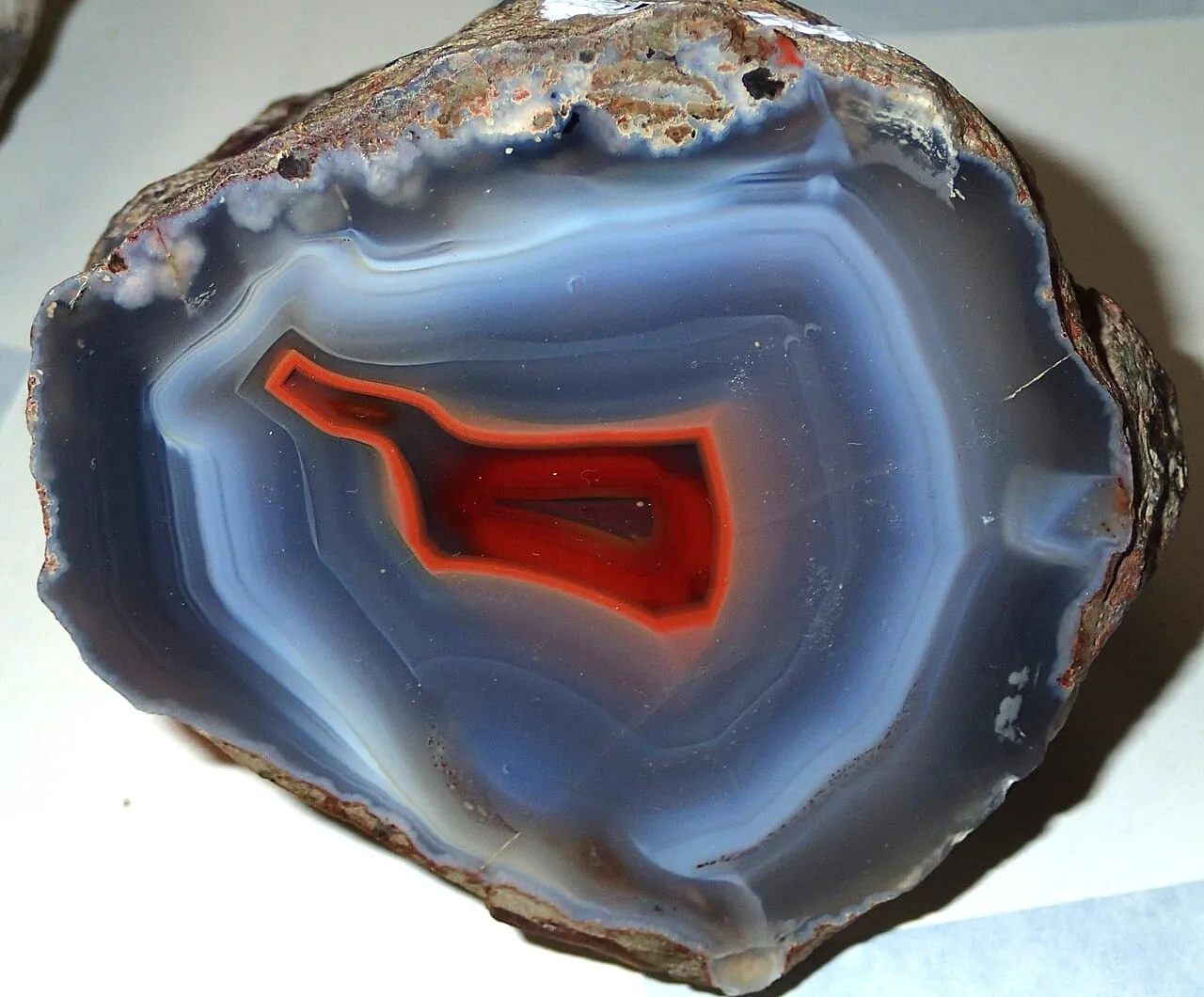
The banded variety of chalcedony: it grows layer by layer in hollows in volcanic rock and shows a new pattern every time it is cut.
Almandine
The commonest garnet: a deep red, iron-rich stone named after the ancient city of Alabanda in Anatolia, used in jewellery and in sandpaper alike.
Amazonite
A turquoise-like green-blue feldspar: a variety of microcline worn as jewellery for more than three thousand years, but it can release lead.