VarietyA variety of Opal
Fire opal
SiO₂·nH₂OAteş opali
A transparent opal in warm yellow, orange and red, like a glowing coal; it usually shows no play-of-colour.
Also known as: Mexican fire opal · Jelly opal (fire opal without play-of-colour) · Cantera opal (Mexican opal cut together with its host rock)
- Popularly: Semi-precious stone
- Gemstone
- Ornamental
- Important in Türkiye
In short
Fire opal is a transparent to translucent opal whose body colour runs from yellow through orange to red. The “fire” in the name describes the colour of the stone: most fire opal does not show the rainbow flashes of precious opal, though it occasionally gives off bright green flashes. Its most famous source is Mexico, but it also occurs in Türkiye, in the Simav area of Kütahya and around Gümüldür in İzmir.
Photos
How does it form?
Fire opal forms when underground water carrying dissolved silica seeps into cracks, hollows and pores in volcanic rocks. As the water drains away, the silica is deposited at low temperature and hardens into a jelly-like mass. Mexico’s fire opals are mostly found in cracks and cavities of a volcanic rock called rhyolite.
If the silica spheres inside opal are arranged in an orderly way, precious opal with play-of-colour results. In fire opal this orderly arrangement is usually missing; the look of the stone is set by its transparency and warm body colour. Fire opal from Simav is a kind of opal known as opal-CT, which is close to crystalline but disordered in structure.
What is it used for?
- Jewellery: being transparent or translucent, it can be cut as a cabochon (a polished dome) or as a faceted stone, and is used in rings, necklaces and earrings.
- Carving and ornaments: in Mexico the stone is cut and polished together with its host rock to make “cantera opal”.
- Collecting: bright, crack-free pieces are sought by mineral and gem collectors.
Because fire opal contains water, it can crack with sudden changes in temperature and humidity; it should be stored with care and protected from knocks against hard surfaces.
Where is it found?
The most famous source of fire opal is the state of Querétaro in Mexico; the opal deposits lie mainly in the mountain ranges of the municipalities of Colón, Tequisquiapan and Ezequiel Montes. About 100 mines remain around Querétaro, though most are now closed; they were heavily worked from the 1960s to the mid-1970s. The Mexican state of Jalisco is another important source.
Outside Mexico, fire opal also comes from Virgin Valley in the US state of Nevada, from Ethiopia’s Wollo region, and from around Campos Borges in the Brazilian state of Rio Grande do Sul.
Fire opal in Türkiye
Opal found in geodes, nodules and cracks in rhyolitic volcanic rocks around Simav and Şaphane in Kütahya, known in the trade as “Simav fire opal”, has been documented in scientific studies. Around Gümüldür in İzmir, red and orange opal nodules occur in dacitic volcanic rocks; researchers note that these stones contain fewer cracks than the known fire opals of western Türkiye and are suitable for cabochon cutting.
What determines its value?
Colour matters most for fire opal: a saturated, vivid orange or red stone that is clean and transparent is the most sought after, while pale and cloudy stones are worth less. The bright green flashes seen in some stones (play-of-colour) make a stone more special. Crack-free and large pieces, good cutting and polishing, and origin also count, and opal’s water content makes it prone to cracking, which affects value. Glass and plastic imitations and synthetic opal should not be sold as natural stone.
This information is educational, not buying, selling or investment advice. Value varies enormously with quality and treatment.
How to recognise it
- 1
The body colour runs from yellow through orange to red, sometimes brown; the stone is transparent or translucent.
- 2
Most fire opal has no play-of-colour like that of precious opal; the colour you see is the stone’s own body colour. Some stones occasionally flash bright green.
- 3
Being opal, it is softer than quartz (5.5–6.5) and feels light in the hand; it should be protected from rubbing against hard surfaces.
- 4
In Mexico the stone is sometimes cut and polished together with the rhyolite rock it formed in (“cantera opal”); the opal shows within the rock as a bright vein or patch.
- 5
Telling natural stones from glass, plastic and synthetic opal reliably needs a gem laboratory.
Fakes and imitations
What shops usually don’t tell you:
- Glass and plastic (resin) imitations: man-made materials that copy the warm colours of opal; glass imitations may show round air bubbles.
- Synthetic opal: made in the laboratory; under a loupe its colour patches may look too regular. A gem laboratory is needed to tell it apart.
Myths and misconceptions
MythFire opal is opal in which fiery colours play.
FactThe “fire” in the name describes the warm yellow, orange and red body colour of the stone. Most fire opal shows no play-of-colour; only some stones give off bright green flashes. A stone that does show play-of-colour is called precious opal.
Myth“Girasol opal” is another name for fire opal.
FactThe name girasol is sometimes used for fire opal by mistake. True girasol opal is a colourless, transparent kind of opal (hyalite) with a bluish glow that follows the light source around; it does not have the warm colours of fire opal.
What is it believed to be good for?
This section reports beliefs; it is not health information. There is no scientific evidence for these claims and no stone replaces medical treatment.
The meanings people give this stone, and who holds them:
- Today crystal-therapy sources claim that fire opal revives zest for life and creativity and gives courage and self-confidence.
- The same sources say the stone activates the root and sacral chakras.
- In Türkiye, some news websites write that opal varieties, fire opal among them, are believed to be good for eyesight and joint pain and helpful to people with kidney disorders.
What science says
The warm colour of fire opal is linked to trace substances such as iron in its structure; according to a study of opal from Gümüldür, the colour is related to rising iron content. There is no scientific evidence that the stone boosts creativity, courage or energy, activates a chakra, or helps eye, joint or kidney complaints; anyone with such a complaint should see a doctor.
Did you know?
The first opal mine in the Mexican state of Jalisco was found by accident in 1957 by Alfonso Ramírez; by 1960 about 500 mines were known in that region alone.
Much of the opal from Ethiopia’s Wollo region has an orange, yellow or reddish body colour together with play-of-colour; these stones count as both fire opal and precious opal and are called “precious fire opal”.
According to one study, the colour of opal nodules from Gümüldür is related to rising iron content; these stones contain fewer cracks than the well-known fire opals of western Türkiye.
Where is it found?
Loading map…
- Ezequiel Montes–Tequisquiapan–Colón area, Querétaro, Mexico · Major depositThe most famous source of fire opal; the “Mexican fire opals” in rhyolite
- Magdalena area, Jalisco, Mexico · Major depositHundreds of mines opened after the first opal mine in the region was found in 1957
- Virgin Valley, Humboldt County, Nevada, USA · Known localityOpal fields in volcanic sediments; the “black fire opal” is the official gemstone of Nevada
- Wollo, Amhara Region, Ethiopia · Known localityMuch of the opal has an orange, yellow or reddish body colour as well as play-of-colour
- Campos Borges, Rio Grande do Sul, Brazil · Known localityKnown for unusually large fire opals
- Simav–Şaphane area, Kütahya, Türkiye · Known locality“Simav fire opal” in rhyolitic volcanic rocks; documented in scientific studies
- Gümüldür area, Menderes, İzmir, Türkiye · Known localityRed and orange opal nodules in dacitic volcanic rocks; found suitable for cabochon cutting
Locations are approximate to protect sites. Red dots mark places in Türkiye. Open in the big map →
Frequently asked questions
What is fire opal?
Fire opal is a transparent to translucent opal whose body colour runs from yellow through orange to red. The “fire” in the name describes the colour of the stone: most fire opal does not show the rainbow flashes of precious opal, though it occasionally gives off bright green flashes. Its most famous source is Mexico, but it also occurs in Türkiye, in the Simav area of Kütahya and around Gümüldür in İzmir.
What is fire opal used for?
Jewellery: being transparent or translucent, it can be cut as a cabochon (a polished dome) or as a faceted stone, and is used in rings, necklaces and earrings. Carving and ornaments: in Mexico the stone is cut and polished together with its host rock to make “cantera opal”. Collecting: bright, crack-free pieces are sought by mineral and gem collectors. Because fire opal contains water, it can crack with sudden changes in temperature and humidity; it should be stored with care and protected from knocks against hard surfaces.
How hard is fire opal?
It has a hardness of 5.5–6.5 on the Mohs scale. It can scratch glass; a steel knife scratches it only with difficulty. Its specific gravity is 1.9–2.3 g/cm³.
Where is fire opal found?
Its best-known localities: Ezequiel Montes–Tequisquiapan–Colón area, Querétaro, Mexico; Magdalena area, Jalisco, Mexico; Virgin Valley, Humboldt County, Nevada, USA; Wollo, Amhara Region, Ethiopia; Campos Borges, Rio Grande do Sul, Brazil.
Where is fire opal found in Türkiye?
Known localities in Türkiye: Simav–Şaphane area, Kütahya, Türkiye; Gümüldür area, Menderes, İzmir, Türkiye.
How can you tell if fire opal is real?
The body colour runs from yellow through orange to red, sometimes brown; the stone is transparent or translucent. Most fire opal has no play-of-colour like that of precious opal; the colour you see is the stone’s own body colour. Some stones occasionally flash bright green. Being opal, it is softer than quartz (5.5–6.5) and feels light in the hand; it should be protected from rubbing against hard surfaces. Glass and plastic (resin) imitations: man-made materials that copy the warm colours of opal; glass imitations may show round air bubbles.
Is fire opal valuable?
On the “street to diamond” value ladder it sits on step 6 of nine: Fine ornamental and collector stone. Colour matters most for fire opal: a saturated, vivid orange or red stone that is clean and transparent is the most sought after, while pale and cloudy stones are worth less. The bright green flashes seen in some stones (play-of-colour) make a stone more special. Crack-free and large pieces, good cutting and polishing, and origin also count, and opal’s water content makes it prone to cracking, which affects value. Glass and plastic imitations and synthetic opal should not be sold as natural stone.
What is fire opal good for?
Today crystal-therapy sources claim that fire opal revives zest for life and creativity and gives courage and self-confidence. The same sources say the stone activates the root and sacral chakras. In Türkiye, some news websites write that opal varieties, fire opal among them, are believed to be good for eyesight and joint pain and helpful to people with kidney disorders. The warm colour of fire opal is linked to trace substances such as iron in its structure; according to a study of opal from Gümüldür, the colour is related to rising iron content. There is no scientific evidence that the stone boosts creativity, courage or energy, activates a chakra, or helps eye, joint or kidney complaints; anyone with such a complaint should see a doctor. This section reports beliefs; it is not health information. There is no scientific evidence for these claims and no stone replaces medical treatment.
Family
_1.jpg)

Sources
- Opal Description (Gem Encyclopedia) · GIA
- Opal · Wikipedia
- Characteristics of opals from Simav, Turkey (Esenli, Kumbasar, Eren & Uz), Neues Jahrbuch für Mineralogie, Monatshefte 2001(3) · Schweizerbart, 2001
- The Gümüldür Fire Opal: Mode of Occurrence and Mineralogical Aspects (Karacık, Genç, Esenli & Göller), Turkish Journal of Earth Sciences 20(1) · TÜBİTAK, 2011
- Ethiopian Opal (H. M. King) · Geology.com
- Fire opal · Epigem
- Magdalena, Jalisco · Wikipedia
- Ezequiel Montes · Wikipedia
- Virgin Valley (valley), Humboldt County, Nevada · TopoQuest
- Campos Borges · Wikipedia
- Menderes, İzmir · Wikipedia
- Opal · Vikipedi
- Opal taşı özellikleri nelerdir? Opal taşının en bilinen faydaları · Gazete Vatan
External links
Draft: awaiting expert reviewReport an error ↗
On the same step
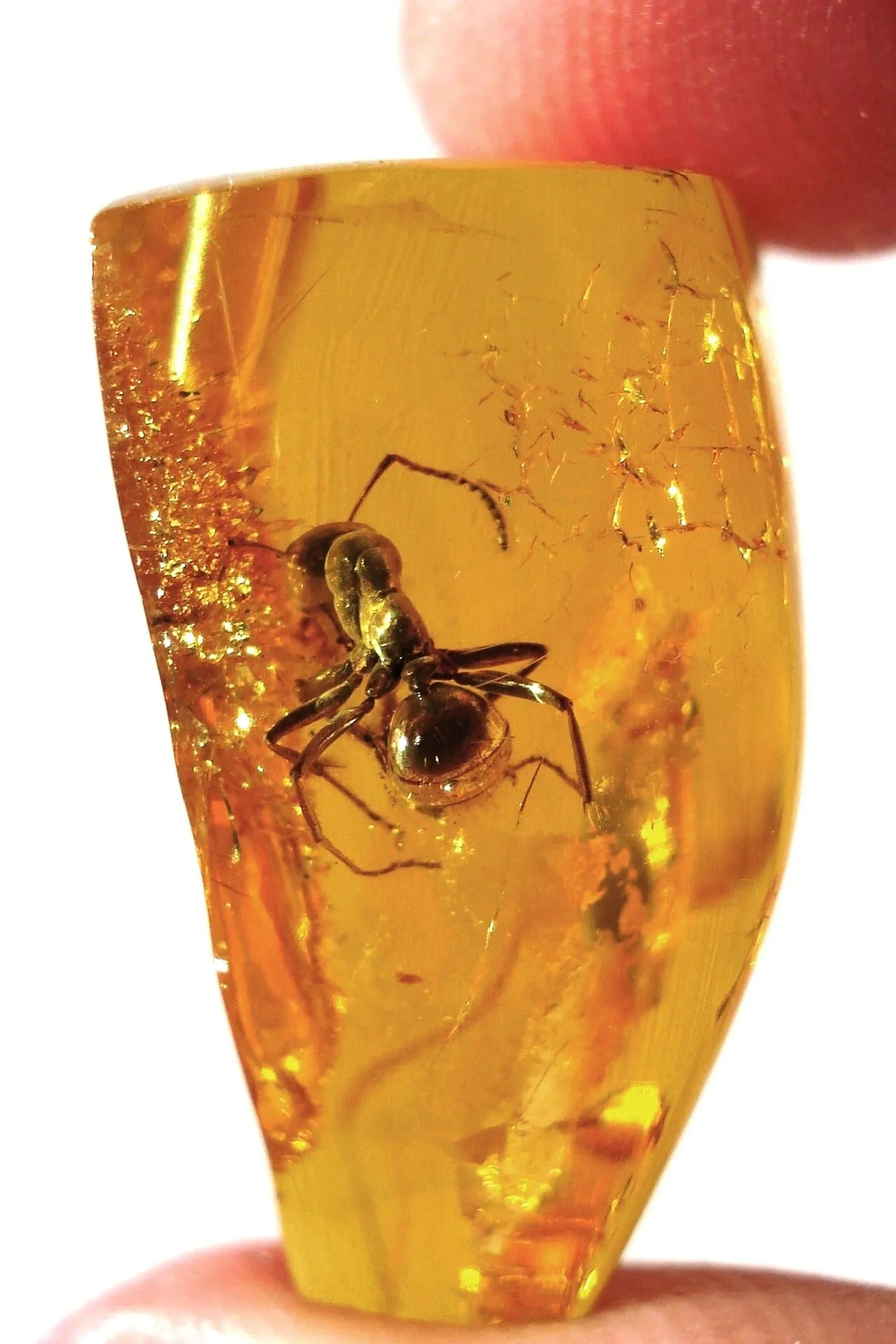
Amber
Tree resin fossilised over millions of years: a light, warm organic gem that sometimes holds prehistoric insects.
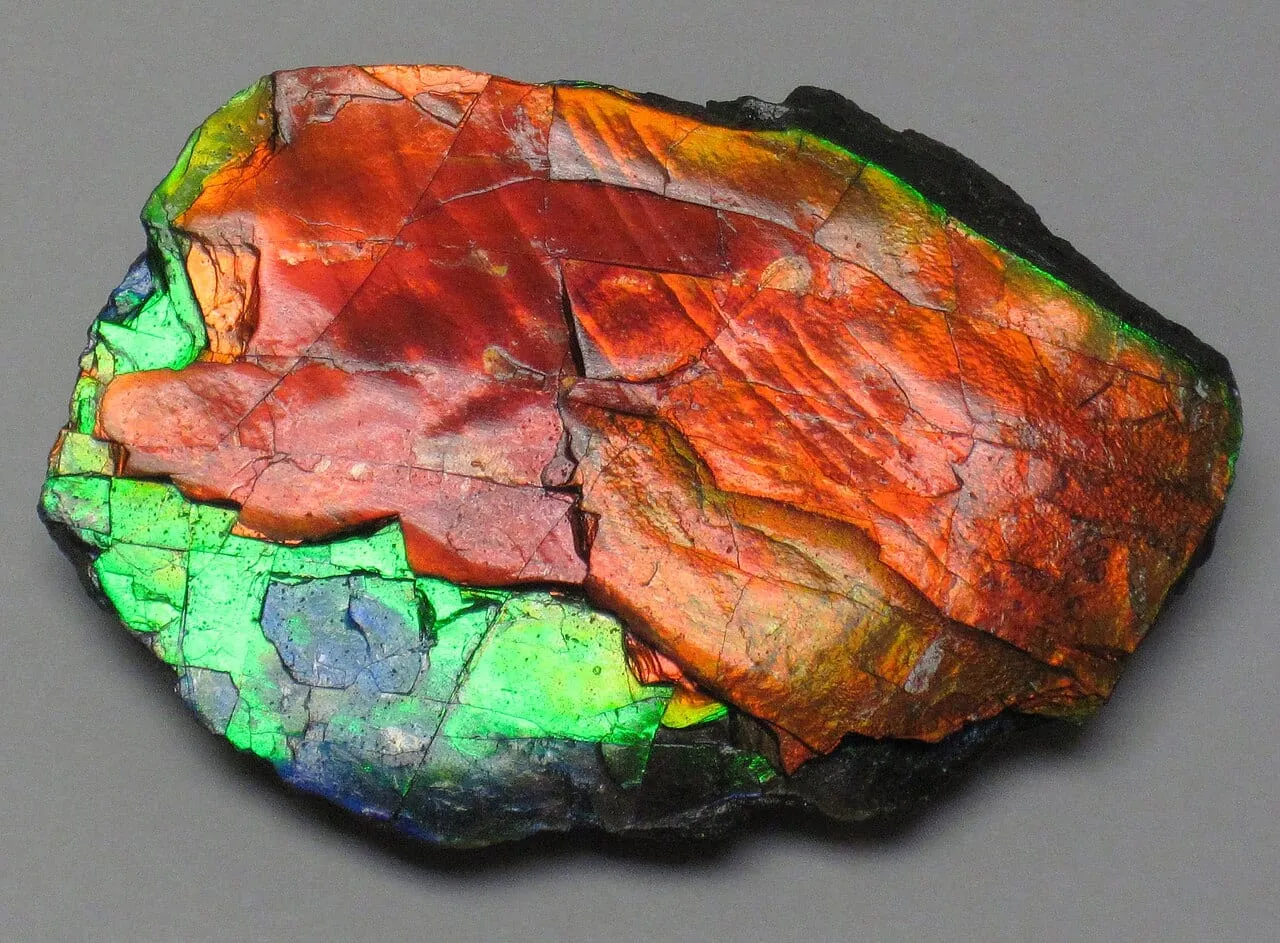
Ammolite
The rainbow-bright layer of fossil ammonite shell; of gem quality it comes only from the Canadian province of Alberta.
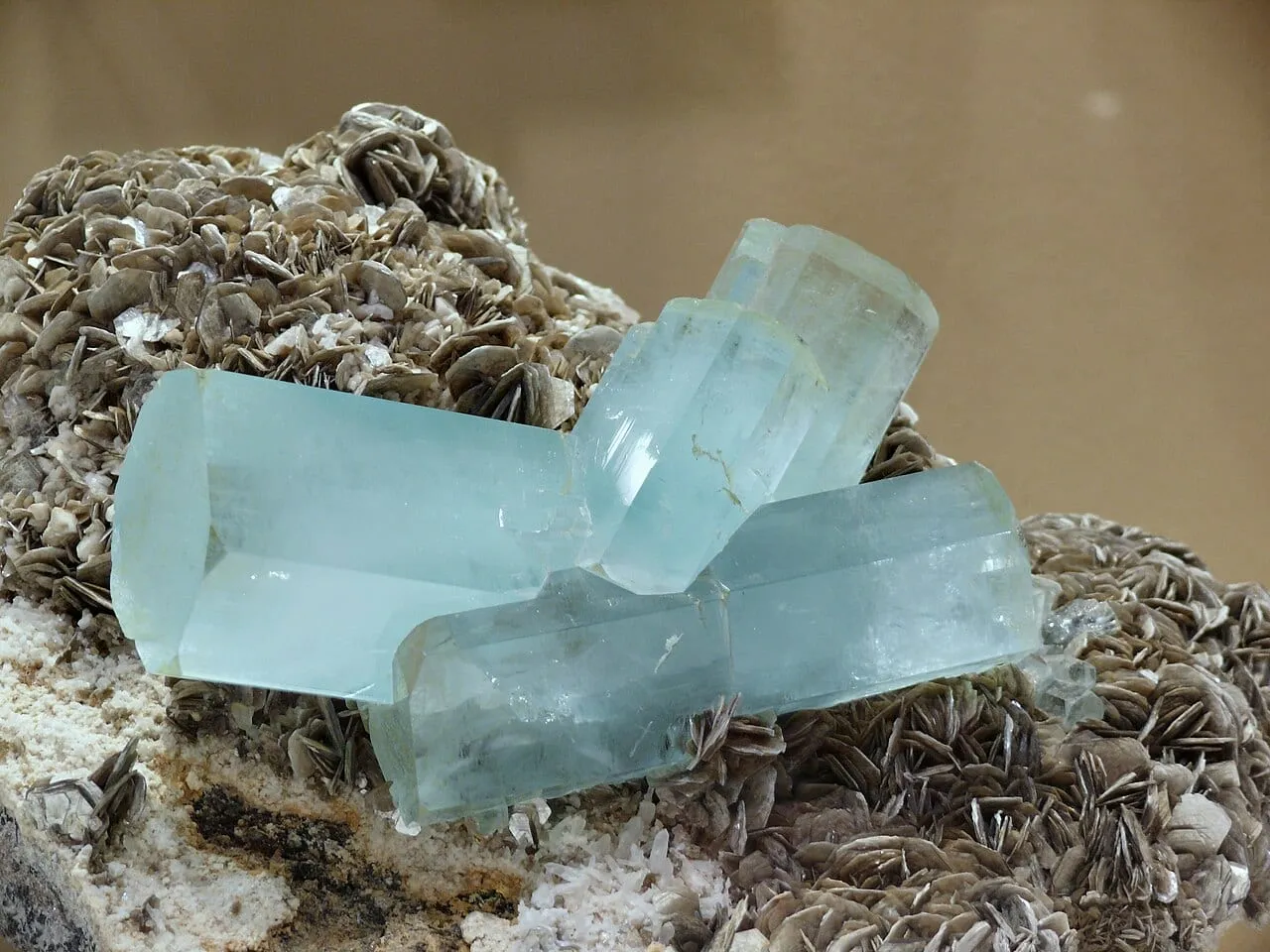
Aquamarine
The blue member of the beryl family, named after seawater: often found as large, clear, nearly flawless crystals.