VarietyA variety of Chalcedony
Carnelian
SiO₂Karneol
Translucent chalcedony coloured orange to red by iron oxide: an ancient stone made into beads, seals and jewellery for thousands of years.
Also known as: Cornelian · Sard (darker, harder form)
- Popularly: Semi-precious stone
- Gemstone
- Ornamental
In short
Carnelian is the variety of chalcedony coloured by iron oxide impurities from pale orange through brownish red to almost black. Its darker and harder form, sard, shades into it without a sharp boundary, and the two names are often used interchangeably. Most of the stone sold as carnelian is in fact pale agate that has been heated or dyed to colour it. People have made beads and seals from carnelian since the Neolithic.
Photos
How does it form?
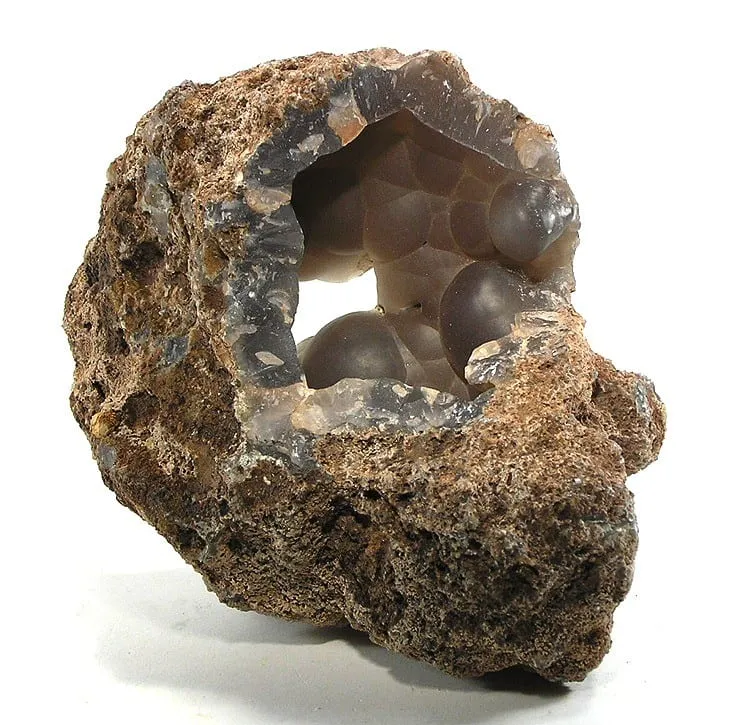
Like all chalcedony, carnelian forms when silica-rich waters deposit very fine quartz fibres in cracks and hollows in rocks. It gets its colour from iron compounds. Heating turns iron hydroxides into iron oxide, so the red tones of the stone deepen when it is heated, even by the heat of the sun. Most stone sold as carnelian is therefore heated or dyed pale agate.
What is it used for?
- Beads and jewellery: bead-making in carnelian goes back to the Neolithic; the Indus Valley Civilization made etched carnelian beads in the 3rd millennium BC. Today it is used for tumbled stones, beads and cabochons.
- Seals and engraved stones: in Roman times signet rings were made of carnelian, while sard was used for Assyrian cylinder seals and for Egyptian and Phoenician scarabs.
- History: the seal that Napoleon found during the Egyptian campaign and carried with him for years was also carnelian (Kunz).
Sard and carnelian
The names carnelian (cornelian) and “sard” are often used for the same stone. As a rule, sard is darker and harder. According to Pliny the Elder, sard took its name from the city of Sardis in Lydia.
What determines its value?
The value of carnelian depends on its colour (a deep, saturated and even orange-red is the most sought after), translucency, cleanliness, and whether the colour is natural or the result of heat treatment. Carnelian is the best-known and generally least expensive variety of chalcedony; most is made into tumbled stones, beads and cabochons. Heated or dyed stones are common and should be disclosed. Old engraved seals and carvings, however, may have artistic and collector value.
This information is educational, not buying, selling or investment advice. Value varies enormously with quality and treatment.
How to recognise it
- 1
Held to the light, light passes through its thin edges (it is translucent); its colour lies between orange and brownish red, and it is often cloudy or only faintly banded.
- 2
Its hardness is 6.5–7: it scratches glass, and a steel knife cannot scratch it.
- 3
A polished surface has a glassy shine; a broken surface is uneven, with no distinct cleavage plane.
- 4
Red jasper, which looks similar in colour, lets no light through (it is opaque), while carnelian is translucent.
Fakes and imitations
What shops usually don’t tell you:
- Heated or dyed agate: most of what is sold as carnelian is a commoner, paler agate or chalcedony. The iron in it turns bright orange-red when heated. Heating is very common, but the seller should say so.
- Red jasper: looks like carnelian but is opaque. The odem, the first stone on the High Priest’s breastplate, is said to be probably sard but perhaps red jasper, so the two stones were mixed up even in antiquity.
Myths and misconceptions
MythAll carnelian on the market is naturally coloured.
FactMuch of the stone sold as carnelian is pale agate or chalcedony that has been heated or dyed to turn it orange or red. Heating is a common and accepted treatment, but the seller should disclose it.
MythCarnelian and sard are two clearly separate stones.
FactBoth are chalcedony coloured by iron oxide. Sard is generally the darker and harder one, but the properties shade into each other, the boundary is blurred, and the two names are often used interchangeably.
What is it believed to be good for?
This section reports beliefs; it is not health information. There is no scientific evidence for these claims and no stone replaces medical treatment.
The meanings people give this stone, and who holds them:
- It is told that in the East people feared the envious, and that a prayer engraved on a carnelian was believed to protect its wearer from the harm of the envious and of the devil.
- The popularity of carnelian as a talisman in the Islamic world is traced to the story that the Prophet wore a silver ring set with an engraved carnelian on the little finger of his right hand; the imam Jafar is also said to have declared that all the wishes of whoever wore the stone would be granted.
- In earlier times carnelian worn at the neck or on a finger was believed to cool the blood and still anger, and the lapidary of King Alfonso X recommends it to people with a weak voice or timid speech, since the warm-coloured stone was thought to give them courage.
- In Türkiye, some news and crystal-therapy sites claim that carnelian regulates blood circulation, balances low blood pressure, cleanses the kidneys and raises life energy and self-confidence.
What science says
There is no scientific evidence that carnelian protects against the evil eye, calms anger, regulates blood circulation or balances blood pressure; the iron oxide that colours the stone does not mean that it has such an effect on the body. Blood pressure and kidney problems need a doctor’s supervision, and a stone is no substitute for treatment.
Did you know?
The name comes from the Medieval Latin corneolus, related to the cornel cherry (cornum), whose translucent red fruits resemble the stone. The form “carnelian” arose in the 16th century under the influence of the Latin caro (flesh).
The Varna Chalcolithic necropolis in Bulgaria has yielded the earliest faceted carnelian beads, dating from about the middle of the 5th millennium BC.
In Roman times carnelian was widely used for signet rings, because hot wax does not stick to it.
Where is it found?
Loading map…
- Khambhat (Cambay) area, Gujarat, India · Major depositIndia is the main commercial producer of carnelian; the carnelian and agate industry of western India is very old, and the Indus Valley Civilization made etched carnelian beads in the 3rd millennium BC
- Ratnapura, Sabaragamuwa, Sri Lanka · Known localityOne of the significant carnelian localities named by Wikipedia
- Yanacodo, Peru · Known localityWikipedia names Yanacodo as a significant carnelian locality; the point is country-level
- Rio Grande do Sul, Brazil · Known localityGem-quality carnelian also comes from Brazil; the region is known for agate and chalcedony in basalt cavities
- Artigas, Uruguay · Known localityGem-quality carnelian also comes from Uruguay
- Egypt · Known localityNamed as one of the sources of gem-quality carnelian; the source gives no exact site
Locations are approximate to protect sites. Red dots mark places in Türkiye. Open in the big map →
Frequently asked questions
What is carnelian?
Carnelian is the variety of chalcedony coloured by iron oxide impurities from pale orange through brownish red to almost black. Its darker and harder form, sard, shades into it without a sharp boundary, and the two names are often used interchangeably. Most of the stone sold as carnelian is in fact pale agate that has been heated or dyed to colour it. People have made beads and seals from carnelian since the Neolithic.
What is carnelian used for?
Beads and jewellery: bead-making in carnelian goes back to the Neolithic; the Indus Valley Civilization made etched carnelian beads in the 3rd millennium BC. Today it is used for tumbled stones, beads and cabochons. Seals and engraved stones: in Roman times signet rings were made of carnelian, while sard was used for Assyrian cylinder seals and for Egyptian and Phoenician scarabs. History: the seal that Napoleon found during the Egyptian campaign and carried with him for years was also carnelian (Kunz).
How hard is carnelian?
It has a hardness of 6.5–7 on the Mohs scale. It scratches glass and steel; a steel knife cannot scratch it. Its specific gravity is 2.58–2.64 g/cm³.
Where is carnelian found?
Its best-known localities: Khambhat (Cambay) area, Gujarat, India; Ratnapura, Sabaragamuwa, Sri Lanka; Yanacodo, Peru; Rio Grande do Sul, Brazil; Artigas, Uruguay.
How can you tell if carnelian is real?
Held to the light, light passes through its thin edges (it is translucent); its colour lies between orange and brownish red, and it is often cloudy or only faintly banded. Its hardness is 6.5–7: it scratches glass, and a steel knife cannot scratch it. A polished surface has a glassy shine; a broken surface is uneven, with no distinct cleavage plane. Heated or dyed agate: most of what is sold as carnelian is a commoner, paler agate or chalcedony. The iron in it turns bright orange-red when heated. Heating is very common, but the seller should say so.
Is carnelian valuable?
On the “street to diamond” value ladder it sits on step 5 of nine: Ornamental stone. The value of carnelian depends on its colour (a deep, saturated and even orange-red is the most sought after), translucency, cleanliness, and whether the colour is natural or the result of heat treatment. Carnelian is the best-known and generally least expensive variety of chalcedony; most is made into tumbled stones, beads and cabochons. Heated or dyed stones are common and should be disclosed. Old engraved seals and carvings, however, may have artistic and collector value.
What is carnelian good for?
It is told that in the East people feared the envious, and that a prayer engraved on a carnelian was believed to protect its wearer from the harm of the envious and of the devil. The popularity of carnelian as a talisman in the Islamic world is traced to the story that the Prophet wore a silver ring set with an engraved carnelian on the little finger of his right hand; the imam Jafar is also said to have declared that all the wishes of whoever wore the stone would be granted. In earlier times carnelian worn at the neck or on a finger was believed to cool the blood and still anger, and the lapidary of King Alfonso X recommends it to people with a weak voice or timid speech, since the warm-coloured stone was thought to give them courage. In Türkiye, some news and crystal-therapy sites claim that carnelian regulates blood circulation, balances low blood pressure, cleanses the kidneys and raises life energy and self-confidence. There is no scientific evidence that carnelian protects against the evil eye, calms anger, regulates blood circulation or balances blood pressure; the iron oxide that colours the stone does not mean that it has such an effect on the body. Blood pressure and kidney problems need a doctor’s supervision, and a stone is no substitute for treatment. This section reports beliefs; it is not health information. There is no scientific evidence for these claims and no stone replaces medical treatment.
Family
.jpg)

Sources
- Carnelian · Wikipedia
- Carnelian · Geology.com
- Carnelian Value, Price, and Jewelry Information · International Gem Society
- Karnelyan taşı özellikleri nelerdir? Karnelyan taşının en bilinen faydaları · Gazete Vatan, 2024
- The Curious Lore of Precious Stones (G. F. Kunz) · J. B. Lippincott Company (Project Gutenberg), 1913
External links
Draft: awaiting expert reviewReport an error ↗
On the same step
Agate
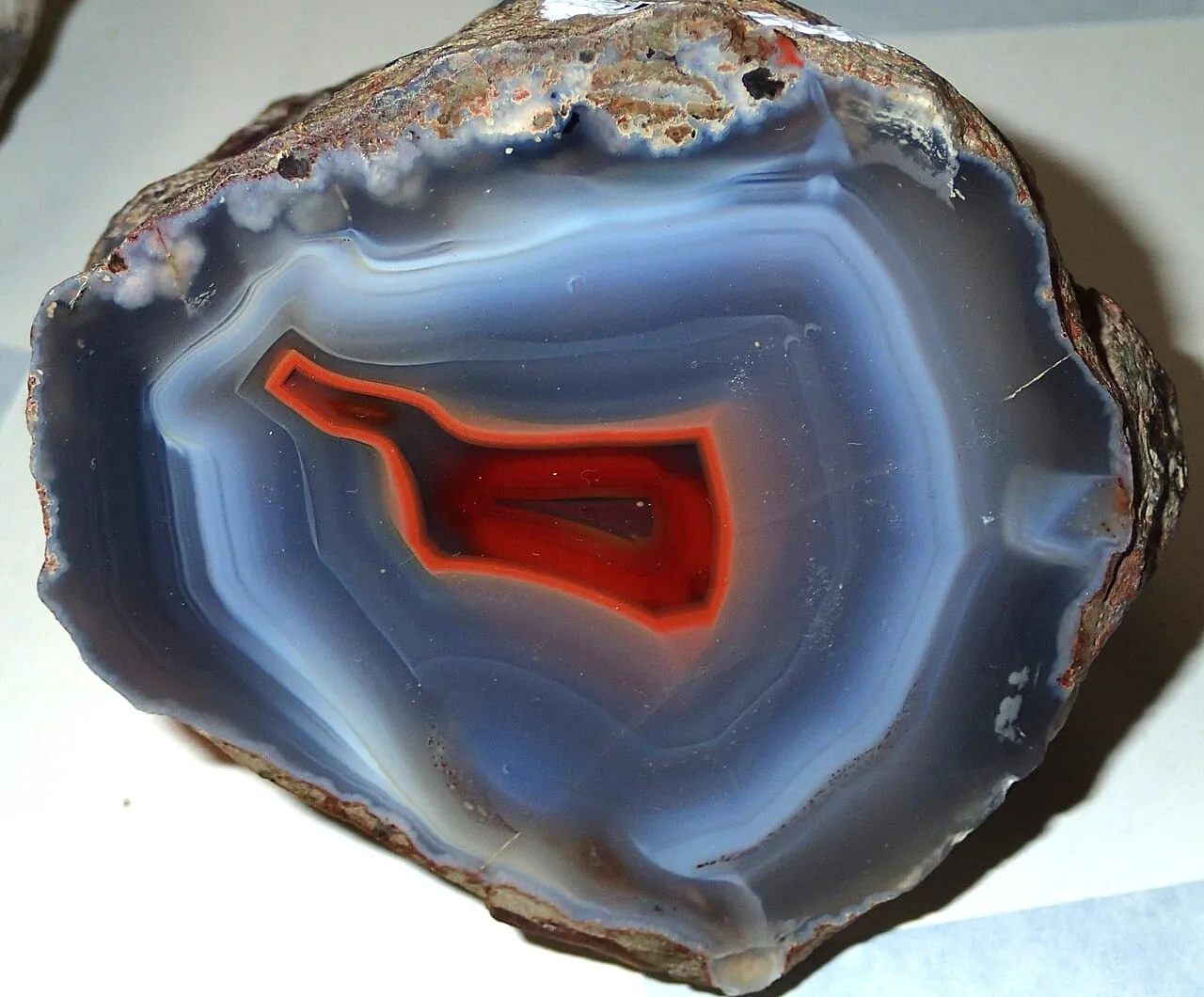
The banded variety of chalcedony: it grows layer by layer in hollows in volcanic rock and shows a new pattern every time it is cut.
Almandine
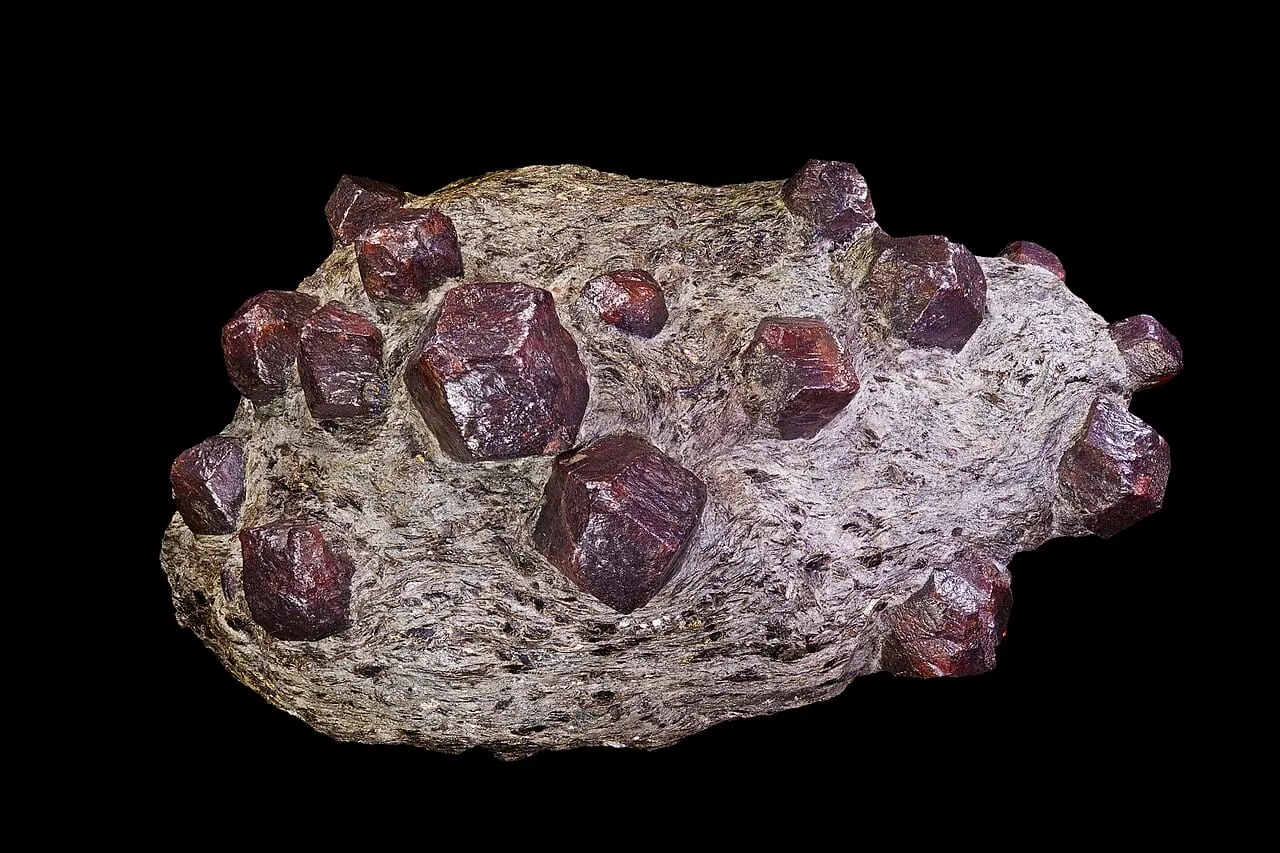
The commonest garnet: a deep red, iron-rich stone named after the ancient city of Alabanda in Anatolia, used in jewellery and in sandpaper alike.
Amazonite
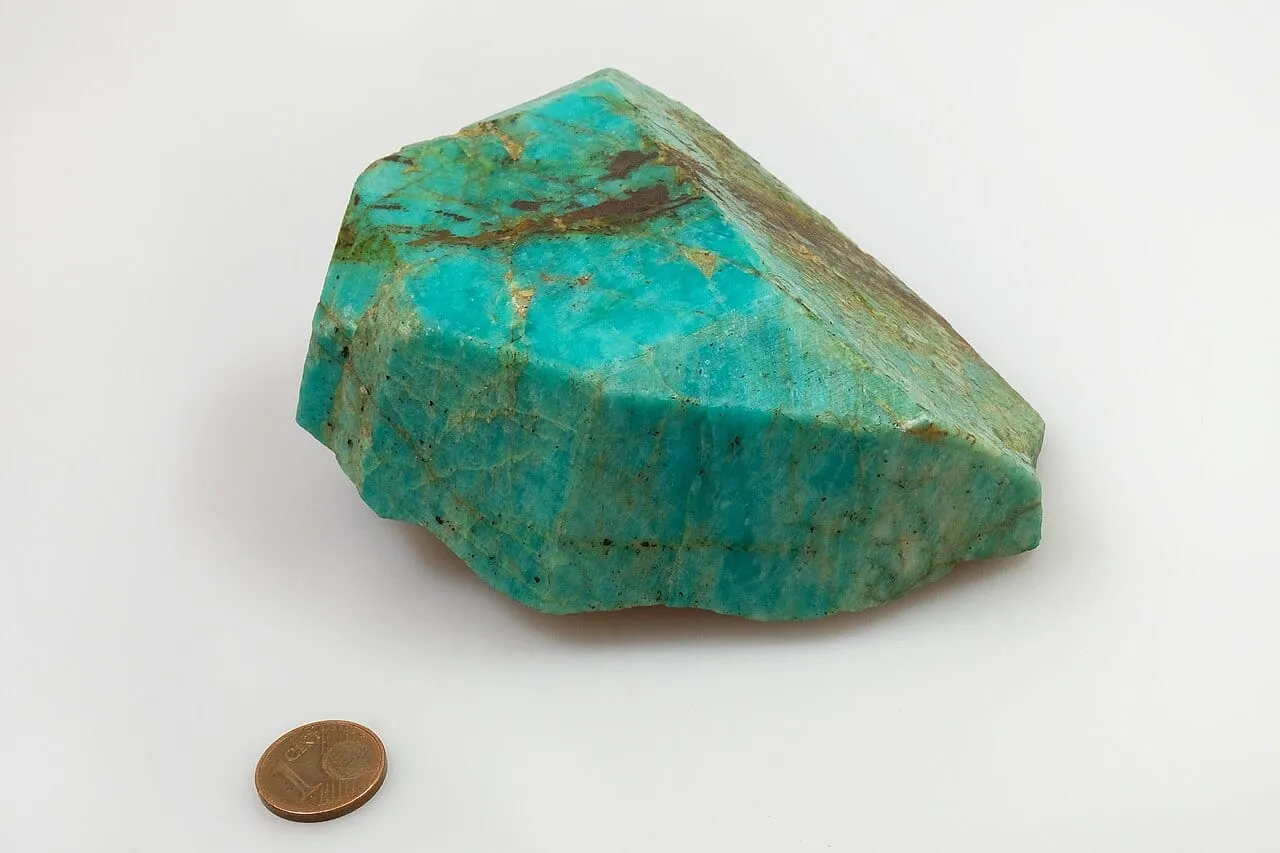
A turquoise-like green-blue feldspar: a variety of microcline worn as jewellery for more than three thousand years, but it can release lead.