Mineral
Arsenopyrite
FeAsSArsenopirit
A widespread silvery-grey sulfide containing arsenic: it smells of garlic when struck and is poisonous.
Also known as: Mispickel · Arsenical pyrites
- Popularly: Ore and raw material
- Ore
- Handle with care
- Important in Türkiye

In short
Arsenopyrite is a metallic mineral made of iron, arsenic and sulfur, coloured between silver-white and steel-grey. About 46 per cent of its weight is arsenic. It is the most abundant and widespread arsenic mineral in the Earth’s crust and one of the main ores of arsenic. It occurs in hot veins, often together with gold, and its name is a contraction of a phrase meaning “arsenical pyrites”.
Photos
.jpg)
How does it form?
Arsenopyrite mostly forms in hydrothermal veins, where hot, metal-bearing waters circulate through cracks in rock and cool, and it is usually one of the first minerals to form in them. It occurs in gold-bearing quartz veins, tin veins, pegmatites and sulfide deposits in rocks changed by heat, and it can also be found in metamorphic rocks such as gneiss and schist. Pyrrhotite, pyrite, chalcopyrite, galena, gold, scheelite and cassiterite are among its companions.
What is it used for?
- Arsenic ore: Arsenopyrite is one of the main ores of arsenic. Arsenic is used today mainly in lead alloys (batteries, ammunition) and semiconductors (gallium arsenide); it has also been used in wood preservatives, weedkillers and insecticides. Industrial arsenic is mostly recovered as a by-product from the dust of copper, gold and lead smelters.
- A pointer in gold prospecting: Because it can occur with gold, it is treated as an indicator of gold-bearing veins.
- Collecting: Its lustrous, sharp crystals appear in mineral collections, but because it is poisonous it must be stored with care.
In Türkiye
At Karabaşvengi, an iron mineralisation about 5 km north-east of the main iron deposit in Divriği, Sivas, a little arsenopyrite has been reported besides the dominant magnetite; pyrite, chalcopyrite, pyrrhotite, marcasite, sphalerite and galena occur in the same mineralisation. Arsenopyrite may occur at other deposits in Türkiye as well, but this page shows only the place we could verify from a source.
What determines its value?
Arsenopyrite is not valued as an ore in its own right: arsenic is poisonous, its uses are limited and it needs extra precautions in processing, so its worth mostly depends on the gold it contains or accompanies. In many arsenopyrite gold ores the gold is locked inside the mineral and cannot be recovered easily with cyanide, which raises the cost of processing. For collectors, sharp, lustrous, undamaged crystals and specimens from famous deposits such as Freiberg or Panasqueira are sought.
This information is educational, not buying, selling or investment advice. Value varies enormously with quality and treatment.
How to recognise it
- 1
Its colour lies between silver-white and steel-grey; it is not golden yellow like pyrite and chalcopyrite. The lustre is metallic and the streak is black.
- 2
Its hardness is 5.5–6, clearly harder than copper sulfides such as bornite, covellite and chalcocite.
- 3
It is very dense (specific gravity 5.9–6.2): it feels heavy for its size.
- 4
Crystals are usually striated prisms or thick plates; twinning can make star-shaped or cross-shaped crystal groups. It also occurs as massive and granular aggregates.
- 5
It gives off a garlic smell when struck or heated. The smell comes from arsenic and should never be used as an identification test.
Safety
Arsenopyrite contains about 46 per cent arsenic by weight; it is poisonous if swallowed or if its dust is breathed in. Do not lick it, put it in your mouth or eat it; never put it in water to make “gem water” or an “elixir”. Do not heat it (poisonous arsenic fumes are released), do not break it to sniff it, and do not crush or sand it. On exposure to air it slowly turns into iron arsenates; do not touch specimens whose surface has started to decay with bare hands, and do not breathe their dust. According to the World Health Organization, long exposure to arsenic can cause skin, bladder and lung cancer. Wash your hands after handling. Keep specimens away from children and pets, in a closed container.
Myths and misconceptions
MythWhere there is arsenopyrite, there is gold.
FactArsenopyrite often occurs with gold and is used as one of the indicators of gold-bearing veins, but not every arsenopyrite-bearing rock contains gold. Where it does, the gold is often locked inside the mineral and cannot be recovered easily with cyanide.
MythThe garlic smell given off when it is struck is a harmless way to recognise arsenopyrite.
FactThe garlic smell comes from arsenic; it is arsenic vapour released when the mineral is struck or heated, and that vapour is poisonous. Hardness, streak and density are safer clues; a specialist or a laboratory should make the final identification.
Did you know?
Its name is a contraction of the phrase arsenical pyrites; older books also call it “mispickel”, a name of German origin.
Arsenopyrite crystals can grow up to 30 cm; twinning produces star-shaped trillings and cross-shaped twins.
Where is it found?
Loading map…
- Freiberg, Saxony, Germany · Known localityOne of the places the Handbook of Mineralogy names for large, fine arsenopyrite crystals
- Panasqueira, Castelo Branco, Portugal · Known localityA mining district the Handbook of Mineralogy names for arsenopyrite
- Boliden, Västerbotten, Sweden · Known localityOne of the Swedish localities the Handbook of Mineralogy names for arsenopyrite
- Cobalt district, Ontario, Canada · Known localityAn arsenopyrite analysis in the Handbook comes from the O'Brien mine at Cobalt
- Santa Eulalia, Chihuahua, Mexico · Known localityA mining district the Handbook of Mineralogy names for arsenopyrite
- Tavistock, Devon, England · Historic sourceThe Handbook of Mineralogy lists Tavistock in Devon, besides many Cornish mines, among its arsenopyrite localities
- Ashio, Tochigi, Japan · Known localityAccording to the Handbook of Mineralogy, the Ashio mine has large arsenopyrite crystals (coordinate is the town centre)
- Karabaşvengi, Divriği, Sivas, Türkiye · Known localityA little arsenopyrite is reported from the Karabaşvengi iron mineralisation, about 5 km north-east of the main Divriği iron deposit (coordinate is the district centre)
Locations are approximate to protect sites. Red dots mark places in Türkiye. Open in the big map →
Frequently asked questions
What is arsenopyrite?
Arsenopyrite is a metallic mineral made of iron, arsenic and sulfur, coloured between silver-white and steel-grey. About 46 per cent of its weight is arsenic. It is the most abundant and widespread arsenic mineral in the Earth’s crust and one of the main ores of arsenic. It occurs in hot veins, often together with gold, and its name is a contraction of a phrase meaning “arsenical pyrites”.
What is arsenopyrite used for?
Arsenic ore: Arsenopyrite is one of the main ores of arsenic. Arsenic is used today mainly in lead alloys (batteries, ammunition) and semiconductors (gallium arsenide); it has also been used in wood preservatives, weedkillers and insecticides. Industrial arsenic is mostly recovered as a by-product from the dust of copper, gold and lead smelters. A pointer in gold prospecting: Because it can occur with gold, it is treated as an indicator of gold-bearing veins. Collecting: Its lustrous, sharp crystals appear in mineral collections, but because it is poisonous it must be stored with care.
How hard is arsenopyrite?
It has a hardness of 5.5–6 on the Mohs scale. It can scratch glass; a steel knife scratches it only with difficulty. Its specific gravity is 5.9–6.2 g/cm³.
Where is arsenopyrite found?
Its best-known localities: Tavistock, Devon, England; Freiberg, Saxony, Germany; Panasqueira, Castelo Branco, Portugal; Boliden, Västerbotten, Sweden; Cobalt district, Ontario, Canada.
Where is arsenopyrite found in Türkiye?
Known localities in Türkiye: Karabaşvengi, Divriği, Sivas, Türkiye.
How can you tell if arsenopyrite is real?
Its colour lies between silver-white and steel-grey; it is not golden yellow like pyrite and chalcopyrite. The lustre is metallic and the streak is black. Its hardness is 5.5–6, clearly harder than copper sulfides such as bornite, covellite and chalcocite. It is very dense (specific gravity 5.9–6.2): it feels heavy for its size.
Is arsenopyrite valuable?
On the “street to diamond” value ladder it sits on step 4 of nine: Fine dimension stone and ore. Arsenopyrite is not valued as an ore in its own right: arsenic is poisonous, its uses are limited and it needs extra precautions in processing, so its worth mostly depends on the gold it contains or accompanies. In many arsenopyrite gold ores the gold is locked inside the mineral and cannot be recovered easily with cyanide, which raises the cost of processing. For collectors, sharp, lustrous, undamaged crystals and specimens from famous deposits such as Freiberg or Panasqueira are sought.
Is arsenopyrite dangerous?
Arsenopyrite contains about 46 per cent arsenic by weight; it is poisonous if swallowed or if its dust is breathed in. Do not lick it, put it in your mouth or eat it; never put it in water to make “gem water” or an “elixir”. Do not heat it (poisonous arsenic fumes are released), do not break it to sniff it, and do not crush or sand it. On exposure to air it slowly turns into iron arsenates; do not touch specimens whose surface has started to decay with bare hands, and do not breathe their dust. According to the World Health Organization, long exposure to arsenic can cause skin, bladder and lung cancer. Wash your hands after handling. Keep specimens away from children and pets, in a closed container.
Sources
- Handbook of Mineralogy: Arsenopyrite · Mineralogical Society of America
- Arsenopyrite · Wikipedia
- Arsenic · Wikipedia
- Arsenic (fact sheet) · World Health Organization
- Murmano Granitoidi'nin (Divriği-Sivas) Kuzeyindeki Karabaşvengi Demir Cevherleşmesi ve Divriği Demir Yataklarının Kökeninin İrdelenmesi (A. R. Çolakoğlu, T. Arıkal, U. Akın) · 56. Türkiye Jeoloji Kurultayı bildiri özü (Maden Yatakları oturumu)
- Divriği · Wikipedia
External links
Draft: awaiting expert reviewReport an error ↗
On the same step
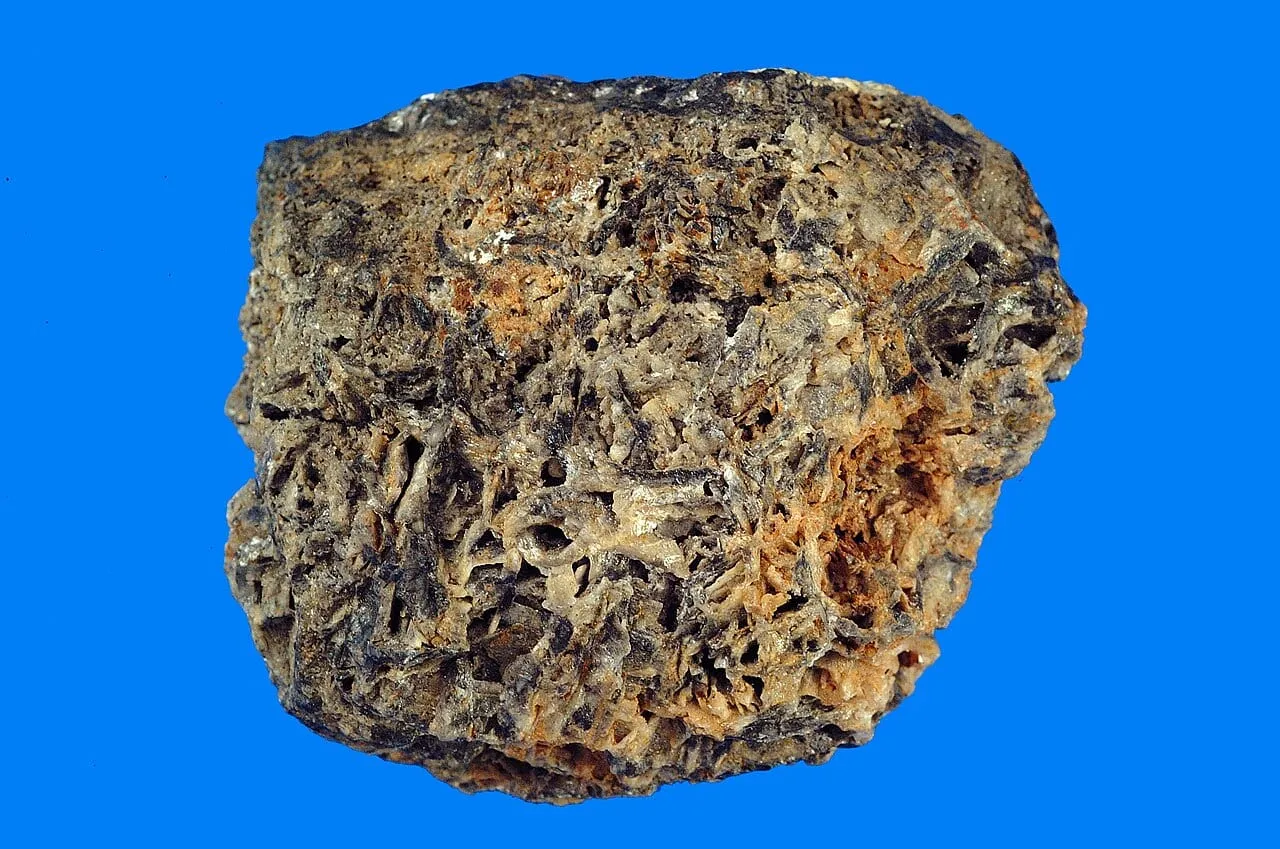
Anglesite
A heavy lead sulfate mineral with a diamond-like shine that grows as a crust around galena; it is named after the island of Anglesey in Wales.
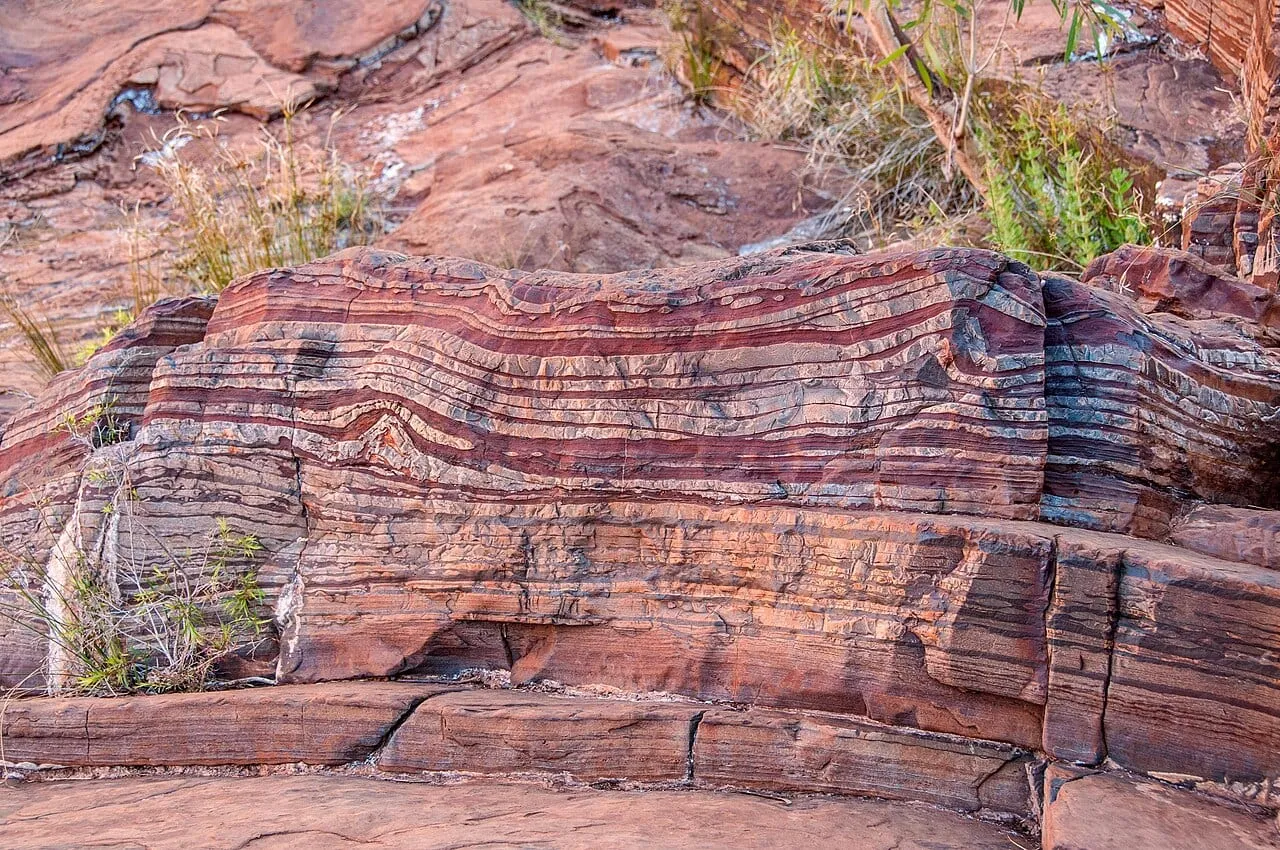
Banded iron formation
An ancient rock of alternating iron-oxide and chert bands: the record of oxygen beginning to build up on Earth, and the main source of iron ore.
Bastnäsite
One of the main ore minerals of the “rare earth” elements such as cerium, lanthanum and neodymium; a raw material for magnets and electronics.