VarietyA variety of Chalcedony
Fire agate
SiO₂Ateş akiği
“Fire” in red, orange, green and sometimes blue and violet inside brown chalcedony, found only in the south-western United States and Mexico.
- Popularly: Semi-precious stone
In short
Fire agate is a brown or reddish-brown, grape-like (botryoidal) variety of chalcedony. Extremely thin layers of iron oxide inside it reflect and refract light, producing red, golden orange and green, and sometimes blue and violet, flashes that seem to come from deep within the stone. Despite the word “agate” in its name it is usually unbanded, so strictly speaking it counts as a kind of chalcedony. Its only known deposits are in central and northern Mexico and in the US states of Arizona, California and New Mexico.
Photos
How does it form?
Fire agate formed during a period of intense volcanic activity some 24 to 36 million years ago. Hot water saturated with silica and iron oxide filled cracks and cavities in the surrounding rock and solidified there into chalcedony layered with iron oxide. Very thin layers of chalcedony were laid down one on top of another, building a bumpy structure like a bunch of grapes. Some of the layers carry a thin film of goethite or limonite (iron oxide-hydroxides); these minerals give the stone its brown colour.
At the Deer Creek deposit in Arizona, fire agate occurs in veins and cracks in volcanic rocks and tuffs of Middle Eocene to Miocene age. A study published in 2020 found tiny scattered grains of iron and titanium oxides (magnetite, maghemite, anatase and rutile) inside layered, grape-like silica bubbles in these stones and linked the colours to that structure. In other words, research into exactly how the fire arises is still going on.
Where do the colours come from?
As light passes through the extremely thin films of chalcedony and iron oxide, part of it is reflected and part refracted, and the reflected waves reinforce or cancel one another. This is called interference; the colours of a soap bubble or of an oil film on water arise the same way. That is why the colours of fire agate differ both from opal’s play of colour and from the way a diamond splits light into colours.
What is it used for?
- Jewellery: It is hard and takes a good polish, so it can be used in almost any kind of jewellery, such as rings, pendants and earrings. It is not faceted; it is made into freeform cabochons that follow its natural shape.
- Collecting: Rough and polished pieces are sought by collectors and museums.
- Rockhounding and local craft: Some areas in Arizona and California are open to rock collectors. In the Mexican state of Aguascalientes, cutting and polishing the stone has become a local craft.
What determines its value?
What matters most is the colour, brightness and coverage of the “fire”: stones showing many colours together are sought after, and blue and violet are the most prized. Cutting skill is crucial: because the coloured layer is so thin, a stone that is ground too far loses its fire, and a good stone is worked by hand into a freeform cabochon that follows the pattern. Size, freedom from cracks and a famous source also matter to collectors. With so few deposits, it is rarer than ordinary agate.
This information is educational, not buying, selling or investment advice. Value varies enormously with quality and treatment.
How to recognise it
- 1
On a brown background, red, orange, golden yellow and green flashes shift as the stone is turned; blue and violet are rarer.
- 2
The surface is made of small bumps like a bunch of grapes; the colours follow the shape of these bumps and seem to come from inside the stone rather than from its surface.
- 3
It belongs to the quartz family and is hard (6.5–7): it scratches glass. It is harder than opal.
- 4
It is not faceted; it is carefully worked by hand into freeform cabochons that follow its natural shape, so as to expose the coloured layer.
Myths and misconceptions
MythFire agate is the same stone as Mexican fire opal.
FactBoth come from Mexico and their names are alike, but fire agate is chalcedony, a form of quartz, whereas fire opal is opal. Fire agate is harder than opal, and its colours come from thin iron-oxide layers rather than from opal's play of colour.
MythFire agate is a banded stone like agate.
FactFire agate usually lacks the bands typical of agate; its colours come not from bands but from thin iron-oxide films inside its grape-like layers. That is why, strictly speaking, it counts as a kind of chalcedony.
What is it believed to be good for?
This section reports beliefs; it is not health information. There is no scientific evidence for these claims and no stone replaces medical treatment.
The meanings people give this stone, and who holds them:
- Today crystal-therapy websites claim that fire agate forms a protective shield around its wearer and reflects harm back to where it came from.
- The same sources claim that the stone gives courage and self-confidence, boosts vitality and even rejuvenates the body.
What science says
Fire agate is made of chemically inert silica with a little iron oxide, and its colours come from light interfering in thin layers. There is no scientific evidence that it protects, gives courage or vitality, or rejuvenates the body. Because fire agate was only recognised in the mid-20th century, it also has no tradition of belief reaching back to ancient times.
Did you know?
According to the US Bureau of Land Management (BLM), fire agate was only recognised in the 1930s, and its use as a jewellery stone dates from the 1940s, which makes it a very young gem.
At the Black Hills Rockhound Area near Safford, Arizona, anyone may search and dig for fire agate without paying a fee or getting a permit.
In the Mexican state of Aguascalientes the deposit was noticed in the late 1960s; in the early 1970s local people learned lapidary work and began cutting and selling the stone themselves.
According to GIA's journal Gems & Gemology, the finest fire agates can rival Australian black opal in appearance.
Where is it found?
Loading map…
- Black Hills Rockhound Area, Graham County, Arizona, USA · Major depositPublic land about 18 miles north of Safford where anyone may dig without a fee or permit; fire agate is the main attraction
- Deer Creek, Galiuro Mountains, Graham County, Arizona, USA · Major depositFire agate in veins and cracks of Middle Eocene to Miocene volcanic rocks and tuffs; studied in scientific research
- Opal Hill Mine, Mule Mountains (near Palo Verde), Riverside County, California, USA · Known localityA private claim known for fire agate, open to fee collecting since 1965
- Aguascalientes State (El Terrero workings and Calvillo area), Mexico · Major depositIn the open pits of El Terrero the agate is found in cavities; the deposit was noticed in the late 1960s and local people began cutting the stone in the early 1970s
- Chihuahua State, Mexico · Known localityListed among the fire agate deposits; no exact site is given
- San Luis Potosí State, Mexico · Known localityListed among the places where fire agate occurs; no exact site is given
Locations are approximate to protect sites. Red dots mark places in Türkiye. Open in the big map →
Frequently asked questions
What is fire agate?
Fire agate is a brown or reddish-brown, grape-like (botryoidal) variety of chalcedony. Extremely thin layers of iron oxide inside it reflect and refract light, producing red, golden orange and green, and sometimes blue and violet, flashes that seem to come from deep within the stone. Despite the word “agate” in its name it is usually unbanded, so strictly speaking it counts as a kind of chalcedony. Its only known deposits are in central and northern Mexico and in the US states of Arizona, California and New Mexico.
What is fire agate used for?
Jewellery: It is hard and takes a good polish, so it can be used in almost any kind of jewellery, such as rings, pendants and earrings. It is not faceted; it is made into freeform cabochons that follow its natural shape. Collecting: Rough and polished pieces are sought by collectors and museums. Rockhounding and local craft: Some areas in Arizona and California are open to rock collectors. In the Mexican state of Aguascalientes, cutting and polishing the stone has become a local craft.
How hard is fire agate?
It has a hardness of 6.5–7 on the Mohs scale. It scratches glass and steel; a steel knife cannot scratch it. Its specific gravity is 2.6–2.64 g/cm³.
Where is fire agate found?
Its best-known localities: Black Hills Rockhound Area, Graham County, Arizona, USA; Deer Creek, Galiuro Mountains, Graham County, Arizona, USA; Aguascalientes State (El Terrero workings and Calvillo area), Mexico; Opal Hill Mine, Mule Mountains (near Palo Verde), Riverside County, California, USA; Chihuahua State, Mexico.
How can you tell if fire agate is real?
On a brown background, red, orange, golden yellow and green flashes shift as the stone is turned; blue and violet are rarer. The surface is made of small bumps like a bunch of grapes; the colours follow the shape of these bumps and seem to come from inside the stone rather than from its surface. It belongs to the quartz family and is hard (6.5–7): it scratches glass. It is harder than opal.
Is fire agate valuable?
On the “street to diamond” value ladder it sits on step 6 of nine: Fine ornamental and collector stone. What matters most is the colour, brightness and coverage of the “fire”: stones showing many colours together are sought after, and blue and violet are the most prized. Cutting skill is crucial: because the coloured layer is so thin, a stone that is ground too far loses its fire, and a good stone is worked by hand into a freeform cabochon that follows the pattern. Size, freedom from cracks and a famous source also matter to collectors. With so few deposits, it is rarer than ordinary agate.
What is fire agate good for?
Today crystal-therapy websites claim that fire agate forms a protective shield around its wearer and reflects harm back to where it came from. The same sources claim that the stone gives courage and self-confidence, boosts vitality and even rejuvenates the body. Fire agate is made of chemically inert silica with a little iron oxide, and its colours come from light interfering in thin layers. There is no scientific evidence that it protects, gives courage or vitality, or rejuvenates the body. Because fire agate was only recognised in the mid-20th century, it also has no tradition of belief reaching back to ancient times. This section reports beliefs; it is not health information. There is no scientific evidence for these claims and no stone replaces medical treatment.
Family
.jpg)

Sources
- Fire agate · Wikipedia
- Dragon’s Eye in Fire Agate (Micro-World), Gems & Gemology 51(4) · GIA, 2015
- Fire Agate · Geology.com
- Gem Focus: Fire Agate, the chalcedony with a flaming iridescence · GemGuide, 2025
- Black Hills Rockhound Area · U.S. Bureau of Land Management
- Opal Hill Mine · DesertUSA
- Fire phenomenon in agate from Deer Creek (Arizona, USA) (Dumańska-Słowik et al.), Goldschmidt 2020 abstract · Geochemical Society / European Association of Geochemistry, 2020
- Fire agate from Deer Creek deposit (Arizona, USA) – new insights into structure and mineralogy (Natkaniec-Nowak et al.), Mineralogical Magazine 84 · Cambridge University Press, 2020
- Deer Creek Fire Agate · ProjectilePoints.net
- Ágata de fuego (Aguascalientes) · México Desconocido
External links
Draft: awaiting expert reviewReport an error
On the same step
Achondrite
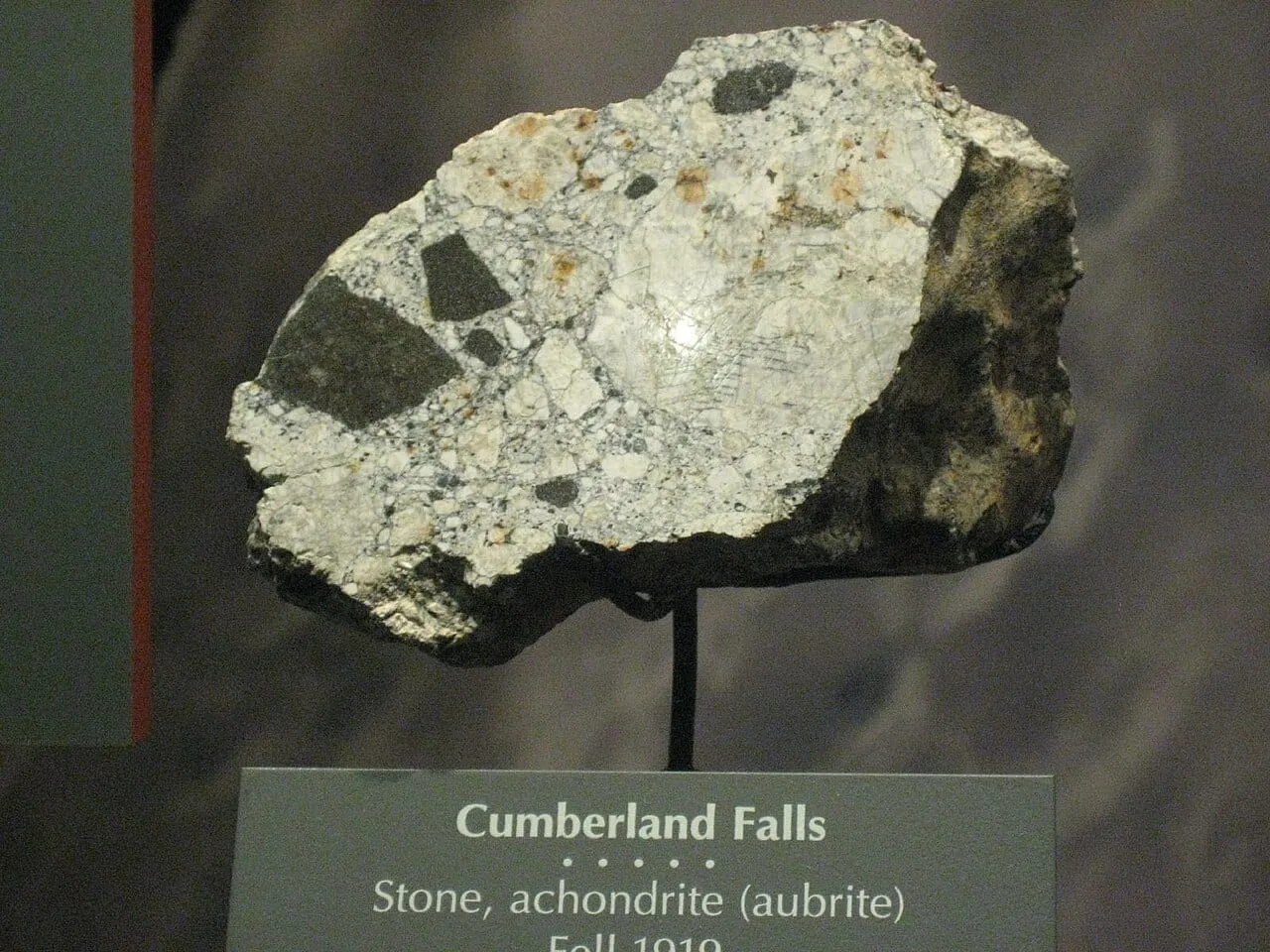
Stony meteorites with no chondrules: rock from melted asteroids, the Moon and Mars, and hard to recognise because they look like Earth rocks.
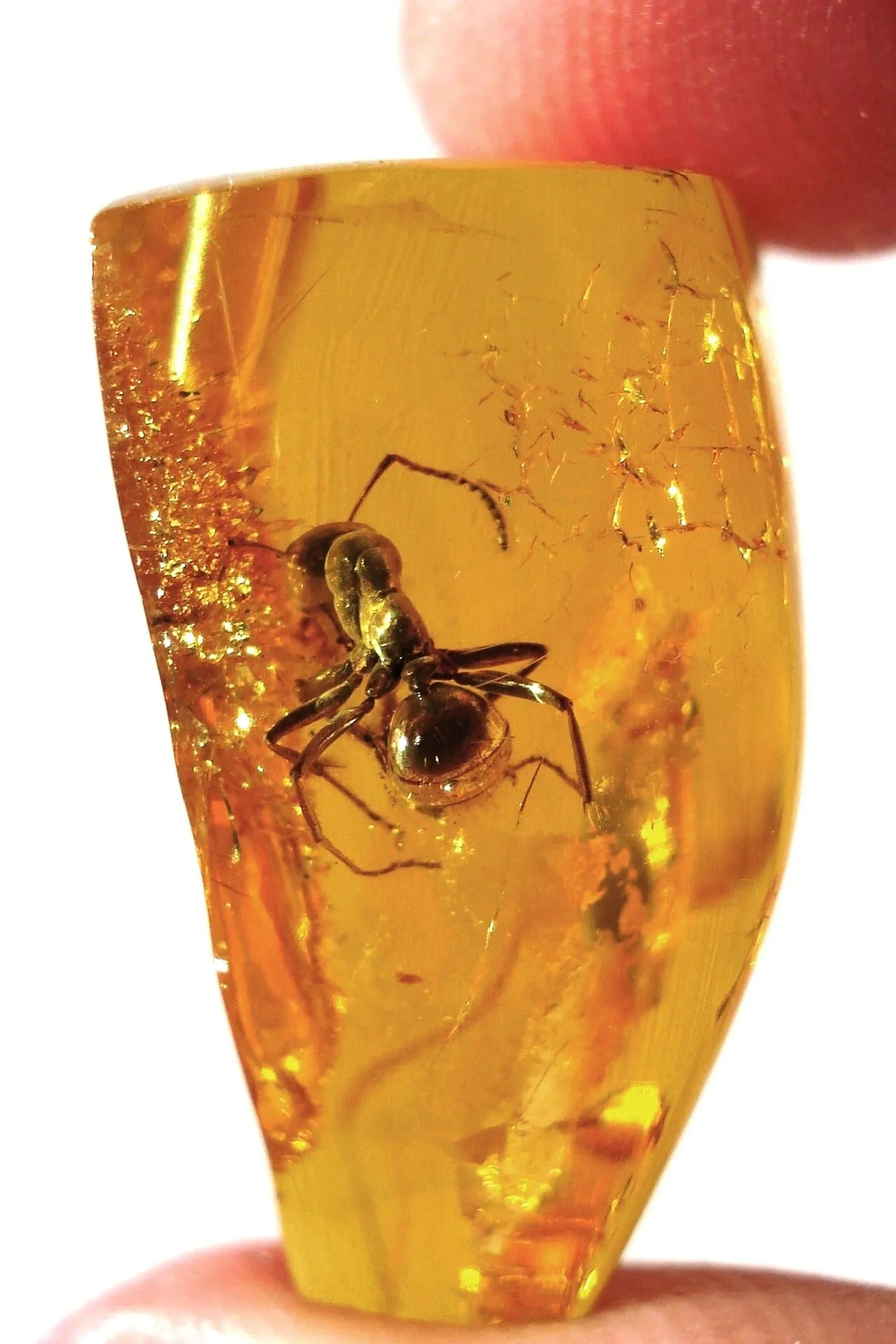
Amber
Tree resin fossilised over millions of years: a light, warm organic gem that sometimes holds prehistoric insects.
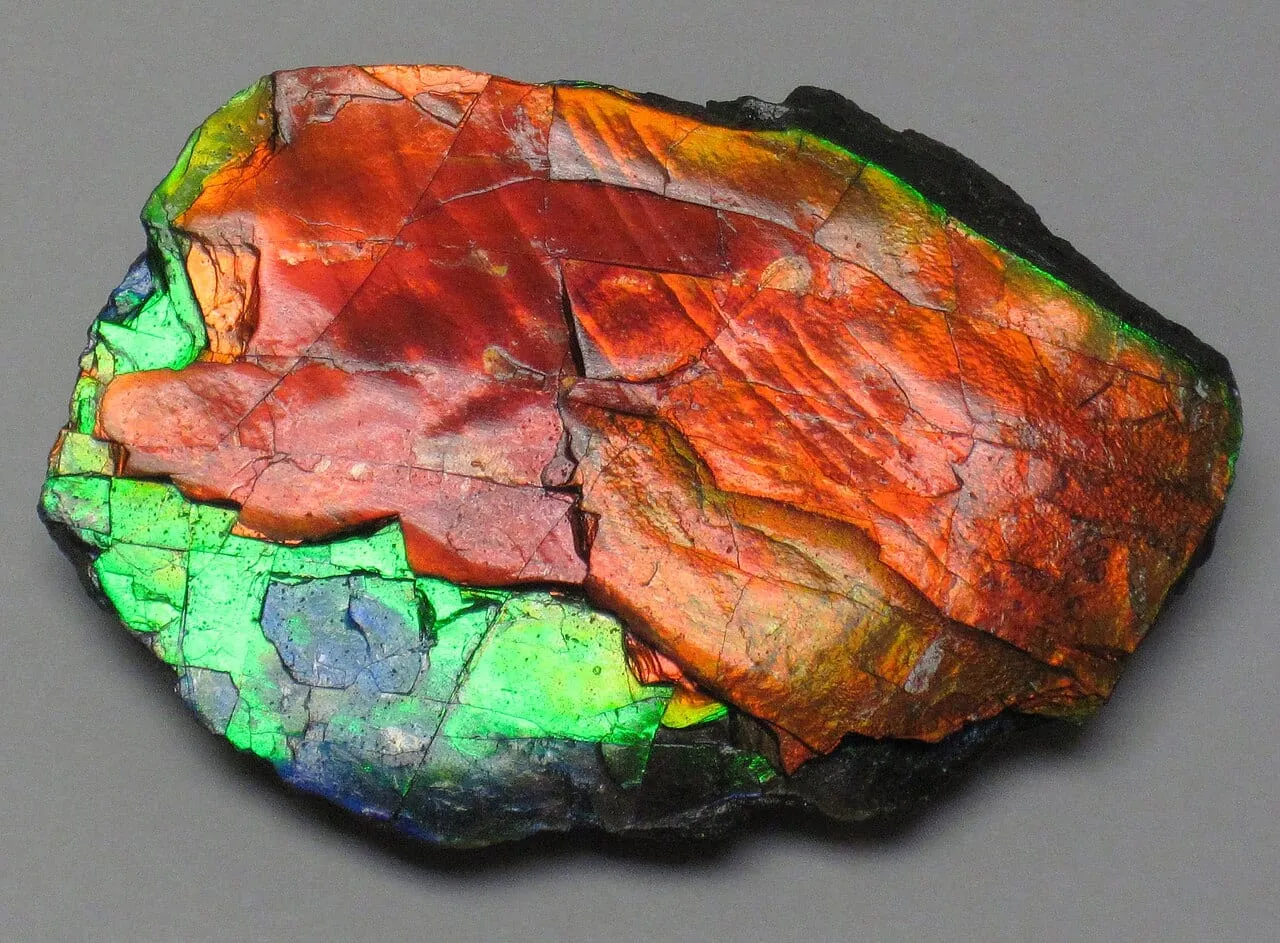
Ammolite
The rainbow-bright layer of fossil ammonite shell; of gem quality it comes only from the Canadian province of Alberta.