VarietyA variety of Gypsum
Alabaster
CaSO₄·2H₂OKaymak taşı
The fine-grained, translucent form of gypsum: a white stone soft enough to scratch with a fingernail, carved into statues, vessels and lamps for thousands of years.
Also known as: Gypsum alabaster
- Popularly: Natural stone (building and decor)
In short
Alabaster is the fine-grained, massive form of gypsum. At its purest it is snow-white and translucent; where iron oxide is mixed in, it shows brown clouds and veins. Because it carves so easily, it was used for statues, reliefs and ornaments from Mesopotamia to medieval England. The same name is also used for the banded calcite worked in ancient Egypt; the two are different stones.
Photos
How does it form?
Alabaster forms in the same way as gypsum. When water evaporates in enclosed seas, lagoons and lakes, calcium sulfate is deposited and builds thick evaporite beds. Alabaster is the very fine-grained, dense, massive part of these beds. Iron oxide mixed into the rock produces brown clouds and veins in the stone.
Calcite alabaster forms differently: from calcite deposited like stalagmites on the floors and walls of limestone caves, or as a kind of travertine laid down by springs of lime-rich water. That is why it is often banded.
What is it used for?
- Sculpture and relief: It was used for figures of gods and worshippers in Mesopotamia, for huge reliefs in Assyrian palaces and for small painted statues and altarpiece panels in medieval England. In the 14th and 15th centuries this carving grew into a valuable industry in Nottingham and a major English export.
- Vessels and urns: In the 3rd century BC the Etruscans made funerary urns from alabaster at Volterra; in ancient Egypt, vessels and sarcophagi were made from calcite alabaster.
- Windows and lamps: Thin sheets were used in the small windows of Byzantine and medieval churches; in the 1920s Volterra workshops produced Art Deco ceiling and wall lamps.
- Building: It has been used in Aragon since Roman times; Muslim Zaragoza was called the “White City” because of its alabaster walls and palaces.
In Türkiye
The Turkish Language Association dictionary defines “kaymak taşı”, the Turkish name for alabaster, as “a soft, white, translucent kind of marble that takes a good polish; water marble, albatr”. According to the decorative stone collection of the Oxford University Museum of Natural History, the banded stone worked in antiquity as “alabastro fiorito” most probably came from the Pamukkale area of Denizli, from quarries near ancient Hierapolis. This stone is not gypsum but a travertine made of calcite deposited by hot springs.
What determines its value?
The value of alabaster depends on the size and soundness of the blocks, the cleanness of the colour (snow-white, even-textured stone is the most sought after) and how well it lets light through; brown-veined kinds may also be chosen for decorative effect. In worked pieces, craftsmanship and the tradition of a famous workshop such as Volterra add value. Treatments such as dyeing or heating to make the stone opaque should be disclosed at sale.
This information is educational, not buying, selling or investment advice. Value varies enormously with quality and treatment.
How to recognise it
- 1
It is a fine-grained stone, white or veined with brown; a thin slice held up to the light lets light through and seems to glow from within.
- 2
Gypsum alabaster can be scratched with a fingernail (hardness 1.5–2); calcite alabaster cannot be scratched with a fingernail but yields to a knife (hardness 3).
- 3
Gypsum alabaster does not fizz in acid; calcite alabaster fizzes in dilute acid.
- 4
It scratches much more easily than marble, which a fingernail cannot scratch. It also slowly dissolves in water, so a surface left wet turns dull.
Fakes and imitations
What shops usually don’t tell you:
- “Alabaster” vessels and statues from Egypt are mostly banded calcite (“Egyptian alabaster”, “onyx marble”), not the same stone as gypsum alabaster.
- Alabaster is porous and easily dyed, so brightly coloured pieces may be dyed.
- In Volterra, alabaster is made opaque and marble-like by heating it slowly to near boiling point; the result is called “marmo di Castellina”.
Myths and misconceptions
MythAlabaster is a single kind of stone.
FactThe name is used for two different stones: gypsum alabaster, which a fingernail scratches, and “Egyptian alabaster”, made of calcite, which is harder and fizzes in acid. According to Britannica, the alabaster of the ancients was really a brown or yellow onyx marble.
MythAlabaster can be used outdoors like marble and washed freely with water.
FactBoth kinds dissolve in water, so neither suits outdoor use. Gypsum alabaster washed with dish liquid turns rough, dull and whiter, losing most of its translucency.
MythAlabaster that looks opaque and white like marble is always in its natural state.
FactAlabaster can be made opaque by heating, and because it is porous it can be dyed. In Tuscany, stone made to look like marble in this way is called “marmo di Castellina”.
What is it believed to be good for?
This section reports beliefs; it is not health information. There is no scientific evidence for these claims and no stone replaces medical treatment.
The meanings people give this stone, and who holds them:
- In an ancient Babylonian mythological text reported by Kunz, the sun god Ninib, deciding the fate of various stones, blesses alabaster and curses chalcedony.
What science says
In Mesopotamia gypsum alabaster was the material of choice for figures of gods and worshippers; it is soft enough to scratch with a fingernail and carves easily. There is no evidence at all that the stone has any sacred or supernatural power.
Did you know?
Black alabaster is said to occur in only three veins in the world: one in Oklahoma in the USA, one in Italy and one in China. It owes its colour to manganese deposits.
The famous “Lion Hunt” reliefs of the Assyrian king Ashurbanipal from Nineveh were carved from the gypsum alabaster known as “Mosul marble”; they are now in the British Museum.
The windows of the Cathedral of Our Lady of the Angels in Los Angeles (2002) use large sheets of alabaster from Aragon; a cooling system keeps the panes from overheating and turning opaque.
Where is it found?
Loading map…
- Central Ebro Valley, Aragon, Spain · Major depositThe world's largest known exploitable alabaster deposits; much of the world's alabaster is extracted here
- Volterra and Castellina Marittima, Tuscany, Italy · Major depositThe Etruscans made funerary urns from local alabaster in the 3rd century BC; the finest kind comes from Castellina and is worked in underground galleries
- Chellaston, Derbyshire, England · Historic sourceOnce one of the largest alabaster producers in the United Kingdom, supplying the famous medieval “Nottingham alabaster” carvings
- Fauld, Staffordshire, England · Known localityOne of England's alabaster sources; its old gypsum workings were used as a bomb store in the Second World War
- Mosul area, Iraq · Historic sourceThe alabaster known as “Mosul marble”; Assyrian palace reliefs of the 9th–7th centuries BC were carved from it
- Alabaster Caverns State Park, near Freedom, Oklahoma, USA · Known localityThe largest natural gypsum cave open to the public; white and very rare black alabaster can be seen
- Pamukkale (Hierapolis) area, Denizli, Türkiye · Historic sourceNot gypsum but calcite “alabaster”: the banded travertine worked in antiquity as “alabastro fiorito” most probably came from here
Locations are approximate to protect sites. Red dots mark places in Türkiye. Open in the big map →
Frequently asked questions
What is alabaster?
Alabaster is the fine-grained, massive form of gypsum. At its purest it is snow-white and translucent; where iron oxide is mixed in, it shows brown clouds and veins. Because it carves so easily, it was used for statues, reliefs and ornaments from Mesopotamia to medieval England. The same name is also used for the banded calcite worked in ancient Egypt; the two are different stones.
What is alabaster used for?
Sculpture and relief: It was used for figures of gods and worshippers in Mesopotamia, for huge reliefs in Assyrian palaces and for small painted statues and altarpiece panels in medieval England. In the 14th and 15th centuries this carving grew into a valuable industry in Nottingham and a major English export. Vessels and urns: In the 3rd century BC the Etruscans made funerary urns from alabaster at Volterra; in ancient Egypt, vessels and sarcophagi were made from calcite alabaster.
How hard is alabaster?
It has a hardness of 1.5–2 on the Mohs scale. It is soft enough to scratch with a fingernail. Its specific gravity is 2.31–2.33 g/cm³.
Where is alabaster found?
Its best-known localities: Central Ebro Valley, Aragon, Spain; Volterra and Castellina Marittima, Tuscany, Italy; Chellaston, Derbyshire, England; Mosul area, Iraq; Pamukkale (Hierapolis) area, Denizli, Türkiye.
Where is alabaster found in Türkiye?
Known localities in Türkiye: Pamukkale (Hierapolis) area, Denizli, Türkiye.
How can you tell if alabaster is real?
It is a fine-grained stone, white or veined with brown; a thin slice held up to the light lets light through and seems to glow from within. Gypsum alabaster can be scratched with a fingernail (hardness 1.5–2); calcite alabaster cannot be scratched with a fingernail but yields to a knife (hardness 3). Gypsum alabaster does not fizz in acid; calcite alabaster fizzes in dilute acid. “Alabaster” vessels and statues from Egypt are mostly banded calcite (“Egyptian alabaster”, “onyx marble”), not the same stone as gypsum alabaster.
Is alabaster valuable?
On the “street to diamond” value ladder it sits on step 4 of nine: Fine dimension stone and ore. The value of alabaster depends on the size and soundness of the blocks, the cleanness of the colour (snow-white, even-textured stone is the most sought after) and how well it lets light through; brown-veined kinds may also be chosen for decorative effect. In worked pieces, craftsmanship and the tradition of a famous workshop such as Volterra add value. Treatments such as dyeing or heating to make the stone opaque should be disclosed at sale.
What is alabaster good for?
In an ancient Babylonian mythological text reported by Kunz, the sun god Ninib, deciding the fate of various stones, blesses alabaster and curses chalcedony. In Mesopotamia gypsum alabaster was the material of choice for figures of gods and worshippers; it is soft enough to scratch with a fingernail and carves easily. There is no evidence at all that the stone has any sacred or supernatural power. This section reports beliefs; it is not health information. There is no scientific evidence for these claims and no stone replaces medical treatment.
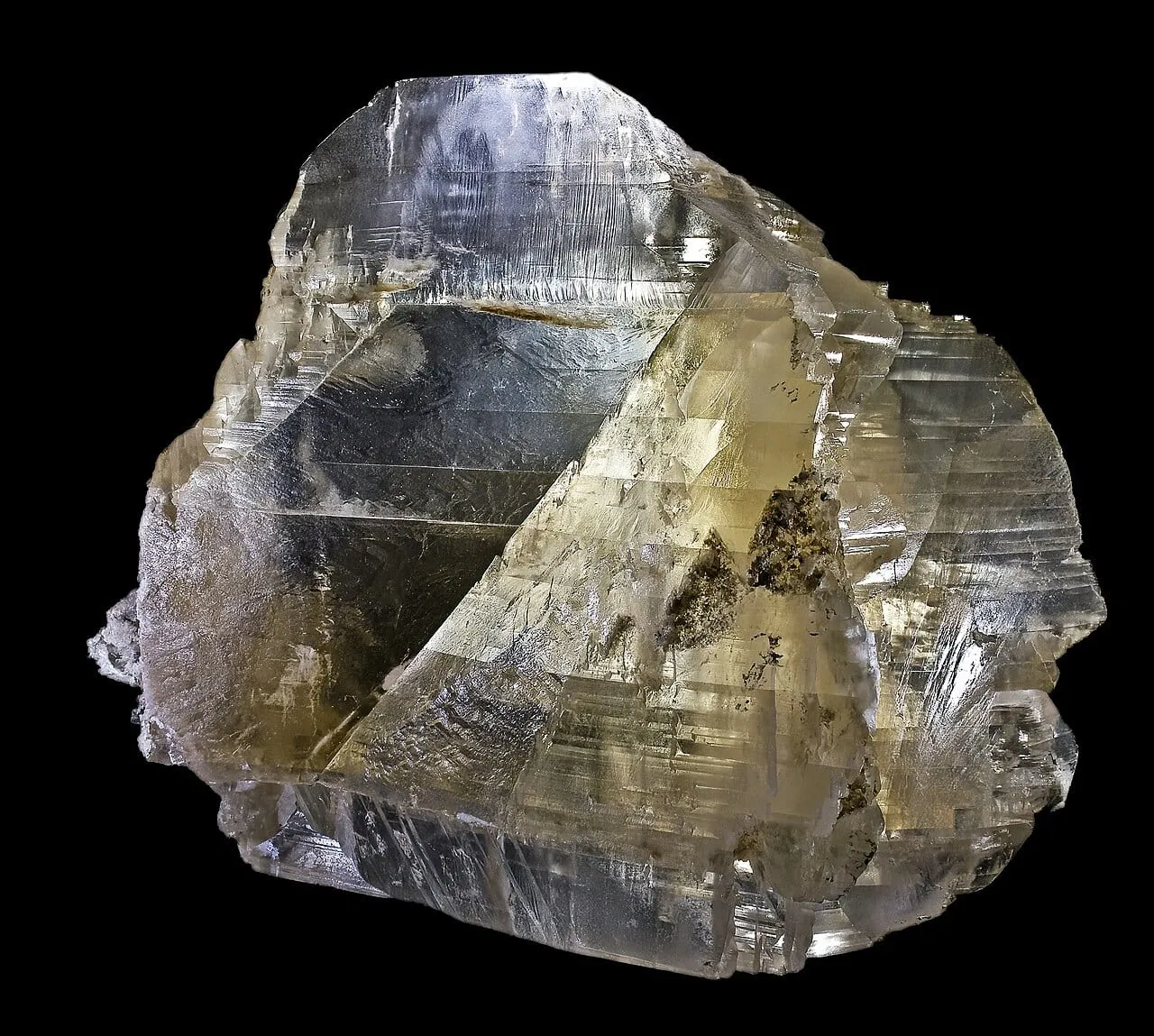
Family
_(GeoDIL_number_-_500).jpg)

Sources
- Alabaster · Wikipedia
- Alabaster · Encyclopaedia Britannica
- Kaymaktaşı · Vikipedi
- Güncel Türkçe Sözlük: kaymak taşı · Türk Dil Kurumu
- Handbook of Mineralogy: Gypsum · Mineralogical Society of America
- Chellaston · Wikipedia
- RAF Fauld explosion · Wikipedia
- Alabaster Caverns State Park · Wikipedia
- Corsi Collection of Decorative Stones: 301, Alabastro fiorito · Oxford University Museum of Natural History
- The Curious Lore of Precious Stones (G. F. Kunz) · J. B. Lippincott Company; Project Gutenberg, 1913
External links
Draft: awaiting expert reviewReport an error
On the same step
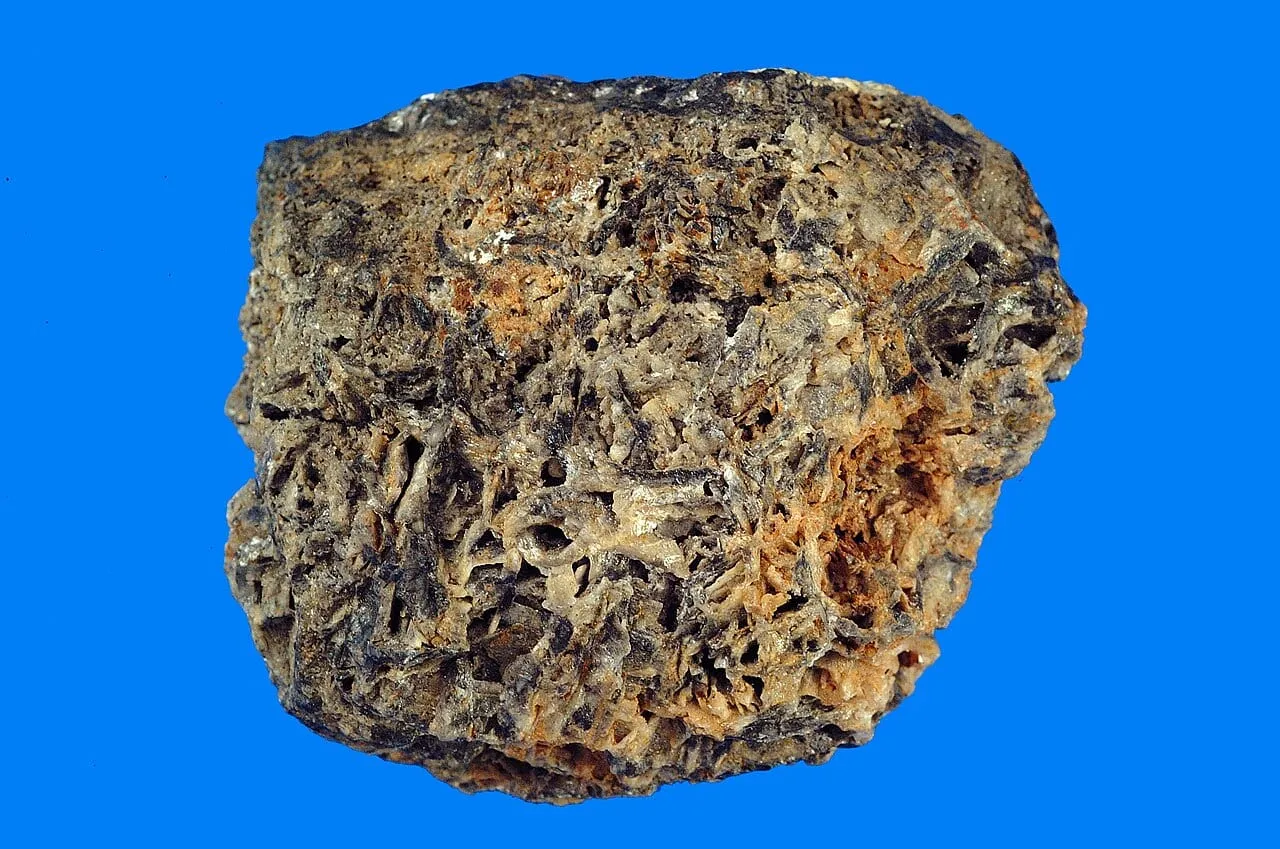
Anglesite
A heavy lead sulfate mineral with a diamond-like shine that grows as a crust around galena; it is named after the island of Anglesey in Wales.
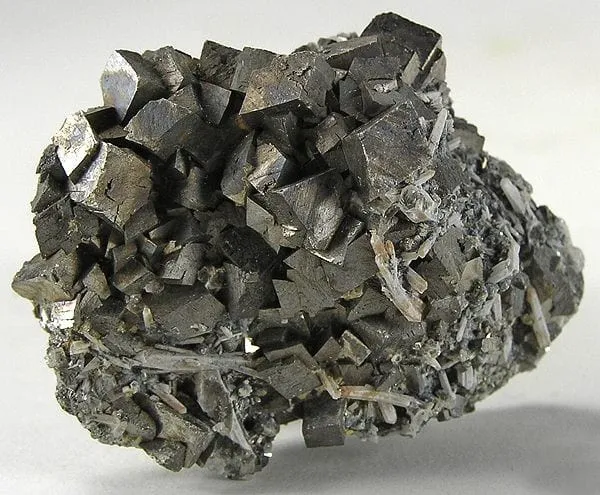
Arsenopyrite
A widespread silvery-grey sulfide containing arsenic: it smells of garlic when struck and is poisonous.
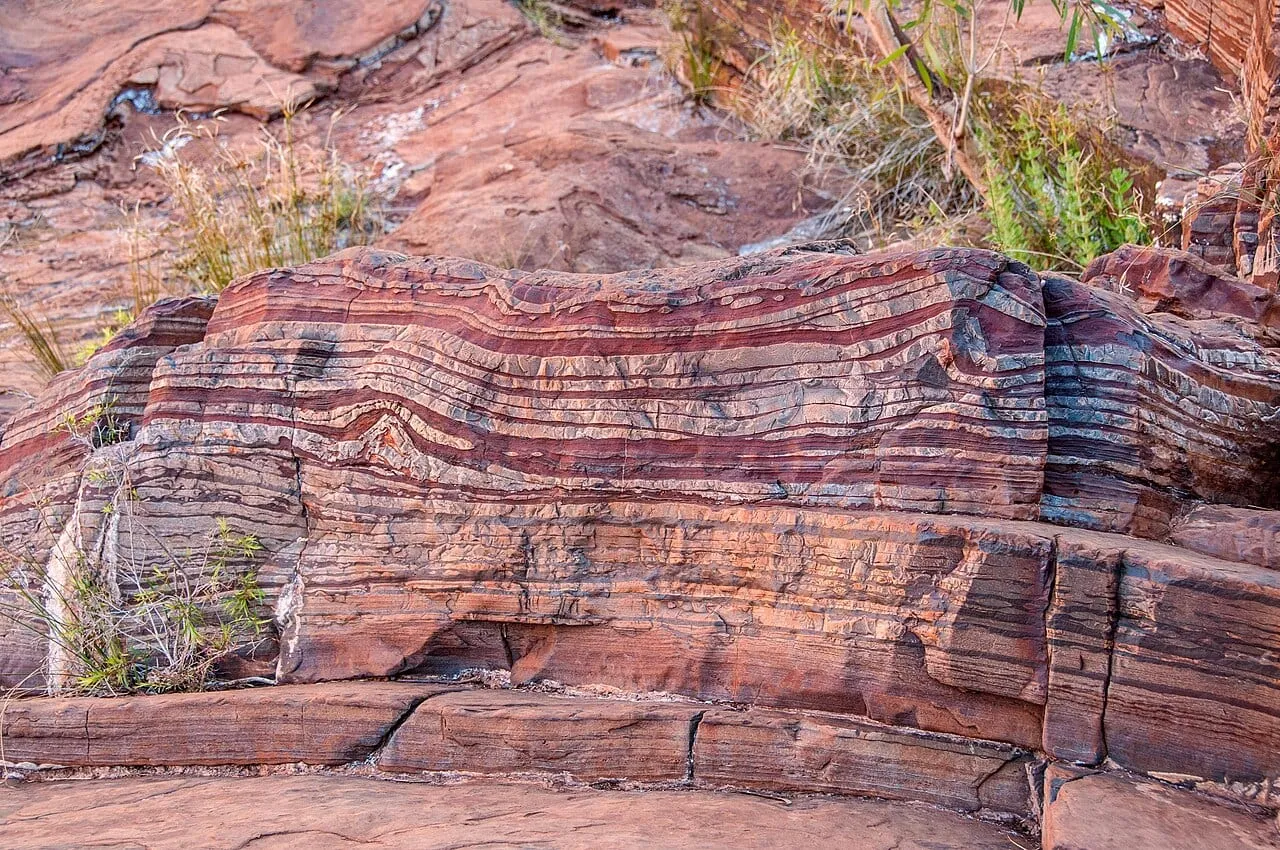
Banded iron formation
An ancient rock of alternating iron-oxide and chert bands: the record of oxygen beginning to build up on Earth, and the main source of iron ore.