VarietyA variety of Chalcedony
Moss agate
SiO₂Yosun akiği
Translucent chalcedony that seems to hold green moss or water plants inside: the patterns are not plants but minerals.
Also known as: Mocha stone
- Popularly: Semi-precious stone
In short
Moss agate is an ornamental stone made of colourless or milky, translucent chalcedony holding green, and sometimes red, brown and black, patterns that look like moss. The green patterns are mostly fine inclusions of hornblende or chlorite-group minerals; iron oxides give red and brown tones and manganese oxides give black. Because it lacks the concentric bands typical of agate, it counts scientifically as a variety of chalcedony. It is found in many parts of the world, including India, Brazil, Uruguay, central Europe and the United States.
Photos
How does it form?
Moss agate mostly forms in cavities in volcanic rocks. Silica-rich solutions slowly solidify in these cavities into chalcedony. Meanwhile green minerals such as hornblende or chlorite, together with iron and manganese compounds, are trapped in the silica as fine fibres, threads and branches. Because the chalcedony grows not in bands but as a translucent mass filling the whole cavity, the patterns are spread all through the stone. According to Wikipedia, moss agate usually comes from weathered volcanic rocks; specimens from India come from the Deccan basalts.
The colour of the patterns depends on the metals they contain and on how far those metals are oxidised. Green tones mostly come from minerals such as hornblende and chlorite, red and brown tones from iron oxides and black tones from manganese oxides.
What is it used for?
- Jewellery: It is made into cabochons, beads and pendants; the pattern shows best when light comes from behind the translucent stone.
- Seal and ring stone: The Metropolitan Museum of Art in New York holds a Roman ring stone (intaglio) carved in moss agate and dated between the 1st century BC and the 3rd century AD, which shows that the stone has been worked for at least two thousand years.
- Collecting: Slices with striking landscape-like patterns and pieces from famous localities such as Montana are sought by collectors.
How it differs from dendritic agate
Moss agate is often confused with dendritic agate. In dendritic agate the patterns are black or brown, fine and look like tree branches, usually spreading along a single plane inside the stone. In moss agate the patterns are usually green, thicker and denser, and spread through the stone in three dimensions. Both lack bands, so both are varieties of chalcedony. For banded agates, see the agate page.
What determines its value?
Pattern matters most: a clean, translucent background with vividly coloured, crisp moss patterns spread so as to form an attractive scene inside the stone is what is sought. Good centring of the pattern in the cut, freedom from cracks and the quality of the polish also count. Because chalcedony is plentiful, ordinary moss agate is an inexpensive ornamental stone; pieces with striking patterns and stones from famous localities are sought by collectors.
This information is educational, not buying, selling or investment advice. Value varies enormously with quality and treatment.
How to recognise it
- 1
On a colourless, milky or pale grey translucent background there are green, brown, red or black thread-like and branching patterns that look like moss or water plants.
- 2
The patterns are spread through the stone in three dimensions; held up to the light, it looks like a bed of moss lying deep inside.
- 3
It has none of the nested bands typical of agate.
- 4
Its hardness is 6.5–7: it scratches glass, and a steel knife cannot scratch it. A broken surface has a waxy lustre, and light passes through its thin edges.
Myths and misconceptions
MythThe patterns inside moss agate are fossilised moss.
FactDespite its name, moss agate contains no organic matter. The patterns are made of green minerals such as hornblende and chlorite, and of iron and manganese compounds, trapped inside the chalcedony.
MythMoss agate is a kind of banded agate.
FactMoss agate lacks the concentric bands typical of agate, so mineralogists count it as a variety of chalcedony rather than a true agate. The name “agate” is used because it is established in the trade.
What is it believed to be good for?
This section reports beliefs; it is not health information. There is no scientific evidence for these claims and no stone replaces medical treatment.
The meanings people give this stone, and who holds them:
- According to old dream interpretations recorded by Kunz in 1913, dreaming of moss agate was taken as a sign of an unsuccessful journey.
- An old birth-month verse quoted by Kunz says that, thanks to the charm of moss agate, those born in June would have happy years and never see June's golden sunshine turn to tears.
- Today crystal-therapy websites present moss agate as the “gardener's stone”, claiming that it brings abundance and plenty, helps plants grow, calms people and connects them with nature.
What science says
Moss agate is made of chemically inert silica with a little trapped mineral matter; there is no scientific evidence that it brings happiness or plenty, makes plants grow or has a calming effect. The “gardener's stone” label comes from the moss-like look of its patterns, not from any proven effect of the stone.
Did you know?
The stone was once also called “Mocha stone”, after the port city of Mocha in Yemen, which was once a source.
In his 1913 book the mineralogist George F. Kunz included a list he had drawn up of “accessory birthstones” found in the United States, not meant to replace the real birthstones; on it, the stone for June is moss agate from California, Montana, Wyoming and Arizona.
“Montana moss agate”, found in the Yellowstone River gravels between Sidney and Billings, comes from past volcanic activity in the Yellowstone area; it owes its red colour to iron oxide and its black colour to manganese oxide.
Where is it found?
Loading map…
- Deccan basalts, India · Major depositMoss agate formed in cavities in basalt lavas; Kunz illustrated “Mocha stones” from India in 1913
- Yellowstone River valley (between Sidney and Billings), Montana, USA · Major deposit“Montana moss agate” from the river gravels; iron oxide gives the red colour and manganese oxide the black
- Mocha (al-Mukha), Yemen · Historic sourceThe old name “Mocha stone” comes from this Arabian port city, once a source of the stone
- Brazil · Known localityListed among the countries where moss agate is found; no exact site is given
- Uruguay · Known localityListed among the countries where moss agate is found; no exact site is given
- Indonesia · Known localityListed among the sources of moss agate; no exact site is given
Locations are approximate to protect sites. Red dots mark places in Türkiye. Open in the big map →
Frequently asked questions
What is moss agate?
Moss agate is an ornamental stone made of colourless or milky, translucent chalcedony holding green, and sometimes red, brown and black, patterns that look like moss. The green patterns are mostly fine inclusions of hornblende or chlorite-group minerals; iron oxides give red and brown tones and manganese oxides give black. Because it lacks the concentric bands typical of agate, it counts scientifically as a variety of chalcedony. It is found in many parts of the world, including India, Brazil, Uruguay, central Europe and the United States.
What is moss agate used for?
Jewellery: It is made into cabochons, beads and pendants; the pattern shows best when light comes from behind the translucent stone. Seal and ring stone: The Metropolitan Museum of Art in New York holds a Roman ring stone (intaglio) carved in moss agate and dated between the 1st century BC and the 3rd century AD, which shows that the stone has been worked for at least two thousand years. Collecting: Slices with striking landscape-like patterns and pieces from famous localities such as Montana are sought by collectors.
How hard is moss agate?
It has a hardness of 6.5–7 on the Mohs scale. It scratches glass and steel; a steel knife cannot scratch it. Its specific gravity is 2.58–2.64 g/cm³.
Where is moss agate found?
Its best-known localities: Deccan basalts, India; Yellowstone River valley (between Sidney and Billings), Montana, USA; Mocha (al-Mukha), Yemen; Brazil; Uruguay.
How can you tell if moss agate is real?
On a colourless, milky or pale grey translucent background there are green, brown, red or black thread-like and branching patterns that look like moss or water plants. The patterns are spread through the stone in three dimensions; held up to the light, it looks like a bed of moss lying deep inside. It has none of the nested bands typical of agate.
Is moss agate valuable?
On the “street to diamond” value ladder it sits on step 5 of nine: Ornamental stone. Pattern matters most: a clean, translucent background with vividly coloured, crisp moss patterns spread so as to form an attractive scene inside the stone is what is sought. Good centring of the pattern in the cut, freedom from cracks and the quality of the polish also count. Because chalcedony is plentiful, ordinary moss agate is an inexpensive ornamental stone; pieces with striking patterns and stones from famous localities are sought by collectors.
What is moss agate good for?
According to old dream interpretations recorded by Kunz in 1913, dreaming of moss agate was taken as a sign of an unsuccessful journey. An old birth-month verse quoted by Kunz says that, thanks to the charm of moss agate, those born in June would have happy years and never see June's golden sunshine turn to tears. Today crystal-therapy websites present moss agate as the “gardener's stone”, claiming that it brings abundance and plenty, helps plants grow, calms people and connects them with nature. Moss agate is made of chemically inert silica with a little trapped mineral matter; there is no scientific evidence that it brings happiness or plenty, makes plants grow or has a calming effect. The “gardener's stone” label comes from the moss-like look of its patterns, not from any proven effect of the stone. This section reports beliefs; it is not health information. There is no scientific evidence for these claims and no stone replaces medical treatment.
Family


Sources
- Moss agate · Wikipedia
- Moss Agate · Gemdat.org
- Moss Agate · Minerals.net
- Moss agate (chalcedony), Glossary · Rivista Italiana di Gemmologia
- Mineral of the month, September 2025: Moss agate · Mineralogische Staatssammlung München (SNSB), 2025
- The Curious Lore of Precious Stones (G. F. Kunz) · J. B. Lippincott Company (Project Gutenberg), 1913
- Moss agate ring stone, Roman, ca. 1st century B.C.–3rd century A.D. (accession 41.160.484) · Metropolitan Museum of Art (Wikimedia Commons)

External links
Draft: awaiting expert reviewReport an error
On the same step
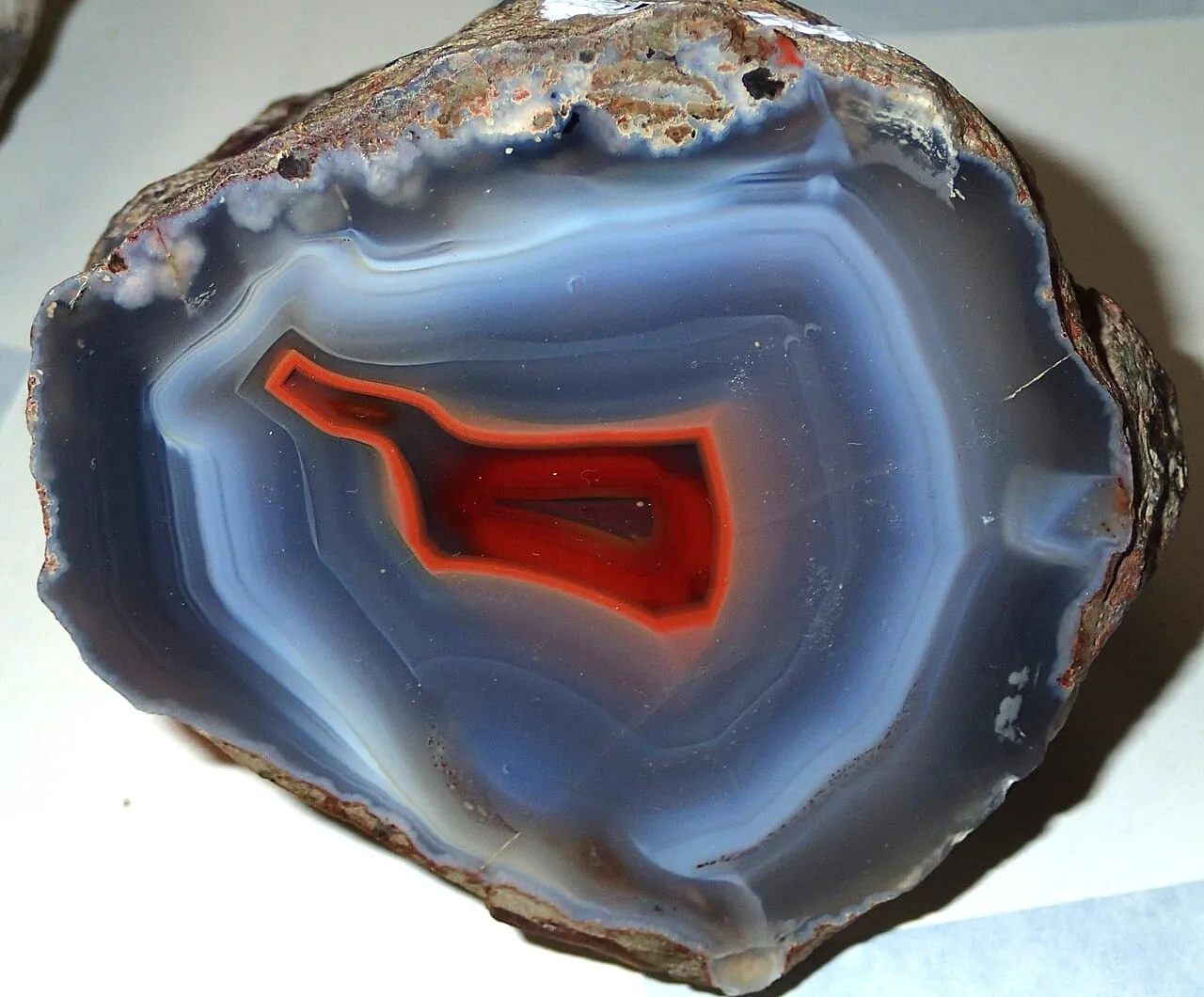
Agate
The banded variety of chalcedony: it grows layer by layer in hollows in volcanic rock and shows a new pattern every time it is cut.

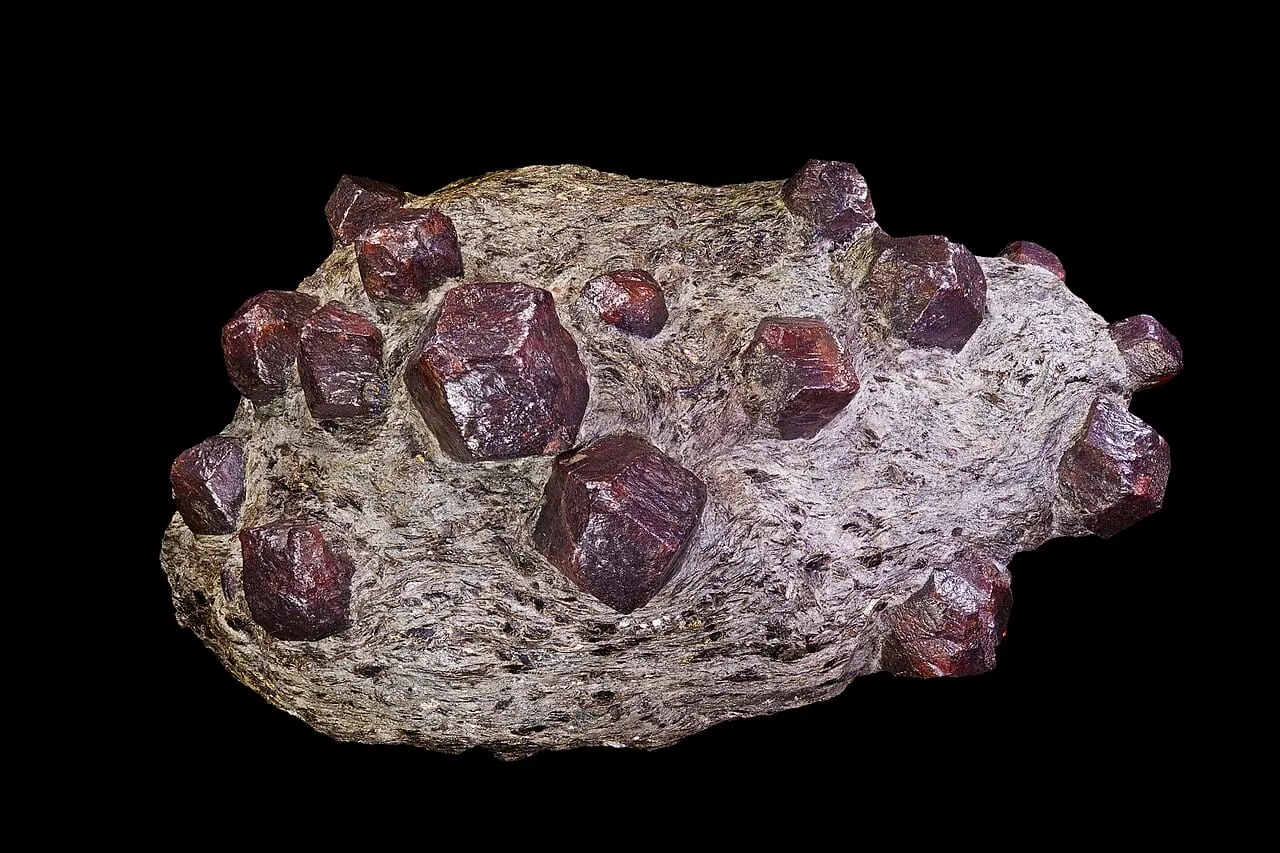
Almandine
The commonest garnet: a deep red, iron-rich stone named after the ancient city of Alabanda in Anatolia, used in jewellery and in sandpaper alike.
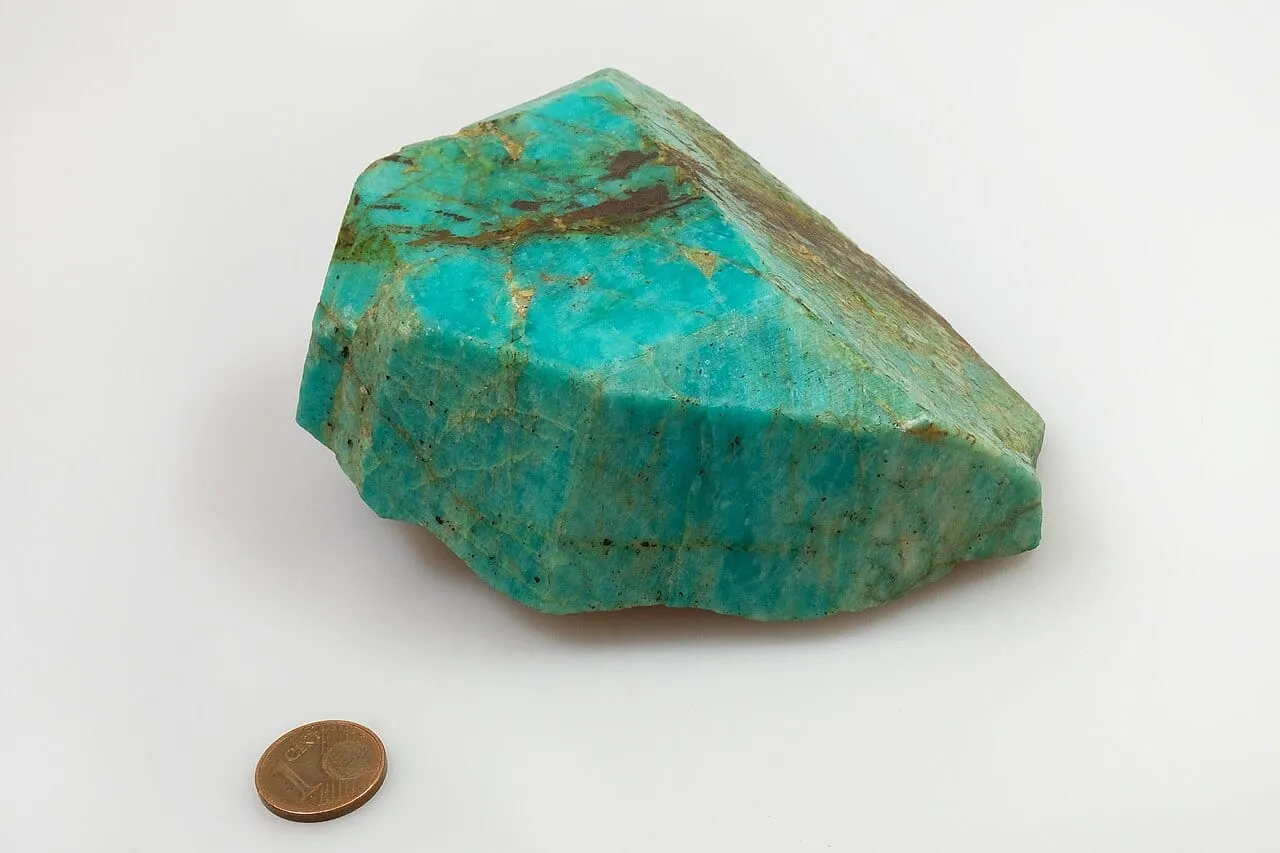
Amazonite
A turquoise-like green-blue feldspar: a variety of microcline worn as jewellery for more than three thousand years, but it can release lead.