VarietyA variety of Chalcedony
Dendritic agate
SiO₂Dendritik akik
Translucent chalcedony that looks as if tiny trees or ferns were drawn inside it: the patterns are not plants but manganese and iron oxides.
Also known as: Tree agate · Shajar (Banda, India)
- Popularly: Semi-precious stone
In short
Dendritic agate is an ornamental stone of colourless, milky white or pale grey translucent chalcedony carrying black or brown branching patterns. These patterns are called dendrites, from the Greek dendron, “tree”. The branches are made of manganese and iron oxide minerals. Most pieces lack the bands that give agate its name, so scientifically it is a variety of chalcedony, although the trade knows it as an agate.
Photos
How does it form?
Dendritic agate develops in chalcedony deposited by silica-rich waters in hollows and cracks in rock. While the chalcedony is still porous, or when fine cracks open later, water carrying dissolved manganese and iron moves along these cracks. When the chemistry of the water changes, manganese and iron oxides precipitate quickly, and the crystals grow into finely branching patterns, much like frost flowers on a window. That is why the dendrites mostly lie along a thin plane inside the stone.
A study of the area around Dereyalak village in Eskişehir, Türkiye, suggested that the agate nodules there may have formed when sepiolite (meerschaum) was replaced by low-temperature, silica-rich hot waters. In these nodules the black colour comes from dendrites of pyrolusite and manganite.
What is it used for?
- Jewellery: patterned pieces are cut as cabochons for pendants, rings, earrings, brooches and cufflinks. The stone is valued for its pattern, not its optical properties.
- Craft: in Banda, India, artisans have cut and polished dendritic agate gathered along the banks of the Ken River for about 400 years; locally called “shajar”, it is set in jewellery and made into keepsakes.
- History: studies at Kanlıtaş Höyük in Eskişehir suggest that people of the Chalcolithic period may have used the nearby Dereyalak agates to make beads and ornaments.
How it differs from moss agate
Older books often lumped moss agate and dendritic agate together as “tree stones” or as “mocha stones”, after the port of Mocha in Yemen. Today the two are told apart: in dendritic agate the patterns are black or brown, fine and flat, while in moss agate they are mostly green, thicker inclusions scattered through the stone. Because neither is banded, mineralogists regard both as varieties of chalcedony. For banded agates, see the agate page.
In Türkiye
In Pliocene conglomerates around Dereyalak village in Eskişehir there are white and black agate nodules 5–30 cm across. Each nodule has a transparent core, a white translucent zone around it, then a black dendritic zone and finally an opal-rich outer rim. These occurrences were documented in a scientific study published in 2014.
What determines its value?
The pattern matters most: how fine and sharp the branches are and how much they look like a tree, a forest or a landscape. A clean, evenly coloured background, a well-centred pattern and a good polish also count. The stone is usually untreated; dyed material is worth less. Because chalcedony is plentiful, ordinary pieces are an inexpensive ornamental stone, while stones showing a striking scene are sought by collectors and jewellers.
This information is educational, not buying, selling or investment advice. Value varies enormously with quality and treatment.
How to recognise it
- 1
Black or brown patterns branch and taper like tree twigs or fern fronds on a pale, translucent background.
- 2
The patterns usually spread along a flat plane inside the stone, like a two-dimensional drawing; cut parallel to that plane, the stone looks like a landscape picture.
- 3
Most pieces lack the concentric bands typical of agate; where bands exist, the dendrites lie between or on them.
- 4
Its hardness is 6.5–7: it scratches glass, and a steel knife cannot scratch it.
Fakes and imitations
What shops usually don’t tell you:
- Dyed material also occurs: stones whose background or patterns have been darkened with dye are worth less than naturally coloured ones, and the treatment should be disclosed.
Myths and misconceptions
MythThe tree patterns in dendritic agate are fossilised plants or moss.
FactThey are not plant remains but branching growths of manganese and iron oxide minerals that precipitated from water seeping into cracks in the stone. Mineral formations that resemble living things like this are called pseudofossils.
MythDendritic agate and moss agate are the same stone.
FactBoth are unbanded chalcedony and are often confused. In dendritic agate the patterns are black or brown branches of manganese and iron oxide that mostly spread on a flat plane; the usually green, moss-like inclusions of moss agate are minerals such as chlorite, celadonite or hornblende, scattered through the stone in three dimensions.
What is it believed to be good for?
This section reports beliefs; it is not health information. There is no scientific evidence for these claims and no stone replaces medical treatment.
The meanings people give this stone, and who holds them:
- Today crystal-therapy books and sites present dendritic agate as a “stone of plenitude” and claim that it brings balance and calm and helps people connect with nature.
- Some crystal-therapy sites claim that, because of its branching patterns, dendritic agate is good for the nervous system and for pain.
What science says
There is no scientific evidence that dendritic agate brings plenty, calms people or helps the nervous system or pain; the likeness of the branches to nerves or trees is just a visual resemblance created by the way the mineral crystals grow. Persistent pain calls for a doctor.
Did you know?
The Roman writer Pliny the Elder mentions, among the kinds of agate, a stone called dendrachates, meaning “tree agate”, named for the tree-like designs inside it.
The dendritic agate craft of Banda in India, where the stone is called “shajar” (Arabic for “tree”), was entered in India's register of geographical indications in 2023.
Only a small share of the rough stones cut in Banda, about 5 per cent, reveal a pattern; stones without one are discarded.
Where is it found?
Loading map…
- Banks of the Ken River, Banda, Uttar Pradesh, India · Major depositSource of the finest dendritic agate, called “shajar”; the stone has been cut and polished in Banda for about 400 years
- Yellowstone River valley (between Sidney and Billings), Montana, USA · Known locality“Montana moss agate” from the river gravels; its black branching patterns are manganese oxide
- Brazil · Known localityListed among the sources of dendritic agate; no exact site is given
- Madagascar · Known localityListed among the sources of dendritic agate; no exact site is given
- Mexico · Known localityListed among the sources of dendritic agate; no exact site is given
- Australia · Known localityListed among the sources of dendritic agate; no exact site is given
- Around Dereyalak village, Eskişehir, Türkiye · Known localityAgate nodules 5–30 cm across with black dendrites, in Pliocene conglomerates; documented in scientific studies
Locations are approximate to protect sites. Red dots mark places in Türkiye. Open in the big map →
Frequently asked questions
What is dendritic agate?
Dendritic agate is an ornamental stone of colourless, milky white or pale grey translucent chalcedony carrying black or brown branching patterns. These patterns are called dendrites, from the Greek dendron, “tree”. The branches are made of manganese and iron oxide minerals. Most pieces lack the bands that give agate its name, so scientifically it is a variety of chalcedony, although the trade knows it as an agate.
What is dendritic agate used for?
Jewellery: patterned pieces are cut as cabochons for pendants, rings, earrings, brooches and cufflinks. The stone is valued for its pattern, not its optical properties. Craft: in Banda, India, artisans have cut and polished dendritic agate gathered along the banks of the Ken River for about 400 years; locally called “shajar”, it is set in jewellery and made into keepsakes. History: studies at Kanlıtaş Höyük in Eskişehir suggest that people of the Chalcolithic period may have used the nearby Dereyalak agates to make beads and ornaments.
How hard is dendritic agate?
It has a hardness of 6.5–7 on the Mohs scale. It scratches glass and steel; a steel knife cannot scratch it. Its specific gravity is 2.59–2.61 g/cm³.
Where is dendritic agate found?
Its best-known localities: Banks of the Ken River, Banda, Uttar Pradesh, India; Yellowstone River valley (between Sidney and Billings), Montana, USA; Brazil; Madagascar; Mexico.
Where is dendritic agate found in Türkiye?
Known localities in Türkiye: Around Dereyalak village, Eskişehir, Türkiye.
How can you tell if dendritic agate is real?
Black or brown patterns branch and taper like tree twigs or fern fronds on a pale, translucent background. The patterns usually spread along a flat plane inside the stone, like a two-dimensional drawing; cut parallel to that plane, the stone looks like a landscape picture. Most pieces lack the concentric bands typical of agate; where bands exist, the dendrites lie between or on them. Dyed material also occurs: stones whose background or patterns have been darkened with dye are worth less than naturally coloured ones, and the treatment should be disclosed.
Is dendritic agate valuable?
On the “street to diamond” value ladder it sits on step 5 of nine: Ornamental stone. The pattern matters most: how fine and sharp the branches are and how much they look like a tree, a forest or a landscape. A clean, evenly coloured background, a well-centred pattern and a good polish also count. The stone is usually untreated; dyed material is worth less. Because chalcedony is plentiful, ordinary pieces are an inexpensive ornamental stone, while stones showing a striking scene are sought by collectors and jewellers.
What is dendritic agate good for?
Today crystal-therapy books and sites present dendritic agate as a “stone of plenitude” and claim that it brings balance and calm and helps people connect with nature. Some crystal-therapy sites claim that, because of its branching patterns, dendritic agate is good for the nervous system and for pain. There is no scientific evidence that dendritic agate brings plenty, calms people or helps the nervous system or pain; the likeness of the branches to nerves or trees is just a visual resemblance created by the way the mineral crystals grow. Persistent pain calls for a doctor. This section reports beliefs; it is not health information. There is no scientific evidence for these claims and no stone replaces medical treatment.
Family


Sources
- Agate · Wikipedia
- Moss agate · Wikipedia
- Pseudofossil · Wikipedia
- Dendritic Agate · Gemdat.org
- Dendritic Agate · Minerals.net
- Dendritic Agate Buying Guide · GemSelect
- Occurrence of dendritic agate from Dereyalak village (Eskisehir), NW of Turkey and its relationship to sepiolite nodules in the region (Çalık & Arzoğulları), Journal of African Earth Sciences 97 · Elsevier, 2014
- Kalkolitik döneme ait Kanlıtaş Höyüğünde kullanılan süstaşlarının jeolojik özellikleri, Eskişehir (Çalık, Özbek & Türkcan), 71. Türkiye Jeoloji Kurultayı · TMMOB Jeoloji Mühendisleri Odası, 2018
- Artwork by nature (Shajar stone of Banda) · Down To Earth
- Banda Shazar Patthar Craft (GI application 666) · Geographical Indications Registry, Government of India, 2023
- Agate: Physical Properties and Origin (O. C. Farrington); Archaeology and Folk-lore (B. Laufer), Geology Leaflet 8 · Field Museum of Natural History, 1927
Draft: awaiting expert reviewReport an error
On the same step
Agate
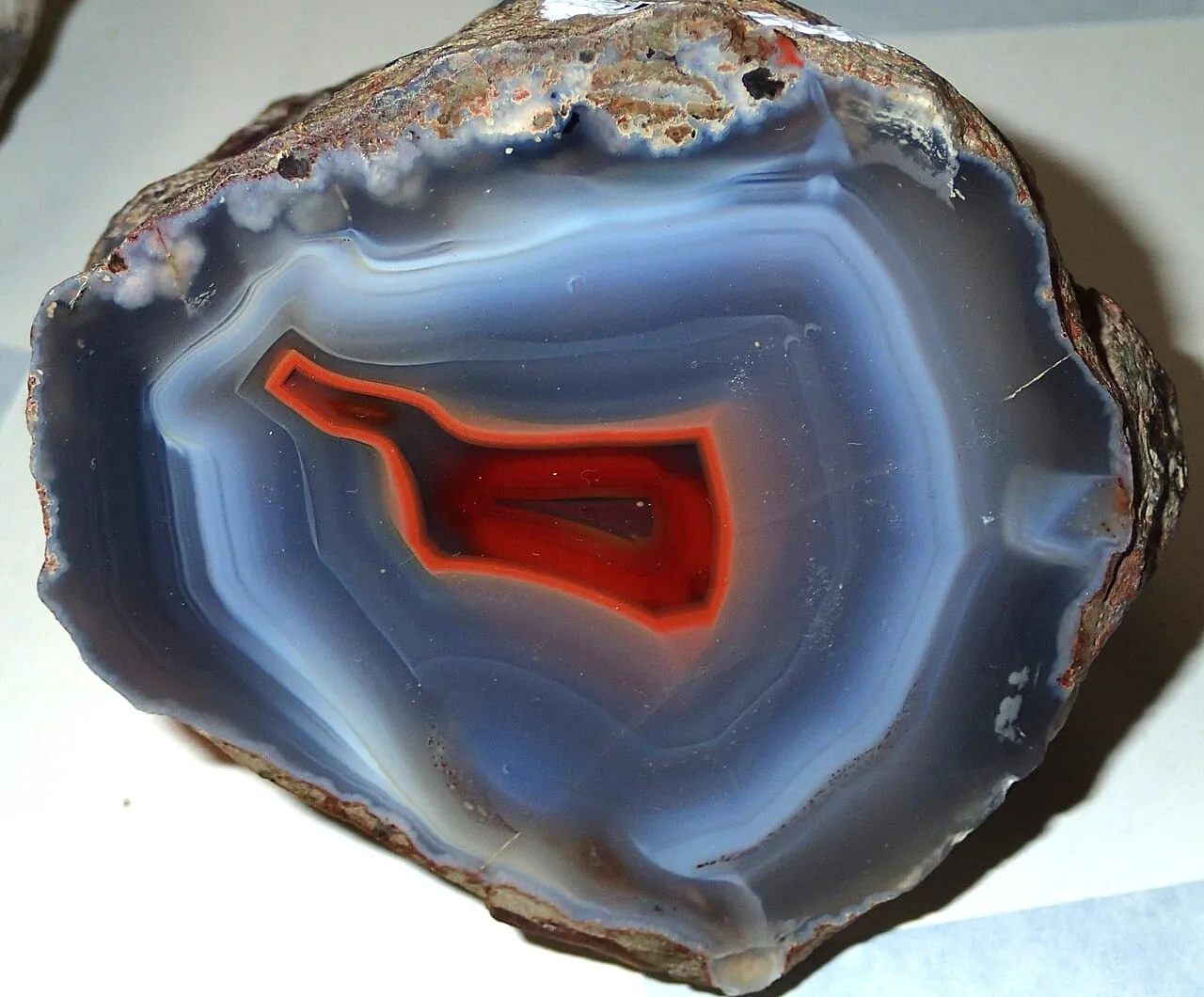
The banded variety of chalcedony: it grows layer by layer in hollows in volcanic rock and shows a new pattern every time it is cut.

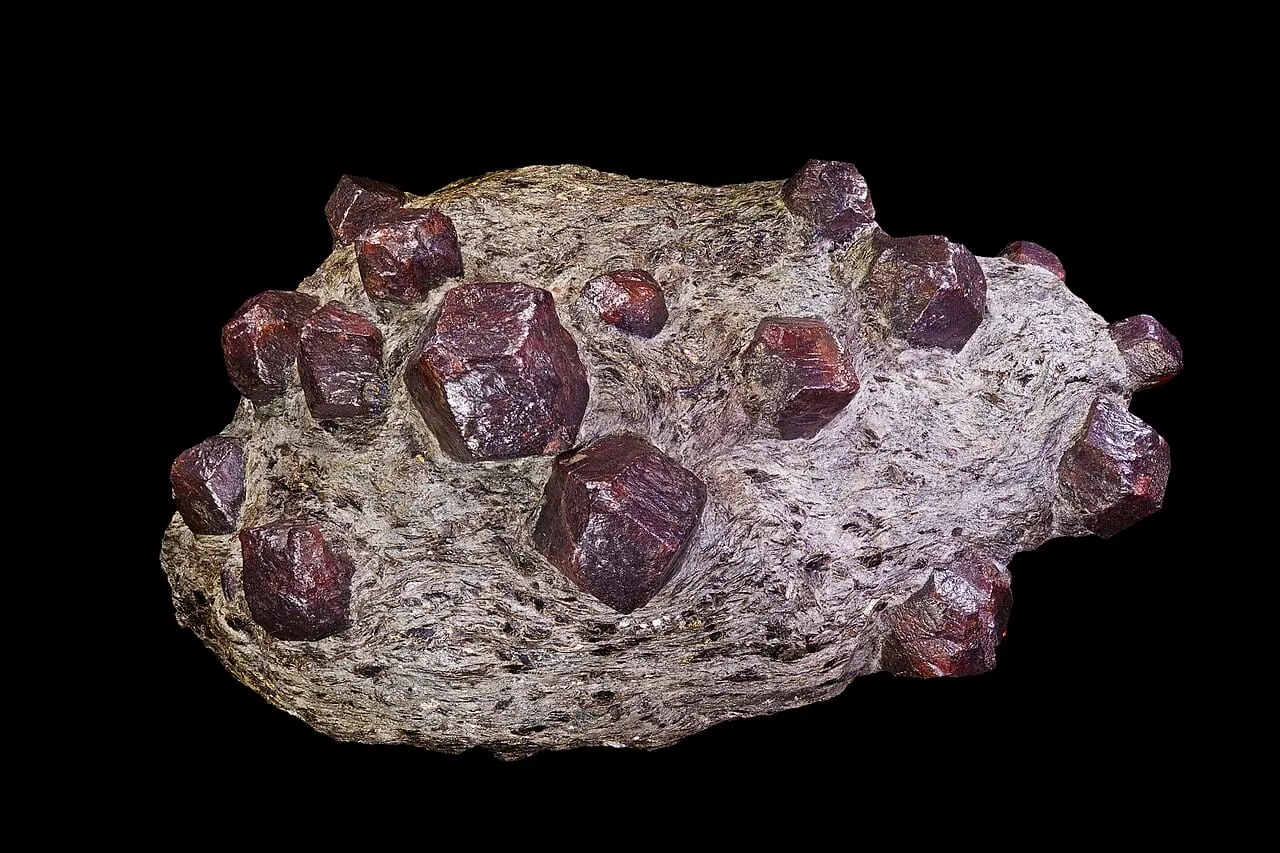
Almandine
The commonest garnet: a deep red, iron-rich stone named after the ancient city of Alabanda in Anatolia, used in jewellery and in sandpaper alike.
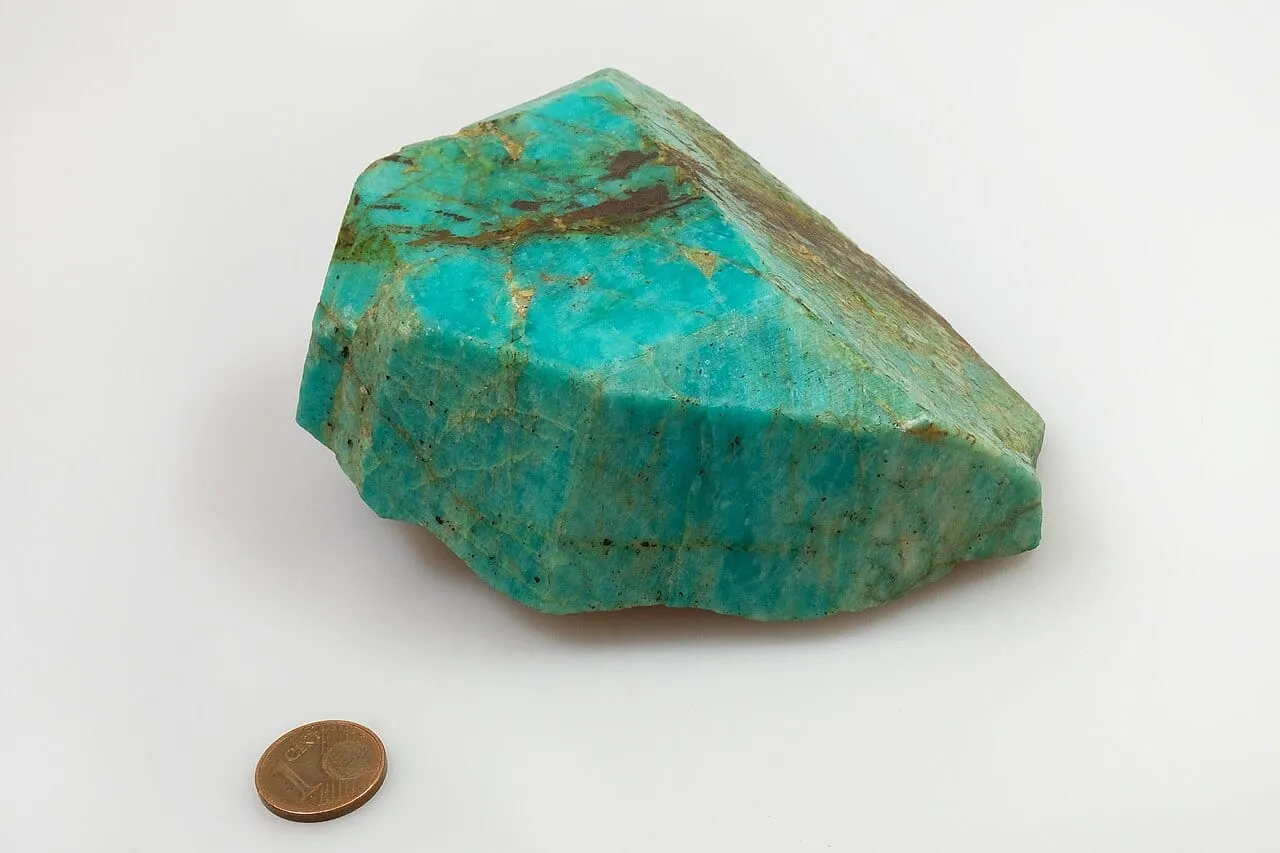
Amazonite
A turquoise-like green-blue feldspar: a variety of microcline worn as jewellery for more than three thousand years, but it can release lead.