Mineral
Cerussite
PbCO₃Serüsit
A very heavy, toxic lead carbonate mineral with a diamond-like shine; the natural counterpart of the old white lead pigment.
Also known as: White lead ore · Lead carbonate
- Popularly: Ore and raw material
- Ore
- Handle with care
- Important in Türkiye
.jpg)
In short
Cerussite is a mineral made of lead and carbon (lead carbonate, PbCO₃). It forms colourless or white crystals with a diamond-like shine and is very heavy. It forms in the upper parts of lead deposits where they meet air and water, and in some deposits it is an important lead ore. Its name comes from the Latin cerussa, “white lead”; in Turkish it is also called “üstübeç”.
Photos

How does it form?
Cerussite is a secondary mineral: it is one of the products formed near the surface, in the part of a lead deposit that meets air and groundwater (the oxidised zone), as primary lead minerals such as galena break down. That is why it occurs with other secondary minerals such as anglesite, smithsonite, malachite, azurite and pyromorphite. It has the same crystal arrangement as aragonite. Its crystals can sometimes reach 60 cm.
What is it used for?
- Lead ore: Its lead content reaches about 77% by weight. Where galena has weathered away, cerussite can be an important ore.
- White lead: Natural cerussite is not used to make paint; the “white lead” (üstübeç) used in paint and make-up is made artificially. Because of its clean whiteness and covering power it was a painter’s basic pigment for centuries. It is banned in most countries today because it causes lead poisoning.
- Collecting: Its diamond-like lustre, star-shaped twins and large crystals from places such as Tsumeb make it a favourite of mineral collectors.
In Türkiye
In Türkiye cerussite is seen as a mineral of the oxidised zone in lead–zinc deposits. According to a study by Temur published in the MTA Journal, in the Bolkar Mountains zinc–lead deposits, about 35 km southeast of Ulukışla in Niğde, the secondary ores formed by the breakdown of galena include cerussite, anglesite, smithsonite, hemimorphite, malachite and azurite.
What determines its value?
As an ore, cerussite is valued by the lead content gathered in the oxidised zone of lead deposits (pure cerussite is about 77% lead by weight), the size of the deposit and the cost of mining and processing. Collectors look for large, clear, lustrous and undamaged crystals, neat star-shaped or heart-shaped twins, and specimens from famous places such as Tsumeb or Touissit. Because it is very brittle and sensitive to heat, cut cerussite is extremely rare and is made only for collectors.
This information is educational, not buying, selling or investment advice. Value varies enormously with quality and treatment.
How to recognise it
- 1
It is very heavy (specific gravity about 6.5): about two and a half times as heavy as a piece of quartz of the same size.
- 2
Its colourless, white or grey crystals have an adamantine (diamond-like) lustre, sometimes resinous.
- 3
Its hardness is 3–3.5 and it is very brittle: a steel knife scratches it and it breaks easily.
- 4
Its crystals often form twins: groups shaped like a six-rayed star, or like a heart.
- 5
It usually occurs with minerals such as galena, anglesite, malachite and azurite; some specimens may glow yellow under long-wave ultraviolet light.
Fakes and imitations
What shops usually don’t tell you:
- Anglesite is also heavy, adamantine and often colourless; it occurs together with cerussite and the two are hard to tell apart by eye. A laboratory analysis is needed for certain identification.
Safety
Cerussite contains lead, a toxic metal that builds up in the body and can permanently damage the brain and nervous system, especially in children. According to the World Health Organization, there is no level of lead exposure that is known to be without harmful effects. Always wash your hands after touching cerussite and keep specimens out of children’s reach. Never put cerussite in your mouth, grind it, sand it or heat it, and do not breathe its dust. Never put it in drinking water.
Myths and misconceptions
MythNatural cerussite and the white lead used in paint are the same substance.
FactThe white lead used in paint and make-up is mostly man-made basic lead carbonate (2PbCO₃·Pb(OH)₂), while cerussite is natural, neutral lead carbonate. Both are lead compounds and both are toxic, which is why white lead paint has been banned in most countries.
MythCerussite, with its diamond-like shine, can be worn in jewellery like a precious stone.
FactIts hardness is only 3–3.5, it is very brittle, it is sensitive to heat and vibration, and it contains lead. Cut cerussite is a collector’s stone, not a jewellery stone.
What is it believed to be good for?
This section reports beliefs; it is not health information. There is no scientific evidence for these claims and no stone replaces medical treatment.
The meanings people give this stone, and who holds them:
- Turkish sources say that üstübeç (white lead) mixed with rose water can be used to treat what is called a “night burn” (gece yanığı).
What science says
Üstübeç and cerussite are lead compounds; lead is toxic and, according to the World Health Organization, there is no level of lead exposure that is known to be without harmful effects. They should therefore never be applied to burns, wounds or skin. Cerussite should never be soaked in drinking water (“gem water”), put in the mouth, or have its dust inhaled.
Did you know?
Cerussite crystals often join as threefold twins, forming groups that look like six-rayed stars.
The world’s largest faceted cerussite is the “Light of the Desert”, about 900 carats, cut from rough found at Tsumeb, Namibia, and kept in the Royal Ontario Museum in Toronto. Cerussite splits light into colours even more than diamond does; on the other hand it is very fragile and even the warmth of a palm can damage it.
“White lead”, used since antiquity in face make-up and paint, was made by corroding lead with vinegar; the method was described by Theophrastus around 300 BC.
Where is it found?
Loading map…
- Tsumeb, Oshikoto, Namibia · Major depositThe Handbook of Mineralogy lists superb crystals and twinned groups; the rough for the 900-carat “Light of the Desert” gem came from here
- Touissit, Oujda area, Morocco · Known localityThe Touissit mine, known for fine twinned crystals
- Broken Hill, New South Wales, Australia · Major depositOne of the world’s largest lead–zinc–silver deposits; cerussite occurs in its oxidised zone
- Friedrichssegen mine, Lahnstein, Rhineland-Palatinate, Germany · Known localityA mine in the Lahn valley cited for fine cerussite crystals
- Příbram, Central Bohemia, Czechia · Historic sourceSilver-bearing lead mines worked for centuries
- Monteponi and Montevecchio, near Iglesias, Sardinia, Italy · Historic sourceLead–zinc mines of Sardinia known since the Middle Ages
- Leadhills, Lanarkshire, Scotland · Historic sourceScotland’s old lead-mining district
- Phoenixville, Pennsylvania, USA · Historic sourceThe Wheatley mine, known for cerussite and anglesite specimens
- Bolkar Mountains (Ulukışla), Niğde, Türkiye · Known localityCerussite, anglesite and smithsonite occur in the oxidised zone of the Bolkar Mountains zinc–lead deposits
Locations are approximate to protect sites. Red dots mark places in Türkiye. Open in the big map →
Frequently asked questions
What is cerussite?
Cerussite is a mineral made of lead and carbon (lead carbonate, PbCO₃). It forms colourless or white crystals with a diamond-like shine and is very heavy. It forms in the upper parts of lead deposits where they meet air and water, and in some deposits it is an important lead ore. Its name comes from the Latin cerussa, “white lead”; in Turkish it is also called “üstübeç”.
What is cerussite used for?
Lead ore: Its lead content reaches about 77% by weight. Where galena has weathered away, cerussite can be an important ore. White lead: Natural cerussite is not used to make paint; the “white lead” (üstübeç) used in paint and make-up is made artificially. Because of its clean whiteness and covering power it was a painter’s basic pigment for centuries. It is banned in most countries today because it causes lead poisoning. Collecting: Its diamond-like lustre, star-shaped twins and large crystals from places such as Tsumeb make it a favourite of mineral collectors.
How hard is cerussite?
It has a hardness of 3–3.5 on the Mohs scale. A fingernail cannot scratch it, but a steel knife can. Its specific gravity is 6.53–6.57 g/cm³.
Where is cerussite found?
Its best-known localities: Tsumeb, Oshikoto, Namibia; Broken Hill, New South Wales, Australia; Příbram, Central Bohemia, Czechia; Monteponi and Montevecchio, near Iglesias, Sardinia, Italy; Leadhills, Lanarkshire, Scotland.
Where is cerussite found in Türkiye?
Known localities in Türkiye: Bolkar Mountains (Ulukışla), Niğde, Türkiye.
How can you tell if cerussite is real?
It is very heavy (specific gravity about 6.5): about two and a half times as heavy as a piece of quartz of the same size. Its colourless, white or grey crystals have an adamantine (diamond-like) lustre, sometimes resinous. Its hardness is 3–3.5 and it is very brittle: a steel knife scratches it and it breaks easily. Anglesite is also heavy, adamantine and often colourless; it occurs together with cerussite and the two are hard to tell apart by eye. A laboratory analysis is needed for certain identification.
Is cerussite valuable?
On the “street to diamond” value ladder it sits on step 4 of nine: Fine dimension stone and ore. As an ore, cerussite is valued by the lead content gathered in the oxidised zone of lead deposits (pure cerussite is about 77% lead by weight), the size of the deposit and the cost of mining and processing. Collectors look for large, clear, lustrous and undamaged crystals, neat star-shaped or heart-shaped twins, and specimens from famous places such as Tsumeb or Touissit. Because it is very brittle and sensitive to heat, cut cerussite is extremely rare and is made only for collectors.
What is cerussite good for?
Turkish sources say that üstübeç (white lead) mixed with rose water can be used to treat what is called a “night burn” (gece yanığı). Üstübeç and cerussite are lead compounds; lead is toxic and, according to the World Health Organization, there is no level of lead exposure that is known to be without harmful effects. They should therefore never be applied to burns, wounds or skin. Cerussite should never be soaked in drinking water (“gem water”), put in the mouth, or have its dust inhaled. This section reports beliefs; it is not health information. There is no scientific evidence for these claims and no stone replaces medical treatment.
Is cerussite dangerous?
Cerussite contains lead, a toxic metal that builds up in the body and can permanently damage the brain and nervous system, especially in children. According to the World Health Organization, there is no level of lead exposure that is known to be without harmful effects. Always wash your hands after touching cerussite and keep specimens out of children’s reach. Never put cerussite in your mouth, grind it, sand it or heat it, and do not breathe its dust. Never put it in drinking water.
Sources
- Cerussite · Wikipedia
- Handbook of Mineralogy: Cerussite · Mineralogical Society of America
- White lead · Wikipedia
- Üstübeç · Vikipedi
- Exhibit A: Light of the Desert Cerussite Gem · Royal Ontario Museum
- Bolkardağı (Ulukışla-Niğde) Yöresi Çinko-Kurşun Yataklarının Petrografik İncelemesi (S. Temur), MTA Dergisi 112, 71–84 · MTA Genel Müdürlüğü, 1991
- Lead poisoning (fact sheet) · World Health Organization
External links
Draft: awaiting expert reviewReport an error ↗
On the same step
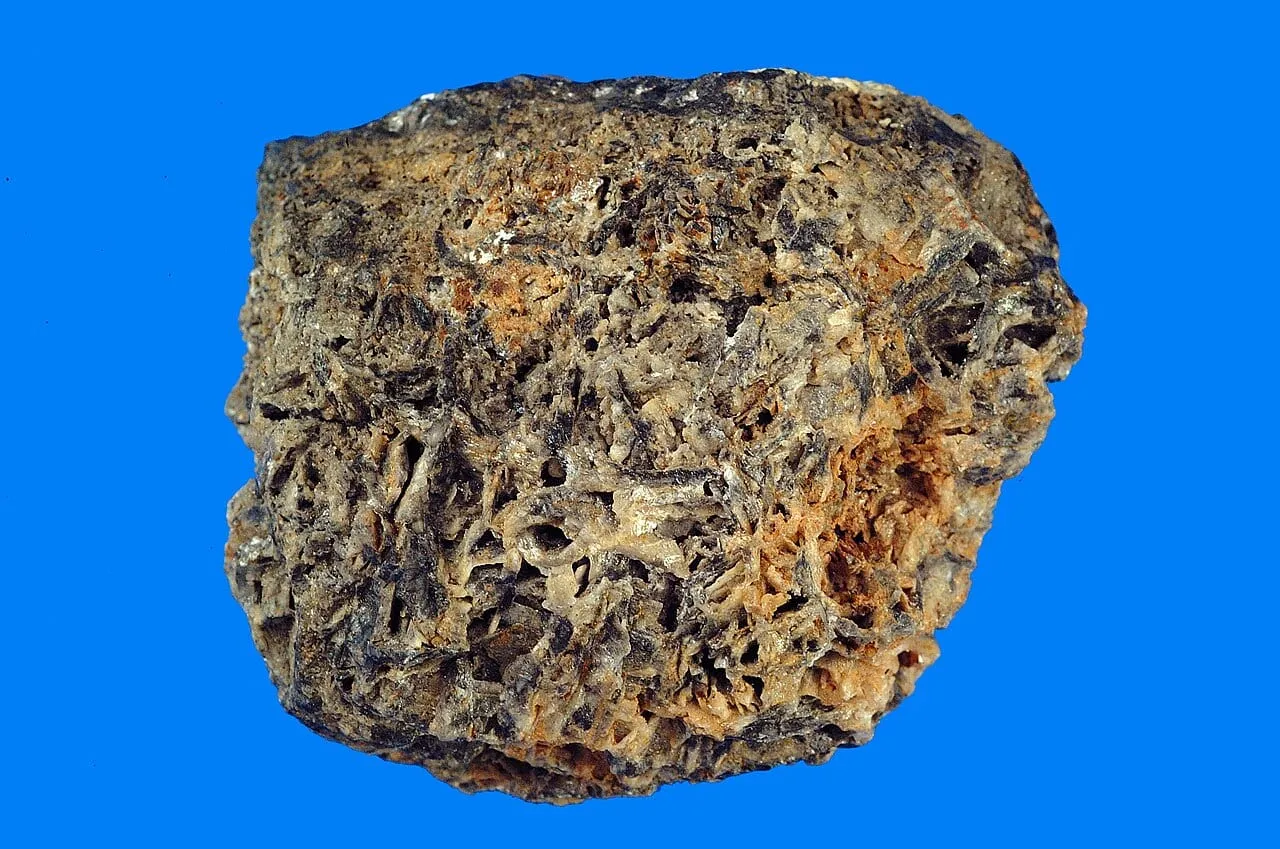
Anglesite
A heavy lead sulfate mineral with a diamond-like shine that grows as a crust around galena; it is named after the island of Anglesey in Wales.
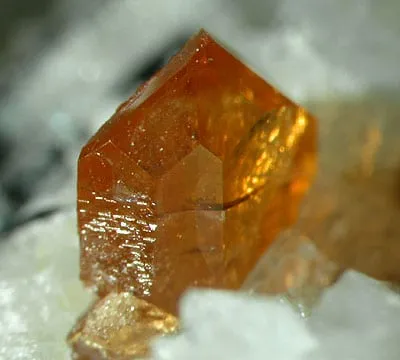
Bastnäsite
One of the main ore minerals of the “rare earth” elements such as cerium, lanthanum and neodymium; a raw material for magnets and electronics.
Borax (tincal)
A sodium borate that dissolves in water and crumbles to white powder in dry air; one of the world’s key tincal deposits is at Kırka in Eskişehir.