VarietyA variety of Chalcedony
Bloodstone
SiO₂Heliotrop
A dark green stone flecked with blood-red spots: a mix of chalcedony and jasper, and one of the birthstones of March.
Also known as: Heliotrope · Indian bloodstone · Ematille
- Popularly: Semi-precious stone
- Birthstone: March
- Gemstone
- Ornamental
In short
Bloodstone, also called heliotrope, is an ornamental stone made of dark green chalcedony mixed with jasper carrying red spots. The green comes from very fine mineral inclusions, and the red spots from concentrations of iron oxide minerals, most likely hematite. True Indian bloodstone is found mainly in the Deccan Traps of India. In Türkiye the word “kan taşı” (“blood stone”) means hematite in the dictionary; bloodstone is a different stone.
Photos
How does it form?
Bloodstone is a mixture of very fine-grained (cryptocrystalline) quartz that occurs mostly as jasper and sometimes as chalcedony. It takes its green from very fine mineral inclusions such as chlorite and amphibole, and its red spots from concentrations of iron oxide minerals, most likely hematite. True Indian bloodstone is found mainly in the Deccan Traps of India, a vast plateau of lava. Some sources class the stone as a variety of chalcedony and others as dark green jasper; which of the two it resembles more varies from piece to piece.
What is it used for?
- Jewellery: good pieces are cut as cabochons for rings and cufflinks; lower-grade material is tumbled and polished.
- History: bloodstone has been a popular stone for about two thousand years. Carvings have been made in which the red spots are placed to look like drops of blood running down the head of Christ.
The “kan taşı” mix-up
In Turkish the word “kan taşı” means hematite in the TDK dictionary, whereas bloodstone is a much lighter, green stone. In some sales listings in Türkiye bloodstone is also called “kan taşı”, so the two stones are often confused. For hematite, see the Hematite page.
What determines its value?
The value of bloodstone depends on how deep and even the green body is, how vivid and well spread the red spots are, how clean the stone is and how well it is polished. Good pieces are cut as cabochons for rings and cufflinks, while lower-grade material is mostly tumbled and polished. It is a plentiful ornamental stone.
This information is educational, not buying, selling or investment advice. Value varies enormously with quality and treatment.
How to recognise it
- 1
It has a dark green body scattered with bright red spots; the name comes from this look of blood stains.
- 2
Its hardness is 6.5–7: it scratches glass, and a steel knife cannot scratch it.
- 3
It is opaque to semi-translucent; it takes a glassy shine when polished, and a broken surface is curved like a shell (conchoidal).
- 4
It is not heavy like hematite: its density is 2.6–2.7, as light as quartz, whereas hematite is dark grey to black with a metallic lustre.
Fakes and imitations
What shops usually don’t tell you:
- Setonite (“African bloodstone”): an ornamental stone made of red jasper, grey chalcedony and pyrite; it is not bloodstone.
- Dragon’s Blood (“Australian bloodstone”): made of red jasper and green epidote; it is not bloodstone either.
Myths and misconceptions
MythThe stone we call “kan taşı” in Turkish is bloodstone.
FactIn the Turkish dictionary of the TDK, “kan taşı” means hematite, the red or brown iron oxide mineral. Bloodstone is a mixture of chalcedony and jasper, green with red spots; some sellers call it kan taşı too, which is why the two stones get mixed up.
MythAny green stone with red spots is bloodstone.
FactOther ornamental stones containing red jasper are also sold as bloodstone: the “African bloodstone” called setonite and the “Australian bloodstone” called Dragon’s Blood are not heliotrope.
What is it believed to be good for?
This section reports beliefs; it is not health information. There is no scientific evidence for these claims and no stone replaces medical treatment.
The meanings people give this stone, and who holds them:
- According to Pliny the Elder, magicians used bloodstone as a stone of invisibility; in the 4th century Damigeron wrote that it brought rain and eclipses of the sun, served for divination, and preserved the wearer’s health and youth.
- Ancient Roman soldiers are said to have carried the stone in the belief that it slowed bleeding; in India it is also reported that the stone, dipped in cold water, was laid on wounds to stop bleeding.
- According to a Christian tradition, the red spots are drops of Jesus’s blood that fell on the stone at the crucifixion, and for that reason the stone was regarded as a Christian amulet.
- Today crystal-therapy practitioners regard bloodstone as a lucky charm that gives strength and endurance, and say it is held by athletes.
What science says
There is no scientific evidence that bloodstone stops bleeding, preserves health and youth, or gives strength. According to George F. Kunz, any cold object could make blood clot, so the stone has nothing to do with it. The red spots are iron oxide, not blood. Serious bleeding needs medical help, and trying a stone can delay it.
Did you know?
The name heliotrope comes from the Greek helios (sun) and trepein (to turn); it goes back to ancient ideas about how the stone reflects light, which Pliny the Elder also describes.
It is one of the birthstones of March; in the modern list it stands alongside aquamarine.
Where is it found?
Loading map…
- Deccan Traps, India · Major depositTrue Indian bloodstone is found mainly in the Deccan Traps; most of the bloodstone on the market today comes from India
- Isle of Rum, Scotland · Historic sourceBloodstone occurrences are reported on the Isle of Rum in Scotland
- Madagascar · Known localityNamed by Geology.com among the sources of bloodstone; no exact site is given
- Brazil · Known localityNamed by Geology.com and GIA among the sources of bloodstone; no exact site is given
- Australia · Known localityNamed by Geology.com and GIA among the sources of bloodstone; no exact site is given
- China · Known localityNamed by Geology.com and GIA among the sources of bloodstone; no exact site is given
Locations are approximate to protect sites. Red dots mark places in Türkiye. Open in the big map →
Frequently asked questions
What is bloodstone?
Bloodstone, also called heliotrope, is an ornamental stone made of dark green chalcedony mixed with jasper carrying red spots. The green comes from very fine mineral inclusions, and the red spots from concentrations of iron oxide minerals, most likely hematite. True Indian bloodstone is found mainly in the Deccan Traps of India. In Türkiye the word “kan taşı” (“blood stone”) means hematite in the dictionary; bloodstone is a different stone.
What is bloodstone used for?
Jewellery: good pieces are cut as cabochons for rings and cufflinks; lower-grade material is tumbled and polished. History: bloodstone has been a popular stone for about two thousand years. Carvings have been made in which the red spots are placed to look like drops of blood running down the head of Christ.
How hard is bloodstone?
It has a hardness of 6.5–7 on the Mohs scale. It scratches glass and steel; a steel knife cannot scratch it. Its specific gravity is 2.6–2.7 g/cm³.
Where is bloodstone found?
Its best-known localities: Deccan Traps, India; Isle of Rum, Scotland; Madagascar; Brazil; Australia.
How can you tell if bloodstone is real?
It has a dark green body scattered with bright red spots; the name comes from this look of blood stains. Its hardness is 6.5–7: it scratches glass, and a steel knife cannot scratch it. It is opaque to semi-translucent; it takes a glassy shine when polished, and a broken surface is curved like a shell (conchoidal). Setonite (“African bloodstone”): an ornamental stone made of red jasper, grey chalcedony and pyrite; it is not bloodstone.
Is bloodstone valuable?
On the “street to diamond” value ladder it sits on step 5 of nine: Ornamental stone. The value of bloodstone depends on how deep and even the green body is, how vivid and well spread the red spots are, how clean the stone is and how well it is polished. Good pieces are cut as cabochons for rings and cufflinks, while lower-grade material is mostly tumbled and polished. It is a plentiful ornamental stone.
What is bloodstone good for?
According to Pliny the Elder, magicians used bloodstone as a stone of invisibility; in the 4th century Damigeron wrote that it brought rain and eclipses of the sun, served for divination, and preserved the wearer’s health and youth. Ancient Roman soldiers are said to have carried the stone in the belief that it slowed bleeding; in India it is also reported that the stone, dipped in cold water, was laid on wounds to stop bleeding. According to a Christian tradition, the red spots are drops of Jesus’s blood that fell on the stone at the crucifixion, and for that reason the stone was regarded as a Christian amulet. Today crystal-therapy practitioners regard bloodstone as a lucky charm that gives strength and endurance, and say it is held by athletes. There is no scientific evidence that bloodstone stops bleeding, preserves health and youth, or gives strength. According to George F. Kunz, any cold object could make blood clot, so the stone has nothing to do with it. The red spots are iron oxide, not blood. Serious bleeding needs medical help, and trying a stone can delay it. This section reports beliefs; it is not health information. There is no scientific evidence for these claims and no stone replaces medical treatment.
Family
.JPG)
.jpg)
Sources
- Heliotrope (bloodstone) · Wikipedia
- Bloodstone: Heliotrope · Geology.com
- March Birthstones · GIA
- Birthstone · Wikipedia
- kan taşı (Güncel Türkçe Sözlük) · TDK (Türk Dil Kurumu)
- The Curious Lore of Precious Stones (G. F. Kunz) · J. B. Lippincott Company (Project Gutenberg), 1913
External links
Draft: awaiting expert reviewReport an error ↗
On the same step
Agate
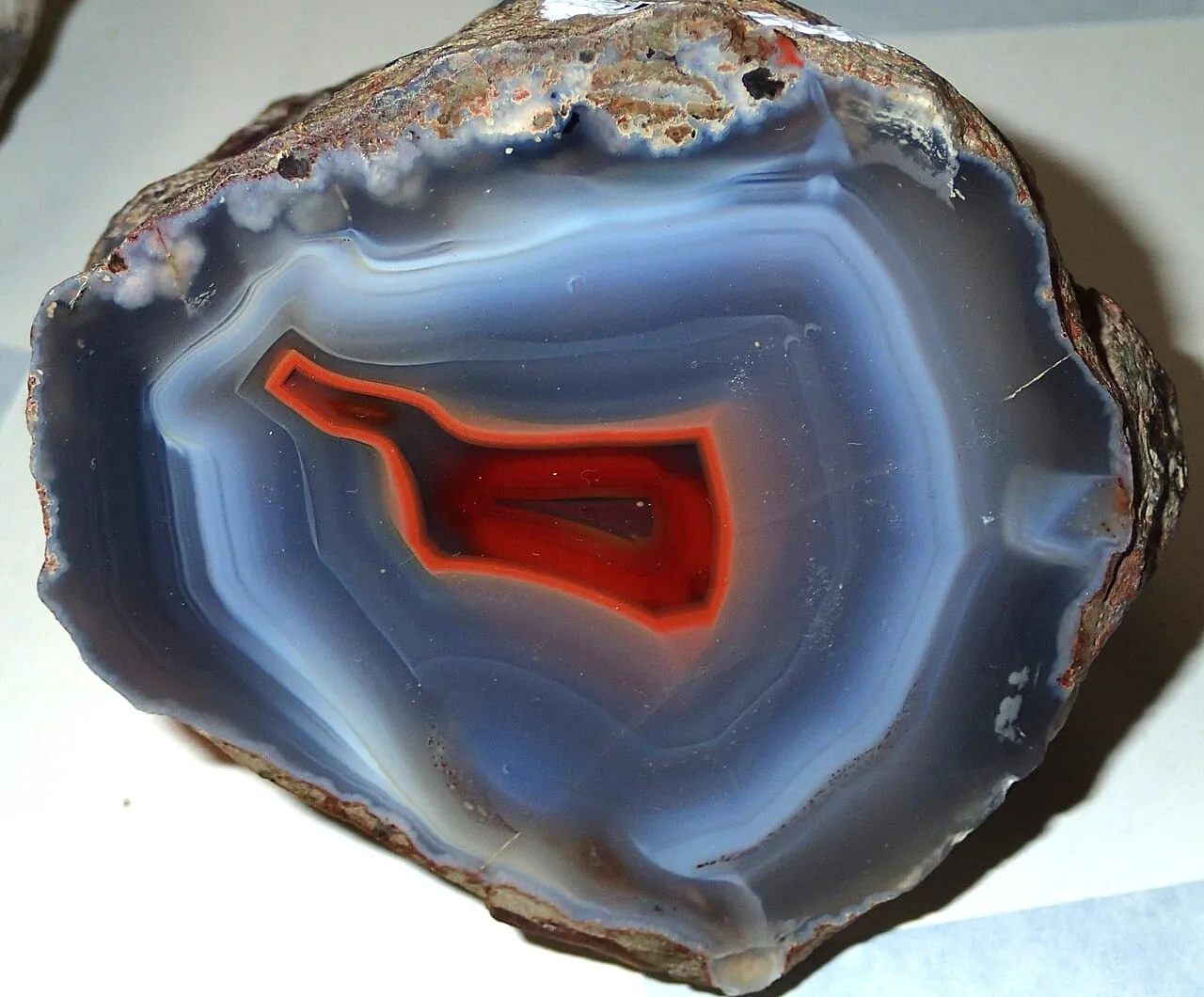
The banded variety of chalcedony: it grows layer by layer in hollows in volcanic rock and shows a new pattern every time it is cut.
Almandine
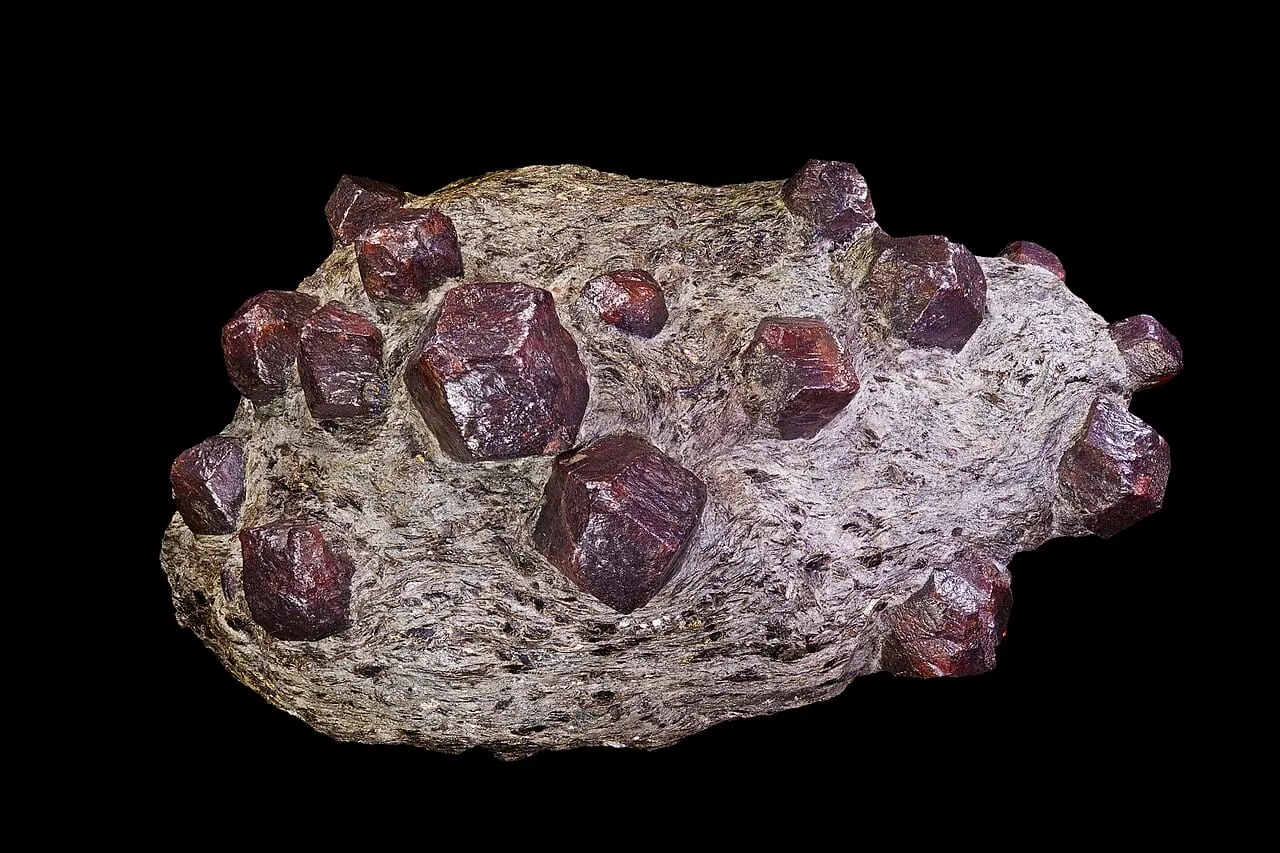
The commonest garnet: a deep red, iron-rich stone named after the ancient city of Alabanda in Anatolia, used in jewellery and in sandpaper alike.
Amazonite
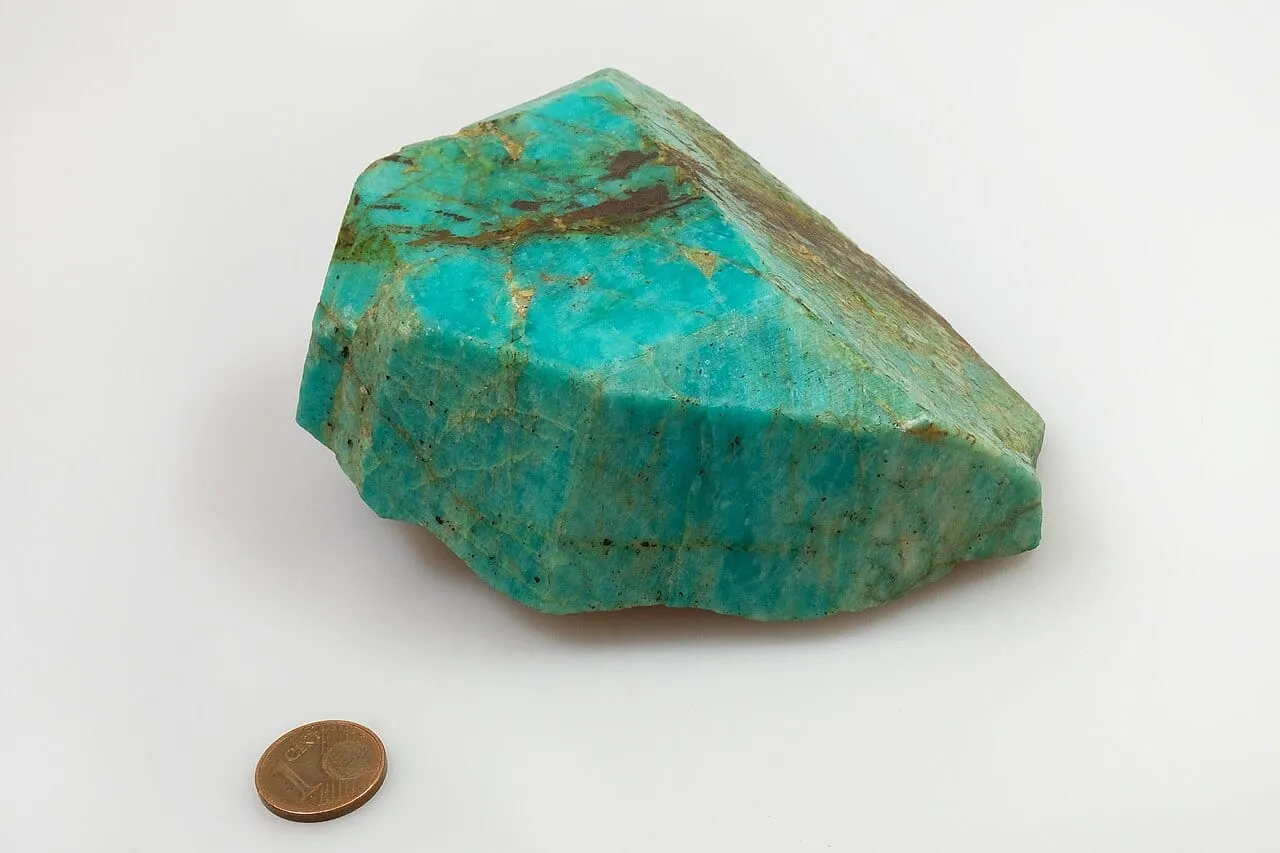
A turquoise-like green-blue feldspar: a variety of microcline worn as jewellery for more than three thousand years, but it can release lead.