How do fossils form? How bone, shell and footprints turn to stone
What a fossil is, why so few living things fossilise, how bone and shell turn to stone, what moulds and casts are, and how index fossils date rocks.
How does an ammonite shell, a dinosaur bone or a footprint pressed into mud reach us millions of years later? This guide walks through the steps of fossilisation and what fossils tell us. Each fossil has its own page in the Fossils section.
What is a fossil?
A fossil is physical evidence of a prehistoric plant or animal. There are two kinds:
- Body fossils: what is left of the organism itself: bone, tooth, shell, leaf.
- Trace fossils: marks it left while alive: footprints, burrows, tracks, droppings (coprolites).
Why do so few living things fossilise?
Most things that die rot away, scavengers eat the rest, and nothing is left. To fossilise, remains must be buried quickly: under mud or sand there is little oxygen and decay slows down. That is why around 99 per cent of the fossils found are of sea creatures, which were easily covered on the sea floor after death. On land, the animals most likely to fossilise lived by lakes and rivers, where floods covered their remains with mud.
Turning to stone, step by step
- The organism dies.
- Soft parts such as skin and muscle rot away; often only bone, teeth or shell remain.
- The remains are covered by sediment such as mud, sand or silt.
- As more layers build up on top, the ones below are squeezed and in time become sedimentary rock.
- Meanwhile groundwater seeps into the pores of the bone or shell and leaves minerals behind (calcite, silica, iron minerals). The remains slowly turn to stone. This can take thousands or even millions of years.
Because minerals fill the spaces, the inner structure is kept: fossil bones often show a spongy texture, and petrified wood can show growth rings.
Moulds and casts
Sometimes groundwater dissolves the buried shell or bone completely, leaving a hole in its shape in the rock: a mould. If minerals or sediment later fill the hole, they form a cast in the shape of the shell. Most shelled sea creatures fossilise this way. Footprints are kept in a similar way: the print is a mould, and the sediment that fills it is the cast.
Other ways of preservation
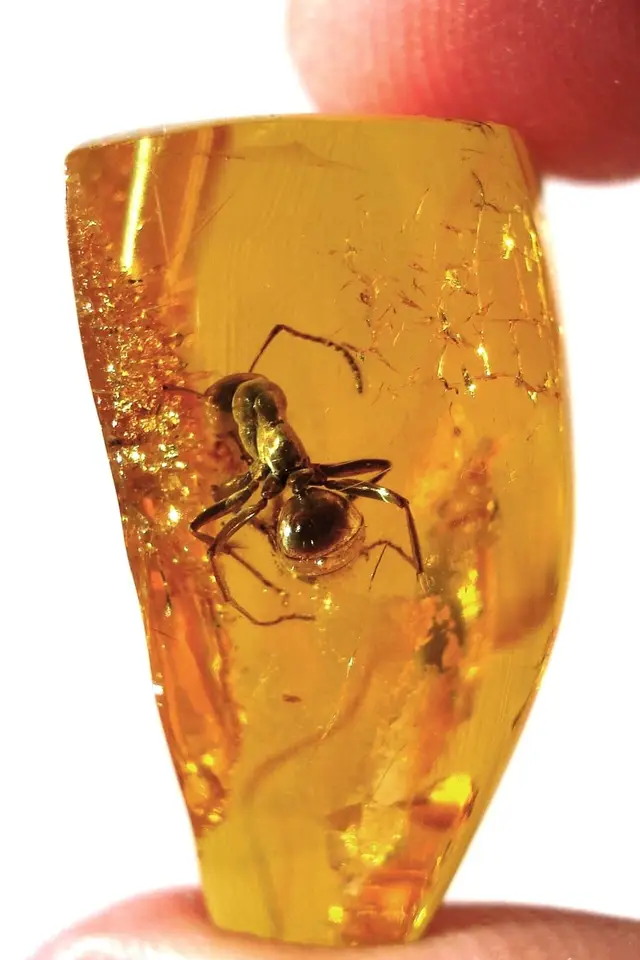
Some fossils survive without turning to stone: insects trapped in tree resin and kept in amber, or remains frozen in ice or dried out in very dry places.
How do we find fossils?
Layers holding fossils lie buried under other layers for millions of years. Movements of the Earth’s crust lift them up, and as rain, wind and rivers wear away the rock above, the fossils come to the surface.
How do fossils date rocks?
In undisturbed sedimentary layers the lowest is the oldest and the highest the youngest (the law of superposition). To match layers in distant places, geologists use index fossils: fossils of organisms that spread over a wide area but lived for a short time. Layers holding the same index fossil are the same age. Ammonites, each species of which lived briefly but spread very widely, are good index fossils.
Before you collect anything, check the local rules: in many countries fossils are protected.
Quick questions, quick answers
What is a fossil?
A fossil is physical evidence of a prehistoric plant or animal: its preserved remains (bone, tooth, shell) or a trace it left while alive (a footprint, a burrow, droppings). Remains are called body fossils, traces are trace fossils.
Does every living thing become a fossil when it dies?
No. Fossilisation is rare; most things that die rot away completely and leave nothing. Around 99 per cent of the fossils found are of sea creatures, whose remains could be quickly covered by sand or mud.
What is an index fossil?
The fossil of an organism that spread over a wide area but lived for a relatively short time. Layers holding the same index fossil can be matched as the same age; ammonites are a good example.
Stones in this guide
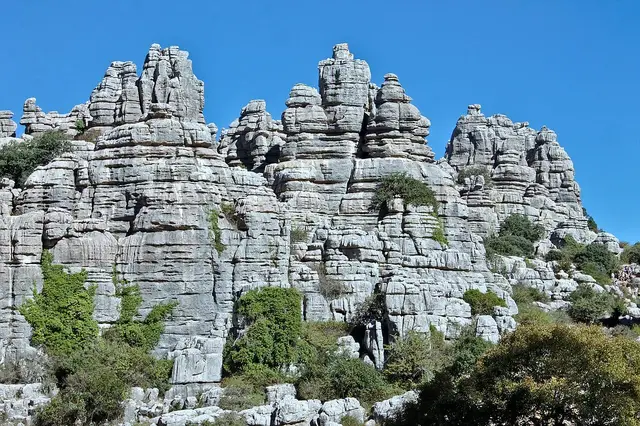
Limestone
A stone built from sea shells: the shared source of pyramids, caves and cement.
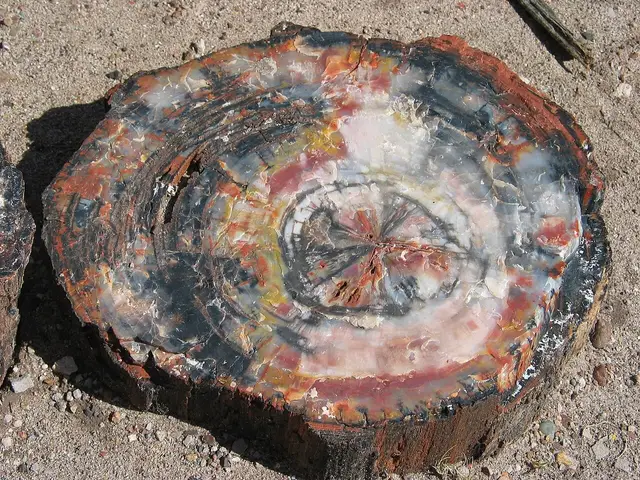
Petrified wood
A fossil formed when buried wood is replaced by silica minerals: even its annual rings can be seen in the stone.
Amber
Tree resin fossilised over millions of years: a light, warm organic gem that sometimes holds prehistoric insects.
Ammolite
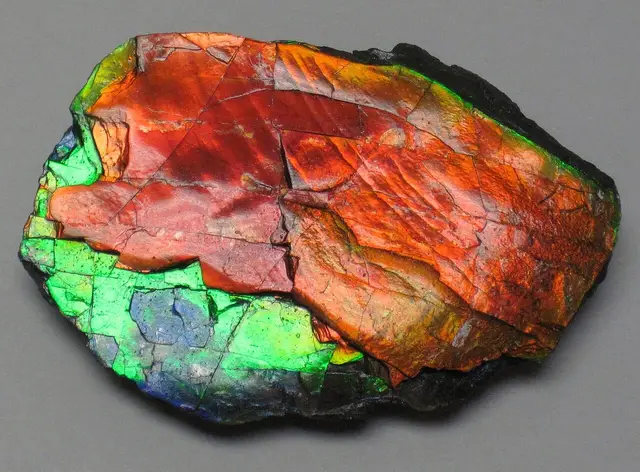
The rainbow-bright layer of fossil ammonite shell; of gem quality it comes only from the Canadian province of Alberta.
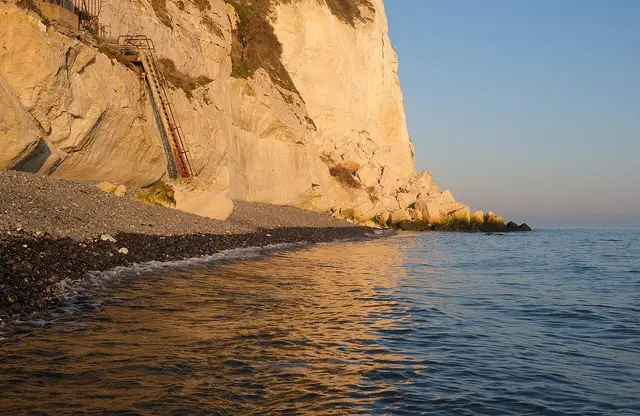
Chalk
Natural chalk is a soft, white limestone made of the shells of microscopic sea creatures; classroom chalk, however, is often gypsum.
Sources
- How are dinosaur fossils formed? (Lisa Hendry) · Natural History Museum, London
- Fossils: Window to the Past · University of California Museum of Paleontology
- Fossils: Window to the Past — Permineralization · University of California Museum of Paleontology