Organic gem
Petrified wood
Taşlaşmış ağaç
A fossil formed when buried wood is replaced by silica minerals: even its annual rings can be seen in the stone.
Also known as: Fossil wood · Silicified wood
- Popularly: Semi-precious stone
- Ornamental
- Important in Türkiye

In short
Petrified wood is fossilised wood: the tissue of the tree has been replaced, where it was buried, by minerals brought by water and volcanic ash, mostly silica (opal, chalcedony or quartz). Unlike most plant fossils it keeps the three-dimensional shape of the tree, and cell walls and annual rings can be seen even in the stone. Its colours come mostly from traces of metals such as iron. In Türkiye there are Early Miocene forests, buried about 18 million years ago, around Çamlıdere in Ankara and in Bolu.
Photos

How does it form?
Dead trees normally rot quickly; but if a trunk is buried quickly in wet sediment or volcanic ash it is starved of oxygen, and bacteria and fungi cannot eat the wood. Mineral-laden waters moving through the sediment fill the wood’s cell walls and voids and replace them. Silica bonds to the cellulose and forms a kind of template; as the cellulose decays, silica takes its place, which is why cell walls are often preserved in fine detail. Volcanic ash is especially favourable because it is rich in silica. The colours come mostly from trace metals: iron is the most important, while chromium gives a bright green.
What is it used for?
- Ornaments: table tops, bookends, clock faces and other ornamental objects are made from it; it is used only sparingly in jewellery.
- Building: some Ancestral Puebloan structures near Petrified Forest National Park, such as Agate House Pueblo, were built of petrified wood.
- Science: petrified wood helps us understand ancient forests and climates. Studies of the wood found around Ankara showed that a warm, frost-free climate and a variety of forest types existed there in the Early Miocene.
Where is it found?
Petrified wood is found worldwide in beds ranging in age from the Devonian, about 390 million years ago, to nearly the present. Some “petrified forests” are whole ecosystems buried by volcanic eruptions, with trunks often still standing where they grew; Amethyst Ridge in Yellowstone National Park shows 27 successive forest ecosystems on top of one another. Others are accumulations of driftwood carried by rivers; Petrified Forest National Park in the United States is a fine example. The Greek island of Lesbos, the area around the Cairo–Suez road in Egypt, the German city of Chemnitz and the Jaramillo Petrified Forest in Argentine Patagonia are other well-known examples.
In Türkiye
Silicified trees from Early Miocene forests, buried about 18 million years ago by eruptions of the Galatian Volcanic Province, occur in the Çamlıdere, Kızılcahamam and Beypazarı districts of Ankara and around Seben and Kıbrıscık in Bolu. In the study by Bayam and colleagues (2018), 233 petrified woods collected at these sites contained a large number of genera, such as Sequoia, Taxodium, Quercus (oak), Cedrus (cedar) and Pinus (pine); some trunks still stand where they grew, as felled stumps. The fossil forest at Kuztepe in Pelitçik village, Çamlıdere, was registered as a “strictly protected sensitive area” by a Presidential Decision in 2020 (decision no. 3060). Two separate fossil forest sites near Seben in Bolu, at Hocaş and Kozyaka, have also been described (Akkemik and colleagues, 2016).
What determines its value?
The value of petrified wood depends on how much detail of the wood structure is preserved, the beauty of its colour and pattern, the size of the piece, its freedom from cracks and the quality of its polish; for science its age, preserved cell detail and tree species matter too. In many places it is a plentiful ornamental stone: it is made into table tops, bookends, clocks and ornaments, and used only sparingly in jewellery. Pieces taken from protected areas are illegal; a piece of unknown legal origin should not be bought.
This information is educational, not buying, selling or investment advice. Value varies enormously with quality and treatment.
How to recognise it
- 1
It is often in the form of a trunk, branch or stump; wood structure such as bark, rings and grain shows on the surface.
- 2
It is much heavier than timber and feels like hard stone: its hardness is 6.5–7, so it scratches glass, and a broken surface is uneven and splintery.
- 3
In a cut and polished section, annual rings and cell structure can be seen.
- 4
Its colour is mostly dull grey or brown; red, pink, yellow and even bluish-violet shades occur too. Most of the colour comes from trace metals such as iron.
Myths and misconceptions
MythPetrified wood is wood that has itself turned into stone.
FactWood does not turn into stone; minerals dissolved in water replace its cell walls and fill its voids. In time only about 10% of the original organic material remains, and the rest is nearly pure silica.
MythWood always takes millions of years to petrify.
FactIn silica-rich hot springs wood can become silicified within hundreds of years. Most petrified wood is nevertheless millions of years old.
MythTaking a piece of petrified wood home is a harmless souvenir.
FactIn many places it is forbidden: no natural object may be removed from Petrified Forest National Park in the United States, and the Pelitçik Fossil Forest in Ankara has been a “strictly protected sensitive area” since 2020. Once a piece is removed it is cut off from its place and context, and for science where a fossil lies matters as much as the fossil itself.
Did you know?
The petrified forest of Lesbos, at the western tip of the Greek island, covers more than 150 km² and is possibly the largest of all; it was declared a national monument in 1985 and has trunks up to 22 metres long.
In silica-rich hot springs wood can become silicified within hundreds of years, though in general the process takes far longer.
Where is it found?
Loading map…
- Petrified Forest National Park, Arizona, USA · Major depositA particularly fine example of an accumulation of driftwood carried by a river: silicified trees about 230 million years old (Late Triassic). No natural object may be removed from the park
- Yellowstone National Park, Wyoming, USA · Known localityAmethyst Ridge shows 27 successive forest ecosystems buried by volcanic eruptions
- Western Lesbos, Greece · Major depositPossibly the largest petrified forest, over 150 km²; declared a national monument in 1985, with trunks up to 22 m long
- Cairo–Suez road area, Egypt · Known localityA petrified forest declared a national protectorate by Egypt's ministry of environment; the point is the city of Cairo
- Chemnitz, Saxony, Germany · Historic sourceAn in-place petrified forest was found in the town in 1737; the natural history museum displays specimens
- Jaramillo Petrified Forest, Santa Cruz, Argentina · Known localityMany trunks in Patagonia more than 3 m across and 30 m long
- Çamlıdere (Pelitçik, Kuztepe), Ankara, Türkiye · Major depositEarly Miocene silicified trees, 18.2–16.9 million years old; the Pelitçik Fossil Forest was registered as a “strictly protected sensitive area” in 2020
- Kızılcahamam, Ankara, Türkiye · Known localityThe same Early Miocene belt of petrified forest
- Beypazarı, Ankara, Türkiye · Known localityThe same Early Miocene belt of petrified forest
- Seben (Hocaş and Kozyaka), Bolu, Türkiye · Known localityTwo fossil forest sites made of the lower parts of trunks felled by an Early Miocene eruption
Locations are approximate to protect sites. Red dots mark places in Türkiye. Open in the big map →
Frequently asked questions
What is petrified wood?
Petrified wood is fossilised wood: the tissue of the tree has been replaced, where it was buried, by minerals brought by water and volcanic ash, mostly silica (opal, chalcedony or quartz). Unlike most plant fossils it keeps the three-dimensional shape of the tree, and cell walls and annual rings can be seen even in the stone. Its colours come mostly from traces of metals such as iron. In Türkiye there are Early Miocene forests, buried about 18 million years ago, around Çamlıdere in Ankara and in Bolu.
What is petrified wood used for?
Ornaments: table tops, bookends, clock faces and other ornamental objects are made from it; it is used only sparingly in jewellery. Building: some Ancestral Puebloan structures near Petrified Forest National Park, such as Agate House Pueblo, were built of petrified wood. Science: petrified wood helps us understand ancient forests and climates. Studies of the wood found around Ankara showed that a warm, frost-free climate and a variety of forest types existed there in the Early Miocene.
How hard is petrified wood?
It has a hardness of 6.5–7 on the Mohs scale. It scratches glass and steel; a steel knife cannot scratch it. Its specific gravity is 2.58–2.91 g/cm³.
Where is petrified wood found?
Its best-known localities: Petrified Forest National Park, Arizona, USA; Western Lesbos, Greece; Çamlıdere (Pelitçik, Kuztepe), Ankara, Türkiye; Chemnitz, Saxony, Germany; Yellowstone National Park, Wyoming, USA.
Where is petrified wood found in Türkiye?
Known localities in Türkiye: Çamlıdere (Pelitçik, Kuztepe), Ankara, Türkiye; Kızılcahamam, Ankara, Türkiye; Beypazarı, Ankara, Türkiye; Seben (Hocaş and Kozyaka), Bolu, Türkiye.
How can you tell if petrified wood is real?
It is often in the form of a trunk, branch or stump; wood structure such as bark, rings and grain shows on the surface. It is much heavier than timber and feels like hard stone: its hardness is 6.5–7, so it scratches glass, and a broken surface is uneven and splintery. In a cut and polished section, annual rings and cell structure can be seen.
Is petrified wood valuable?
On the “street to diamond” value ladder it sits on step 5 of nine: Ornamental stone. The value of petrified wood depends on how much detail of the wood structure is preserved, the beauty of its colour and pattern, the size of the piece, its freedom from cracks and the quality of its polish; for science its age, preserved cell detail and tree species matter too. In many places it is a plentiful ornamental stone: it is made into table tops, bookends, clocks and ornaments, and used only sparingly in jewellery. Pieces taken from protected areas are illegal; a piece of unknown legal origin should not be bought.
Sources
- Petrified wood · Wikipedia
- Taşlaşmış ağaç · Vikipedi
- Petrified Wood (Fossilized Wood) · GemDat
- Petrified wood · U.S. National Park Service, Petrified Forest National Park
- Laws & Policies · U.S. National Park Service, Petrified Forest National Park
- Trees of the Galatian Volcanic Province in the Miocene (Bayam, Akkemik, Poole & Akarsu), Palaeontologia Electronica · Palaeontological Association, 2018
- Silicified woods from two previously undescribed early Miocene forest sites near Seben, northwest Turkey (Akkemik et al.), Review of Palaeobotany and Palynology · Elsevier, 2016
- Çamlıdere Fosil Ormanı: Avrupa Jeoparklar Ağı Kapsamında (E. Gümüş) · TMMOB Jeoloji Mühendisleri Odası
- Pelitçik Fosil Ormanı Doğal Sit Alanının Koruma Statüsünün Yeniden Değerlendirilmesi Hakkında Cumhurbaşkanı Kararı (3060), Resmî Gazete 6 Ekim 2020, sayı 31266 · T.C. Resmî Gazete, 2020
External links
Draft: awaiting expert reviewReport an error ↗
On the same step
Agate
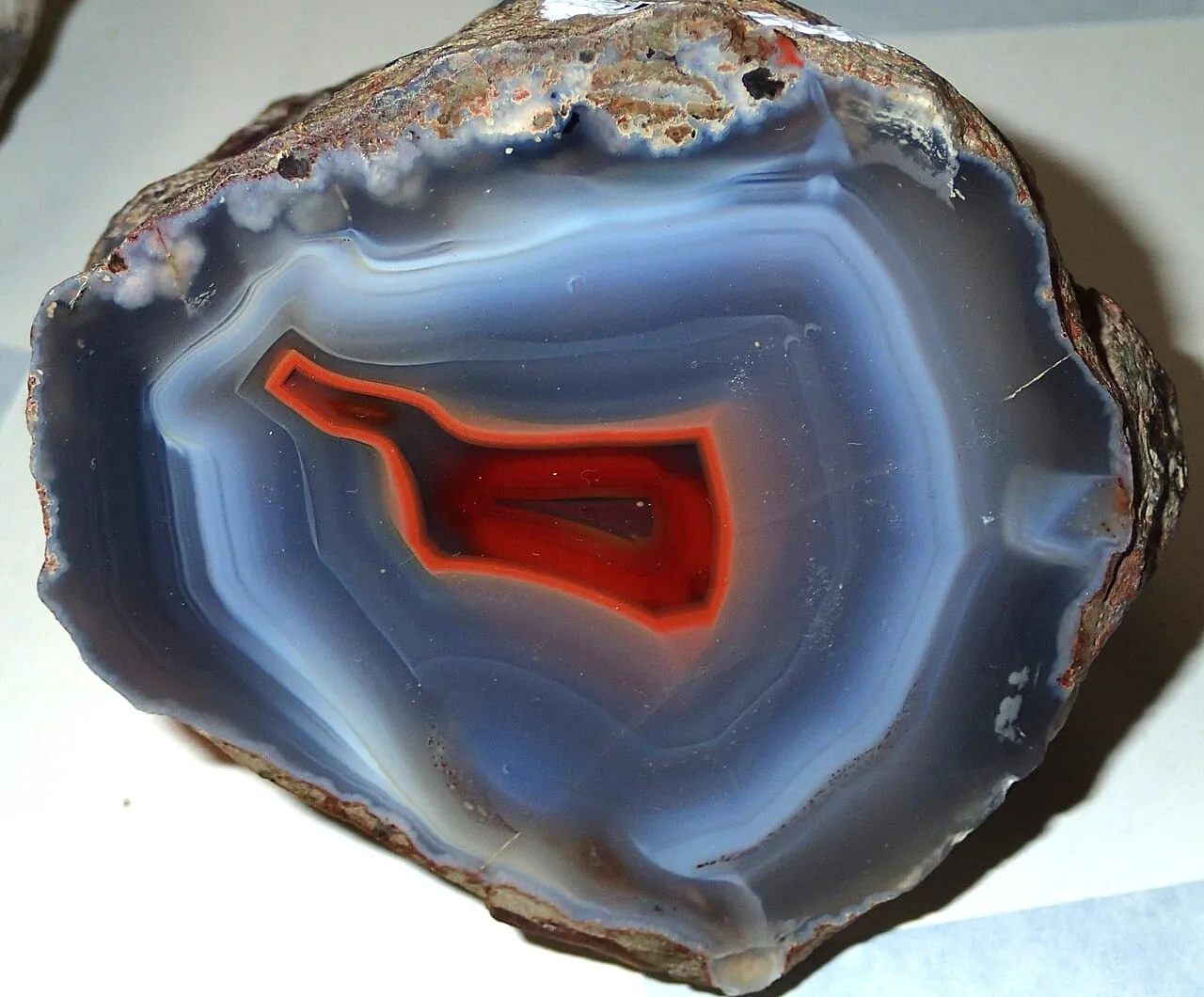
The banded variety of chalcedony: it grows layer by layer in hollows in volcanic rock and shows a new pattern every time it is cut.

Almandine
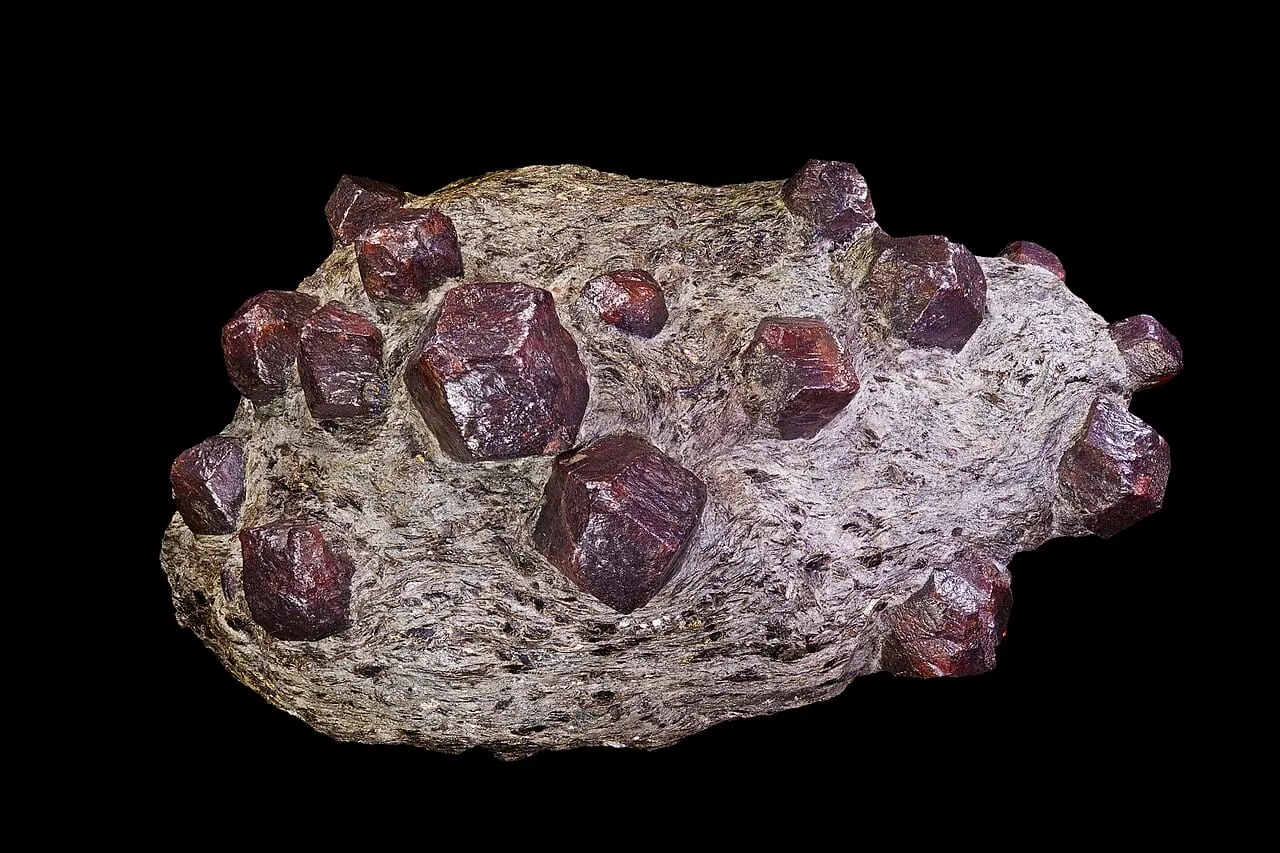
The commonest garnet: a deep red, iron-rich stone named after the ancient city of Alabanda in Anatolia, used in jewellery and in sandpaper alike.
Amazonite
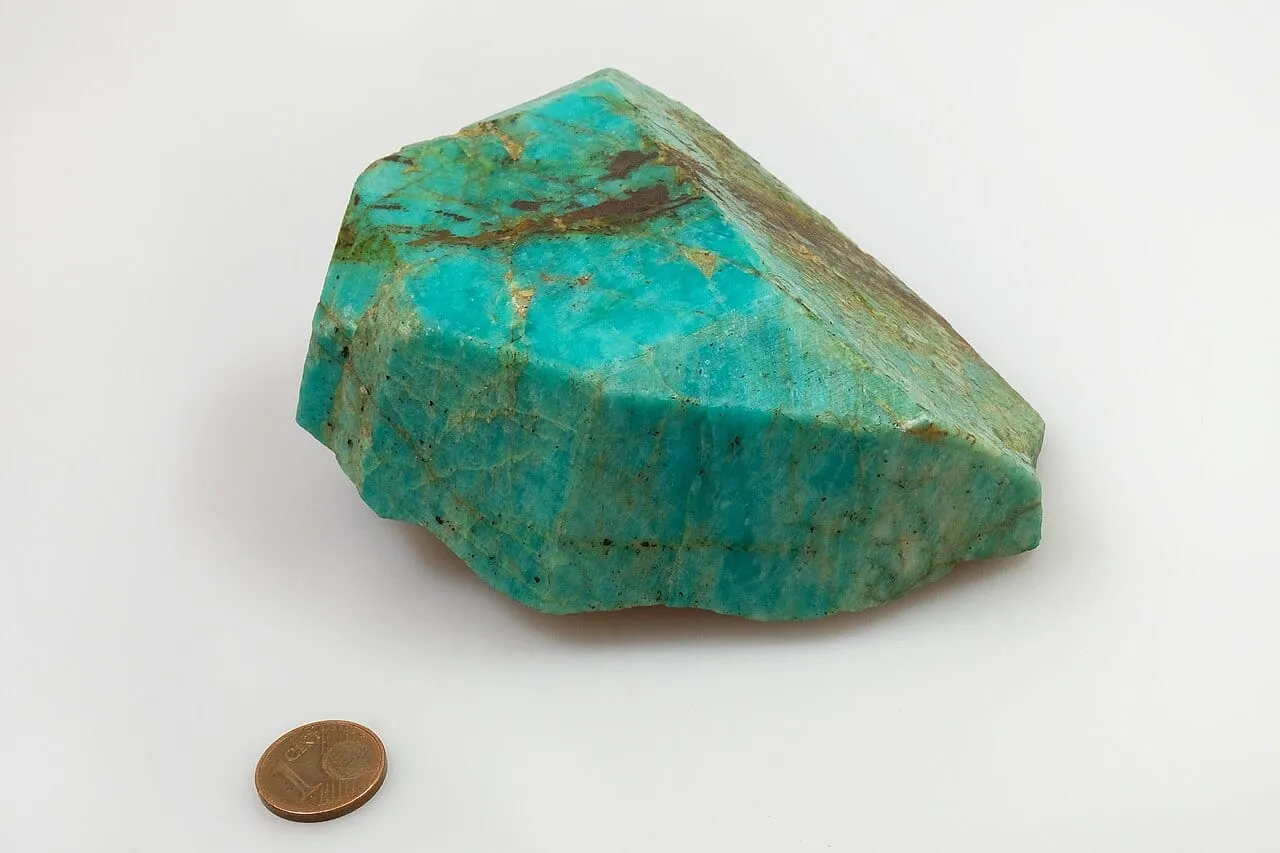
A turquoise-like green-blue feldspar: a variety of microcline worn as jewellery for more than three thousand years, but it can release lead.