Rock
Limestone
Kireçtaşı
A stone built from sea shells: the shared source of pyramids, caves and cement.
- Everyday
- Building stone
- Industrial

In short
Limestone is a sedimentary rock that forms mostly when the shells and skeletons of sea creatures pile up on the sea floor and harden. You can often see fossil shells and corals in it. It slowly dissolves in rainwater, which is how caves form, and people have used it for thousands of years as building stone and to make cement.
How does it form?
Most limestone forms in shallow, warm seas. Corals, mussels, sea snails and single-celled organisms such as foraminifera use calcium carbonate from the water to build shells and skeletons. When they die, their remains collect on the sea floor, are buried, compacted and hardened into limestone. Calcium carbonate can also precipitate directly from water: travertine around hot springs and the stalactites and stalagmites in caves form this way.
Rainwater picks up carbon dioxide from the air and becomes slightly acidic, slowly dissolving limestone. Over long periods this creates karst landscapes full of caves, swallow holes and sinkholes.
What is it used for?
- Cement: Limestone is heated with clay at high temperature to make clinker, the main ingredient of cement.
- Lime: Lime made by heating limestone is used in steelmaking, glass and paper production, water treatment and farming.
- Building stone and aggregate: It is cut into blocks for buildings and crushed for roads and concrete.
Limestone in Türkiye
Large areas of Türkiye, especially the Taurus Mountains, are made of limestone; their caves, swallow holes and underground rivers are classic karst features. At Göbekli Tepe in Şanlıurfa, T-shaped pillars carved from local limestone between 9600 and 8200 BCE are among the oldest known monumental structures built by humans.
How to recognise it
- 1
It fizzes straight away when a drop of dilute hydrochloric acid is added, and more slowly and weakly in vinegar.
- 2
A steel knife or nail scratches it easily, but it cannot scratch glass.
- 3
It often contains fossils of shells, corals or sea snails.
- 4
It is usually white, cream, beige or grey, and its crystals are mostly too small to see.
Fakes and imitations
What shops usually don’t tell you:
- Many limestones and travertines that take a polish are sold as “marble” in the stone trade. In geology, marble is limestone that has been recrystallised by heat and pressure.
- Dolomite rock (dolostone) looks very much like limestone, but it fizzes clearly in cold dilute acid only when powdered.
- Not all school chalk is natural chalk; some is made from gypsum, which does not fizz in acid.
Did you know?
The limestone of the Giza pyramids is packed with lentil-sized fossils of single-celled creatures called nummulites. The ancient geographer Strabo thought they were the petrified leftovers of the pyramid builders’ meals.
The White Cliffs of Dover are chalk, built from microscopic algae plates (coccoliths) that piled up on the sea floor over a very long time.
Where is it found?
Loading map…
- Pyramids of Giza, Egypt · Historic sourceThe core of the Great Pyramid is local limestone; its outer casing was fine white limestone brought from the Tura quarries across the Nile.
- White Cliffs of Dover, England · Known localityChalk made of the microscopic plates (coccoliths) of algae that settled on a Late Cretaceous sea floor.
- Göbekli Tepe, Şanlıurfa, Türkiye · Historic sourceThe T-shaped pillars of its monuments, dated to 9600–8200 BCE, are carved from local limestone; inscribed on the UNESCO World Heritage List in 2018.
- Taurus Mountains, Türkiye · Known localityHome to Türkiye's most extensive karst landscapes, with caves, swallow holes and sinkholes formed as rain and groundwater dissolve the limestone.
Locations are approximate to protect sites. Red dots mark places in Türkiye. Open in the big map →
Sources
- Limestone · Encyclopaedia Britannica
- Memphis and its Necropolis – the Pyramid Fields from Giza to Dahshur · UNESCO World Heritage Centre
- Göbekli Tepe · UNESCO World Heritage Centre
- Imaggeo on Mondays: Nummulites, the living lentils · European Geosciences Union (GeoLog), 2018
External links
Draft: awaiting expert reviewReport an error ↗
On the same step
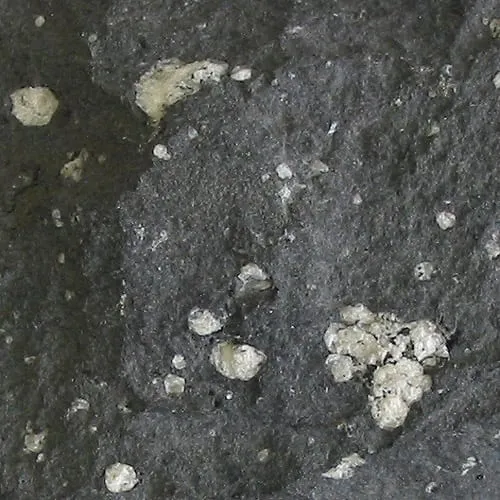
Andesite
The rock of volcanic arcs, named after the Andes — and the pink-grey stone of Ankara Castle.
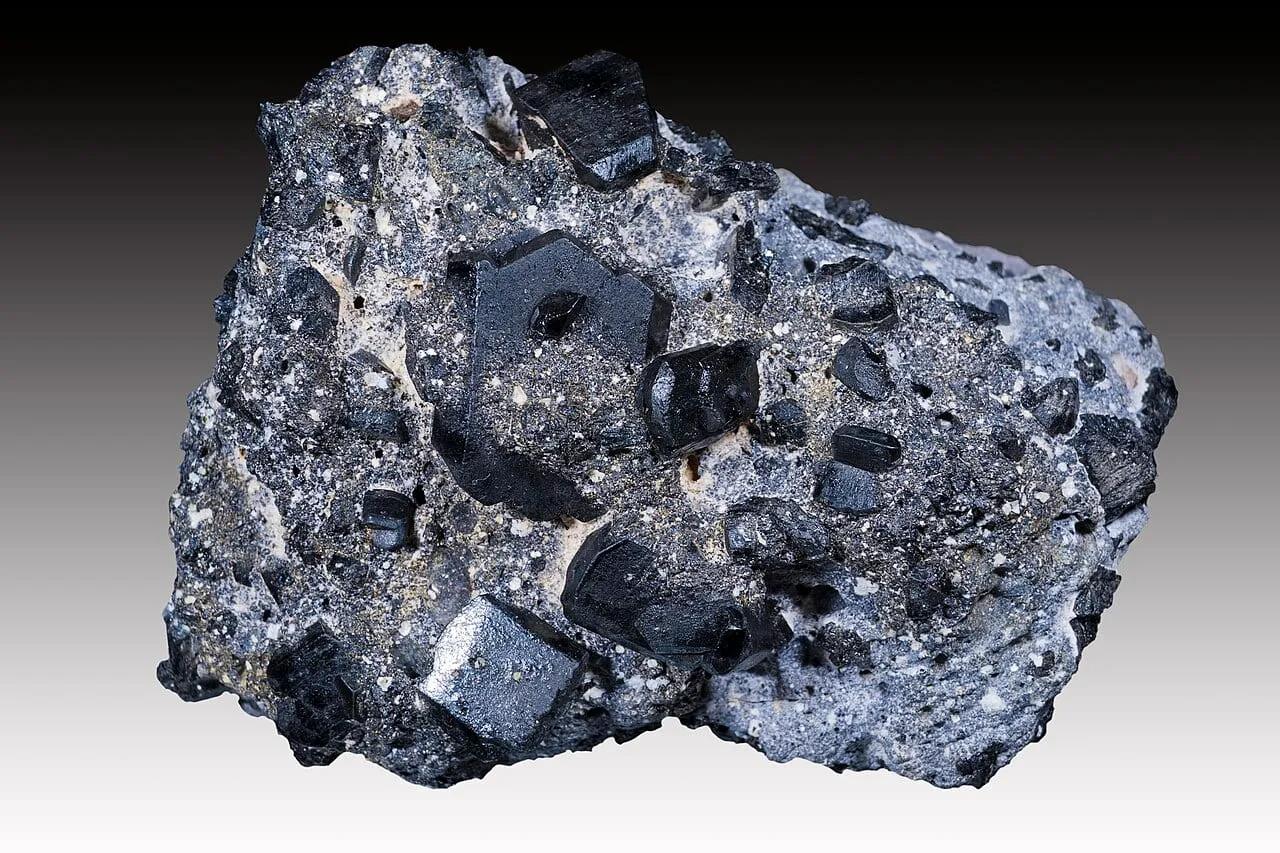
Augite (pyroxene)
The most common pyroxene, which darkens basalt and gabbro: inconspicuous, yet one of the key building blocks of Earth’s crust.
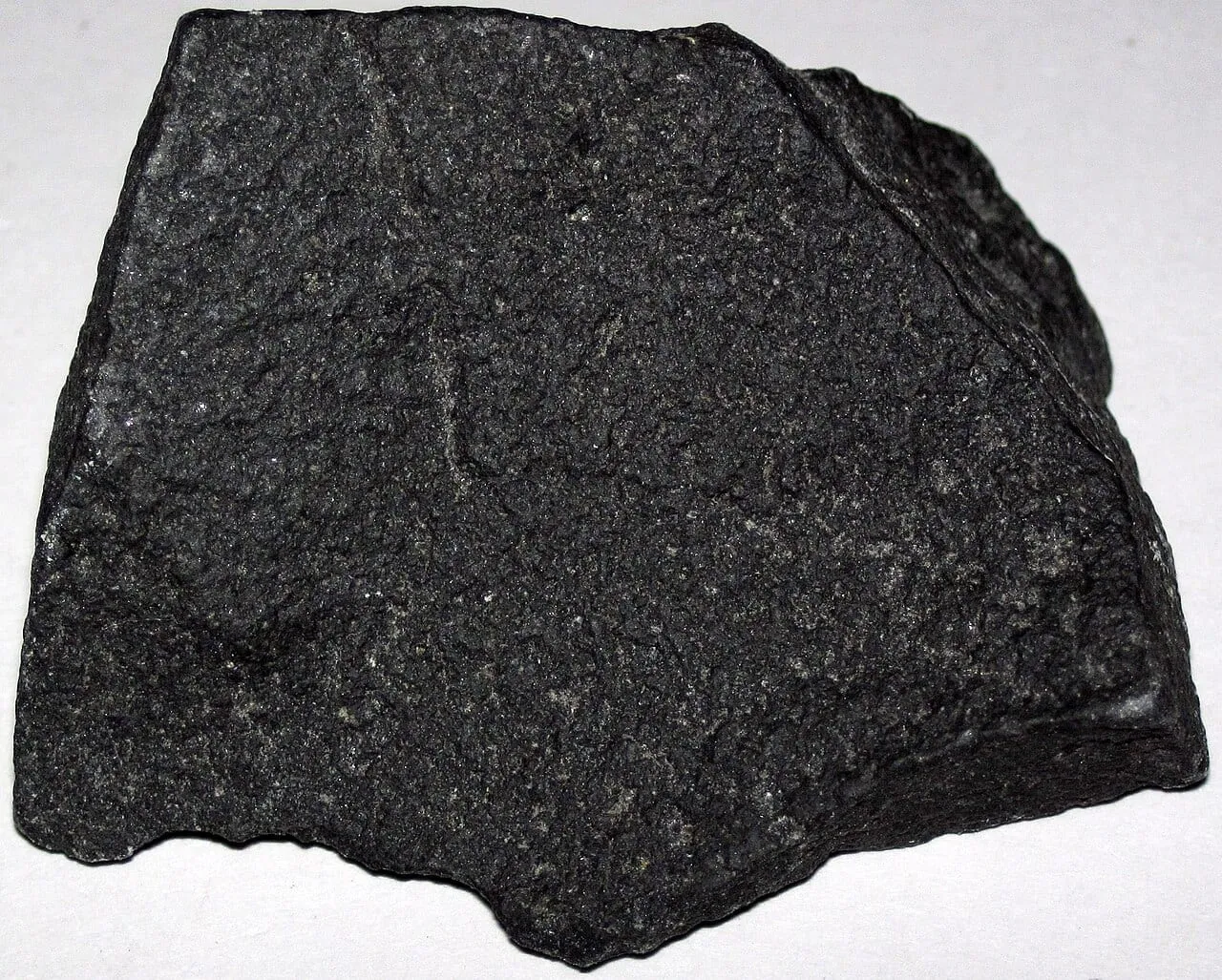
Basalt
The rock of the ocean floors and the Moon’s dark plains — the most common volcanic rock on Earth.