Organic gem
Ammolite
CaCO₃Ammolit
The rainbow-bright layer of fossil ammonite shell; of gem quality it comes only from the Canadian province of Alberta.
Also known as: Gem ammonite · Gem aragonite · Korite (trade name)
- Popularly: Semi-precious stone
- Gemstone

In short
Ammolite is the pearly, iridescent layer of the shells of ammonites that lived about 70–75 million years ago. An ammonite was an extinct sea animal, a distant relative of the squid. Because thin layers of aragonite in the shell reflect light by interference, it shows red, green and, more rarely, blue and purple. Gem-quality ammolite in commercial quantities has only been found in the province of Alberta in southern Canada. The layer is thin and soft, so most stones are assembled, such as doublets and triplets.
Photos
_23.jpg)
How does it form?
Ammonites lived in the inland sea that covered the middle of North America in the Late Cretaceous (about 70–75 million years ago). When the animals died, their shells were buried in mud on the sea floor, and the mud slowly turned into the rock called shale. Ammonite shells were originally made of layers of aragonite, as the shells of many molluscs are today, and in most fossil shells only the pearly layer survives. Ammolite is this layer where it has remained bright, thick enough and sound; it occurs only at certain levels. GIA researchers link its formation to how deeply the shell was buried: in the St. Mary River area that depth was about 4 km, and the rock was later uplifted and eroded so that it came back to the surface.
Most ammolite is found in shells preserved inside concretions, iron-rich lumps that are harder than the surrounding shale.
What is it used for?
- Jewellery: used in every kind of jewellery, such as rings, necklaces, earrings and brooches. Because the layer is thin and soft, most stones are made as doublets or triplets; in a triplet the ammolite sits between a shale backing below and a cap of quartz or synthetic spinel above.
- Decoration and collecting: complete ammonite fossils and unworked pieces are also sought after for collections and decoration.
- Science: the microstructure of the shell, and colour produced by light interference, are of interest to gemology and palaeontology.
Care
Ammolite is soft; heat, acids, perfume, hairspray and many household products can spoil its shine. Solid stones need special care. Capped triplets can be cleaned carefully with warm soapy water and in an ultrasonic cleaner, but knocks can make the glued layers separate.
Where is it found?
Gem-quality ammolite in commercial quantities has been found only in the Late Cretaceous Bearpaw Formation of southern Alberta, Canada, and so far only from two ammonite species (Placenticeras meeki and P. intercalare). The main source is the St. Mary River valley near Lethbridge; the Oxbow and Zone 4 mines lie on land of the Kainai (Blood) people. Ammolite has also been reported from the Bow, Little Bow, Oldman and Red Deer rivers. The mines are usually open pits, and the land is restored when work is finished.
What determines its value?
The variety and brightness of the colours matter most for ammolite: the more colours a stone shows, the higher its grade; the full spectrum, and especially blue and purple, is most sought after, while stones that show only red or brown are worth less. Sharp, bright colours that do not go dark from some angles, and the rare suture patterns that recall the ammonite shell, add value. Whether a stone is a solid piece or a doublet or triplet, and whether it has been impregnated with resin (stabilised), must be disclosed; untreated solid stones are generally worth more.
This information is educational, not buying, selling or investment advice. Value varies enormously with quality and treatment.
How to recognise it
- 1
It shows rainbow colours: red and green are the commonest, blue is rare and purple very rare. The colour changes as you tilt the stone; in a mainly red stone it shifts through orange and yellow to green.
- 2
It is soft (Mohs 3.5): fluorite scratches it, calcite does not.
- 3
In most rough pieces the coloured areas look like a mosaic of panes set off by thin healed fractures; some pieces show rare “suture” patterns that mimic the internal structure of the ammonite.
- 4
Most stones are opaque. In most jewellery a backing of shale is glued underneath and a cap of quartz or synthetic spinel on top; looking at the side of the stone shows the layers.
- 5
Telling a natural solid piece from a doublet or triplet, or whether it has been impregnated with resin, is difficult; impregnation shows only at more than 30× magnification, as thin seams of epoxy between the layers.
Fakes and imitations
What shops usually don’t tell you:
- Doublets and triplets: a thin layer of ammolite is glued onto shale or another backing (doublet); in triplets a cap of clear quartz or synthetic spinel is added on top. These are not natural single-piece stones and must be sold as such.
- Look-alike materials: opal, fire agate, labradorite, and modern shells such as abalone and paua, or the Late Triassic iridescent fossil marble (lumachelle) from Bleiberg in Austria, can be mistaken for ammolite.
Myths and misconceptions
MythAmmolite and an ammonite fossil are the same thing.
FactAn ammonite fossil is the petrified shell of the extinct animal, and most are dull in colour. Ammolite is the trade name for the iridescent pearly layer in the shells of Placenticeras ammonites of the Bearpaw Formation only.
MythThe colours of ammolite are dye or were added afterwards.
FactThe colours come not from a dye or pigment but from thin layers of aragonite reflecting light and interfering with it; the colour depends on the thickness of the layers. Colour treatments such as heating and irradiation are not used on ammolite because they would damage it. Most ammolite is simply impregnated with resin to make it durable, which adds strength, not colour.
What is it believed to be good for?
This section reports beliefs; it is not health information. There is no scientific evidence for these claims and no stone replaces medical treatment.
The meanings people give this stone, and who holds them:
- The Blackfoot people call ammolite and ammonite fossils “iniskim”, the “buffalo stone”; the stone is believed to bring luck in the buffalo hunt and is used in ceremonies and prayers.
- Ammonite fossils, the raw material of ammolite, have been the subject of other beliefs through history: in medieval Europe they were taken for petrified snakes, some Europeans credited them with power against witchcraft, and Hindus regard ammonites from Nepal’s Gandaki River as a concrete manifestation of Vishnu.
- Some feng shui practitioners in Asia say that ammolite, because of its seven colours, is a “prosperity stone” that supports the flow of chi and brings wealth, wisdom and growth.
What science says
The colours of ammolite are a physical result of aragonite layers reflecting light by interference; there is no scientific evidence that the colours represent an energy or a benefit such as wealth or wisdom, bring luck in hunting, or protect anyone. Ammonite fossils and ammolite hold sacred meaning for the Blackfoot and other Indigenous peoples of North America, and that meaning should be mentioned with respect.
Did you know?
Ammolite is one of the few new natural gem materials to enter the market in the last fifty years. Its first recorded use as a gem was in 1962, when amateur lapidaries showed pieces at a gem show in Nanton, Alberta; the name “ammolite” was introduced in 1967 by Calgary jeweller Marcel Charbonneau.
In 1998 ammolite was declared a mineral rather than a fossil under Alberta law; had it been declared a fossil, mining could have been severely restricted.
The shells of the Placenticeras ammonites that yield ammolite typically reached about 70 cm across at maturity. According to a 2001 GIA article, about 90% of the ammolite on the market came from the mines of a single company, Korite of Calgary.
Where is it found?
Loading map…
- St. Mary River valley (between Lethbridge and Magrath), Alberta, Canada · Major depositThe main source of commercial ammolite; the Oxbow and Zone 4 mines in the Bearpaw Formation, and the now-closed Kormos mine, lie along this river
- Kainai (Blood) Reserve, Alberta, Canada · Major depositThe Oxbow mine lies on this reserve; the mineral rights belong to the Kainai (Blood) people
Locations are approximate to protect sites. Red dots mark places in Türkiye. Open in the big map →
Frequently asked questions
What is ammolite?
Ammolite is the pearly, iridescent layer of the shells of ammonites that lived about 70–75 million years ago. An ammonite was an extinct sea animal, a distant relative of the squid. Because thin layers of aragonite in the shell reflect light by interference, it shows red, green and, more rarely, blue and purple. Gem-quality ammolite in commercial quantities has only been found in the province of Alberta in southern Canada. The layer is thin and soft, so most stones are assembled, such as doublets and triplets.
What is ammolite used for?
Jewellery: used in every kind of jewellery, such as rings, necklaces, earrings and brooches. Because the layer is thin and soft, most stones are made as doublets or triplets; in a triplet the ammolite sits between a shale backing below and a cap of quartz or synthetic spinel above. Decoration and collecting: complete ammonite fossils and unworked pieces are also sought after for collections and decoration. Science: the microstructure of the shell, and colour produced by light interference, are of interest to gemology and palaeontology.
How hard is ammolite?
It has a hardness of 3.5–4 on the Mohs scale. A fingernail cannot scratch it, but a steel knife can. Its specific gravity is 2.76–2.84 g/cm³.
Where is ammolite found?
Its best-known localities: St. Mary River valley (between Lethbridge and Magrath), Alberta, Canada; Kainai (Blood) Reserve, Alberta, Canada.
How can you tell if ammolite is real?
It shows rainbow colours: red and green are the commonest, blue is rare and purple very rare. The colour changes as you tilt the stone; in a mainly red stone it shifts through orange and yellow to green. It is soft (Mohs 3.5): fluorite scratches it, calcite does not. In most rough pieces the coloured areas look like a mosaic of panes set off by thin healed fractures; some pieces show rare “suture” patterns that mimic the internal structure of the ammonite. Doublets and triplets: a thin layer of ammolite is glued onto shale or another backing (doublet); in triplets a cap of clear quartz or synthetic spinel is added on top. These are not natural single-piece stones and must be sold as such.
Is ammolite valuable?
On the “street to diamond” value ladder it sits on step 6 of nine: Fine ornamental and collector stone. The variety and brightness of the colours matter most for ammolite: the more colours a stone shows, the higher its grade; the full spectrum, and especially blue and purple, is most sought after, while stones that show only red or brown are worth less. Sharp, bright colours that do not go dark from some angles, and the rare suture patterns that recall the ammonite shell, add value. Whether a stone is a solid piece or a doublet or triplet, and whether it has been impregnated with resin (stabilised), must be disclosed; untreated solid stones are generally worth more.
What is ammolite good for?
The Blackfoot people call ammolite and ammonite fossils “iniskim”, the “buffalo stone”; the stone is believed to bring luck in the buffalo hunt and is used in ceremonies and prayers. Ammonite fossils, the raw material of ammolite, have been the subject of other beliefs through history: in medieval Europe they were taken for petrified snakes, some Europeans credited them with power against witchcraft, and Hindus regard ammonites from Nepal’s Gandaki River as a concrete manifestation of Vishnu. Some feng shui practitioners in Asia say that ammolite, because of its seven colours, is a “prosperity stone” that supports the flow of chi and brings wealth, wisdom and growth. The colours of ammolite are a physical result of aragonite layers reflecting light by interference; there is no scientific evidence that the colours represent an energy or a benefit such as wealth or wisdom, bring luck in hunting, or protect anyone. Ammonite fossils and ammolite hold sacred meaning for the Blackfoot and other Indigenous peoples of North America, and that meaning should be mentioned with respect. This section reports beliefs; it is not health information. There is no scientific evidence for these claims and no stone replaces medical treatment.
Sources
- Ammolite: Iridescent fossilized ammonite from southern Alberta, Canada (Mychaluk, Levinson & Hall), Gems & Gemology 37(1) · GIA, 2001
- Ammolite · Wikipedia
- Ammonoidea · Wikipedia
- Ammolite History · Galt Museum & Archives
- Ammolite becomes Alberta's official gemstone · Global News, 2022
- Article Explains Ammolite's Organic Origins and Feng Shui Popularity · GIA
- Blood 148 · Wikipedia
- Magrath, Alberta · Wikipedia
- Lethbridge · Wikipedia
External links
Draft: awaiting expert reviewReport an error ↗
On the same step
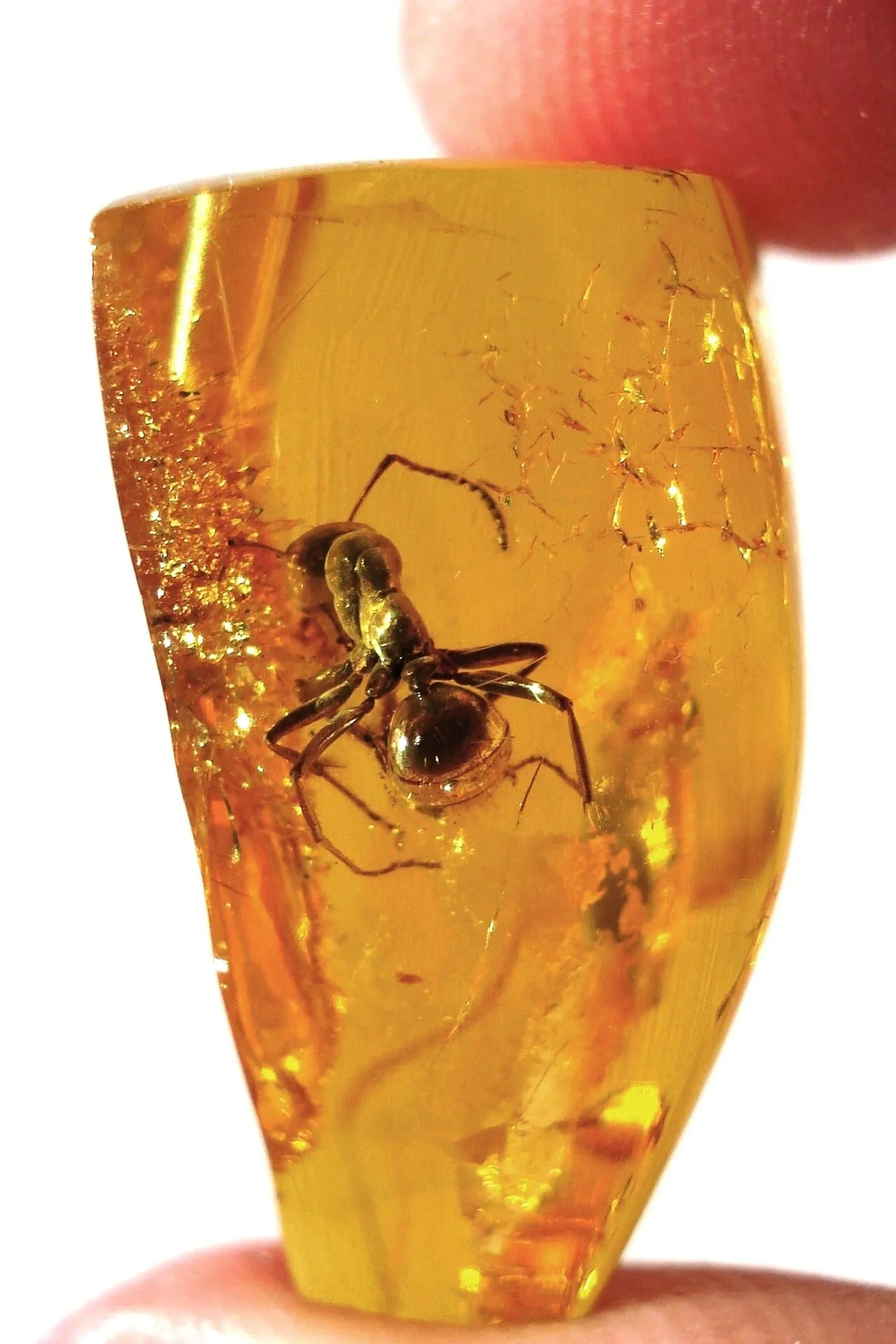
Amber
Tree resin fossilised over millions of years: a light, warm organic gem that sometimes holds prehistoric insects.

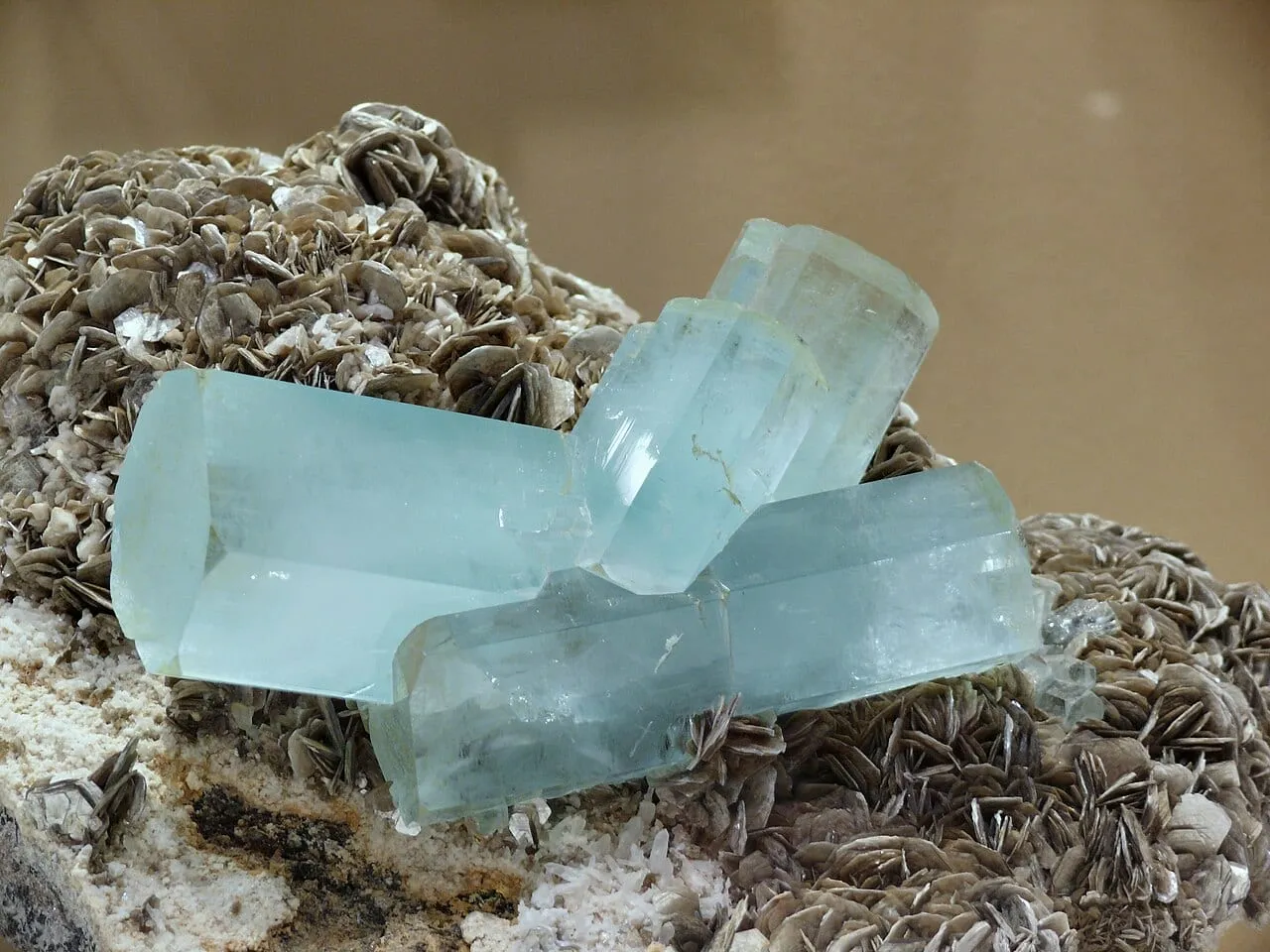
Aquamarine
The blue member of the beryl family, named after seawater: often found as large, clear, nearly flawless crystals.
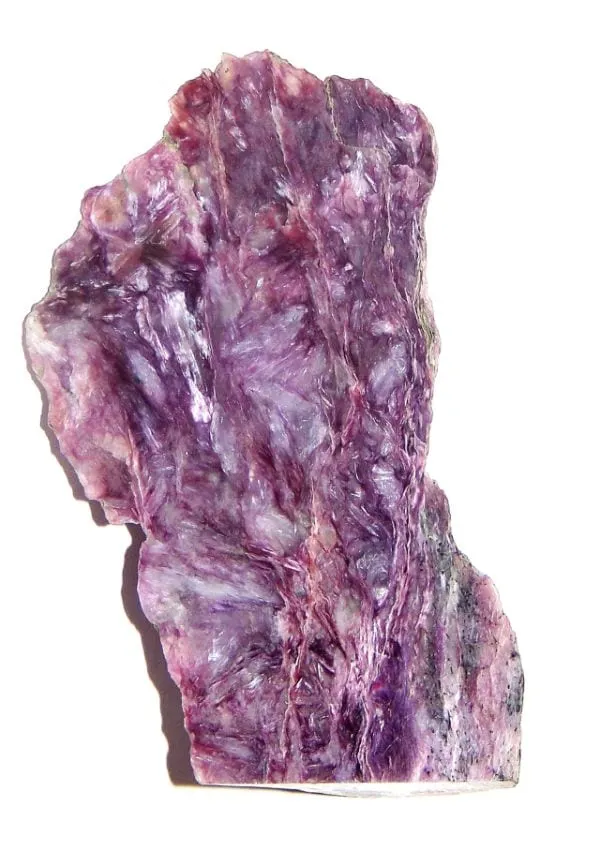
Charoite
A swirl-patterned purple stone found in the world only in Siberia; when first found it was thought to be a dyed fake.