VarietyA variety of Agate
Enhydro agate
SiO₂Enhidro akik
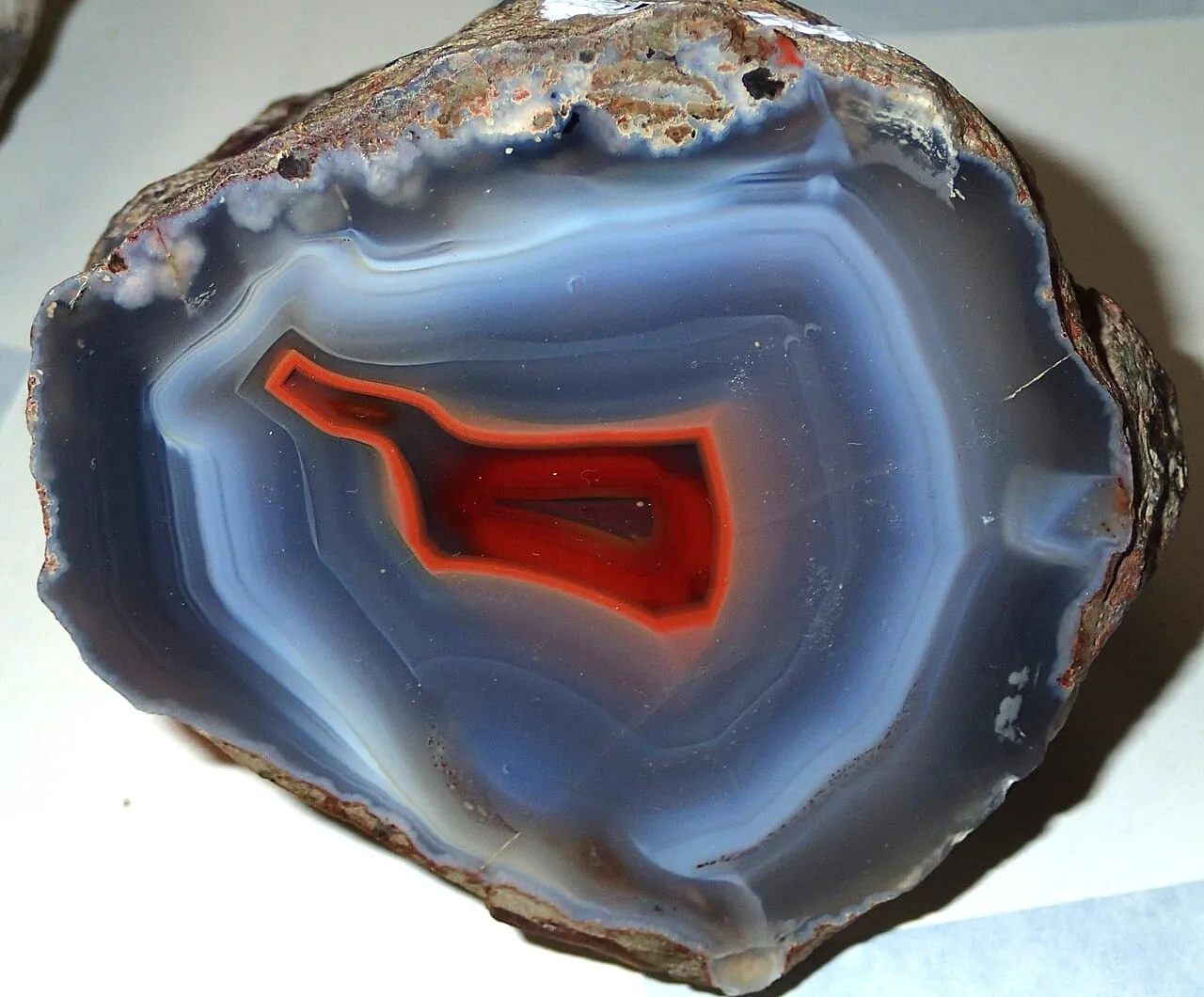
An agate or chalcedony nodule that still holds water: shake it and the water sloshes, while a bubble moves behind its thin wall.
Also known as: Enhydros · Water-stone
- Popularly: Semi-precious stone
In short
An enhydro agate is an agate or chalcedony nodule with water trapped in the hollow at its centre, usually together with a gas bubble that moves like the bubble in a spirit level. The name comes from Greek and means “containing water”. These stones, described by Pliny the Elder, were counted among gems in ancient Rome. They form in cavities in volcanic rocks and are known from places such as Brazil, Uruguay and Australia. Because the chalcedony shell is porous, the water inside can change over time and may even slowly be lost.
How does it form?
As silica-rich water seeps through cavities in volcanic rocks, it leaves silica on the cavity walls layer by layer, building an agate or chalcedony shell. As the layers build up, a hollow remains in the middle and water is trapped in it; the silica-rich water itself forms the shell. Because the chalcedony shell is permeable, water can slowly enter and leave over very long periods. Known specimens date back to the Eocene, and the process is still going on today.
In the Uruguayan nodule that Gümbel examined in 1880, the chalcedony shell was built of overlapping bulges reminiscent of tree resin. Towards the inside, pale and milky layers alternated, and at the very centre clear quartz crystals pointed into the hollow. Water and a gas bubble filled the remaining space.
What is the water inside?
Gümbel drilled into a 51-gram enhydro agate and studied the roughly 2.4 grams of liquid inside. The liquid had no smell or taste; when evaporated it left a very small amount of table salt (sodium chloride) and probably calcium chloride and calcium sulphate. The gas bubble held no noticeable carbon dioxide; Gümbel concluded that it was water vapour and most likely air. In similar “water-stones” from Beechworth in Australia, the liquid was likewise found to be a dilute water containing chlorides and sulphates of calcium, magnesium and sodium.
What is it used for?
- Collecting: Stones in which the moving water and bubble can be seen are sought by collectors and museums as natural curiosities.
- History: In Rome, polished enhydros with a moving bubble were much admired and counted among gems.
- Science: Since the 19th century, scientists have studied the liquid and gas inside them to understand the conditions under which agates form.
Care
An enhydro agate should be protected from frost: in Gümbel’s experiment the freezing water expanded and cracked the wall. For the same reason Gümbel avoided heating a stone above 100 °C, since the wall might burst. Because the shell is porous, the water may also evaporate, however slowly.
What determines its value?
What matters most is how easily the water and bubble can be seen: stones with a thin, translucent wall through which the water and the moving bubble are clearly visible are what collectors look for. The amount of water, the size of the stone, its pattern and freedom from cracks also count. Because a cracked or porous stone can lose its water over time, sound specimens that still hold plenty of water are worth more to collectors. Chalcedony is plentiful, so the value lies less in the material than in the natural curiosity the stone shows.
This information is educational, not buying, selling or investment advice. Value varies enormously with quality and treatment.
How to recognise it
- 1
Held close to the ear and shaken gently, the stone may let you hear the water sloshing inside.
- 2
With a light behind it you may see the water level, or a gas bubble sliding as the stone is turned; that is why one face is often sawn and polished thin.
- 3
The outside is usually a rounded, smooth, pale chalcedony shell; Pliny, too, described these stones as “always rounded, smooth and white”.
- 4
It belongs to the quartz family and is hard (6.5–7), but its thin wall can crack from a knock, from freezing or from sudden heating.
Myths and misconceptions
MythThe water inside an enhydro agate is millions of years old and has never changed since the stone formed.
FactThe chalcedony shell is porous, and water can slowly move in and out over geological time. So the water inside is most often not the water that was there when the stone formed.
MythAn agate with water inside keeps that water for ever.
FactThe water can evaporate very slowly through tiny channels in the shell. As Gümbel's 1880 experiment showed, freezing can also crack the wall and let the water seep out.
What is it believed to be good for?
This section reports beliefs; it is not health information. There is no scientific evidence for these claims and no stone replaces medical treatment.
The meanings people give this stone, and who holds them:
- Today crystal-therapy websites claim that the “ancient water” inside an enhydro agate cleanses the emotions and calms and balances people.
What science says
The water inside an enhydro agate is ordinary groundwater with a few dissolved salts, and it is often not even as old as the stone itself; there is no scientific evidence that it cleanses or calms.
Did you know?
Describing these stones from near Vicenza in Italy, Pliny the Elder wrote that the liquid inside moves “as in an egg” when the stone is moved. The Roman poet Claudian also wrote several short poems about these natural wonders.
The government of Uruguay sent many liquid-filled chalcedony nodules from the Salto area to the 1878 Paris World's Fair, which drew scientists' attention back to these stones.
When the German geologist C. W. Gümbel cooled a small enhydro agate to about −6 °C in 1880, the water inside froze, a fine crack opened in the wall and some of the water seeped out.
The largest enhydro agate on record was found in the city of Fuxin in China: it is 63 cm across and weighs 310 kg.
Where is it found?
Loading map…
- Monti Berici (Monte Tondo), Vicenza, Italy · Historic sourceSource of the “enhydros” described by Pliny the Elder and counted among gems in Rome; described again by Alberto Fortis in 1802
- Around Catalán (north-west of Salto), Uruguay · Major depositAn area of large agate workings; the Uruguayan government sent many liquid-filled chalcedony nodules from here to the 1878 Paris World's Fair
- Brazil · Known localityListed among the sources of enhydro agate; no exact site is given
- Spring Creek, Beechworth, Victoria, Australia · Known localityLiquid-filled chalcedony and quartz “water-stones” with flat faces and sharp edges that look like crystals; studied in the 19th century
- Idar-Oberstein, Rhineland-Palatinate, Germany · Historic sourceWater-filled agate nodules were reported among the local agates in the 19th century
- Fuxin, Liaoning, China · Known localityThe largest enhydro agate on record was found here: 63 cm across and weighing 310 kg
Locations are approximate to protect sites. Red dots mark places in Türkiye. Open in the big map →
Frequently asked questions
What is enhydro agate?
An enhydro agate is an agate or chalcedony nodule with water trapped in the hollow at its centre, usually together with a gas bubble that moves like the bubble in a spirit level. The name comes from Greek and means “containing water”. These stones, described by Pliny the Elder, were counted among gems in ancient Rome. They form in cavities in volcanic rocks and are known from places such as Brazil, Uruguay and Australia. Because the chalcedony shell is porous, the water inside can change over time and may even slowly be lost.
What is enhydro agate used for?
Collecting: Stones in which the moving water and bubble can be seen are sought by collectors and museums as natural curiosities. History: In Rome, polished enhydros with a moving bubble were much admired and counted among gems. Science: Since the 19th century, scientists have studied the liquid and gas inside them to understand the conditions under which agates form.
How hard is enhydro agate?
It has a hardness of 6.5–7 on the Mohs scale. It scratches glass and steel; a steel knife cannot scratch it. Its specific gravity is 2.59–2.61 g/cm³.
Where is enhydro agate found?
Its best-known localities: Around Catalán (north-west of Salto), Uruguay; Monti Berici (Monte Tondo), Vicenza, Italy; Idar-Oberstein, Rhineland-Palatinate, Germany; Brazil; Spring Creek, Beechworth, Victoria, Australia.
How can you tell if enhydro agate is real?
Held close to the ear and shaken gently, the stone may let you hear the water sloshing inside. With a light behind it you may see the water level, or a gas bubble sliding as the stone is turned; that is why one face is often sawn and polished thin. The outside is usually a rounded, smooth, pale chalcedony shell; Pliny, too, described these stones as “always rounded, smooth and white”.
Is enhydro agate valuable?
On the “street to diamond” value ladder it sits on step 5 of nine: Ornamental stone. What matters most is how easily the water and bubble can be seen: stones with a thin, translucent wall through which the water and the moving bubble are clearly visible are what collectors look for. The amount of water, the size of the stone, its pattern and freedom from cracks also count. Because a cracked or porous stone can lose its water over time, sound specimens that still hold plenty of water are worth more to collectors. Chalcedony is plentiful, so the value lies less in the material than in the natural curiosity the stone shows.
What is enhydro agate good for?
Today crystal-therapy websites claim that the “ancient water” inside an enhydro agate cleanses the emotions and calms and balances people. The water inside an enhydro agate is ordinary groundwater with a few dissolved salts, and it is often not even as old as the stone itself; there is no scientific evidence that it cleanses or calms. This section reports beliefs; it is not health information. There is no scientific evidence for these claims and no stone replaces medical treatment.
Family

Sources
- Enhydro agate · Wikipedia
- Ueber die mit einer Flüssigkeit erfüllten Chalcedonmandeln (Enhydros) von Uruguay (C. W. Gümbel), Sitzungsberichte der mathematisch-physikalischen Classe 10 · Königlich Bayerische Akademie der Wissenschaften, 1880
- Some suggestions regarding the formation of “enhydros” or water-stones (T. Cooksey), Records of the Australian Museum 2(6) · Australian Museum, 1895
- Enhydro agate – a secret water chamber · The Hazel Tree, 2014
- Enhydros (agate nodule from Brazil), photo description by Didier Descouens · Wikimedia Commons
External links
Draft: awaiting expert reviewReport an error
On the same step
Almandine
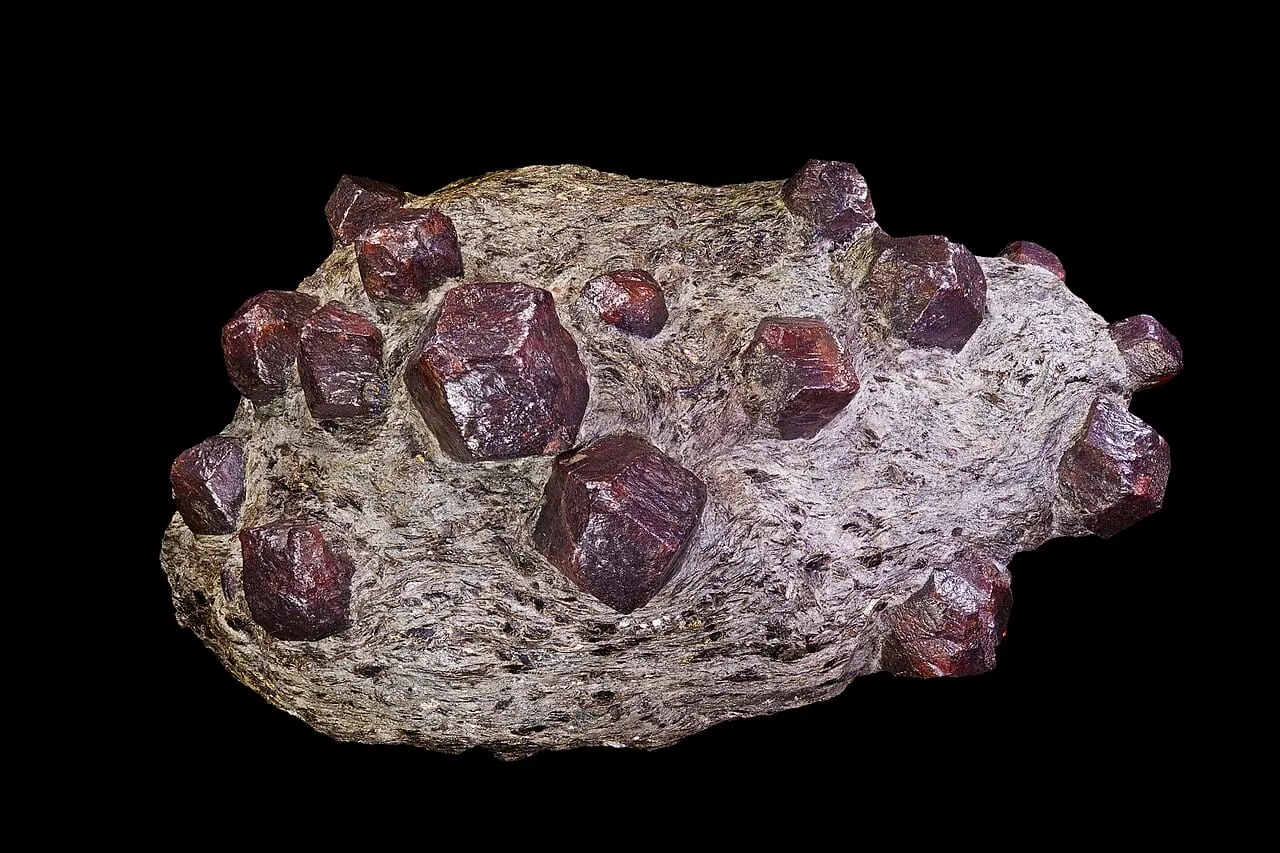
The commonest garnet: a deep red, iron-rich stone named after the ancient city of Alabanda in Anatolia, used in jewellery and in sandpaper alike.
Amazonite
A turquoise-like green-blue feldspar: a variety of microcline worn as jewellery for more than three thousand years, but it can release lead.
Amethyst
The purple variety of quartz, coloured by traces of iron working together with natural radiation.