VarietyA variety of Microcline
Amazonite
KAlSi₃O₈Amazonit
A turquoise-like green-blue feldspar: a variety of microcline worn as jewellery for more than three thousand years, but it can release lead.
Also known as: Amazonstone · Amazon stone
- Popularly: Semi-precious stone
- Gemstone
- Ornamental
In short
Amazonite is the green or bluish-green variety of microcline, a potassium feldspar. Its name alludes to the Amazon River, but the stone is not found in the Amazon Basin. Finds from excavations in Middle and New Kingdom Egypt and in Mesopotamia show that it has been used in jewellery for more than three thousand years. It is cut into cabochons, beads and small carvings. Because it can contain lead, it should be kept away from children and from drinking water.
Photos
How does it form?
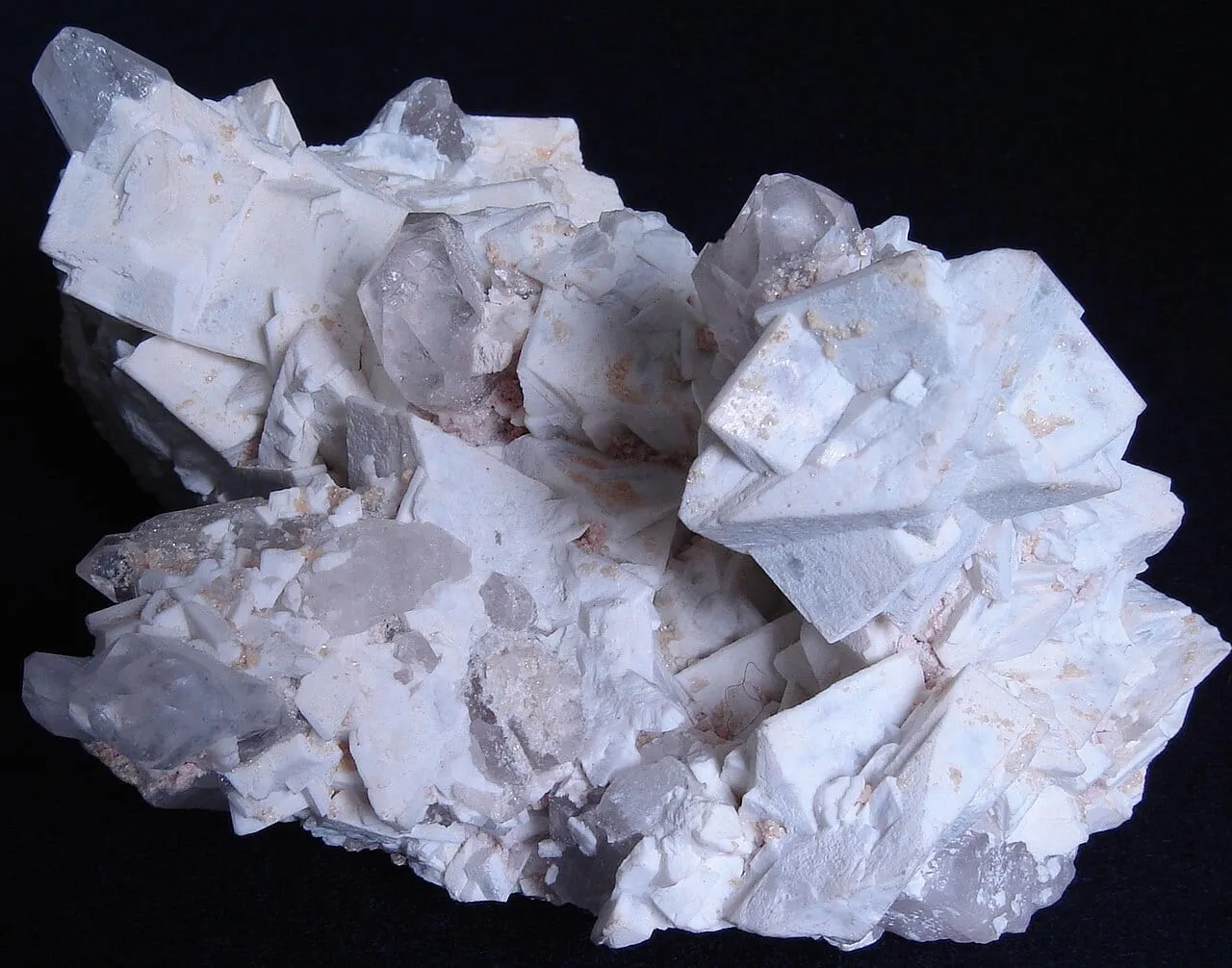
Like the other forms of microcline, amazonite crystallises in slowly cooling silica-rich magmas, that is, in granite and pegmatite. The green colour arises from lead, water and other trace elements working together in the feldspar structure. These conditions are not often met, so amazonite occurs in a limited number of places. As in the Pikes Peak area of Colorado, it often grows together with smoky quartz.
What is it used for?
- Jewellery: Cabochons, beads, small carvings and pendants are made from it. Because it has perfect cleavage in two directions, a domed cut is preferred to faceting, and the stone needs protection from knocks.
- Jewellery in history: It was used for jewellery in Middle and New Kingdom Egypt and in Mesopotamia; in Bronze Age Egypt it was mined at Gebel Migif in the Eastern Desert.
- Collecting: Vivid green crystals grown together with smoky quartz are sought by collectors.
Where does the colour come from?
The colour of amazonite was a mystery for many years. Because copper compounds are often blue and green, the colour was attributed to copper. A 1985 study suggested instead that the blue-green is tied to lead and water in the feldspar; theoretical work in 1998 deepened the role of lead. Other studies linked the colour to rising amounts of lead, rubidium and thallium, and a 2010 study found a role for divalent iron as well. These findings suggest that the colour may be the sum of several interdependent factors.
Name and history
The name comes from the Amazon River, but it is uncertain whether the green stones thought to have been brought from there were really amazonite. The stone was described as a distinct mineral in the 18th century. In early modern times amazonite was obtained almost exclusively in Russia, from the Miass area of the Ilmen Mountains, about 80 km southwest of Chelyabinsk.
What determines its value?
Colour counts most: vivid, saturated, turquoise-like green-blue tones are far more sought after than pale, yellowish or greyish greens. Evenness of colour, few white streaks and the absence of cracks also matter. Because of its cleavage it is usually cut as a cabochon, beads or carvings; faceting is rare. Among collectors, fine crystals grown together with smoky quartz, such as those from localities like Colorado's Pikes Peak area, are valued.
This information is educational, not buying, selling or investment advice. Value varies enormously with quality and treatment.
How to recognise it
- 1
Its colour runs from green to bluish green; vivid, turquoise-like tones are the most sought after.
- 2
Its hardness is 6–6.5: it scratches glass. But with perfect cleavage in two directions it chips or breaks easily on impact.
- 3
Cleavage faces flash like mirrors in the light; on the green ground you often see thin white streaks or a grid-like pattern.
- 4
It can be confused with turquoise, green fluorite and dyed stones; hardness, cleavage and a gem-laboratory examination tell them apart.
Fakes and imitations
What shops usually don’t tell you:
- Turquoise, green fluorite and dyed stones of a similar colour may be sold as amazonite; a gem laboratory is needed for a firm answer.
Safety
Amazonite can contain lead. In 2021 the German Institut für Edelsteinprüfung (EPI) reported that the lead released from an 11 g sample of amazonite into an acidic solution simulating saliva exceeded the amount recommended by the EU's DIN EN 71-3:2013 standard by five times. So the stone should not be put in drinking water, mouthed, or given to children in pieces small enough to swallow.
Myths and misconceptions
MythAmazonite comes from the Amazon River.
FactThe name alludes to the Amazon River, but amazonite is not found in the Amazon Basin. Whether the green stones once believed to come from there were really amazonite is uncertain.
MythAmazonite is a harmless stone: you can put it in water and drink the water, and children can wear it.
FactAmazonite can contain lead. In 2021 a German laboratory (EPI) found that the lead released from an 11 g sample into an acidic solution exceeded the amount recommended by the EU toy standard by five times. That test simulated a child swallowing the stone; the same risk could apply to putting it in a water bottle.
MythAmazonite gets its colour from copper, like turquoise.
FactThe source of the colour was long unknown and copper was assumed. A 1985 study linked the blue-green to lead and water in the feldspar; later work showed that rubidium, thallium and divalent iron may also play a part. The colour may be the sum of several interdependent factors.
What is it believed to be good for?
This section reports beliefs; it is not health information. There is no scientific evidence for these claims and no stone replaces medical treatment.
The meanings people give this stone, and who holds them:
- A news site in Türkiye (Gazete Vatan, 2024) writes that amazonite helps throat, heart and lung problems, thyroid disease and acne and pimples on the skin, and makes it easier to fall asleep.
- The same article says that amazonite improves concentration, helps forgetfulness, calms the heart and soothes the nerves, and presents it as a “stone of harmony” representing harmony, truth and communication, a symbol of peace and calm.
- Crystal-therapy circles claim that amazonite protects against the electromagnetic radiation given off by devices such as computers and mobile phones.
- In the same circles, pieces of amazonite are said to “purify” drinking water when placed in a water bottle.
What science says
There is no scientific evidence that amazonite helps illness, improves sleep or attention, protects against electromagnetic radiation or purifies water; for lasting complaints see a doctor rather than relying on a stone. Putting the stone in water can actually be harmful: amazonite can contain lead, and in a 2021 experiment by a German laboratory (EPI) the lead released into an acidic solution exceeded the EU standard's recommended value by five times. Amazonite should not be put in water or mouthed.
Did you know?
Amazonite was used for jewellery in Middle and New Kingdom Egypt and in Mesopotamia, yet no ancient or medieval source mentions it. It was first described as a distinct mineral in the 18th century.
Its colour was long a mystery. It was assumed to come from copper, but a 1985 study suggested that the blue-green arises from lead and water in the feldspar.
Where is it found?
Loading map…
- Miass area (Ilmen Mountains), Chelyabinsk Oblast, Russia · Historic sourceIn early modern times amazonite was obtained almost exclusively from the granitic rocks of this area
- Gebel Migif, Eastern Desert, Egypt · Historic sourceWhere amazonite was mined in Bronze Age Egypt; it was used in Middle and New Kingdom jewellery
- Pikes Peak area, El Paso County, Colorado, USA · Major depositIn coarse granite and pegmatite; fine amazonite crystals occur with smoky quartz
- Amelia, Amelia County, Virginia, USA · Known localityAmazonite occurs in the pegmatite of the Morefield mine
- Koppio, Eyre Peninsula, South Australia · Known localitySite of the Baila Hill (Koppio) amazonite mine
- Avdar Massif, Töv Province, Mongolia · Known localityAmazonite in alkali granite; shown at province level
- Hami Prefecture, Xinjiang, China · Known localityAmazonite in the Baishitouquan granite intrusion; shown at region level
Locations are approximate to protect sites. Red dots mark places in Türkiye. Open in the big map →
Frequently asked questions
What is amazonite?
Amazonite is the green or bluish-green variety of microcline, a potassium feldspar. Its name alludes to the Amazon River, but the stone is not found in the Amazon Basin. Finds from excavations in Middle and New Kingdom Egypt and in Mesopotamia show that it has been used in jewellery for more than three thousand years. It is cut into cabochons, beads and small carvings. Because it can contain lead, it should be kept away from children and from drinking water.
What is amazonite used for?
Jewellery: Cabochons, beads, small carvings and pendants are made from it. Because it has perfect cleavage in two directions, a domed cut is preferred to faceting, and the stone needs protection from knocks. Jewellery in history: It was used for jewellery in Middle and New Kingdom Egypt and in Mesopotamia; in Bronze Age Egypt it was mined at Gebel Migif in the Eastern Desert. Collecting: Vivid green crystals grown together with smoky quartz are sought by collectors.
How hard is amazonite?
It has a hardness of 6–6.5 on the Mohs scale. It can scratch glass; a steel knife scratches it only with difficulty. Its specific gravity is 2.54–2.57 g/cm³.
Where is amazonite found?
Its best-known localities: Pikes Peak area, El Paso County, Colorado, USA; Miass area (Ilmen Mountains), Chelyabinsk Oblast, Russia; Gebel Migif, Eastern Desert, Egypt; Amelia, Amelia County, Virginia, USA; Koppio, Eyre Peninsula, South Australia.
How can you tell if amazonite is real?
Its colour runs from green to bluish green; vivid, turquoise-like tones are the most sought after. Its hardness is 6–6.5: it scratches glass. But with perfect cleavage in two directions it chips or breaks easily on impact. Cleavage faces flash like mirrors in the light; on the green ground you often see thin white streaks or a grid-like pattern. Turquoise, green fluorite and dyed stones of a similar colour may be sold as amazonite; a gem laboratory is needed for a firm answer.
Is amazonite valuable?
On the “street to diamond” value ladder it sits on step 5 of nine: Ornamental stone. Colour counts most: vivid, saturated, turquoise-like green-blue tones are far more sought after than pale, yellowish or greyish greens. Evenness of colour, few white streaks and the absence of cracks also matter. Because of its cleavage it is usually cut as a cabochon, beads or carvings; faceting is rare. Among collectors, fine crystals grown together with smoky quartz, such as those from localities like Colorado's Pikes Peak area, are valued.
What is amazonite good for?
A news site in Türkiye (Gazete Vatan, 2024) writes that amazonite helps throat, heart and lung problems, thyroid disease and acne and pimples on the skin, and makes it easier to fall asleep. The same article says that amazonite improves concentration, helps forgetfulness, calms the heart and soothes the nerves, and presents it as a “stone of harmony” representing harmony, truth and communication, a symbol of peace and calm. Crystal-therapy circles claim that amazonite protects against the electromagnetic radiation given off by devices such as computers and mobile phones. In the same circles, pieces of amazonite are said to “purify” drinking water when placed in a water bottle. There is no scientific evidence that amazonite helps illness, improves sleep or attention, protects against electromagnetic radiation or purifies water; for lasting complaints see a doctor rather than relying on a stone. Putting the stone in water can actually be harmful: amazonite can contain lead, and in a 2021 experiment by a German laboratory (EPI) the lead released into an acidic solution exceeded the EU standard's recommended value by five times. Amazonite should not be put in water or mouthed. This section reports beliefs; it is not health information. There is no scientific evidence for these claims and no stone replaces medical treatment.
Is amazonite dangerous?
Amazonite can contain lead. In 2021 the German Institut für Edelsteinprüfung (EPI) reported that the lead released from an 11 g sample of amazonite into an acidic solution simulating saliva exceeded the amount recommended by the EU's DIN EN 71-3:2013 standard by five times. So the stone should not be put in drinking water, mouthed, or given to children in pieces small enough to swallow.
Family


Sources
- Amazonite · Wikipedia
- Amazonit · Vikipedi
- Microcline · Wikipedia
- Handbook of Mineralogy: Microcline · Mineralogical Society of America
- Amazonit taşı özellikleri nelerdir? Amazonit taşının en bilinen faydaları · Gazete Vatan, 2024
- Ilmensky Mountains · Wikipedia
- Koppio · Wikipedia
External links
Draft: awaiting expert reviewReport an error ↗
On the same step
Agate
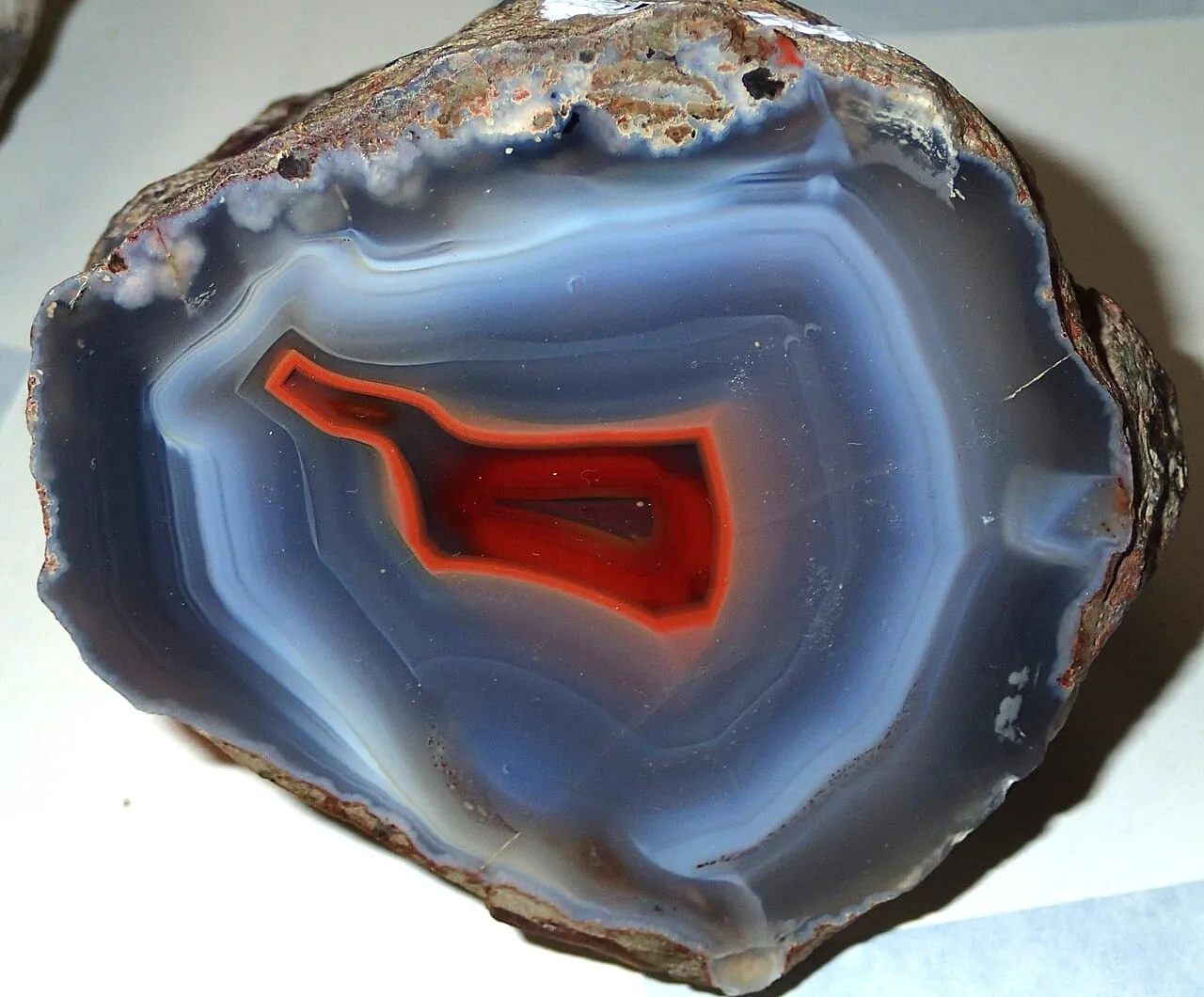
The banded variety of chalcedony: it grows layer by layer in hollows in volcanic rock and shows a new pattern every time it is cut.

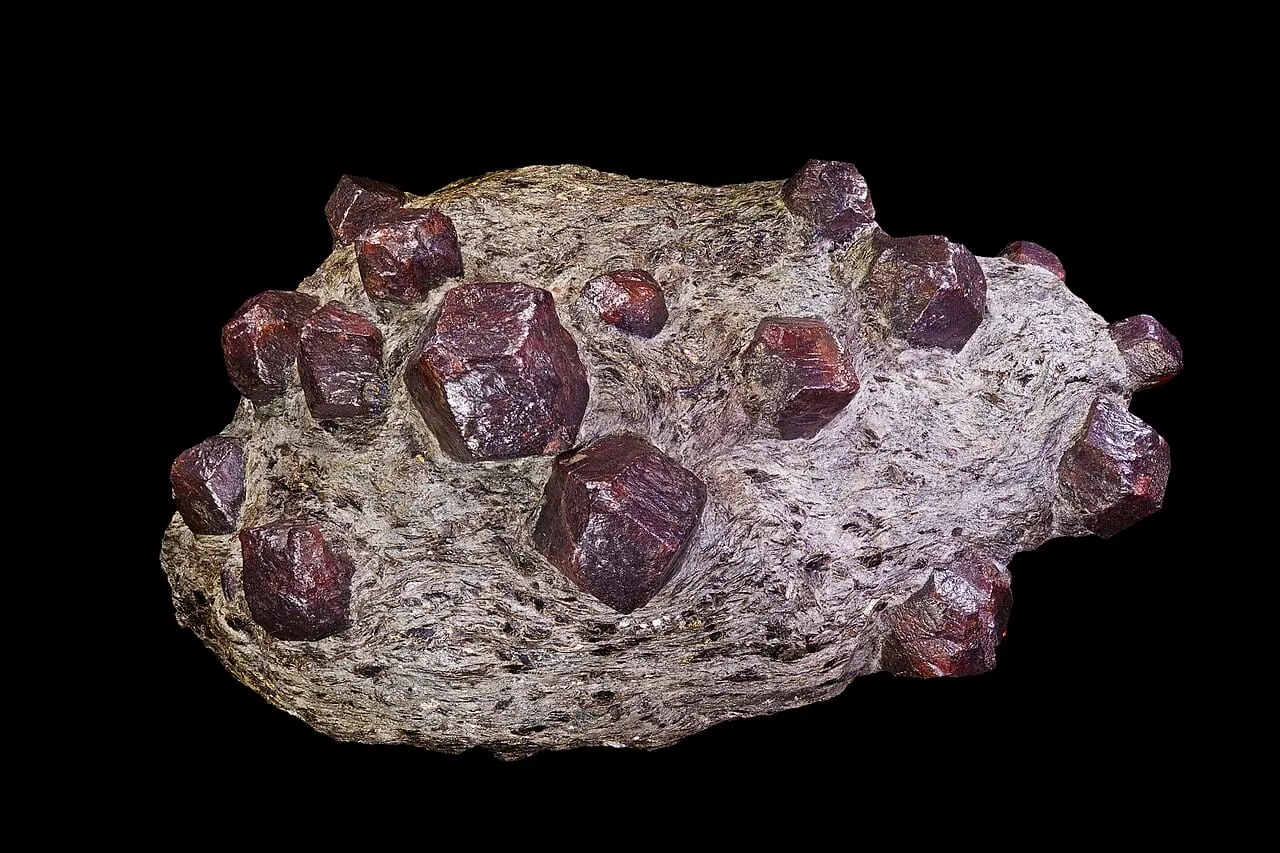
Almandine
The commonest garnet: a deep red, iron-rich stone named after the ancient city of Alabanda in Anatolia, used in jewellery and in sandpaper alike.
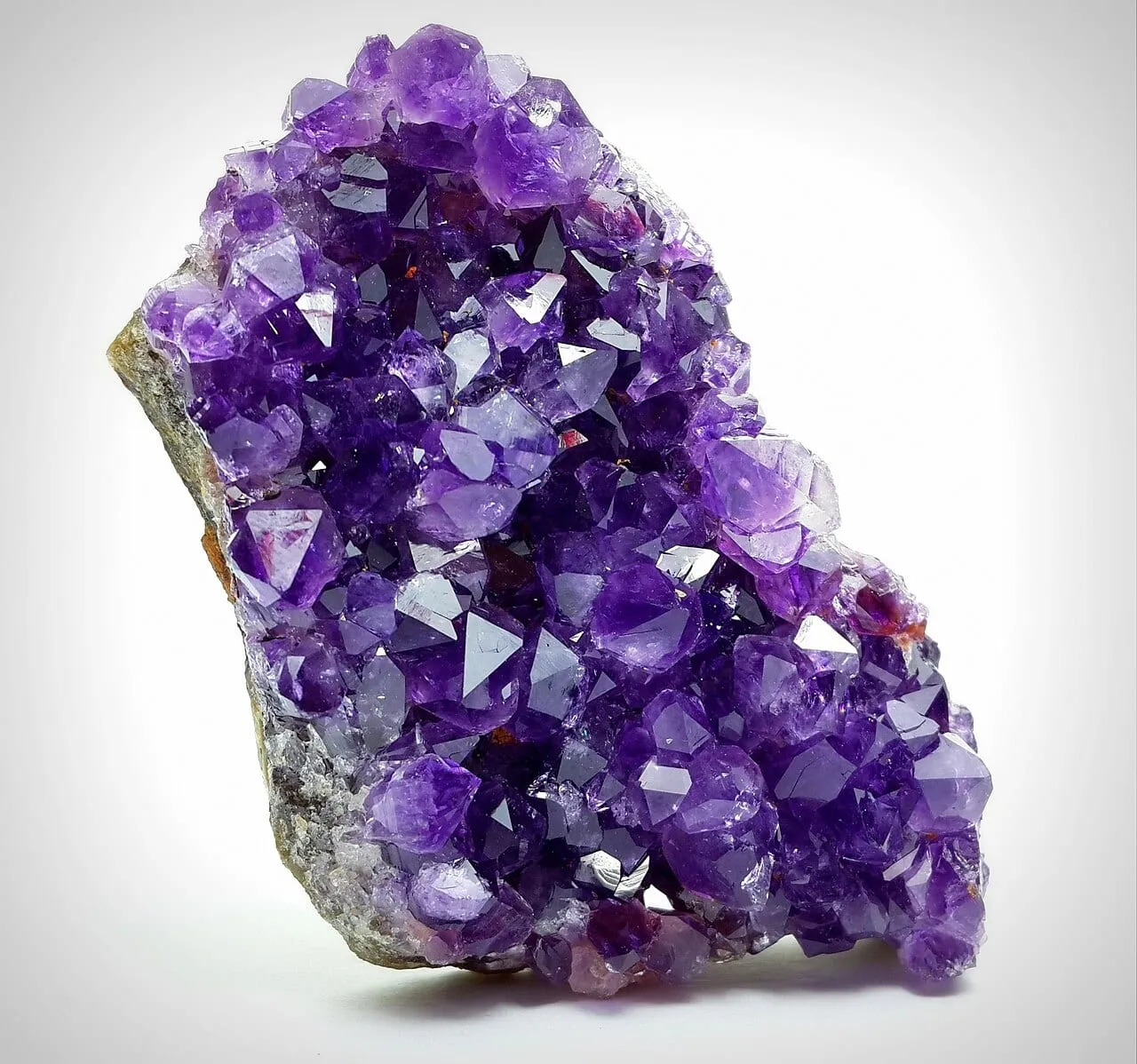
Amethyst
The purple variety of quartz, coloured by traces of iron working together with natural radiation.