VarietyA variety of Agate
Lake Superior agate
SiO₂Lake Superior akiği
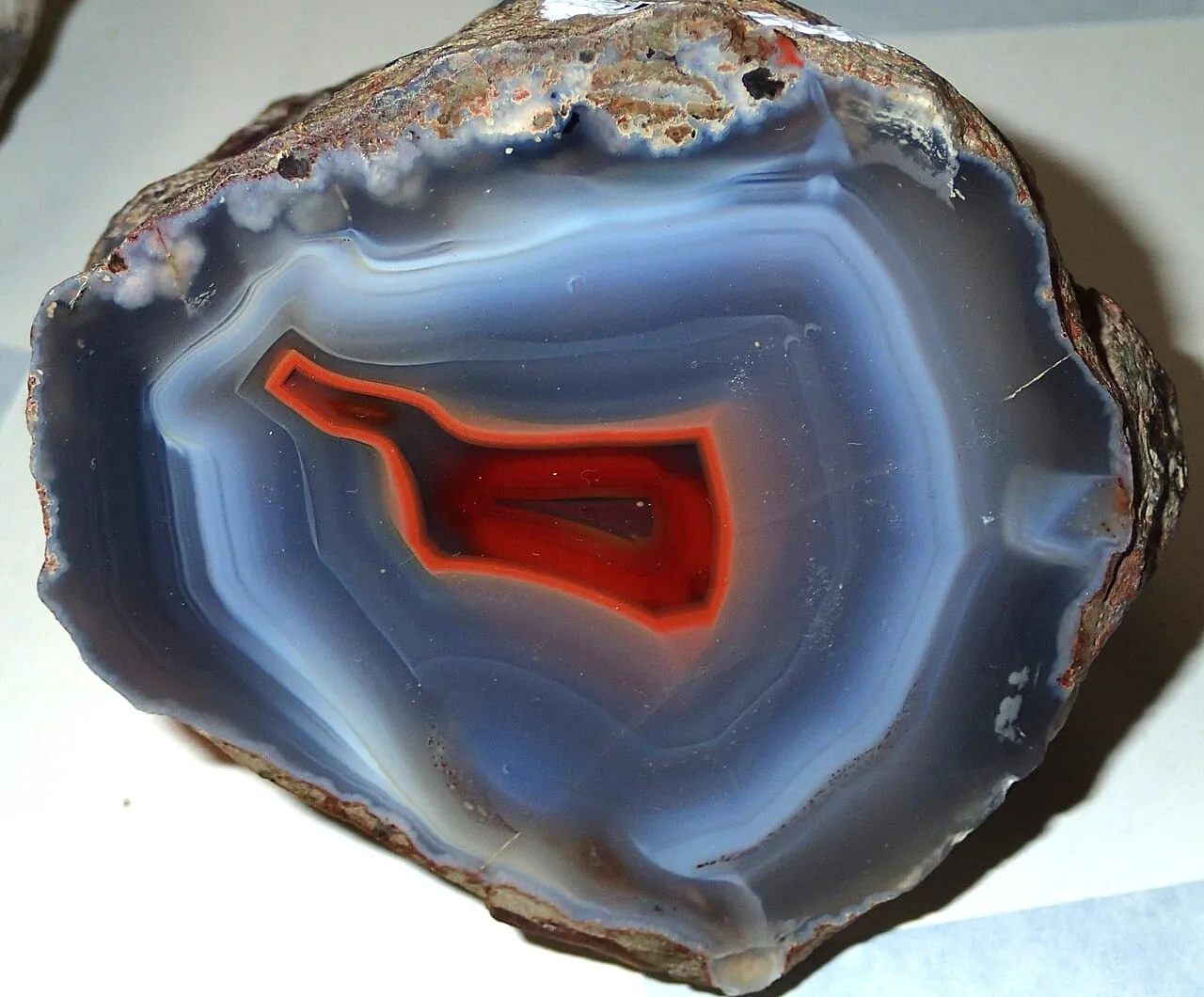
An agate banded in red, orange and white: it formed in lava 1.1 billion years ago, and glaciers spread it across the middle of North America.
- Popularly: Semi-precious stone
In short
Lake Superior agate is an iron-coloured agate from the region around Lake Superior in North America. It formed about 1.1 billion years ago in gas cavities in the basalt lavas of a great rift known as the Midcontinent Rift. During the ice ages, glaciers coming down from Canada broke these hard agates out of the rock and carried them across the American Midwest as far as Iowa, Nebraska and Kansas. It is known for its red, orange, yellow and white bands and has been Minnesota's official state gemstone since 1969.
Photos
How does it form?
About 1.1 billion years ago the North American continent began to split along a 2,000-kilometre rift, the Midcontinent Rift, running from today’s Lake Superior south-west to Kansas and south-east into Lower Michigan. Iron-rich basalt lavas poured out of this rift. As the lava solidified, bubbles of water vapour and carbon dioxide were trapped inside it, leaving cavities in the rock.
Later, groundwater rich in silica and iron seeped into the basalt and formed a gel-like substance in these cavities. Over time fibres of chalcedony and iron oxides grew from the gel, and the cavities filled layer by layer to become solid agate nodules. Iron oxides such as goethite, hematite and limonite give the stone its red, orange and yellow colours.
How did glaciers carry it?
During the Pleistocene ice ages, glaciers advanced from Canada again and again, wearing down the basalt and freeing the harder agates. The glaciers carried the agates across the Midwest and left them behind in heaps of rough, tumbled gravel called glacial till. That is why Lake Superior agates are found today not only on the lake shores but also in gravel pits and stream beds in Minnesota, Wisconsin, Iowa, Nebraska, Kansas and Missouri.
What is it used for?
- Rockhounding: It has been collected for centuries; today the shores of Lake Superior and the gravel pits of the Midwest are favourite spots for rock collectors.
- Jewellery and decoration: Native Americans are known to have used it in jewellery and ceremonial objects. Today it is sliced with diamond saws, made into cabochons for jewellery or tumble-polished.
- Symbol: It is Minnesota’s official state gemstone.
Kinds
Collectors sort Lake Superior agates by their patterns. The most common are “fortification” agates, whose bands follow the shape of the cavity. Those with straight, horizontal bands are called “water-level” agates; they were laid down in the direction of gravity. “Eye” agates, with concentric rings on their surface, and “paint” agates, with opaque coloured bands, are among the most sought after. Unbanded “moss” patterns are common but little sought, and strictly speaking they are not true agates. For general information, see the agate page.
What determines its value?
Bands matter most: sharp, brightly coloured bands, little crystalline quartz, few fractures and unusual features such as “eyes” are what collectors look for. Blue, pink, green, bright yellow or purple bands are rare and raise the value, and copper replacement agates are the most valuable kind of all. Size counts too, because large agates are very scarce. Stones with many fractures, cloudy bands and muddy colours are only good for tumbling or for rock gardens.
This information is educational, not buying, selling or investment advice. Value varies enormously with quality and treatment.
How to recognise it
- 1
Nested bands that follow the shape of the stone come in rust red, orange, dull yellow, white, pink and grey; blue, green, purple and bright yellow are rare.
- 2
Most are the size of a marble; held up to the light, light passes through the edges, and the colours look brighter when wet.
- 3
It belongs to the quartz family and is hard (6.5–7): it scratches glass, and a steel knife cannot scratch it.
- 4
In some agates the bands surround a core of coarse crystalline quartz; the more of this crystalline quartz a stone has, the less it is sought after.
Myths and misconceptions
MythLake Superior agate is found only on the shores of Lake Superior.
FactDuring the ice ages glaciers spread these agates across the American Midwest. They can be found in eastern Minnesota, north-western Wisconsin, Iowa, eastern Nebraska, north-eastern Kansas and northern Missouri, and in Mississippi River gravels as far as Arkansas and Louisiana.
MythLake Superior agates form in the water of the lake.
FactThese agates formed about 1.1 billion years ago in gas cavities in the basalt lavas of the Midcontinent Rift. They turn up on the lake shores because glaciers and waves broke them out of the bedrock and left them among the gravels.
Did you know?
In 1969 the Minnesota Legislature made the Lake Superior agate the state's official gemstone.
The stone was first described in 1911 by the geologist A. C. Lane of the Michigan Geological Survey.
About 95 percent of the agates found are marble-sized; roughly 5 percent are the size of a ping-pong ball, and fewer than 1 percent are as large as a softball or weigh over 450 grams (one pound).
The most valuable kind is the “copper replacement” agate, with native copper in its bands; it comes only from abandoned mines on Michigan's Keweenaw Peninsula.
Where is it found?
Loading map…
- North Shore of Lake Superior (from Duluth, Minnesota, to Nipigon, Ontario) · Major depositOne of the areas whose basalt lavas the agates formed in; the stone was named Minnesota's official gemstone in 1969
- Keweenaw Peninsula, Michigan, USA · Major depositOne of the areas where the agates formed; rare “copper replacement” agates with native copper in their bands come only from abandoned mines here
- Isle Royale, Michigan, USA · Known localityOne of the places where the agates formed; the island is a national park, where collecting needs a permit
- Michipicoten Island, Ontario, Canada · Known localityOne of the places where the agates formed; most of the island has been a provincial park since 1985
- Glacial gravels of Iowa, USA · Known localityAgates carried south by glaciers; found in central and north-eastern Iowa
Locations are approximate to protect sites. Red dots mark places in Türkiye. Open in the big map →
Frequently asked questions
What is lake Superior agate?
Lake Superior agate is an iron-coloured agate from the region around Lake Superior in North America. It formed about 1.1 billion years ago in gas cavities in the basalt lavas of a great rift known as the Midcontinent Rift. During the ice ages, glaciers coming down from Canada broke these hard agates out of the rock and carried them across the American Midwest as far as Iowa, Nebraska and Kansas. It is known for its red, orange, yellow and white bands and has been Minnesota's official state gemstone since 1969.
What is lake Superior agate used for?
Rockhounding: It has been collected for centuries; today the shores of Lake Superior and the gravel pits of the Midwest are favourite spots for rock collectors. Jewellery and decoration: Native Americans are known to have used it in jewellery and ceremonial objects. Today it is sliced with diamond saws, made into cabochons for jewellery or tumble-polished. Symbol: It is Minnesota's official state gemstone.
How hard is lake Superior agate?
It has a hardness of 6.5–7 on the Mohs scale. It scratches glass and steel; a steel knife cannot scratch it. Its specific gravity is 2.59–2.61 g/cm³.
Where is lake Superior agate found?
Its best-known localities: North Shore of Lake Superior (from Duluth, Minnesota, to Nipigon, Ontario); Keweenaw Peninsula, Michigan, USA; Isle Royale, Michigan, USA; Michipicoten Island, Ontario, Canada; Glacial gravels of Iowa, USA.
How can you tell if lake Superior agate is real?
Nested bands that follow the shape of the stone come in rust red, orange, dull yellow, white, pink and grey; blue, green, purple and bright yellow are rare. Most are the size of a marble; held up to the light, light passes through the edges, and the colours look brighter when wet. It belongs to the quartz family and is hard (6.5–7): it scratches glass, and a steel knife cannot scratch it.
Is lake Superior agate valuable?
On the “street to diamond” value ladder it sits on step 5 of nine: Ornamental stone. Bands matter most: sharp, brightly coloured bands, little crystalline quartz, few fractures and unusual features such as “eyes” are what collectors look for. Blue, pink, green, bright yellow or purple bands are rare and raise the value, and copper replacement agates are the most valuable kind of all. Size counts too, because large agates are very scarce. Stones with many fractures, cloudy bands and muddy colours are only good for tumbling or for rock gardens.
Family
_-_Minnesota,_USA.jpg)
_(floor_of_Lake_Superior,_offshore_Keweenaw_Peninsula,_Michigan_USA)_1_(46894723004).jpg)
Sources
- Lake Superior agate · Wikipedia
- Agate · Wikipedia
- Keweenaw Peninsula · Wikipedia
- Isle Royale · Wikipedia
- Michipicoten Island · Wikipedia
- Agate nodule (“Lake Superior Agate”) (floor of Lake Superior, offshore Keweenaw Peninsula, Michigan USA), photo description by James St. John · Wikimedia Commons
- Lake Superior Agate from northeast Iowa (photo description) · Wikimedia Commons

External links
Draft: awaiting expert reviewReport an error
On the same step

Almandine
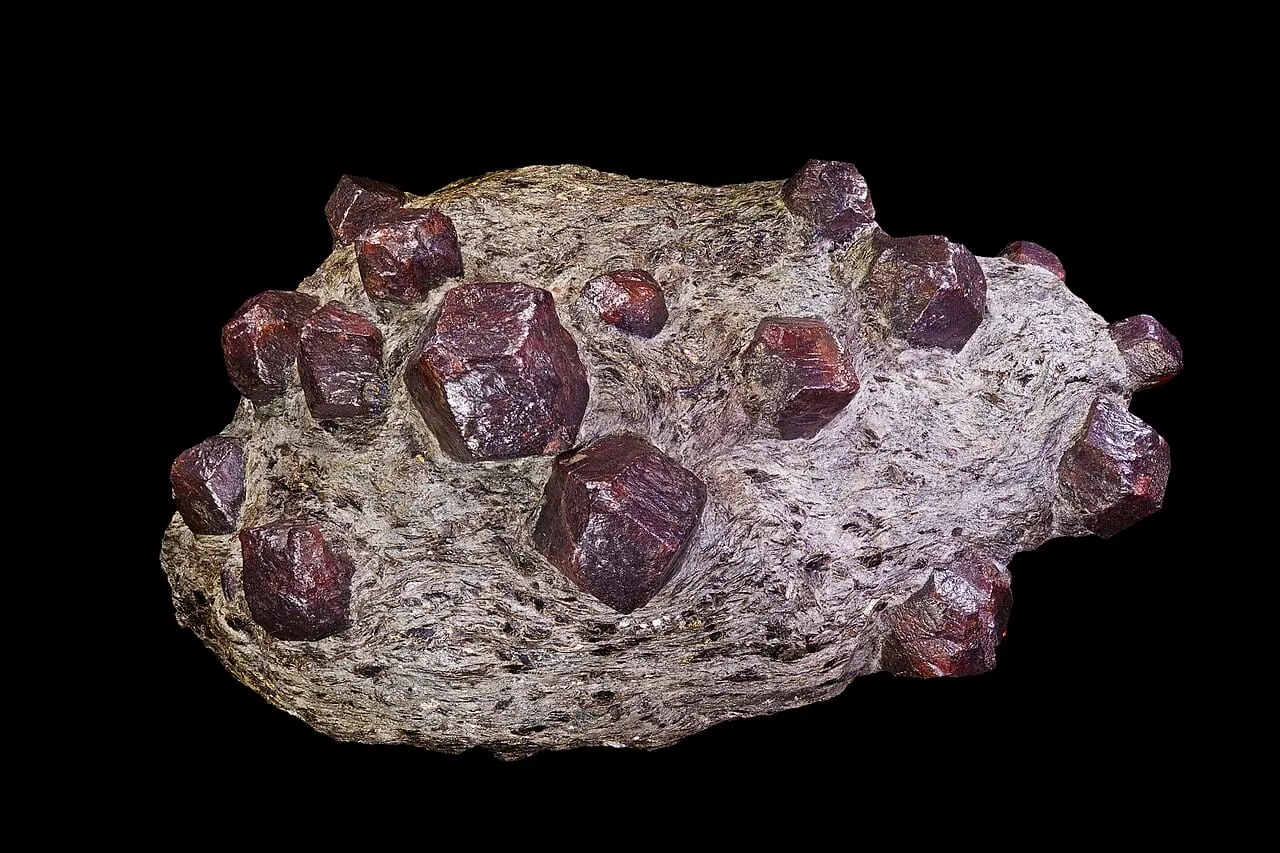
The commonest garnet: a deep red, iron-rich stone named after the ancient city of Alabanda in Anatolia, used in jewellery and in sandpaper alike.
Amazonite
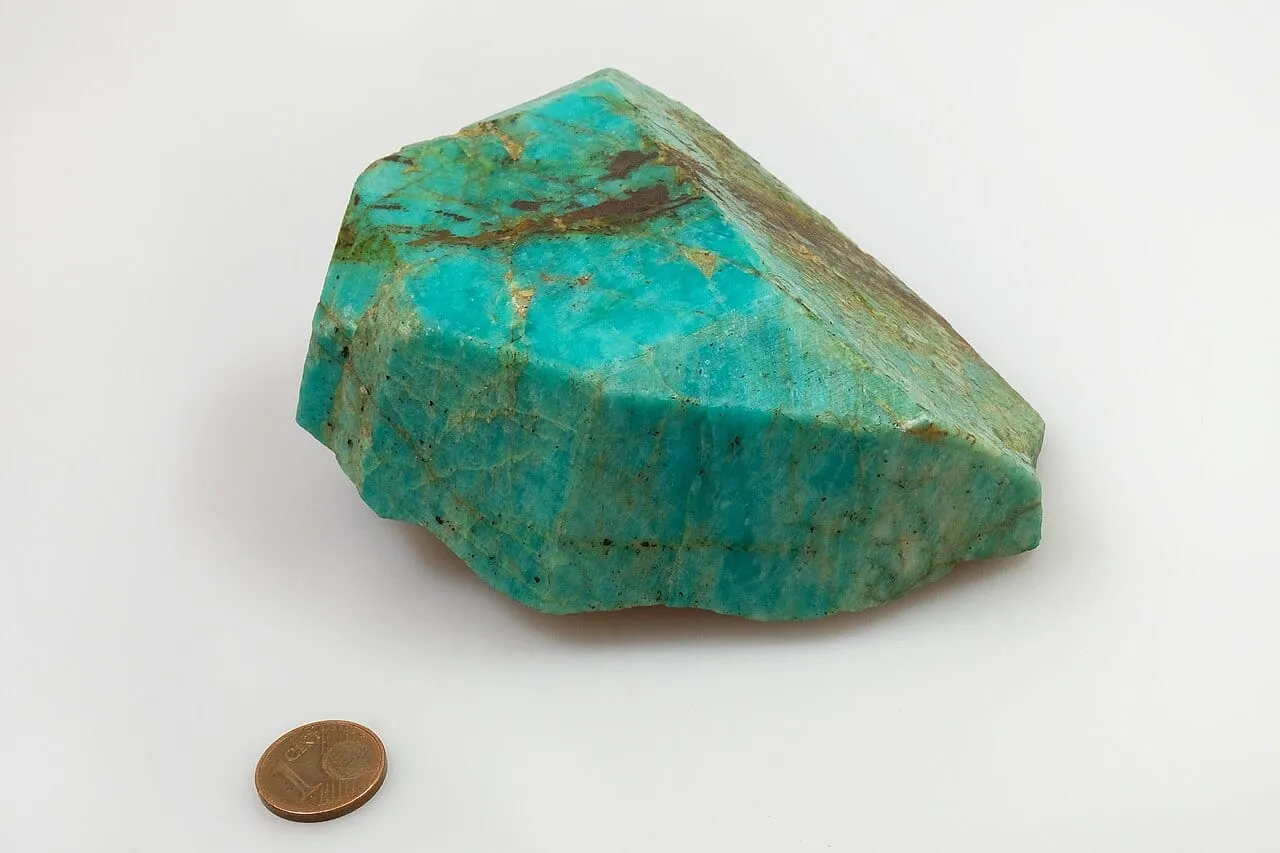
A turquoise-like green-blue feldspar: a variety of microcline worn as jewellery for more than three thousand years, but it can release lead.
Amethyst
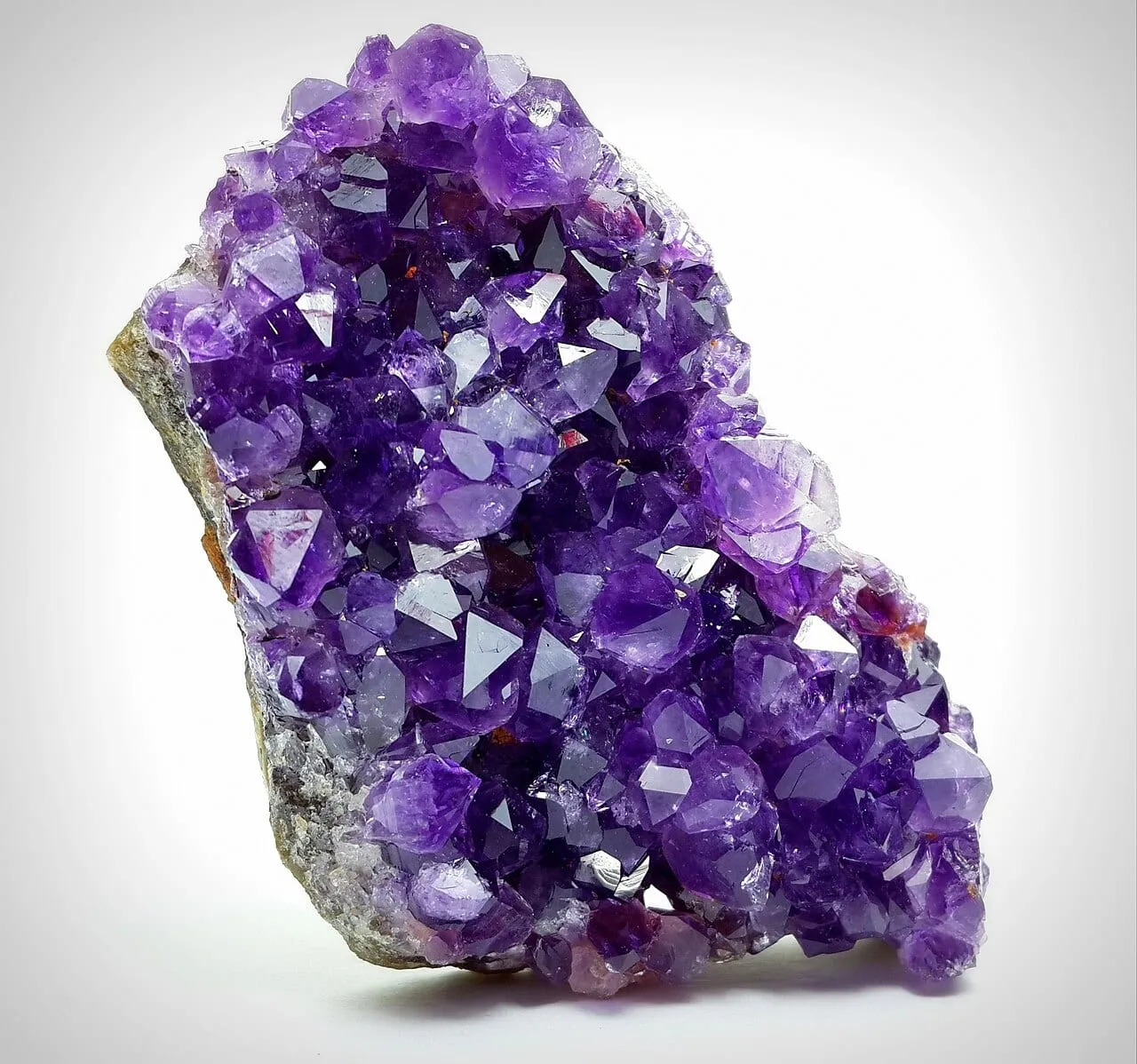
The purple variety of quartz, coloured by traces of iron working together with natural radiation.