Mineral
Beryl
Be₃Al₂Si₆O₁₈Beril
The mineral behind emerald and aquamarine: a gem family running from colourless to green, blue and pink, and an ore of beryllium.
Also known as: Emerald (green variety) · Aquamarine (blue variety) · Morganite (pink variety) · Heliodor (yellow variety) · Goshenite (colourless variety)
- Gemstone
- Ore
In short
Beryl is a mineral made of beryllium, aluminium, silicon and oxygen that forms six-sided, prism-shaped crystals. Pure beryl is colourless; tiny amounts of other elements make it green, blue, yellow or pink. Green beryl is called emerald and blue beryl is called aquamarine.
Where does the colour come from?
Pure beryl is colourless, and this variety is called goshenite. Colour comes from trace elements in the crystal:
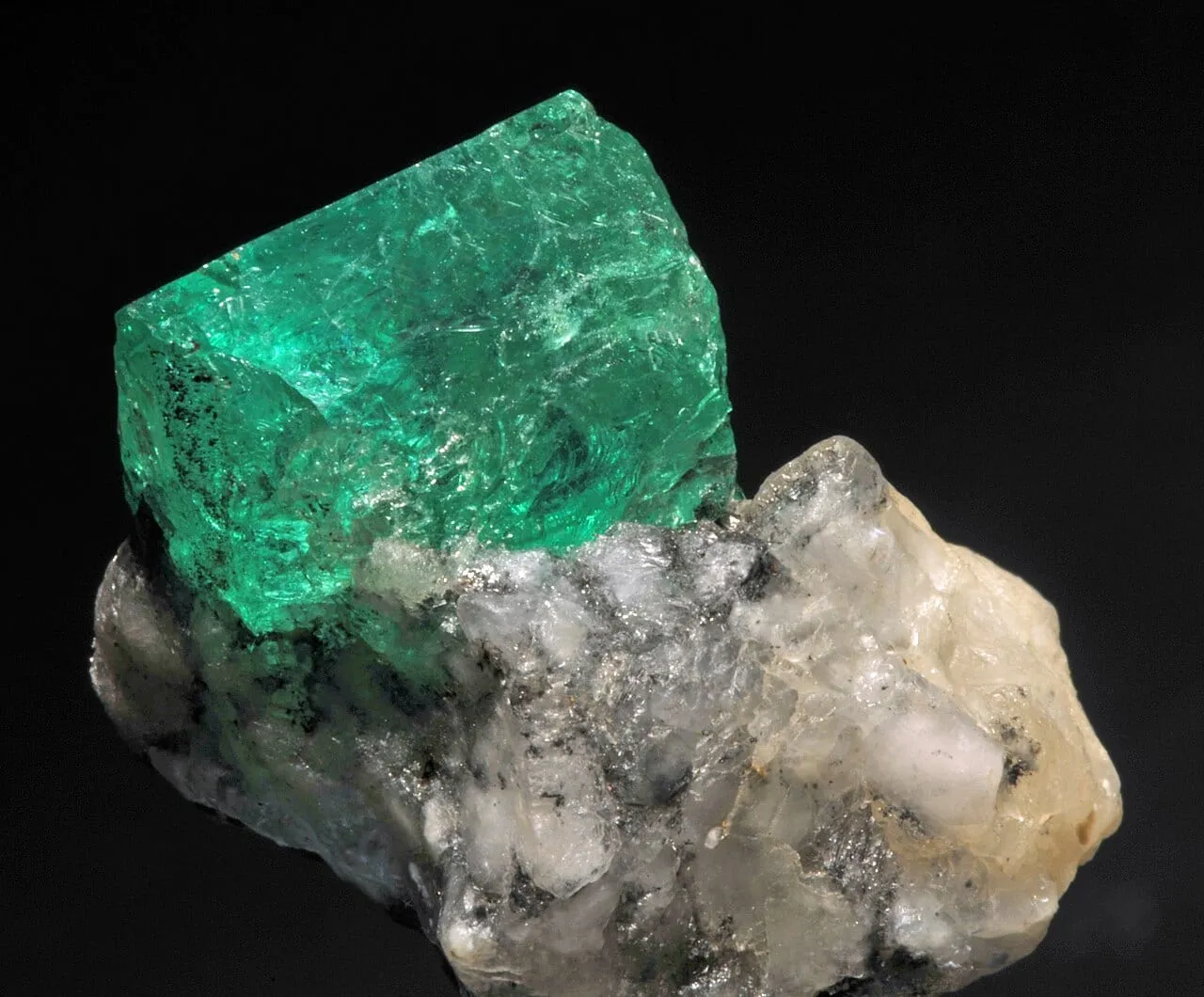
- Emerald: green, from chromium and/or vanadium,
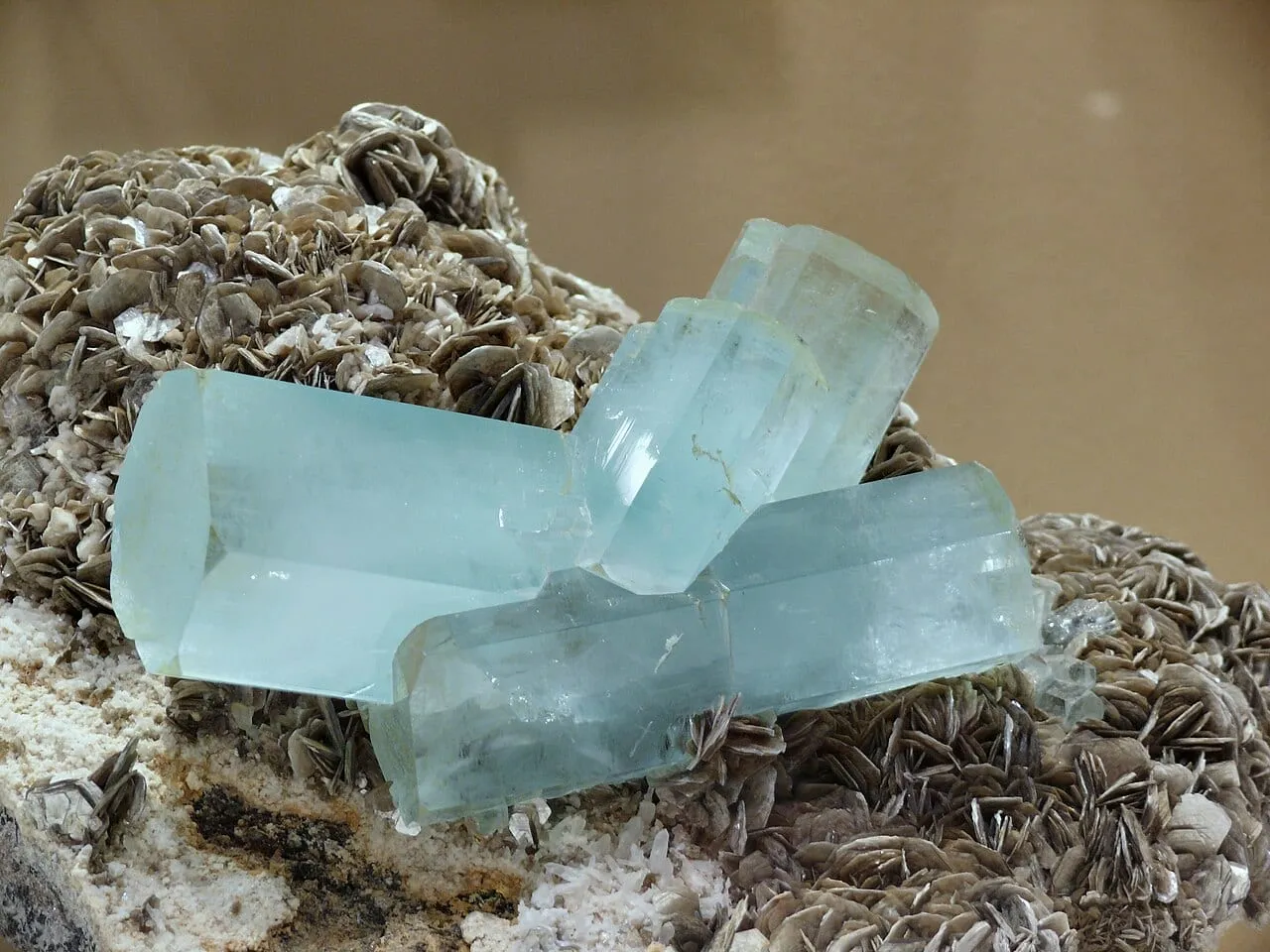
- Aquamarine: pale blue to bluish green, from iron,
- Heliodor: yellow, from iron,
- Morganite: pink to peach, from manganese,
- Red beryl: red, from manganese; a very rare variety found in only a few places.
How does it form?
Most beryl forms in granitic pegmatites, rock veins in which large crystals grow from the last fluids left over from a magma. Emerald usually forms where beryllium-bearing fluids meet chromium-bearing rocks; Colombia’s famous emeralds are found in veins cutting through sedimentary rocks.
A source of beryllium
Together with bertrandite, beryl is one of the two main ores of beryllium, a light, stiff metal. According to the USGS, beryllium in the United States is produced from bertrandite ore mined in Utah and from imported beryl. Beryllium and its alloys are used in aerospace, defence and electronics.
How to recognise it
- 1
Crystals are usually six-sided prisms whose ends look as if they had been sliced off flat.
- 2
It scratches glass easily (hardness 7.5–8) and has no prominent cleavage.
- 3
It can look like quartz, but quartz crystals usually end in a pointed tip, whereas beryl crystals usually have flat ends.
- 4
It occurs as large crystals among feldspar, quartz and mica in pegmatites. The species and any treatments of a cut stone can only be determined with certainty in a gem laboratory.
Fakes and imitations
What shops usually don’t tell you:
- Most aquamarine on the market has been heated to remove greenish tones and give a purer blue. This is a routine treatment but should be disclosed.
- Laboratory-grown (synthetic) beryl and emerald are chemically identical to natural beryl; telling them apart needs laboratory testing.
- Red beryl has sometimes been marketed as “red emerald”. The name is misleading, because only green beryl is called emerald.
- Coloured glass can be used to imitate the beryl varieties.
Did you know?
The pink variety, morganite, is named after the famous American banker J. P. Morgan.
Beryl can grow giant crystals: the Handbook of Mineralogy mentions crystals up to 18 metres long.
Where is it found?
Loading map…
- Teófilo Otoni and Governador Valadares, Minas Gerais, Brazil · Major depositAquamarine and other gem beryls in pegmatites
- Muzo, Boyacá, Colombia · Major depositWorld-famous emerald deposits
- Wah Wah Mountains, Utah, USA · Known localityMain source of the very rare red beryl
- Pala, San Diego County, California, USA · Known localityGem-quality beryl in pegmatites
Locations are approximate to protect sites. Red dots mark places in Türkiye. Open in the big map →
Varieties

Sources
- Handbook of Mineralogy: Beryl · Mineralogical Society of America
- Mineral Commodity Summaries 2025: Beryllium · U.S. Geological Survey, 2025
- Aquamarine Quality Factors · GIA
- Morganite · GIA
External links
Draft: awaiting expert reviewReport an error ↗
On the same step
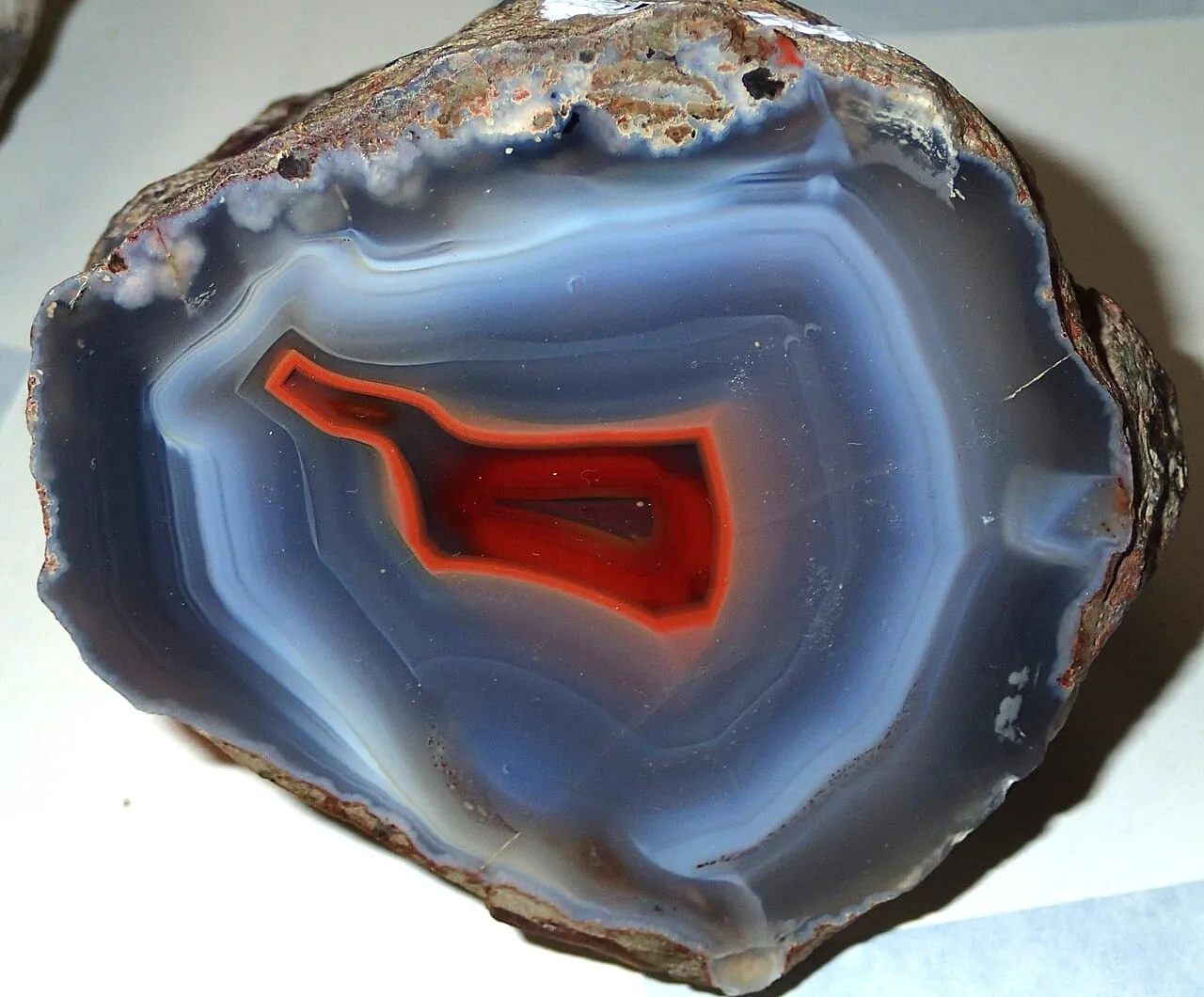
Agate
The banded variety of chalcedony: it grows layer by layer in hollows in volcanic rock and shows a new pattern every time it is cut.
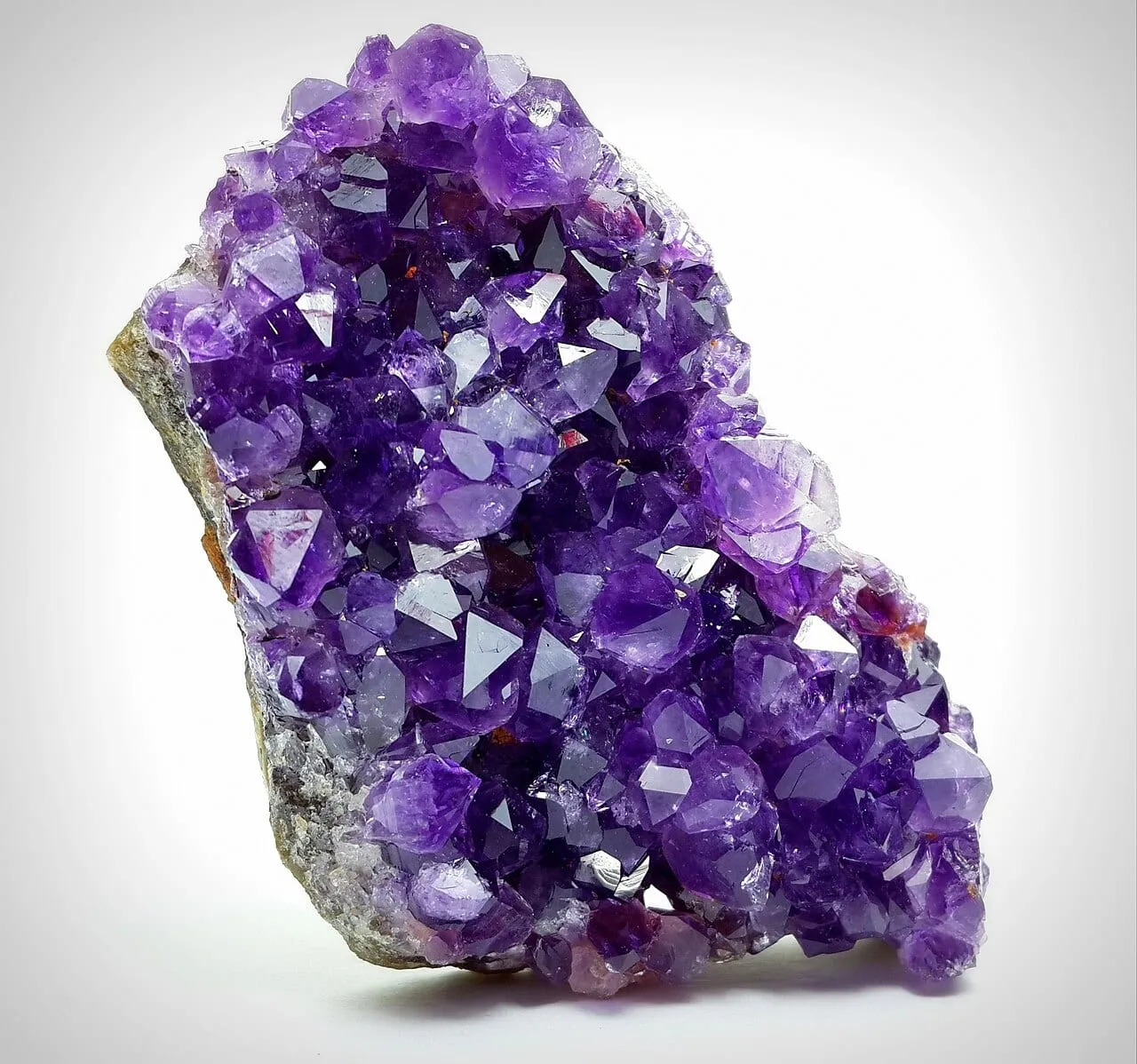
Amethyst
The purple variety of quartz, coloured by traces of iron working together with natural radiation.
Azurite
A deep blue copper mineral that was the most important blue pigment of medieval and Renaissance painters.