VarietyA variety of Beryl
Morganite
Be₃Al₂Si₆O₁₈Morganit
The pastel pink and peach variety of beryl, named in 1910 after the famous banker J. P. Morgan.
Also known as: Pink beryl · Rose beryl · Cesian (caesian) beryl
- Popularly: Semi-precious stone
- Gemstone
In short
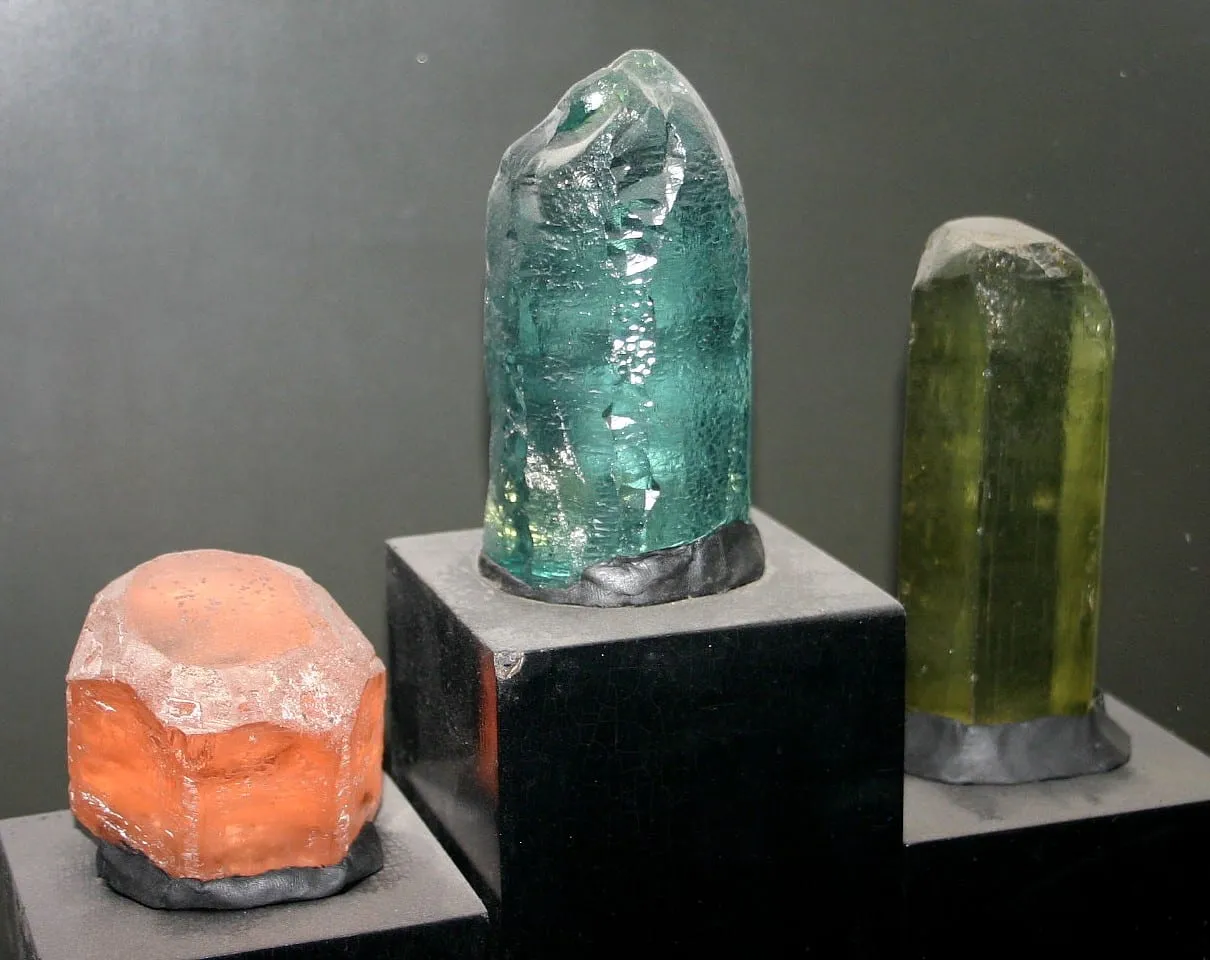
Morganite is the colour variety of beryl that runs from pale pink to peach and orange-pink. It gets its colour from very small amounts of manganese in the crystal. It is a sibling of emerald and aquamarine, the same mineral in another colour, but unlike them it is usually clean and large stones are available. In recent years its pastel colour and durability have made it a favourite, especially in rings.
Photos
How does it form?
Like the other gem varieties of beryl, morganite forms mostly in pegmatites, veins of rock in which large crystals grow from the last fluids left by a cooling magma. In these veins it occurs with minerals such as albite, quartz, aquamarine, tourmaline and lepidolite. The crystals can be very large: GIA mentions morganite crystals from Brazil weighing more than 10 kilograms.
What is it used for?
- Jewellery: Morganite is hard (7.5–8) and durable, and suits everyday wear. Since around 2010 its pastel colour has made it popular in rings, engagement rings included.
- Collecting: Large, well-formed crystals, above all famous examples such as the “Rose of Maine”, are sought by museums and collectors.
Where does the colour come from?
The pink colour of beryl comes from very small amounts of manganese in the crystal structure. Even in very pale stones the colour shows more strongly when the stone is large and viewed along the crystal’s long axis. Stones with peach or orange-pink tones are common in nature; heating removes these tones and leaves a purer pink. In stones whose colour was improved by irradiation, the effect can fade over time with exposure to light.
Where does the name come from?
Pink beryl was long called simply “pink beryl” or “rose beryl”. After a new find in Madagascar in 1910, George F. Kunz named the stone after his friend and customer, the banker J. P. Morgan, at the New York Academy of Sciences on 5 December 1910. Morgan was known for his support of science and the arts and for the stones he gave to the natural history museums of New York and Paris.
What determines its value?
Colour counts most: saturated, even pink or rose tones are more sought after, and the stone often has to be large for the best colour to show. Unlike emerald, eye-visible inclusions are not wanted. Heat treatment to remove yellowish tones is common, and the effect of occasional irradiation can fade in light; both treatments should be disclosed. Because synthetic morganite exists, a laboratory report confirming that a stone is natural also affects value and confidence.
This information is educational, not buying, selling or investment advice. Value varies enormously with quality and treatment.
How to recognise it
- 1
Its colour runs from pastel pink to rose pink and peach; colour banding can occur in a single stone.
- 2
It is hard (7.5–8): it scratches glass and quartz.
- 3
Unlike emerald it is usually clean, with few eye-visible cracks or inclusions.
- 4
Seen from different directions the stone shows slightly different pinks (pleochroism): looking down the crystal's long axis the colour is pinker.
- 5
A gem laboratory is needed to tell it for certain from similar pink stones such as kunzite and pink tourmaline, and from synthetic morganite.
Fakes and imitations
What shops usually don’t tell you:
- Hydrothermal synthetic morganite is on the market; a laboratory examination shows whether a stone is natural.
- The name “pink emerald” is misleading: emerald is the name only for green beryl, and morganite is not called emerald.
- The colour is often improved by treatment: yellowish or orange zones are removed by heating, and irradiation is sometimes applied. The seller should disclose the treatment.
Myths and misconceptions
MythMorganite is pink emerald.
FactMorganite is pink or orange-pink beryl, while emerald is the name only for green beryl. “Pink emerald” is a misleading name and, under US Federal Trade Commission guidelines, not a legal one.
MythThe pink colour of morganite on the market is natural and the stone has not been treated.
FactHeat treatment to remove yellowish or orange zones is routine in morganite, and irradiation is sometimes applied. Heating is a common and accepted practice, but the seller should disclose it.
What is it believed to be good for?
This section reports beliefs; it is not health information. There is no scientific evidence for these claims and no stone replaces medical treatment.
The meanings people give this stone, and who holds them:
- Today crystal-therapy sources claim that morganite supports love, compassion and the healing of emotional wounds, and is linked to the heart chakra.
- The same circles claim that morganite helps heart and breathing problems and acne and pimples on the skin.
- Some sources say morganite brings wisdom and clear thinking and helps one make the right decisions.
What science says
Morganite is a stone named only in 1910; it has no belief attached to it in old lapidaries or folk tradition, so what is told today is recent. There is no scientific evidence that it affects love, emotional balance, heart or breathing problems or the skin; for a lasting complaint see a doctor rather than relying on a stone.
Did you know?
It is named after J. P. Morgan, the friend and customer of George F. Kunz, who proposed the name at a New York Academy of Sciences meeting on 5 December 1910; Morgan built his collection partly through Tiffany & Co., where Kunz worked, and gave stones to museums.
The “Rose of Maine”, found in 1989 at the Bennett Quarry in Maine, USA, is one of the largest morganite crystals known: 23 cm long, 30 cm across and about 23 kg together with its matrix.
Where is it found?
Loading map…
- Antsirabe area, Vakinankaratra, Madagascar · Historic sourceThe name morganite was given after a new find of pink beryl in Madagascar in 1910; the exact pit is not shown here
- Pala district, San Diego County, California, USA · Known localityA pegmatite district where pink beryl was known alongside kunzite and tourmaline
- Bennett Quarry, Buckfield, Maine, USA · Known localityThe pegmatite quarry that yielded the “Rose of Maine” crystal in 1989, about 23 kg with its matrix
- Governador Valadares area, Minas Gerais, Brazil · Major depositThe Minas Gerais pegmatites are a main source of morganite; crystals of more than 10 kg have been reported from Brazil
- Zambezia Province (Alto Ligonha pegmatite district), Mozambique · Known localityMozambique is among the morganite-producing countries; shown at province level
- Nuristan area, Afghanistan · Known localityAfghanistan is among the morganite-producing countries; the pegmatite belt in the east is shown at province level
Locations are approximate to protect sites. Red dots mark places in Türkiye. Open in the big map →
Frequently asked questions
What is morganite?
Morganite is the colour variety of beryl that runs from pale pink to peach and orange-pink. It gets its colour from very small amounts of manganese in the crystal. It is a sibling of emerald and aquamarine, the same mineral in another colour, but unlike them it is usually clean and large stones are available. In recent years its pastel colour and durability have made it a favourite, especially in rings.
What is morganite used for?
Jewellery: Morganite is hard (7.5–8) and durable, and suits everyday wear. Since around 2010 its pastel colour has made it popular in rings, engagement rings included. Collecting: Large, well-formed crystals, above all famous examples such as the “Rose of Maine”, are sought by museums and collectors.
How hard is morganite?
It has a hardness of 7.5–8 on the Mohs scale. It scratches glass and steel; a steel knife cannot scratch it. Its specific gravity is 2.8–2.91 g/cm³.
Where is morganite found?
Its best-known localities: Governador Valadares area, Minas Gerais, Brazil; Antsirabe area, Vakinankaratra, Madagascar; Pala district, San Diego County, California, USA; Bennett Quarry, Buckfield, Maine, USA; Zambezia Province (Alto Ligonha pegmatite district), Mozambique.
How can you tell if morganite is real?
Its colour runs from pastel pink to rose pink and peach; colour banding can occur in a single stone. It is hard (7.5–8): it scratches glass and quartz. Unlike emerald it is usually clean, with few eye-visible cracks or inclusions. Hydrothermal synthetic morganite is on the market; a laboratory examination shows whether a stone is natural.
Is morganite valuable?
On the “street to diamond” value ladder it sits on step 6 of nine: Fine ornamental and collector stone. Colour counts most: saturated, even pink or rose tones are more sought after, and the stone often has to be large for the best colour to show. Unlike emerald, eye-visible inclusions are not wanted. Heat treatment to remove yellowish tones is common, and the effect of occasional irradiation can fade in light; both treatments should be disclosed. Because synthetic morganite exists, a laboratory report confirming that a stone is natural also affects value and confidence.
What is morganite good for?
Today crystal-therapy sources claim that morganite supports love, compassion and the healing of emotional wounds, and is linked to the heart chakra. The same circles claim that morganite helps heart and breathing problems and acne and pimples on the skin. Some sources say morganite brings wisdom and clear thinking and helps one make the right decisions. Morganite is a stone named only in 1910; it has no belief attached to it in old lapidaries or folk tradition, so what is told today is recent. There is no scientific evidence that it affects love, emotional balance, heart or breathing problems or the skin; for a lasting complaint see a doctor rather than relying on a stone. This section reports beliefs; it is not health information. There is no scientific evidence for these claims and no stone replaces medical treatment.
Family


Sources
- Morganite · GIA
- Morganite Value, Price, and Jewelry Information · International Gem Society
- Morganite (gem) · Wikipedia
- Beryl · Wikipedia
- Handbook of Mineralogy: Beryl · Mineralogical Society of America
- Buckfield, Maine · Wikipedia
- Pala, California · Wikipedia
External links
Draft: awaiting expert reviewReport an error ↗
On the same step
Amber
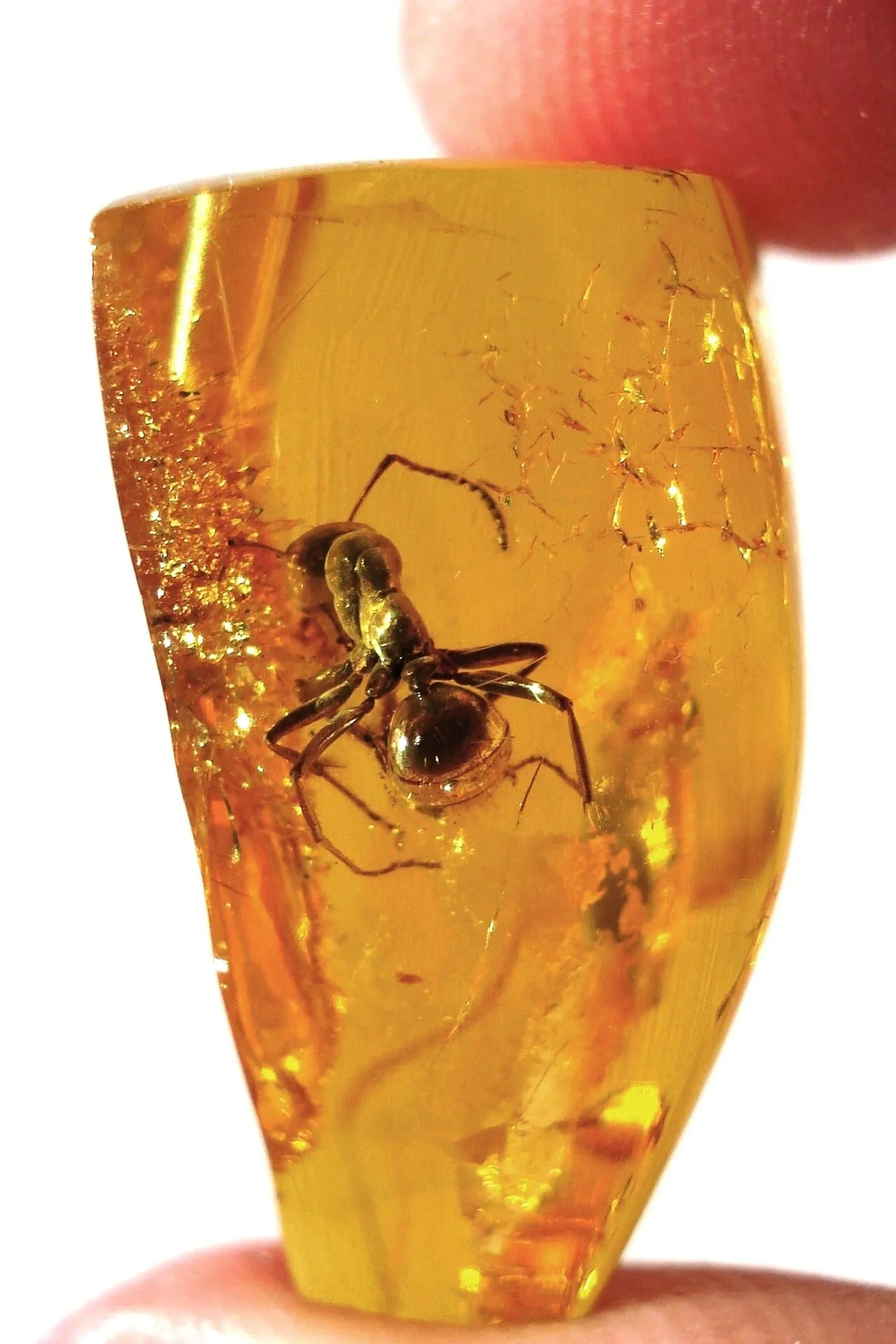
Tree resin fossilised over millions of years: a light, warm organic gem that sometimes holds prehistoric insects.
Ammolite
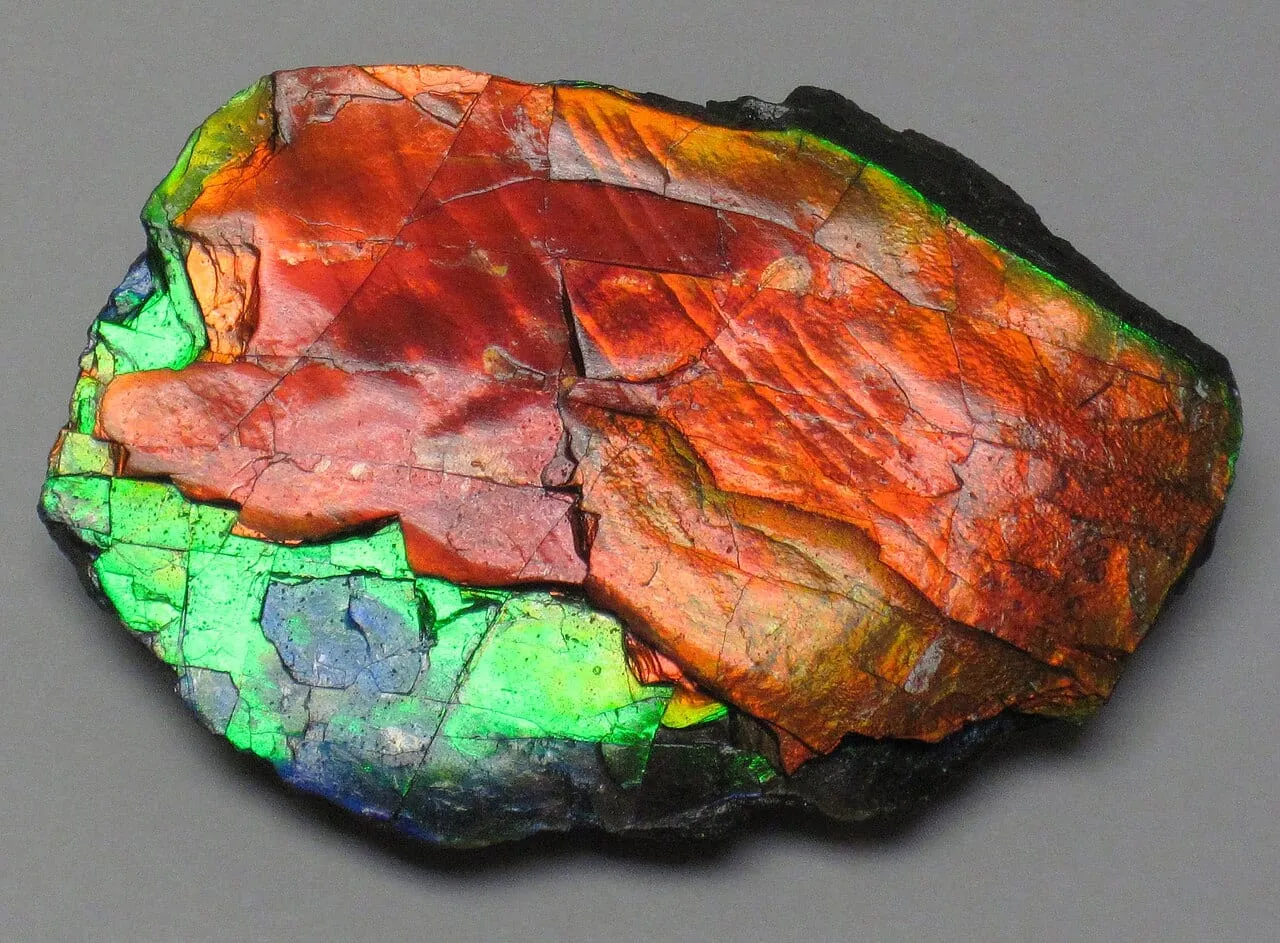
The rainbow-bright layer of fossil ammonite shell; of gem quality it comes only from the Canadian province of Alberta.
Aquamarine
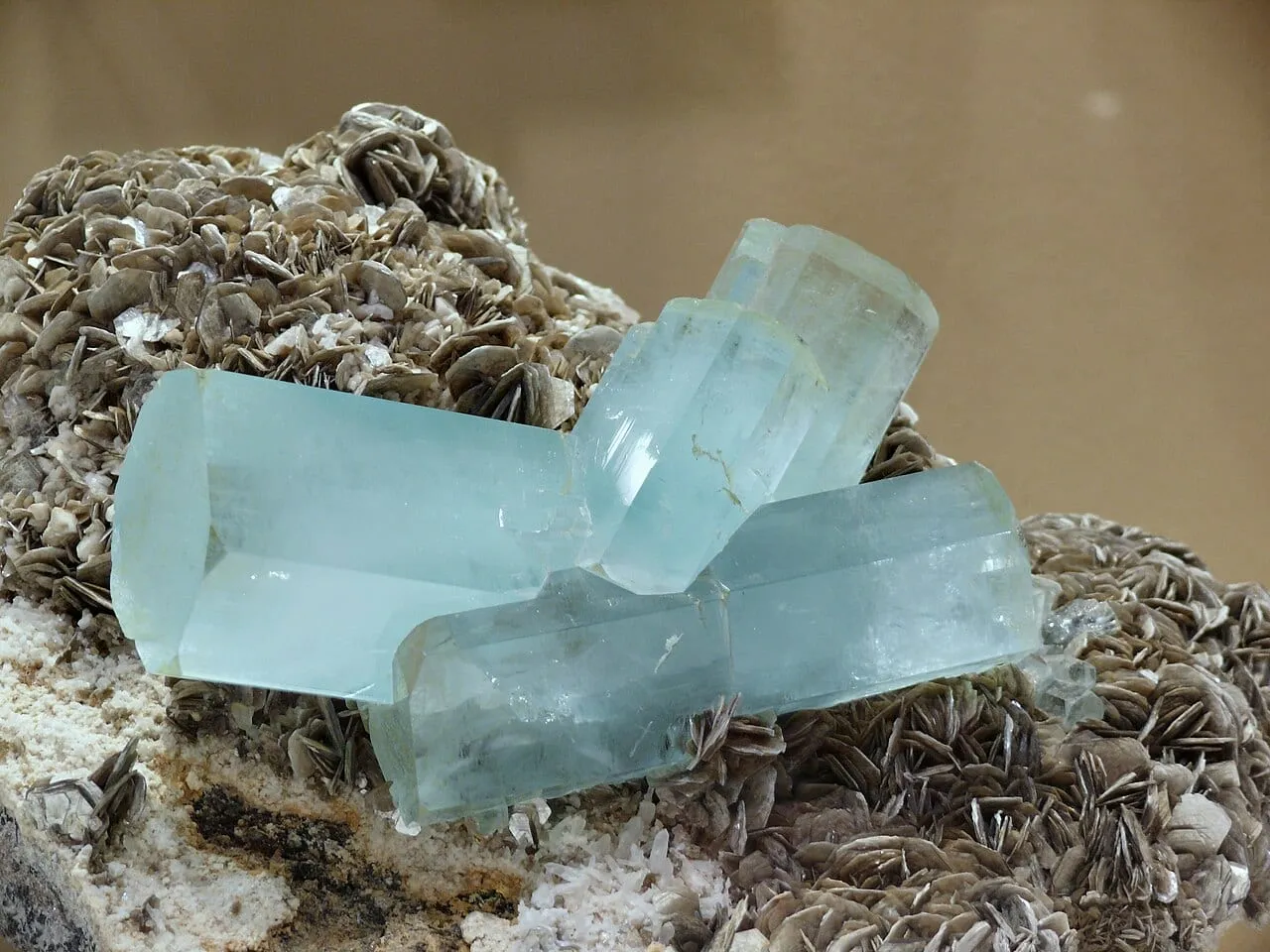
The blue member of the beryl family, named after seawater: often found as large, clear, nearly flawless crystals.