VarietyA variety of Beryl
Red beryl
Be₃Al₂Si₆O₁₈Kırmızı beril
One of the rarest gem minerals: raspberry-red beryl that forms in volcanic rock, not in pegmatite.
Also known as: Bixbite (former name, no longer recommended) · Red emerald (misleading trade name)
- Popularly: Semi-precious stone
- Gemstone
In short
Red beryl is the raspberry-red variety of beryl. It gets its colour from manganese. Unlike most other beryls it forms not in pegmatite but in rhyolite, a topaz-bearing volcanic rock, and it is known from only a few places. Most crystals are small, and most cut stones weigh less than a carat. Its former name is bixbite.
Photos
How does it form?
Most gem varieties of beryl form in pegmatite. Red beryl is different: it forms in topaz-bearing rhyolite. According to the Utah Geological Survey, the process began when topaz rhyolite lava erupted from volcanic vents. As the lava cooled, shrinkage cracks formed and hot, beryllium-rich gases escaped through them. Oxidised surface water seeping into the cracks mixed with the rising beryllium gases; the gases reacted with this water, with silica, alkali feldspar and the iron-manganese oxides of the rock to form red beryl crystals. The crystals are thought to have grown at about 300–650 °C. The rhyolite of the Thomas Range erupted roughly 6 to 7 million years ago, that of the Wah Wah Mountains 18 to 20 million years ago.
What is it used for?
- Gem: Cut red beryls are extremely rare and most weigh less than a carat; they are used in jewellery as small, highly prized stones.
- Collecting: Well-formed crystals on their rhyolite matrix are sought by museums and collectors. According to the Utah Geological Survey, the largest crystal known is 14 mm wide and 34 mm long.
- Science: It is a rare example of beryl forming outside a pegmatite, in a volcanic setting.
Where does the colour come from?
The red colour comes from manganese that replaces aluminium in the crystal structure (as trivalent Mn³⁺); small amounts of iron, chromium and calcium also play a part. The pink colour of morganite, by contrast, comes from divalent manganese. Red beryl also contains almost no water.
Where it occurs, and collecting
According to the Utah Geological Survey, red beryl was known in 2002 from only three places: the Thomas and Wah Wah Mountains in Utah and the Black Range in New Mexico. Gem-A says that red beryl has come from seven localities, and that Mexico is also among the producers. The only known deposit of large, gem-quality crystals is the Ruby-Violet claims in the Wah Wah Mountains of Beaver County, Utah. These are private claims, and collecting without permission is not allowed.
What determines its value?
Colour saturation and size count, but what really decides value is rarity: truly gem-quality red beryl comes almost only from the Wah Wah Mountains in Utah, and most cut stones weigh less than a carat; large, clean stones are extremely rare. Like emerald it can contain fractures and inclusions, and their state affects the value. Because pezzottaite and synthetic look-alikes exist, a laboratory report confirming a natural stone from Utah is important.
This information is educational, not buying, selling or investment advice. Value varies enormously with quality and treatment.
How to recognise it
- 1
Its colour is raspberry, strawberry or cherry red; stones can lean orange-red or purplish red.
- 2
Crystals are small hexagonal prisms (mostly shorter than 1 cm) found in rhyolite cavities with topaz, bixbyite, quartz and orthoclase.
- 3
Like emerald, and unlike most other beryls, it can contain feathers and fractures.
- 4
Its hardness is 7.5–8: it scratches glass and quartz.
- 5
Refractive index and laboratory examination are needed to tell it from pezzottaite and synthetics.
Fakes and imitations
What shops usually don’t tell you:
- Pezzottaite: a red caesium analogue of beryl from Madagascar and Afghanistan, which some sellers have marketed as “red beryl”. Cut stones can be told apart by refractive index.
- Synthetic red beryl: synthetic red beryl made by a hydrothermal process in Russia has entered the market; manganese and cobalt are added to give a deep red.
- Names such as “red emerald” or “scarlet emerald” are misleading; emerald is the name only for green beryl.
Myths and misconceptions
MythRed beryl is a red emerald.
FactEmerald is the name only for green beryl. “Red emerald” and “scarlet emerald” are misleading trade names for red beryl, which is the red variety of the same mineral, beryl.
MythBixbite and bixbyite are the same stone.
FactBixbite is the abandoned old name of red beryl. Bixbyite is a different mineral, a manganese-iron oxide, which can even occur as tiny inclusions in red beryl. Because of the confusion the name “bixbite” is no longer recommended.
MythEvery stone sold as red beryl is natural Utah red beryl.
FactRed beryl is so rare that look-alikes and imitations abound: pezzottaite has been sold as “red beryl”, and synthetic red beryl made in Russia is on the market too.
What is it believed to be good for?
This section reports beliefs; it is not health information. There is no scientific evidence for these claims and no stone replaces medical treatment.
The meanings people give this stone, and who holds them:
- Today crystal-therapy sources claim that red beryl balances the root and heart chakras and revives love and passion.
- The same circles say that red beryl raises vitality and stamina and helps organs such as the heart, lungs, liver and kidneys.
- Some sources claim the stone gives a feeling of security, courage and willpower.
What science says
Red beryl was found only in 1904 and is a very new and very rare stone; it has no belief attached to it in old lapidaries or folk tradition, so what is told today is recent. There is no scientific evidence that it affects love, vitality or any organ; for a lasting complaint see a doctor rather than relying on a stone.
Did you know?
The stone was found in 1904 by Maynard Bixby in Utah's Thomas Range; a year later W. F. Hillebrand identified it as a new kind of beryl. In 1912 A. Eppler named it “bixbite”.
According to the Utah Geological Survey, one red beryl crystal is found for every 150,000 diamonds.
According to Gem-A, the Ruby-Violet mine was estimated to yield about 0.125 carat of faceted stone per ton of ore.
Where is it found?
Loading map…
- Ruby-Violet claims, Wah Wah Mountains, Beaver County, Utah, USA · Major depositThe only known deposit of large, gem-quality red beryl crystals; these are private claims and collecting without permission is not allowed
- Thomas Range, Juab County, Utah, USA · Type localityThe type locality, where Maynard Bixby found red beryl in 1904; the crystals are small
- Black Range, Sierra County, New Mexico, USA · Known localityOne of only three known red beryl localities; gem-grade stones rarely occur
Locations are approximate to protect sites. Red dots mark places in Türkiye. Open in the big map →
Frequently asked questions
What is red beryl?
Red beryl is the raspberry-red variety of beryl. It gets its colour from manganese. Unlike most other beryls it forms not in pegmatite but in rhyolite, a topaz-bearing volcanic rock, and it is known from only a few places. Most crystals are small, and most cut stones weigh less than a carat. Its former name is bixbite.
What is red beryl used for?
Gem: Cut red beryls are extremely rare and most weigh less than a carat; they are used in jewellery as small, highly prized stones. Collecting: Well-formed crystals on their rhyolite matrix are sought by museums and collectors. According to the Utah Geological Survey, the largest crystal known is 14 mm wide and 34 mm long. Science: It is a rare example of beryl forming outside a pegmatite, in a volcanic setting.
How hard is red beryl?
It has a hardness of 7.5–8 on the Mohs scale. It scratches glass and steel; a steel knife cannot scratch it. Its specific gravity is 2.66–2.7 g/cm³.
Where is red beryl found?
Its best-known localities: Thomas Range, Juab County, Utah, USA; Ruby-Violet claims, Wah Wah Mountains, Beaver County, Utah, USA; Black Range, Sierra County, New Mexico, USA.
How can you tell if red beryl is real?
Its colour is raspberry, strawberry or cherry red; stones can lean orange-red or purplish red. Crystals are small hexagonal prisms (mostly shorter than 1 cm) found in rhyolite cavities with topaz, bixbyite, quartz and orthoclase. Like emerald, and unlike most other beryls, it can contain feathers and fractures. Pezzottaite: a red caesium analogue of beryl from Madagascar and Afghanistan, which some sellers have marketed as “red beryl”. Cut stones can be told apart by refractive index.
Is red beryl valuable?
On the “street to diamond” value ladder it sits on step 8 of nine: Top precious stone. Colour saturation and size count, but what really decides value is rarity: truly gem-quality red beryl comes almost only from the Wah Wah Mountains in Utah, and most cut stones weigh less than a carat; large, clean stones are extremely rare. Like emerald it can contain fractures and inclusions, and their state affects the value. Because pezzottaite and synthetic look-alikes exist, a laboratory report confirming a natural stone from Utah is important.
What is red beryl good for?
Today crystal-therapy sources claim that red beryl balances the root and heart chakras and revives love and passion. The same circles say that red beryl raises vitality and stamina and helps organs such as the heart, lungs, liver and kidneys. Some sources claim the stone gives a feeling of security, courage and willpower. Red beryl was found only in 1904 and is a very new and very rare stone; it has no belief attached to it in old lapidaries or folk tradition, so what is told today is recent. There is no scientific evidence that it affects love, vitality or any organ; for a lasting complaint see a doctor rather than relying on a stone. This section reports beliefs; it is not health information. There is no scientific evidence for these claims and no stone replaces medical treatment.
Family
.jpg)
_other_version.jpg)
Sources
- What gemstone is found in Utah that is rarer than diamond and more valuable than gold? (C. Ege), Survey Notes 34(3) · Utah Geological Survey, 2002
- Red Beryl Value, Price, and Jewelry Information · International Gem Society
- American gemstones: red beryl from Utah · Gem-A (Gemmological Association of Great Britain)
- Red beryl · Wikipedia
- Beryl · Wikipedia
- Handbook of Mineralogy: Beryl · Mineralogical Society of America
- Wah Wah Mountains · Wikipedia
External links
Draft: awaiting expert reviewReport an error ↗
On the same step
Alexandrite
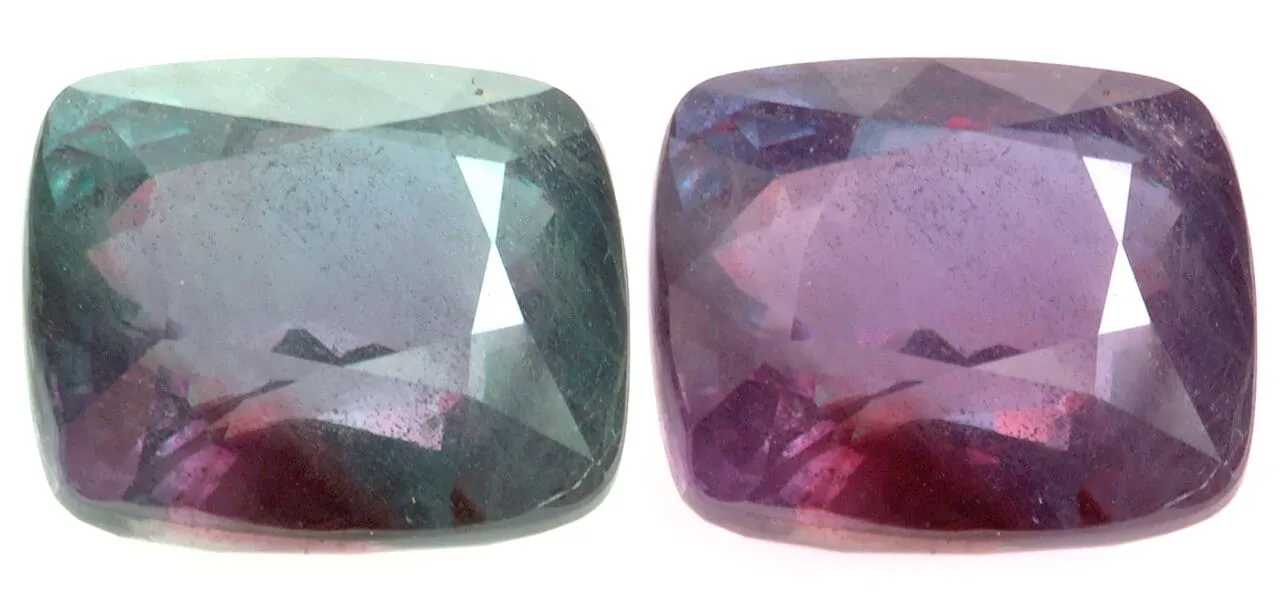
Green in daylight, red in lamplight: the rare colour-change variety of chrysoberyl, first found in Russia's Ural Mountains.

Diamond
Pure carbon and the hardest known natural mineral: it forms about 150–200 km deep and reaches the surface in volcanic eruptions.

Emerald
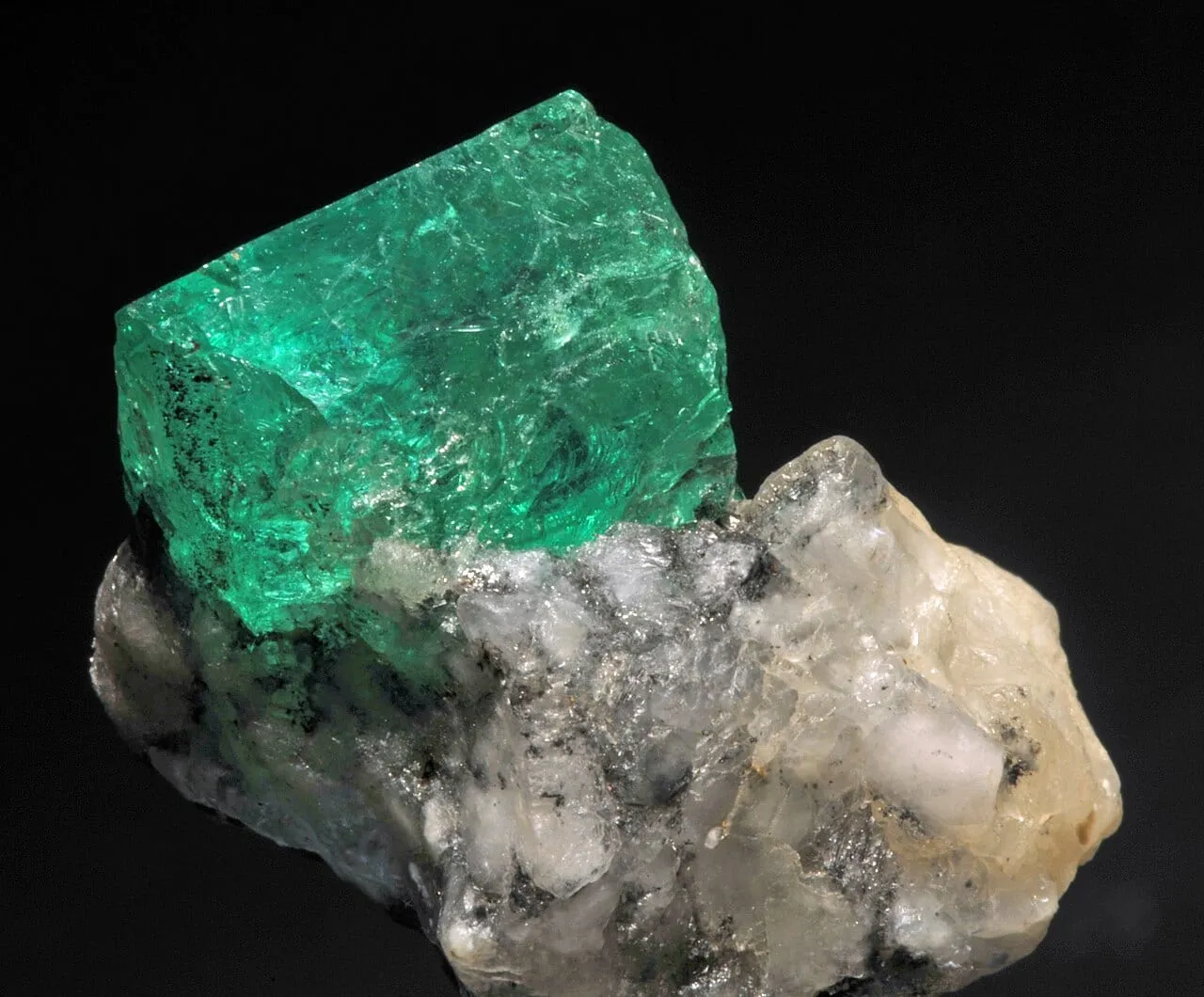
Beryl turned green by chromium and vanadium: the world's most famous green gem, almost always full of inclusions.