VarietyA variety of Beryl
Goshenite
Be₃Al₂Si₆O₁₈Goşenit
The colourless variety of beryl: named after the town of Goshen in the USA, it was once cut into magnifying lenses and early eyeglasses.
Also known as: Colourless beryl · White beryl
- Popularly: Semi-precious stone
In short
Goshenite is the colourless or near-colourless variety of beryl, the same mineral as emerald and aquamarine. Pure beryl is colourless; the trace elements that colour emerald, aquamarine or morganite are almost absent in goshenite. It takes its name from Goshen, Massachusetts, where it was first found. Because it can be very clear, it was once used to make lenses and eyeglasses; today it is mostly a collectors' stone of relatively low value.
Photos
How does it form?
Goshenite, like the other beryl varieties, forms mostly in granite pegmatites: a pegmatite is a coarse-grained rock that crystallises slowly from the last, water-rich part of a magma. Beryl is a silicate mineral containing beryllium and aluminium. If colouring trace elements such as chromium, vanadium, iron or manganese are almost absent while the crystal grows, the beryl stays colourless and goshenite forms. That is why goshenite is often found in the same regions, and the same pegmatites, that also yield aquamarine.
What is it used for?
- Jewellery: It is cut on a small scale as a colourless gem, but more often faceted for collectors than for mainstream jewellery.
- Collecting: Large, clear crystals on mica, feldspar or quartz are kept in mineral collections.
- History: Thanks to its clarity it was once used to make lenses, magnifiers and eyeglasses.
The name
Goshenite is named after the town of Goshen in Massachusetts: colourless beryl was first found there and came to be known by this name in the gem trade. In Turkish it is spelled “goşenit”, the name Turkish Wikipedia gives to colourless beryl.
Colourless, but it can be coloured
According to Wikipedia, goshenite can be coloured yellow, green, pink, blue or intermediate shades by irradiation with high-energy particles; the colour that results depends on trace elements in the crystal such as calcium, scandium, titanium, vanadium, iron and cobalt. Minerals.net, on the other hand, writes that goshenite is normally not treated at all, since it is readily available and affordable. When buying, it is still wise to ask whether a stone’s colour is natural.
What determines its value?
Goshenite is of relatively low value: it has no attractive colour and cannot compete with colourless stones such as diamond, topaz and white sapphire in hardness, brilliance and fire. In cut stones, clarity, cut quality and size decide value; completely clean, large stones are more sought after. In crystal specimens, crystal form, size, lack of damage and the overall look with associated minerals matter; goshenite is sought mostly by collectors who want to complete a beryl collection.
This information is educational, not buying, selling or investment advice. Value varies enormously with quality and treatment.
How to recognise it
- 1
It is colourless or nearly so; its crystals are six-sided prisms and are often very clear.
- 2
Its hardness is 7.5–8; it is harder than quartz, so it can scratch quartz.
- 3
Its refractive index is about 1.57–1.58 and its specific gravity 2.6–2.8. It is less brilliant than colourless stones such as diamond, white sapphire and topaz, and lacks the coloured flashes (fire) of diamond.
- 4
It can be confused with colourless quartz, white topaz, white sapphire, white zircon and diamond; a gem laboratory is needed for certain identification.
Fakes and imitations
What shops usually don’t tell you:
- Foil backing: a green foil placed behind goshenite can make it look like emerald; because its physical properties are the same as emerald's, this imitation is deceptive.
- Irradiation: goshenite can be coloured yellow, green, pink or blue by irradiation with high-energy particles; the resulting colour depends on the trace elements in the crystal.
Myths and misconceptions
MythGoshenite is a cheap twin of diamond and cannot be told apart from it.
FactGoshenite is much softer than diamond and shows neither its brilliance nor its coloured flashes of light (fire). Measuring its refractive index and specific gravity easily separates it from diamond.
MythGoshenite and rock crystal (colourless quartz) are the same stone.
FactGoshenite is not quartz but the colourless variety of beryl, the same mineral as emerald and aquamarine. It is harder than quartz, which is why it was preferred to quartz for lenses in the Middle Ages.
What is it believed to be good for?
This section reports beliefs; it is not health information. There is no scientific evidence for these claims and no stone replaces medical treatment.
The meanings people give this stone, and who holds them:
- According to the mineralogist George F. Kunz, crystal gazers who sought visions often preferred polished spheres of beryl; beryl was believed to give more visions than any other mineral.
- Today crystal-therapy websites and stone sellers claim that goshenite is a “stone of truth” that supports honest communication and clarity of mind, clears up misunderstandings in relationships, brings calm, and opens the crown chakra.
What science says
There is no scientific evidence that beryl or goshenite gives visions, clears the mind or mends relationships. The crystal-gazing belief reported by Kunz applies to beryl in general, not to any particular colour; goshenite's clarity simply comes from the near absence of colouring trace elements.
Did you know?
When eyeglasses were first made from beryl or rock crystal in 13th-century Italy, the German word for glasses, “Brille”, grew out of the name of beryl.
In medieval Europe goshenite crystals were cut and polished into lenses for magnifiers, telescopes and some of the earliest eyeglasses, because they were harder than quartz.
Pure beryl is colourless; the green of emerald, the blue of aquamarine and the pink of morganite all come from trace elements in the crystal.
Where is it found?
Loading map…
- Goshen, Hampshire County, Massachusetts, USA · Type localityColourless beryl was first found here; the name goshenite comes from the town
- Eastern Minas Gerais pegmatite region, Brazil · Major depositGeology.com lists Minas Gerais among the important sources of goshenite; the point is at region level in the state's beryl-bearing pegmatite area
- Ural Mountains, Russia · Known localityOne of the sources listed by Geology.com; because the source says only “the Urals”, the point is at region level, around Murzinka in the pegmatite area of the Central Urals
- Dassu area, Braldu Valley, Gilgit-Baltistan, Pakistan · Known localityPegmatites that also yield aquamarine; the point is at the centre of Shigar District, to which Dassu belongs
- Ampangabe area, near Antsirabe, Madagascar · Known localityPegmatites near Antsirabe in the central highlands of Madagascar; the point is at region level at Antsirabe
- Mount Xuebaoding, Sichuan, China · Known localityA deposit yielding goshenite crystals with muscovite mica and scheelite; the point is at region level, on the mountain's summit
Locations are approximate to protect sites. Red dots mark places in Türkiye. Open in the big map →
Frequently asked questions
What is goshenite?
Goshenite is the colourless or near-colourless variety of beryl, the same mineral as emerald and aquamarine. Pure beryl is colourless; the trace elements that colour emerald, aquamarine or morganite are almost absent in goshenite. It takes its name from Goshen, Massachusetts, where it was first found. Because it can be very clear, it was once used to make lenses and eyeglasses; today it is mostly a collectors' stone of relatively low value.
What is goshenite used for?
Jewellery: It is cut on a small scale as a colourless gem, but more often faceted for collectors than for mainstream jewellery. Collecting: Large, clear crystals on mica, feldspar or quartz are kept in mineral collections. History: Thanks to its clarity it was once used to make lenses, magnifiers and eyeglasses.
How hard is goshenite?
It has a hardness of 7.5–8 on the Mohs scale. It scratches glass and steel; a steel knife cannot scratch it. Its specific gravity is 2.63–2.97 g/cm³.
Where is goshenite found?
Its best-known localities: Goshen, Hampshire County, Massachusetts, USA; Eastern Minas Gerais pegmatite region, Brazil; Ural Mountains, Russia; Dassu area, Braldu Valley, Gilgit-Baltistan, Pakistan; Ampangabe area, near Antsirabe, Madagascar.
How can you tell if goshenite is real?
It is colourless or nearly so; its crystals are six-sided prisms and are often very clear. Its hardness is 7.5–8; it is harder than quartz, so it can scratch quartz. Its refractive index is about 1.57–1.58 and its specific gravity 2.6–2.8. It is less brilliant than colourless stones such as diamond, white sapphire and topaz, and lacks the coloured flashes (fire) of diamond. Foil backing: a green foil placed behind goshenite can make it look like emerald; because its physical properties are the same as emerald's, this imitation is deceptive.
Is goshenite valuable?
On the “street to diamond” value ladder it sits on step 5 of nine: Ornamental stone. Goshenite is of relatively low value: it has no attractive colour and cannot compete with colourless stones such as diamond, topaz and white sapphire in hardness, brilliance and fire. In cut stones, clarity, cut quality and size decide value; completely clean, large stones are more sought after. In crystal specimens, crystal form, size, lack of damage and the overall look with associated minerals matter; goshenite is sought mostly by collectors who want to complete a beryl collection.
What is goshenite good for?
According to the mineralogist George F. Kunz, crystal gazers who sought visions often preferred polished spheres of beryl; beryl was believed to give more visions than any other mineral. Today crystal-therapy websites and stone sellers claim that goshenite is a “stone of truth” that supports honest communication and clarity of mind, clears up misunderstandings in relationships, brings calm, and opens the crown chakra. There is no scientific evidence that beryl or goshenite gives visions, clears the mind or mends relationships. The crystal-gazing belief reported by Kunz applies to beryl in general, not to any particular colour; goshenite's clarity simply comes from the near absence of colouring trace elements. This section reports beliefs; it is not health information. There is no scientific evidence for these claims and no stone replaces medical treatment.
Family


Sources
- Beryl (Goshenite) · Wikipedia
- Beril · Vikipedi
- Goshenite · Geology.com
- The Gemstone Goshenite · Minerals.net
- Handbook of Mineralogy: Beryl · Mineralogical Society of America
- Goshen, Massachusetts · Wikipedia
- The Curious Lore of Precious Stones (G. F. Kunz) · J. B. Lippincott Company (Project Gutenberg), 1913
- Gem News International: Aquamarine from Pakistan, Gems & Gemology 54(1) · GIA, 2018
- Shigar District · Wikipedia
- Mount Xuebaoding · Wikipedia
- Goshenite. Xuebaoding Mt., Mianyang City, Sichuan province, China (photograph and description) · Wikimedia Commons
Draft: awaiting expert reviewReport an error
On the same step
Agate
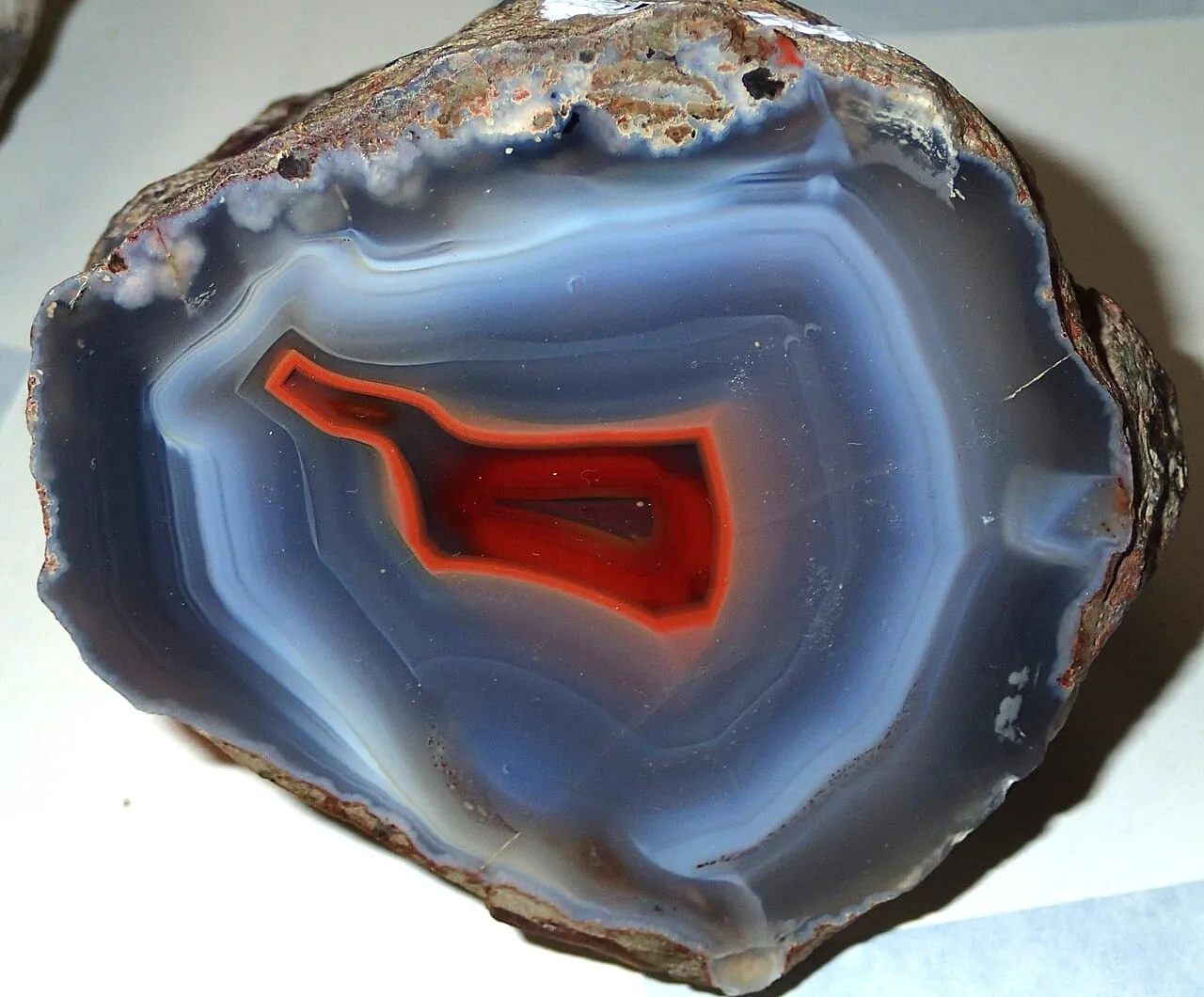
The banded variety of chalcedony: it grows layer by layer in hollows in volcanic rock and shows a new pattern every time it is cut.
Almandine
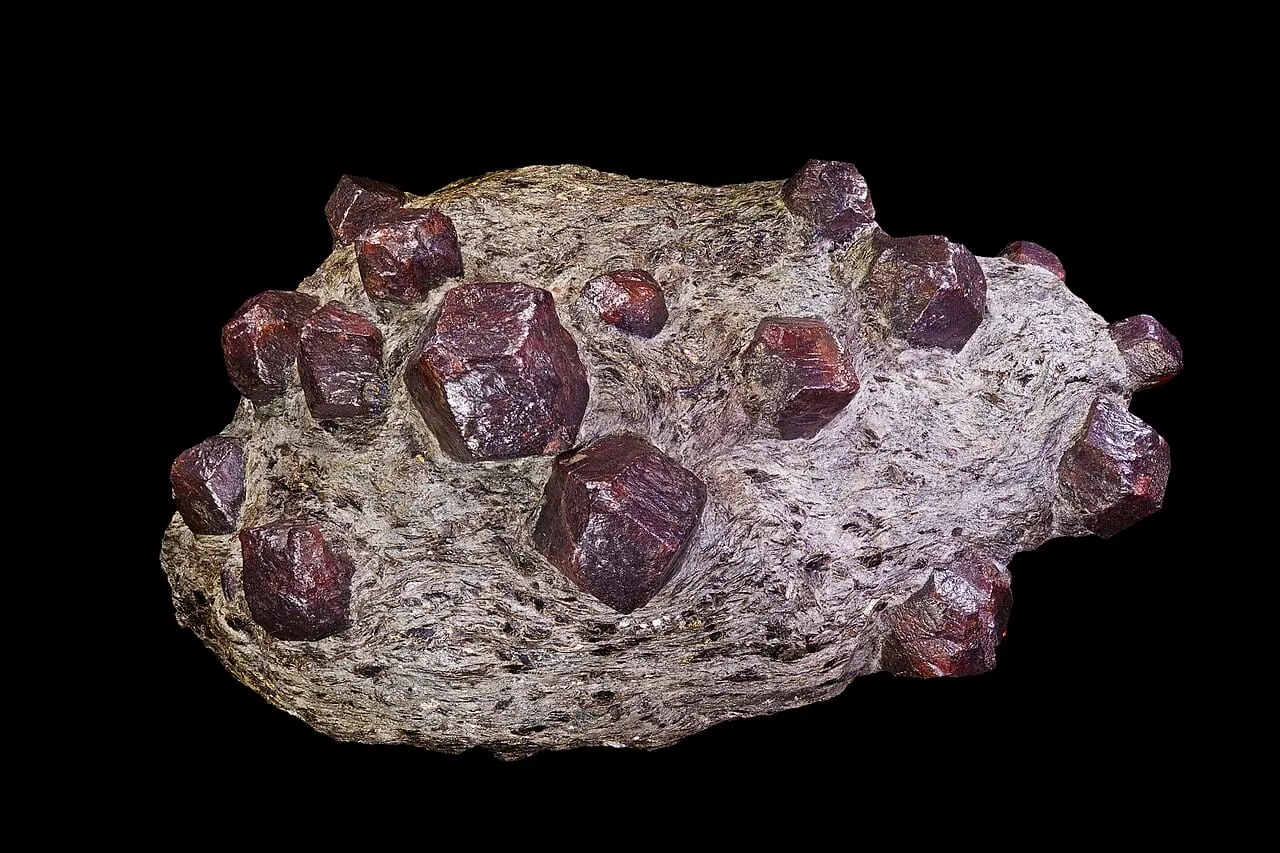
The commonest garnet: a deep red, iron-rich stone named after the ancient city of Alabanda in Anatolia, used in jewellery and in sandpaper alike.
Amazonite
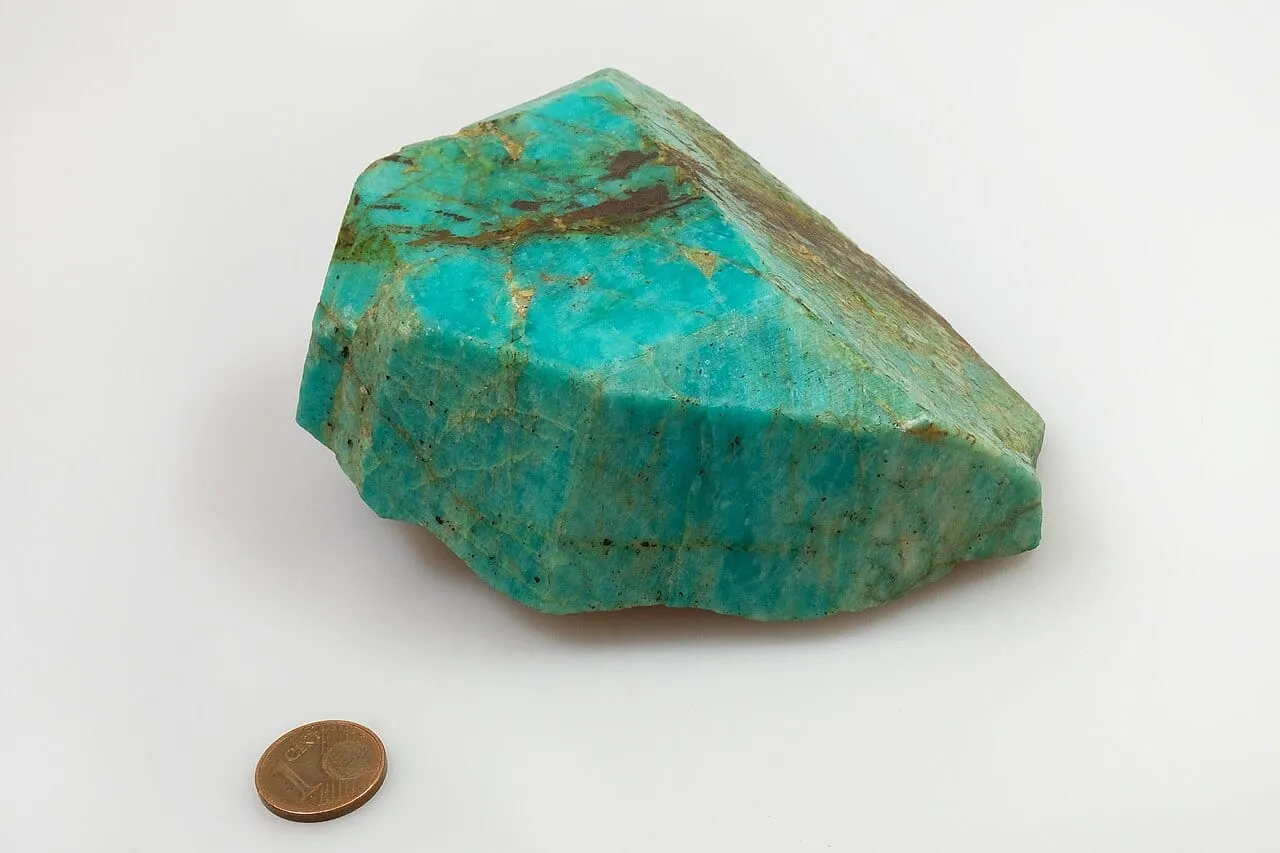
A turquoise-like green-blue feldspar: a variety of microcline worn as jewellery for more than three thousand years, but it can release lead.