Mineral
Spessartine
Mn₃Al₂(SiO₄)₃Spessartin
The orange garnet famous as “mandarin garnet”: named after the Spessart Mountains in Germany, it owes its orange colour to manganese.
Also known as: Spessartite (older British usage; also the name of a rock) · Mandarin garnet (vivid orange spessartine) · Malaya garnet (spessartine–pyrope–almandine blends) · Kashmirine (spessartine from Azad Kashmir)
- Popularly: Semi-precious stone
- Gemstone

In short
Spessartine is the manganese-bearing garnet, known for colours from light orange to reddish brown. It takes its name from its type locality, the Spessart Mountains in Germany. It is found mostly in granite pegmatites and rhyolite. Vivid orange “mandarin garnet” and some colour-change garnets are mixtures of this species.
Photos

How does it form?
Spessartine is found mostly in granite pegmatites (coarse-grained, late-forming veins of magma), granites and rhyolite; it also grows in some skarns and in manganese-rich rocks. The orange garnets of Madagascar come from sodium-rich pegmatites. It is accompanied by minerals such as quartz, potassium feldspar, tourmaline, muscovite, topaz and beryl.
Spessartine forms mixtures (solid solutions) with almandine and pyrope: the closer the composition to spessartine, the lighter orange the stone; the closer to almandine, the more reddish brown. For the family as a whole, see the garnet page.
What is it used for?
- Jewellery: Orange spessartine is hard (7–7.5) and has no cleavage, so it wears well in everyday jewellery and can be used as an engagement ring stone. Stones over 100 carats have been cut from Brazilian and Madagascan rough, but large, clean stones are very rare.
- Colour-change garnets: Most colour-change garnets are pyrope–spessartine mixtures; because they change colour with the light, they are compared to alexandrite.
- Collecting: Orange spessartine crystals grown together with quartz and feldspar in pegmatites are sought after as mineral specimens.
Mandarin and Malaya garnet
Mandarin garnet means vivid orange stones with the highest proportion of spessartine (roughly 85–95%). Malaya garnet is a mixture of spessartine, pyrope and almandine in varying proportions, with colours from pink through orange to red. A rare yellowish-orange spessartine from Azad Kashmir in Pakistan has been marketed as “Kashmirine”.
In Türkiye
Garnets of spessartine composition occurring as phenocrysts (large, early-formed crystals) in rhyolitic volcanic rocks around Menderes in İzmir province were reported in a doctoral thesis completed at Pamukkale University in 2023. The same thesis concluded that most of the garnet occurrences studied in Türkiye have low or limited potential as gemstones.
What determines its value?
Colour matters most for spessartine: vivid, pure orange mandarin stones are rare and the most sought after, while a growing almandine component pushes the colour towards reddish brown. Large spessartine is usually very dark, so big, clean stones are rare. Clarity, cut and origin also count. No colour treatment is known for spessartine, and since much material sold as “synthetic” is really imitation, a laboratory report confirming that a stone is spessartine is important.
This information is educational, not buying, selling or investment advice. Value varies enormously with quality and treatment.
How to recognise it
- 1
Crystals are twelve- or twenty-four-faced; orange, yellowish brown or reddish grains are usually seen in pegmatites together with quartz and feldspar.
- 2
Stones close to pure spessartine are light orange; as the almandine component grows, the colour shifts towards reddish brown and the refractive index rises.
- 3
It has a hardness of 7–7.5 and no cleavage; with a specific gravity of about 4.1–4.2, it feels distinctly heavy for its size.
- 4
Manganese gives characteristic absorption lines in a spectroscope, so spessartine can be told from the other garnet species reliably in a gem laboratory.
Fakes and imitations
What shops usually don’t tell you:
- Laboratory-made garnets such as orange YAG, and orange glass, can be used to imitate spessartine.
- Some “synthetic spessartine” jewellery sold online is actually coloured cubic zirconia or synthetic corundum; these are not garnets.
- In at least one case, laboratory-made corundum was sold as natural spessartine rough.
Myths and misconceptions
MythSpessartine and spessartite are two different stones.
FactBoth are names for the same garnet species: “spessartite” was preferred in Britain and “spessartine” in the USA, and today both are accepted. Spessartite is also used for a rock named after the Spessart.
MythAn orange garnet is always spessartine.
FactOrange garnets can be spessartine, but they can also be hessonite (a variety of grossular), which is usually duller and cinnamon-coloured. Vivid orange mandarin garnet contains a high proportion of spessartine.
What is it believed to be good for?
This section reports beliefs; it is not health information. There is no scientific evidence for these claims and no stone replaces medical treatment.
The meanings people give this stone, and who holds them:
- Today crystal-therapy websites claim that spessartine boosts creativity and optimism and gives courage and confidence.
- The same circles say that spessartine mends broken relationships and helps with sadness and depression.
What science says
There is no scientific evidence that spessartine affects creativity, courage or relationships. Depression is a medical condition; for lasting sadness or low mood, a doctor or mental-health professional should be consulted, not a stone.
Did you know?
“Spessartite” is also the name of an igneous rock (a lamprophyre) named after the Spessart Mountains; context shows which is meant.
The discovery of vivid orange mandarin garnet in the 1990s raised interest in orange gems.
Some Brazilian spessartines have been found as crystals weighing several pounds that kept their transparency.
Where is it found?
Loading map…
- Spessart Mountains (Aschaffenburg area), Bavaria, Germany · Type localityThe locality that gave the mineral its name
- Ramona, San Diego County, California, USA · Known localitySan Diego County, especially around Ramona, has produced fine orange gem-quality spessartine
- Amelia (Rutherford mine), Virginia, USA · Known localityGem-quality stones from orange to deep brownish; crystals weighing several pounds have also been found
- Nathrop area, Chaffee County, Colorado, USA · Known localityA Colorado area with violet-red spessartine in rhyolite
- Sahatany valley (Antsirabe area), Vakinankaratra, Madagascar · Major depositOrange garnet in sodium-rich pegmatites; one of Madagascar's sources of mandarin garnet
- Kaokoland (Marienfluss valley), Kunene Region, Namibia · Major depositNamibia is among the main sources of spessartine, mandarin garnet included; Marienfluss is cited as a locality in the mineralogical literature
- Latinka, Kardzhali Province, Rhodope Mountains, Bulgaria · Known localityWell-formed spessartine–almandine crystals from very dark red to bright yellow-orange
- Menderes, İzmir, Türkiye · Known localitySpessartine-composition garnet phenocrysts in rhyolitic volcanic rocks; documented in an academic study
Locations are approximate to protect sites. Red dots mark places in Türkiye. Open in the big map →
Frequently asked questions
What is spessartine?
Spessartine is the manganese-bearing garnet, known for colours from light orange to reddish brown. It takes its name from its type locality, the Spessart Mountains in Germany. It is found mostly in granite pegmatites and rhyolite. Vivid orange “mandarin garnet” and some colour-change garnets are mixtures of this species.
What is spessartine used for?
Jewellery: Orange spessartine is hard (7–7.5) and has no cleavage, so it wears well in everyday jewellery and can be used as an engagement ring stone. Stones over 100 carats have been cut from Brazilian and Madagascan rough, but large, clean stones are very rare. Colour-change garnets: Most colour-change garnets are pyrope–spessartine mixtures; because they change colour with the light, they are compared to alexandrite. Collecting: Orange spessartine crystals grown together with quartz and feldspar in pegmatites are sought after as mineral specimens.
How hard is spessartine?
It has a hardness of 7–7.5 on the Mohs scale. It scratches glass and steel; a steel knife cannot scratch it. Its specific gravity is 4.12–4.25 g/cm³.
Where is spessartine found?
Its best-known localities: Spessart Mountains (Aschaffenburg area), Bavaria, Germany; Sahatany valley (Antsirabe area), Vakinankaratra, Madagascar; Kaokoland (Marienfluss valley), Kunene Region, Namibia; Ramona, San Diego County, California, USA; Amelia (Rutherford mine), Virginia, USA.
Where is spessartine found in Türkiye?
Known localities in Türkiye: Menderes, İzmir, Türkiye.
How can you tell if spessartine is real?
Crystals are twelve- or twenty-four-faced; orange, yellowish brown or reddish grains are usually seen in pegmatites together with quartz and feldspar. Stones close to pure spessartine are light orange; as the almandine component grows, the colour shifts towards reddish brown and the refractive index rises. It has a hardness of 7–7.5 and no cleavage; with a specific gravity of about 4.1–4.2, it feels distinctly heavy for its size. Laboratory-made garnets such as orange YAG, and orange glass, can be used to imitate spessartine.
Is spessartine valuable?
On the “street to diamond” value ladder it sits on step 6 of nine: Fine ornamental and collector stone. Colour matters most for spessartine: vivid, pure orange mandarin stones are rare and the most sought after, while a growing almandine component pushes the colour towards reddish brown. Large spessartine is usually very dark, so big, clean stones are rare. Clarity, cut and origin also count. No colour treatment is known for spessartine, and since much material sold as “synthetic” is really imitation, a laboratory report confirming that a stone is spessartine is important.
What is spessartine good for?
Today crystal-therapy websites claim that spessartine boosts creativity and optimism and gives courage and confidence. The same circles say that spessartine mends broken relationships and helps with sadness and depression. There is no scientific evidence that spessartine affects creativity, courage or relationships. Depression is a medical condition; for lasting sadness or low mood, a doctor or mental-health professional should be consulted, not a stone. This section reports beliefs; it is not health information. There is no scientific evidence for these claims and no stone replaces medical treatment.
Sources
- Handbook of Mineralogy: Spessartine · Mineralogical Society of America
- Spessartite Garnet Value, Price, and Jewelry Information · International Gem Society
- Spessartine · Wikipedia
- Garnet · Wikipedia
- Hessonite Garnet Value, Price, and Jewelry Information · International Gem Society
- Türkiye'de seçili granatların mineralojik, petrografik, spektroskopik, jeokimyasal ve gemolojik özelliklerinin belirlenmesi (doktora tezi, Ufuk Ören) · Pamukkale Üniversitesi, 2023
External links
Draft: awaiting expert reviewReport an error ↗
On the same step
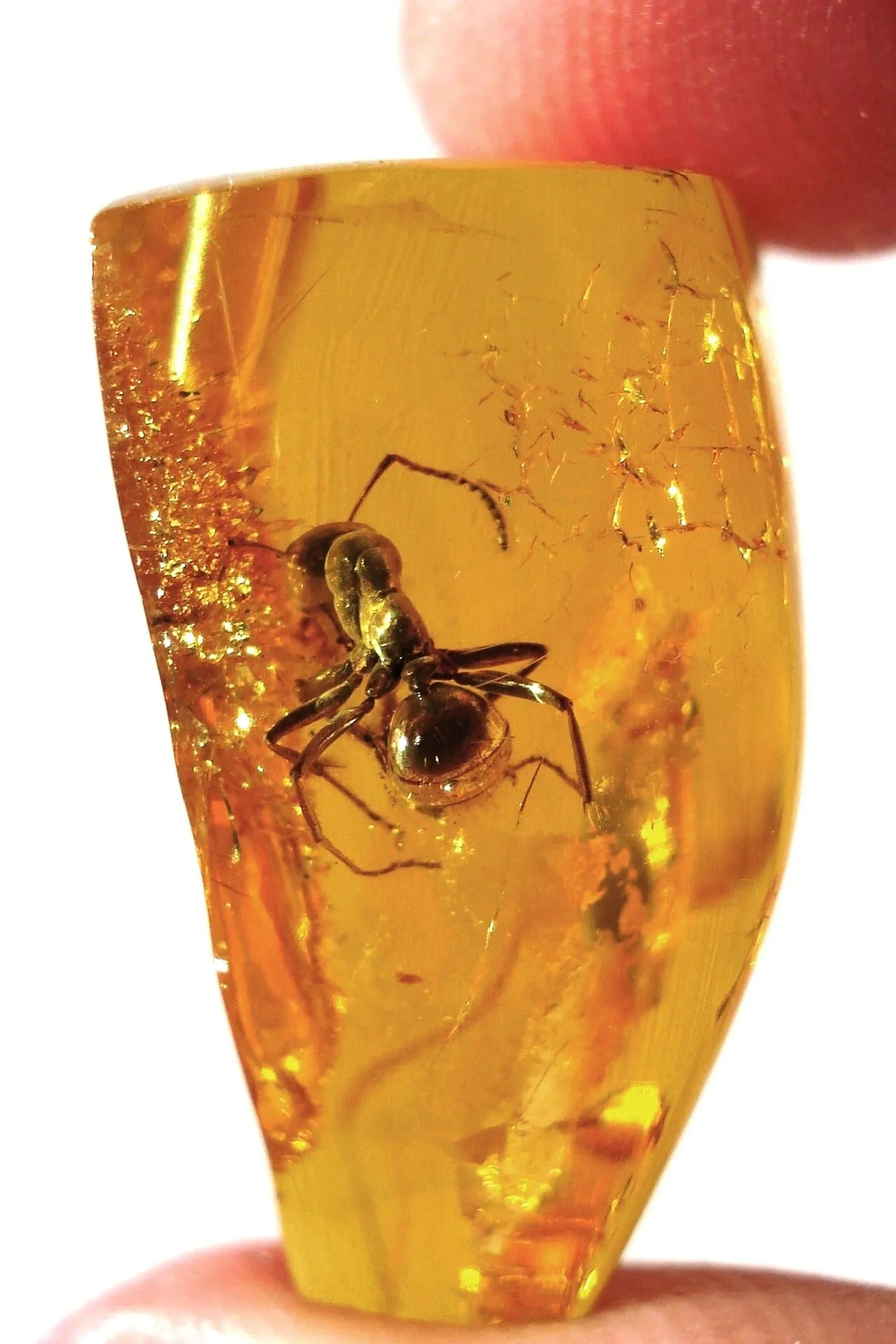
Amber
Tree resin fossilised over millions of years: a light, warm organic gem that sometimes holds prehistoric insects.
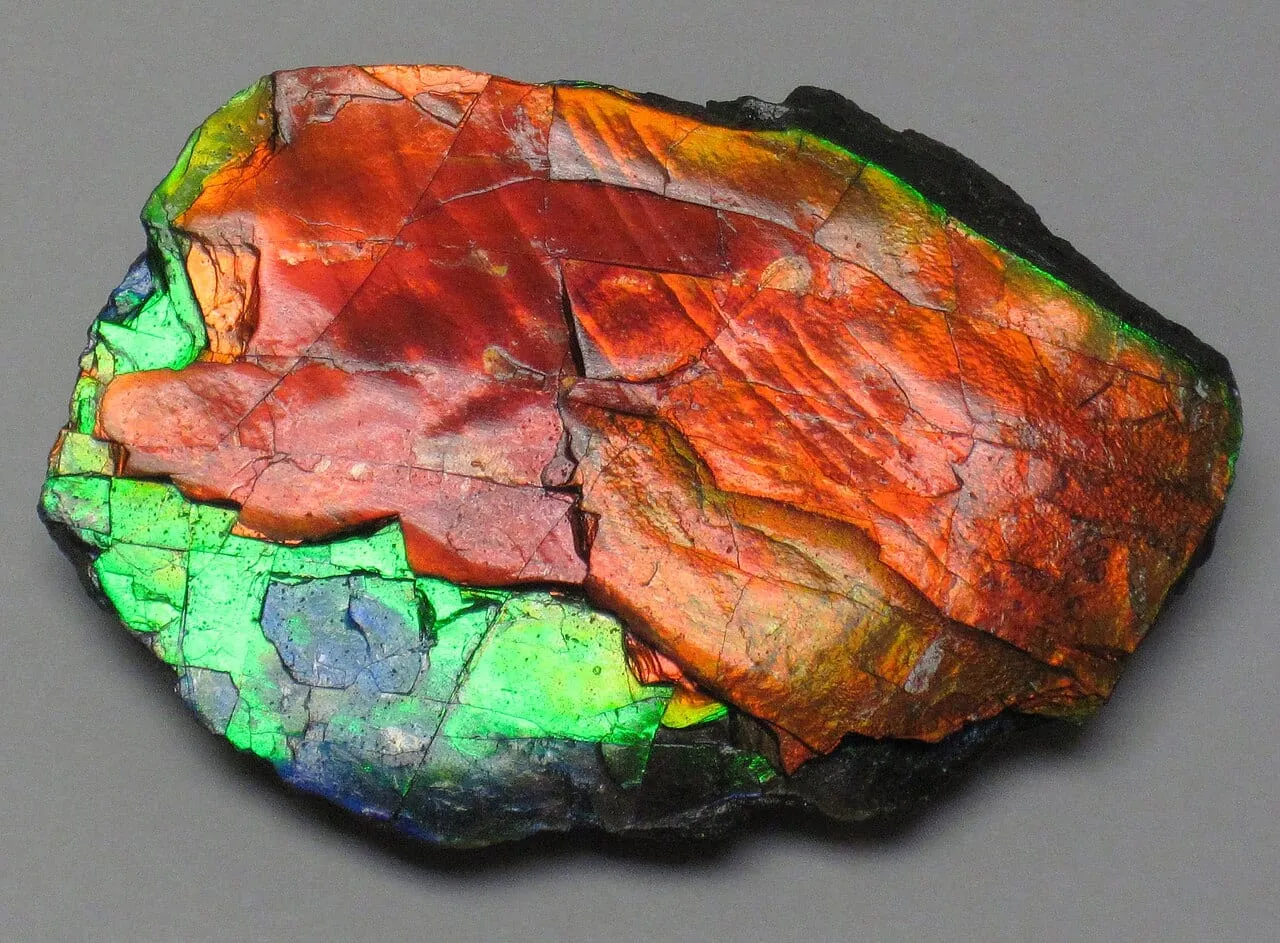
Ammolite
The rainbow-bright layer of fossil ammonite shell; of gem quality it comes only from the Canadian province of Alberta.

Aquamarine
The blue member of the beryl family, named after seawater: often found as large, clear, nearly flawless crystals.