VarietyA variety of Spessartine
Mandarin garnet
Mn₃Al₂(SiO₄)₃Mandalina granatı
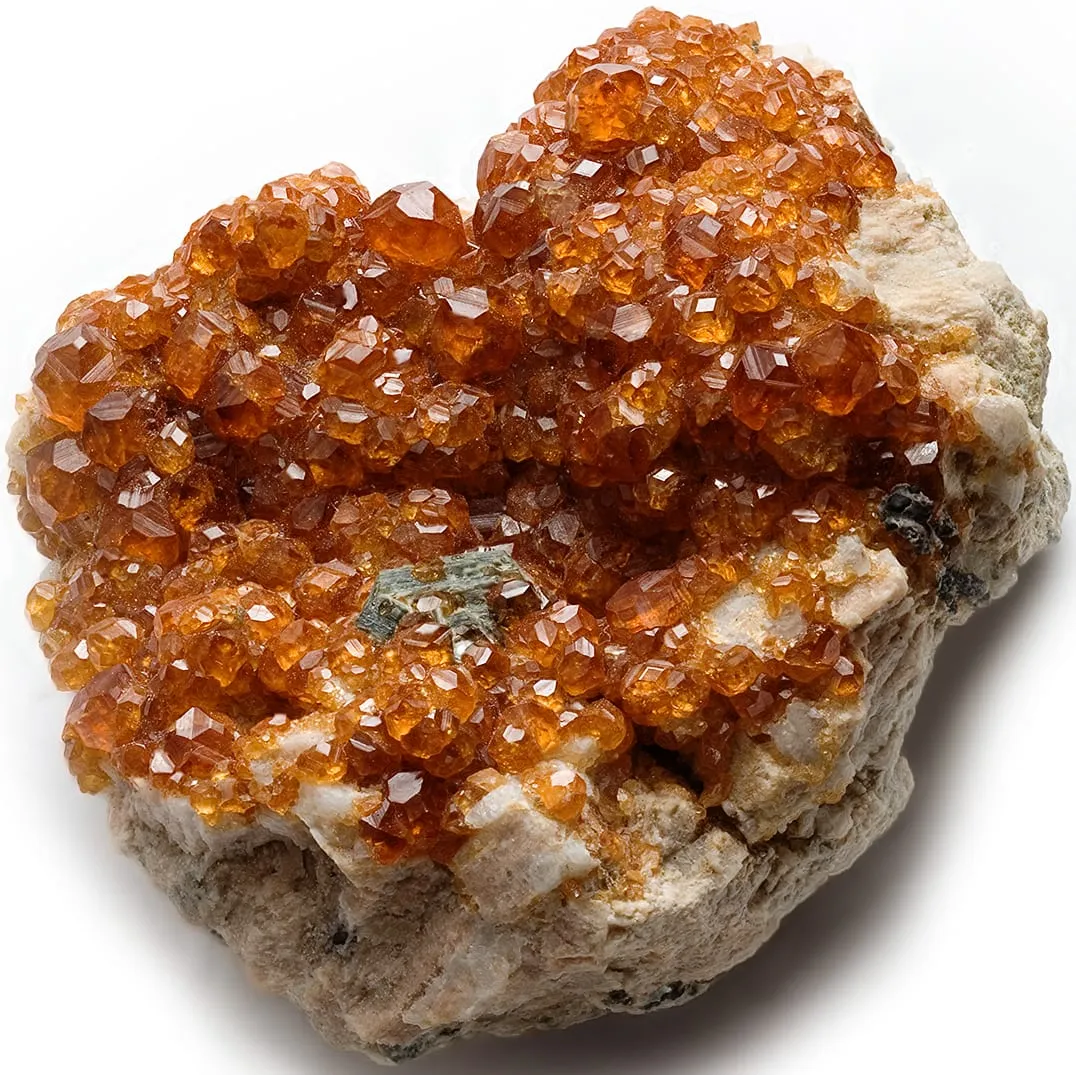
The most vivid orange of spessartine garnet: a rare, brilliant gem found in Namibia in 1991 and named after the colour of the mandarin orange.
Also known as: Mandarin spessartine · Kunene spessartine (early trade name) · Hollandine (early trade name)
- Popularly: Semi-precious stone
In short
Mandarin garnet is the trade name for vivid orange spessartine, the manganese garnet. The name was first used for stones found in 1991 beside the Kunene River in north-western Namibia; today it is also used for any spessartine of that colour. Its bright orange comes from its high manganese content. When the Namibian deposit was exhausted, Nigeria, then Tanzania and Madagascar became the main sources. It is normally not treated at all; the purer its orange, the more it is worth, and stones over 10 carats are extremely rare.
Photos
How does it form?
Mandarin garnet is a spessartine, a manganese-rich garnet. Spessartine forms most often in granite pegmatites, granites and rhyolites; it also grows in manganese-rich rocks altered by hot fluids around igneous intrusions. The Namibian mandarin garnets were found in mica and mica schist, those of Madagascar in sodium-rich pegmatites. In Madagascar the stones are mined both from their parent rock and from alluvial deposits formed as the rocks weathered.
The bright orange colour comes from the high manganese content of the crystal structure. As the share of iron and other garnet components rises, the colour shifts towards reddish or brownish orange; this is why mandarin garnets usually have a very high spessartine content.
What is it used for?
- Jewellery: hard, without cleavage and brilliant, it is set as a precious stone in rings, earrings and necklaces. Its vivid orange makes it one of the most striking garnets.
- Collecting: large, clean stones are rare and sought by collectors; specimens from the closed Namibian mine attract particular interest.
- Science: the proportions of spessartine, pyrope and grossular in stones from different deposits are measured to compare their sources.
Discovery and name
The first mandarin garnets were found in 1991 in north-western Namibia, beside the Kunene River that forms the border with Angola. The area was very remote and sparsely populated, and the stones lay in mica and mica schist. Their unusually vivid, clean orange drew attention at once, but mining grew harder as it went deeper, and Namibian production stopped. According to GIA, as Namibian output declined at the end of the 1990s, a new deposit in south-western Nigeria met demand with larger, cleaner spessartines. In 2007 orange spessartine with a composition very close to the Namibian stones was also found at Loliondo in Tanzania, near Serengeti National Park. The name comes from the orange colour of the mandarin fruit.
Where is it found?
The first and most famous source is the Marienfluss valley and Kunene River area of Namibia, but that deposit is no longer worked. Today the main sources are Nigeria, Loliondo in Tanzania, and Madagascar, where the Sahatany valley is known for its deposits in the parent rock. Orange spessartine also came from Zambia in the 1990s. For the garnet family as a whole, see the garnet page.
What determines its value?
Colour matters most for mandarin garnet: the purer and more vivid the orange, the more valuable the stone, while brown or red tones lower its value. Stones over 10 carats are extremely rare, so size raises value quickly. Clarity and a good cut also count. These stones are normally not treated at all; the real risk comes from imitations such as orange glass and synthetic YAG, so a laboratory report is important.
This information is educational, not buying, selling or investment advice. Value varies enormously with quality and treatment.
How to recognise it
- 1
Its colour ranges from peach to vivid orange and reddish orange; the best show a pure, bright orange without any brown.
- 2
It is a heavy stone: its specific gravity is 4.09–4.15, so hessonite (3.64–3.69) and citrine (about 2.65) of the same colour are clearly lighter. Its refractive index is about 1.79–1.80.
- 3
Like other garnets it is singly refractive, has no cleavage and a hardness of 7–7.5. Inside, curved fibres or small crystals of minerals such as quartz, amphibole and barite may be seen.
- 4
It can be confused with stones such as imperial topaz, fire opal and orange sapphire; a certain identification needs a gemmological laboratory.
Fakes and imitations
What shops usually don’t tell you:
- Orange glass and synthetic YAG (yttrium aluminium garnet made in the laboratory): used as imitations of mandarin garnet.
- Paler or brownish spessartine and other orange garnets such as hessonite may be sold as “mandarin”; the name has no official boundary.
Myths and misconceptions
MythEvery orange garnet is a mandarin garnet.
FactMandarin garnet is a trade name for vivid orange spessartine. The duller, cinnamon-coloured hessonite is grossular garnet, lighter and less expensive. Brownish spessartines do not deserve the name either.
MythThe name mandarin garnet is used only for stones from Namibia.
FactThe name was first used for the Namibian stones, but today it covers all spessartine of the same vivid orange. Nigeria, Tanzania and Madagascar also produce mandarin garnet.
What is it believed to be good for?
This section reports beliefs; it is not health information. There is no scientific evidence for these claims and no stone replaces medical treatment.
The meanings people give this stone, and who holds them:
- Today crystal-therapy websites link mandarin garnet with the sacral chakra because of its orange colour and claim that it brings joy, creativity, vitality and self-confidence.
- The same websites claim that the stone supports metabolism and blood circulation and strengthens the immune system.
What science says
There is no scientific evidence that mandarin garnet brings joy or confidence, or that it affects metabolism, circulation or immunity; health problems call for a doctor. The stone was found only in 1991, so there is no old tradition of belief behind it; its orange colour is simply the result of the manganese it contains.
Did you know?
The first Namibian stones were found at the surface, in mica and mica schist, in a remote and sparsely populated area. As miners dug deeper, yields fell and costs rose, and production finally stopped.
Names such as “Kunene spessartine” and “hollandine” were also proposed at first; in the end “mandarin garnet” won out.
Mandarin garnet from Nigeria is about 95 percent spessartine; in Namibian stones the figure is about 85 percent.
Even before the Namibian find, spessartine was known from places such as Sri Lanka, Myanmar, Madagascar, Brazil and Kenya, but it was almost unknown in jewellery.
Where is it found?
Loading map…
- Marienfluss valley and Kunene River, Kaokoland, Kunene Region, Namibia · Type localityWhere mandarin garnet was first found in 1991, in mica and mica schist on the Angolan border; production stopped as mining grew too difficult. The point is approximate
- Southwestern Nigeria · Major depositA new deposit that yielded larger, cleaner orange spessartine as Namibian production declined in the 1990s; no exact site is given
- Nani, Loliondo, Ngorongoro, Arusha Region, Tanzania · Major depositOrange spessartine found in 2007 near Serengeti National Park; its composition is very close to that of the Namibian stones
- Sahatany valley (Antsirabe area), Vakinankaratra, Madagascar · Known localityOrange spessartine in sodium-rich pegmatites; alluvial deposits are also worked in Madagascar
- Zambia · Known localityOne of the sources of orange spessartine in the 1990s; no exact site is given
Locations are approximate to protect sites. Red dots mark places in Türkiye. Open in the big map →
Frequently asked questions
What is mandarin garnet?
Mandarin garnet is the trade name for vivid orange spessartine, the manganese garnet. The name was first used for stones found in 1991 beside the Kunene River in north-western Namibia; today it is also used for any spessartine of that colour. Its bright orange comes from its high manganese content. When the Namibian deposit was exhausted, Nigeria, then Tanzania and Madagascar became the main sources. It is normally not treated at all; the purer its orange, the more it is worth, and stones over 10 carats are extremely rare.
What is mandarin garnet used for?
Jewellery: hard, without cleavage and brilliant, it is set as a precious stone in rings, earrings and necklaces. Its vivid orange makes it one of the most striking garnets. Collecting: large, clean stones are rare and sought by collectors; specimens from the closed Namibian mine attract particular interest. Science: the proportions of spessartine, pyrope and grossular in stones from different deposits are measured to compare their sources.
How hard is mandarin garnet?
It has a hardness of 7–7.5 on the Mohs scale. It scratches glass and steel; a steel knife cannot scratch it. Its specific gravity is 4.09–4.15 g/cm³.
Where is mandarin garnet found?
Its best-known localities: Marienfluss valley and Kunene River, Kaokoland, Kunene Region, Namibia; Southwestern Nigeria; Nani, Loliondo, Ngorongoro, Arusha Region, Tanzania; Sahatany valley (Antsirabe area), Vakinankaratra, Madagascar; Zambia.
How can you tell if mandarin garnet is real?
Its colour ranges from peach to vivid orange and reddish orange; the best show a pure, bright orange without any brown. It is a heavy stone: its specific gravity is 4.09–4.15, so hessonite (3.64–3.69) and citrine (about 2.65) of the same colour are clearly lighter. Its refractive index is about 1.79–1.80. Like other garnets it is singly refractive, has no cleavage and a hardness of 7–7.5. Inside, curved fibres or small crystals of minerals such as quartz, amphibole and barite may be seen. Orange glass and synthetic YAG (yttrium aluminium garnet made in the laboratory): used as imitations of mandarin garnet.
Is mandarin garnet valuable?
On the “street to diamond” value ladder it sits on step 7 of nine: Precious stone. Colour matters most for mandarin garnet: the purer and more vivid the orange, the more valuable the stone, while brown or red tones lower its value. Stones over 10 carats are extremely rare, so size raises value quickly. Clarity and a good cut also count. These stones are normally not treated at all; the real risk comes from imitations such as orange glass and synthetic YAG, so a laboratory report is important.
What is mandarin garnet good for?
Today crystal-therapy websites link mandarin garnet with the sacral chakra because of its orange colour and claim that it brings joy, creativity, vitality and self-confidence. The same websites claim that the stone supports metabolism and blood circulation and strengthens the immune system. There is no scientific evidence that mandarin garnet brings joy or confidence, or that it affects metabolism, circulation or immunity; health problems call for a doctor. The stone was found only in 1991, so there is no old tradition of belief behind it; its orange colour is simply the result of the manganese it contains. This section reports beliefs; it is not health information. There is no scientific evidence for these claims and no stone replaces medical treatment.
Family


_1.jpg)
Sources
- Mandarin Garnet Value, Price, and Jewelry Information · International Gem Society
- Mandarin Garnet · International Colored Gemstone Association (ICA)
- Gem Localities of the 1990s (J. E. Shigley, D. M. Dirlam, B. M. Laurs, E. A. Boehm, G. Bosshart, W. F. Larson), Gems & Gemology 36(4) · GIA, 2000
- Spessartine · Wikipedia
- Kaokoland · Wikipedia
- Loliondo · Wikipedia
- Orange spessartine garnets in schist (Outomongu Mine, Namibia), photo and description by James St. John · Wikimedia Commons
- Handbook of Mineralogy: Spessartine · Mineralogical Society of America
Draft: awaiting expert reviewReport an error
On the same step

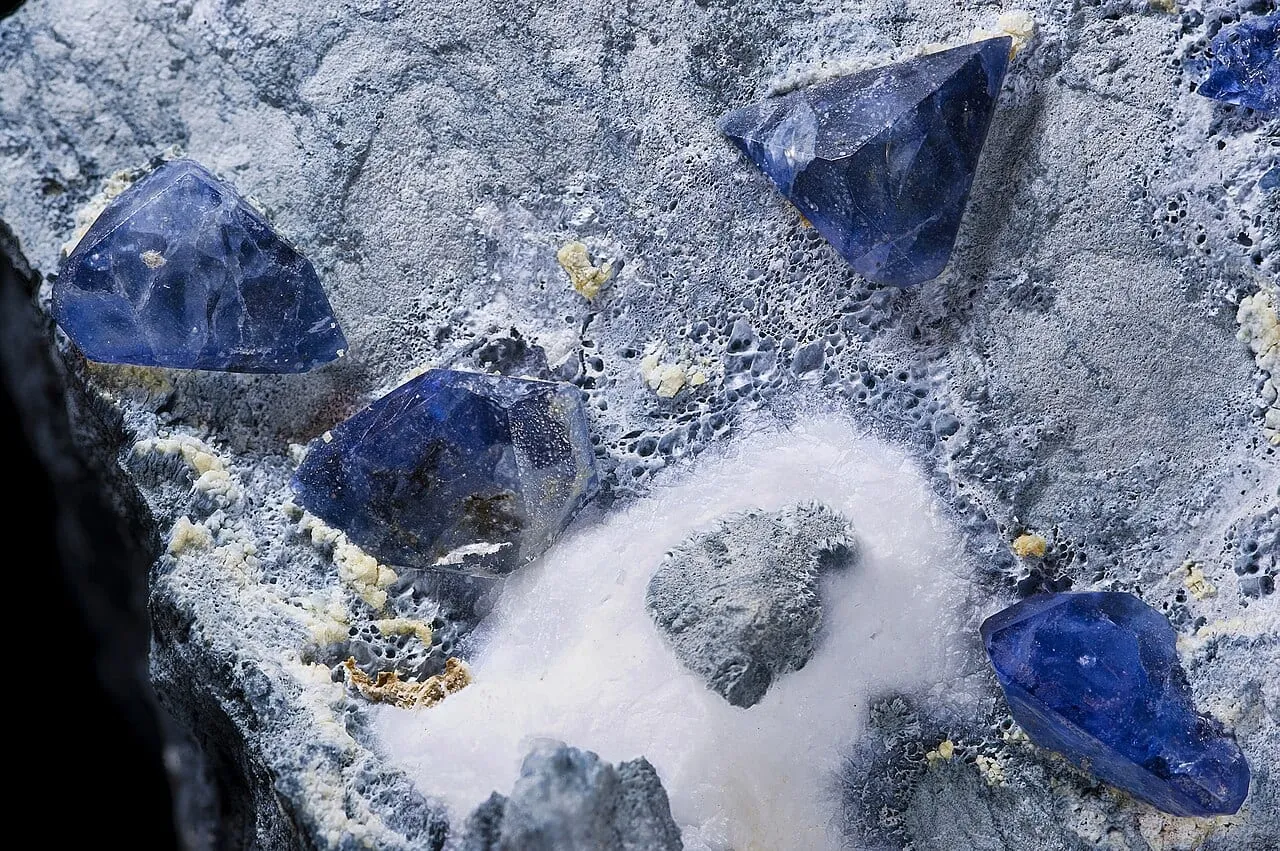
Benitoite
A sapphire-like blue stone whose gem crystals come from a single mine in the world: the official state gem of California.
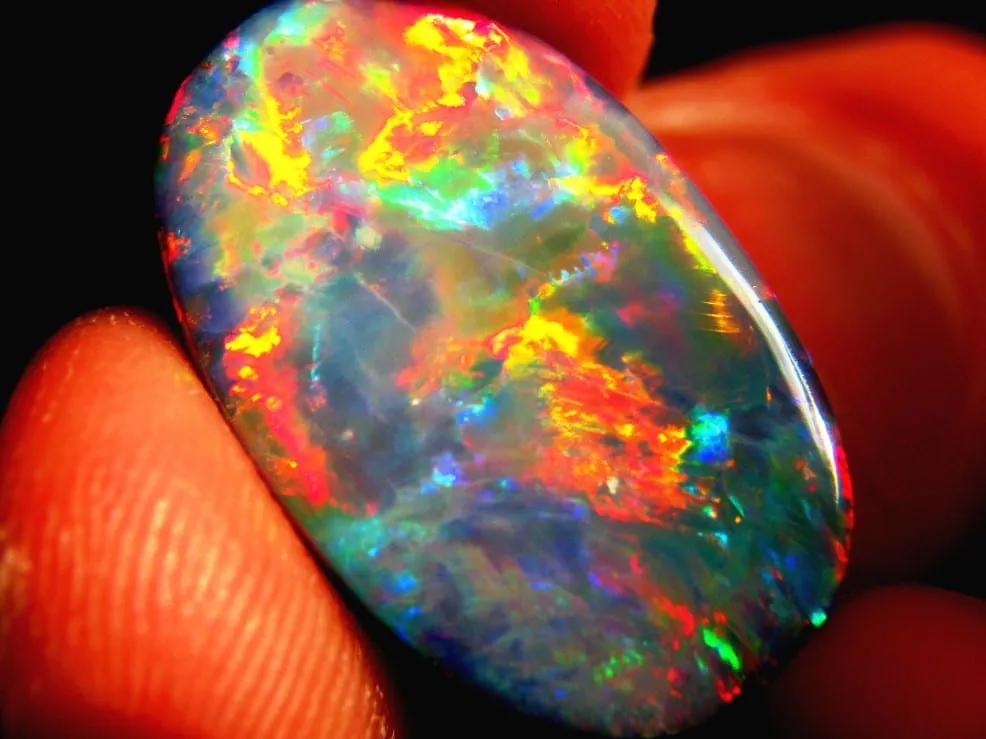
Black opal
Play-of-colour glowing against a dark grey or black body: the rarest and usually most valuable kind of opal, mostly from Lightning Ridge in Australia.
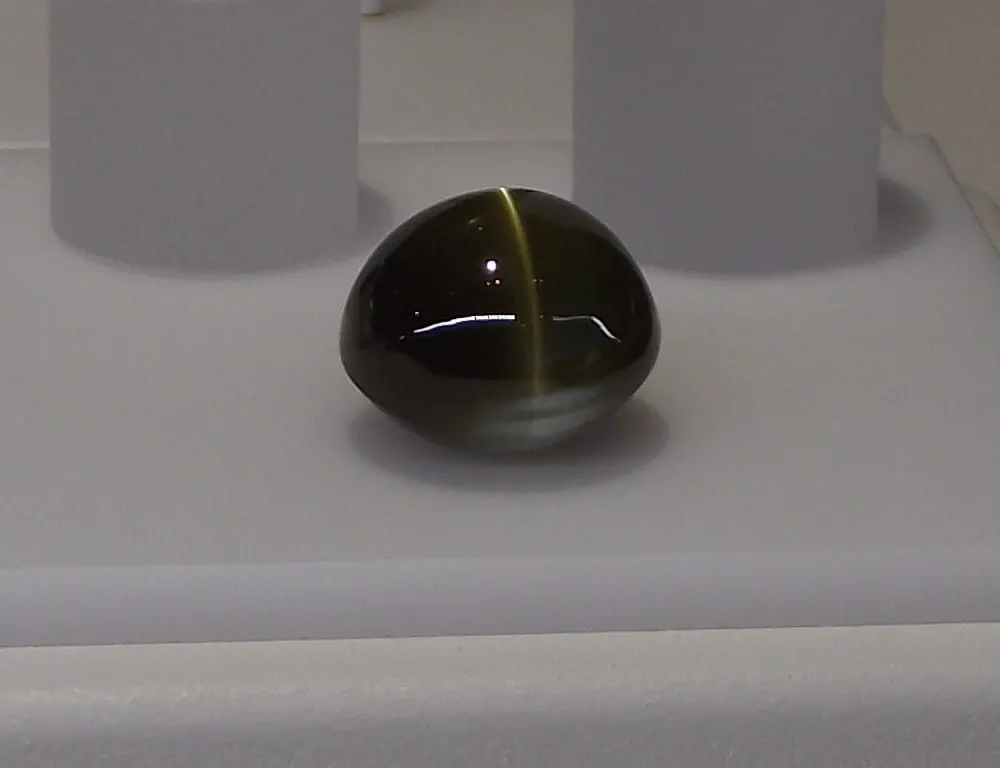
Cat's-eye chrysoberyl
Chrysoberyl that shows a sharp band of light gliding across its domed surface: the gem meant when people simply say “cat's eye”.