VarietyA variety of Labradorite
Spectrolite
NaAlSi₃O₈ – CaAl₂Si₂O₈Spektrolit
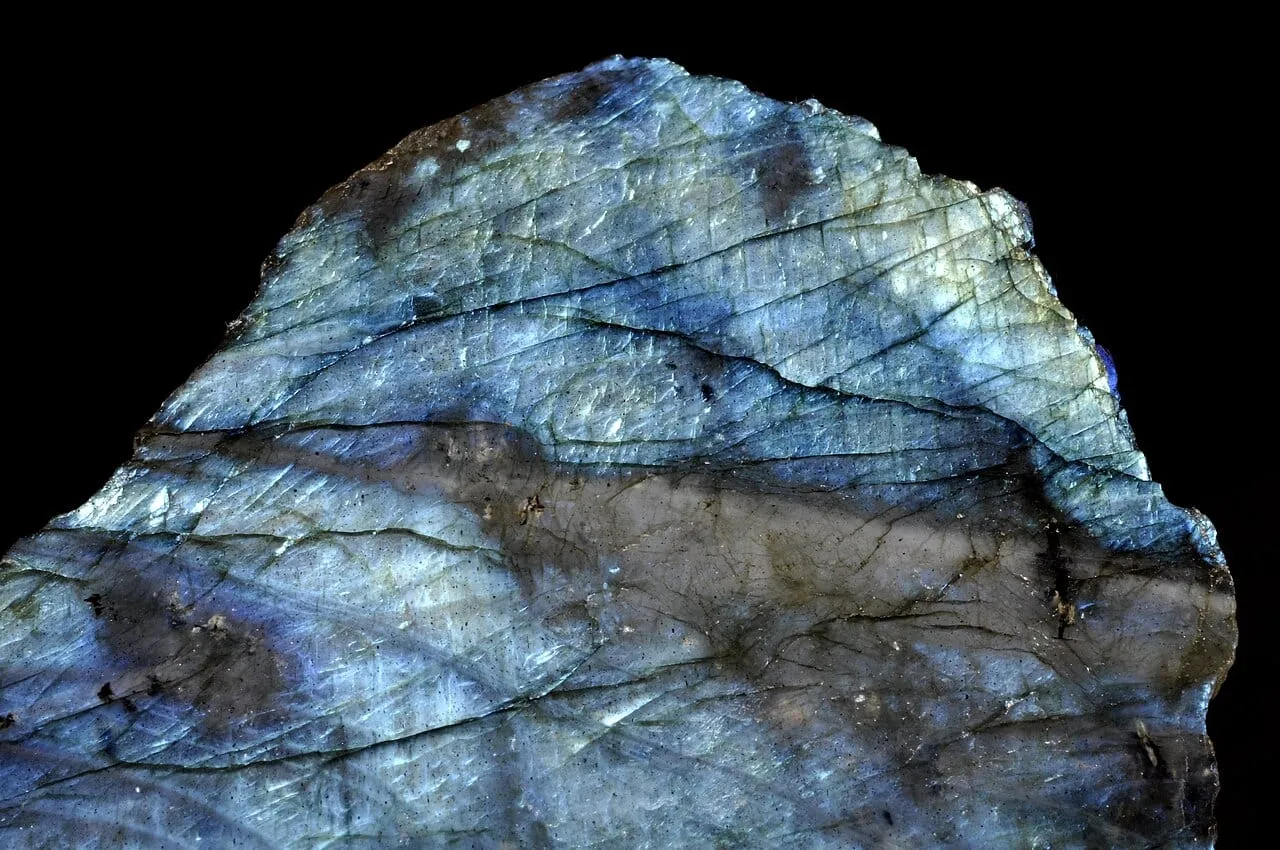
The labradorite of Ylämaa in Finland: on a black background it flashes blue, green, yellow, orange, red and violet all at once.
Also known as: Spektroliitti (Finnish name)
- Popularly: Semi-precious stone
In short
Spectrolite is the labradorite that comes from the Ylämaa area of south-eastern Finland. On a black or dark grey background it shows a strong play of colour that runs through almost every colour of the spectrum as the stone is turned, which is where the name comes from. It was found in 1940, during the Second World War, while the Salpa Line fortifications were being built. It has been used both as a cabochon and jewellery stone and, in large blocks, as a building and monument stone.
Photos
How does it form?
Spectrolite occurs within the Vyborg (Wiborg) rapakivi granite batholith of south-eastern Finland. This large body of granite, formed roughly 1.65 to 1.61 billion years ago, contains six separate anorthosite areas in the Ylämaa district: large dark masses of rock, 0.1 to 1.5 km² in size, enclosed in the granite. Anorthosite is a plutonic rock made almost entirely of plagioclase feldspar; the anorthosite at Ylijärvi is about 1.633 billion years old. These rocks crystallised as magma cooled very slowly deep in the crust. Extremely thin layers that develop inside the labradorite crystals make light interfere and produce the play of colour; how this effect arises is explained on the labradorite page.
What is it used for?
- Jewellery: The most colourful pieces are made into cabochons, beads and small ornaments. The first workshop in Ylämaa to cut and polish spectrolite for jewellery opened in 1973.
- Building and monument stone: The dark, spectrolite-bearing rock has been quarried in large blocks and sold as “granite”, and used for facade cladding, walls, gravestones, sculpture, stairs, flooring and kitchen worktops. It was sold to Italy, China, Russia, Taiwan, Japan and the United States under trade names such as Gem Spectrolite, Arctic Blue and Finlandia Blue.
- Stonecraft training: A stone centre offering training in stone cutting was set up in Ylämaa, and a stone and mineral fair is held there every year.
Discovery and quarrying
The deposit was found in 1940 while anti-tank obstacles were being built for the Salpa Line, the defensive line facing the Soviet border. After the war, in the late 1940s, the stone began to be quarried as a gemstone. The first quarry opened at Ylijärvi in the early 1950s, and the stone was used for gems, small ornaments and gravestones. In the 1960s it was used in Finland under the name “Labrador” for monuments and building interiors. From the 1980s the quarries at Ylijärvi, Mättö and Pahaoja were worked again, and production peaked in the 1990s. Production as a building stone stopped towards the end of the 2000s, so the supply of material is limited.
What determines its value?
What matters most is how wide and lively the play of colour is: pieces in which the colour covers the whole face and shows yellow, orange, red and violet as well as blue and green are the most sought after. A cut parallel to the coloured layers, freedom from cracks and an extra light effect such as a cat's eye add value. Documented Ylämaa origin matters, because the name is also used for labradorite from elsewhere. As a building stone, block size, even distribution of colour and how well it takes a polish are what count.
This information is educational, not buying, selling or investment advice. Value varies enormously with quality and treatment.
How to recognise it
- 1
The background is black or dark grey; the play of colour is seen only from certain angles and, besides blue and green, can include yellow, orange, red and violet.
- 2
In worked pieces of the rock, a coarse-grained black background holds glittering, iridescent labradorite crystals from 0.5 to 15 cm across, with whitish patches of plagioclase here and there.
- 3
A good share of Finnish spectrolite shows a cat's-eye effect as well as the play of colour.
- 4
Its hardness is 6–6.5. Because similar iridescent labradorite also comes from other places, such as Madagascar, only reliable information about its source, not its looks, can show that a stone comes from Ylämaa.
Myths and misconceptions
MythSpectrolite is a different mineral from labradorite.
FactSpectrolite is the name for labradorite from the Ylämaa area that shows an especially strong, many-coloured play of colour; as a mineral it is no different from labradorite.
MythAny labradorite with a rich play of colour is spectrolite.
FactThe name spectrolite is used for material from the Ylämaa area of Finland. As Wikipedia also points out, using it for colourful labradorite from, for example, Madagascar is incorrect and gives a false impression of where the stone comes from.
What is it believed to be good for?
This section reports beliefs; it is not health information. There is no scientific evidence for these claims and no stone replaces medical treatment.
The meanings people give this stone, and who holds them:
- Crystal-therapy websites claim that spectrolite is linked to the “third eye chakra”, supports intuition and spiritual growth and shields its wearer from “negative energies”.
- The same sources claim that spectrolite soothes the nervous system, eases stress, anxiety and depression and boosts vitality.
What science says
Spectrolite's striking colours are a physical effect produced when light interferes in extremely thin feldspar layers inside the stone; there is no scientific evidence that it strengthens intuition, protects anyone or affects the nervous system. Anxiety and depression are treatable conditions; they call for a doctor or a mental health professional, not a stone.
Did you know?
The stone was found in 1940 by a second lieutenant, Pekka Laitakari. His father, the geologist Aarne Laitakari, director of the Geological Survey of Finland, had spent years searching the northern shore of the Gulf of Finland for the bedrock source of the spectrolite pebbles found around Peterhof near Saint Petersburg.
In 1998 spectrolite was chosen as the stone of the South Karelia region in a vote organised by the Geological Survey of Finland.
Its colours are often compared to peacock feathers and butterfly wings.
Where is it found?
Loading map…
- Ylämaa (Ylijärvi, Mättö and Pahaoja quarries), Lappeenranta, South Karelia, Finland · Type localityThe only area where spectrolite occurs: found in 1940 while the Salpa Line was being built, quarried as a gemstone since the late 1940s
Locations are approximate to protect sites. Red dots mark places in Türkiye. Open in the big map →
Frequently asked questions
What is spectrolite?
Spectrolite is the labradorite that comes from the Ylämaa area of south-eastern Finland. On a black or dark grey background it shows a strong play of colour that runs through almost every colour of the spectrum as the stone is turned, which is where the name comes from. It was found in 1940, during the Second World War, while the Salpa Line fortifications were being built. It has been used both as a cabochon and jewellery stone and, in large blocks, as a building and monument stone.
What is spectrolite used for?
Jewellery: The most colourful pieces are made into cabochons, beads and small ornaments. The first workshop in Ylämaa to cut and polish spectrolite for jewellery opened in 1973. Building and monument stone: The dark, spectrolite-bearing rock has been quarried in large blocks and sold as “granite”, and used for facade cladding, walls, gravestones, sculpture, stairs, flooring and kitchen worktops. It was sold to Italy, China, Russia, Taiwan, Japan and the United States under trade names such as Gem Spectrolite, Arctic Blue and Finlandia Blue.
How hard is spectrolite?
It has a hardness of 6–6.5 on the Mohs scale. It can scratch glass; a steel knife scratches it only with difficulty. Its specific gravity is 2.68–2.72 g/cm³.
Where is spectrolite found?
Its best-known localities: Ylämaa (Ylijärvi, Mättö and Pahaoja quarries), Lappeenranta, South Karelia, Finland.
How can you tell if spectrolite is real?
The background is black or dark grey; the play of colour is seen only from certain angles and, besides blue and green, can include yellow, orange, red and violet. In worked pieces of the rock, a coarse-grained black background holds glittering, iridescent labradorite crystals from 0.5 to 15 cm across, with whitish patches of plagioclase here and there. A good share of Finnish spectrolite shows a cat's-eye effect as well as the play of colour.
Is spectrolite valuable?
On the “street to diamond” value ladder it sits on step 6 of nine: Fine ornamental and collector stone. What matters most is how wide and lively the play of colour is: pieces in which the colour covers the whole face and shows yellow, orange, red and violet as well as blue and green are the most sought after. A cut parallel to the coloured layers, freedom from cracks and an extra light effect such as a cat's eye add value. Documented Ylämaa origin matters, because the name is also used for labradorite from elsewhere. As a building stone, block size, even distribution of colour and how well it takes a polish are what count.
What is spectrolite good for?
Crystal-therapy websites claim that spectrolite is linked to the “third eye chakra”, supports intuition and spiritual growth and shields its wearer from “negative energies”. The same sources claim that spectrolite soothes the nervous system, eases stress, anxiety and depression and boosts vitality. Spectrolite's striking colours are a physical effect produced when light interferes in extremely thin feldspar layers inside the stone; there is no scientific evidence that it strengthens intuition, protects anyone or affects the nervous system. Anxiety and depression are treatable conditions; they call for a doctor or a mental health professional, not a stone. This section reports beliefs; it is not health information. There is no scientific evidence for these claims and no stone replaces medical treatment.
Family


Sources
- Spectrolite – a unique natural stone from Finland (P. Härmä, O. Selonen), Geotechnical Report 4 · The Finnish Natural Stone Association, 2017
- Labradorite (section Spectrolite) · Wikipedia
- Spektroliitti · Vikipedi (Fince)
- GemNotes: Spectrolite · JCK Magazine, 1997
- Labradorite (Wiborg Batholith, 1633 Ma; Kymi Province, Finland) (photo description by James St. John) · Wikimedia Commons
- Spectrolite Crystal: Meaning, Properties, and Benefits · Astrology.com
_1.jpg)
External links
Draft: awaiting expert reviewReport an error
On the same step
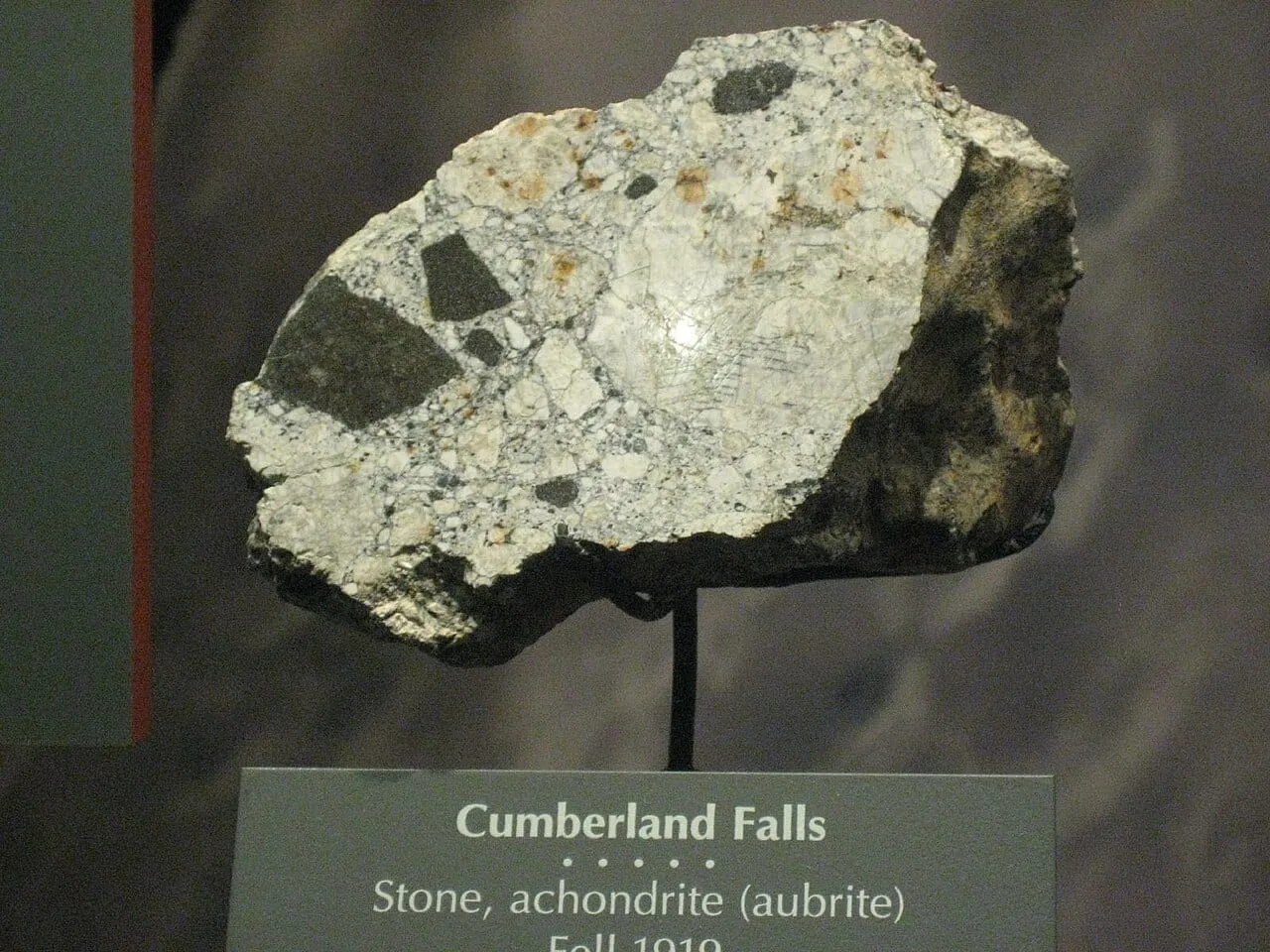
Achondrite
Stony meteorites with no chondrules: rock from melted asteroids, the Moon and Mars, and hard to recognise because they look like Earth rocks.
Amber
Tree resin fossilised over millions of years: a light, warm organic gem that sometimes holds prehistoric insects.
Ammolite
The rainbow-bright layer of fossil ammonite shell; of gem quality it comes only from the Canadian province of Alberta.