VarietyA variety of Chrysoberyl
Alexandrite
BeAl₂O₄Aleksandrit
Green in daylight, red in lamplight: the rare colour-change variety of chrysoberyl, first found in Russia's Ural Mountains.
Also known as: “Emerald by day, ruby by night” (nickname)
- Popularly: Semi-precious stone
- Birthstone: June
- Gemstone
In short
Alexandrite is the colour-change variety of the mineral chrysoberyl. In daylight or fluorescent light it looks green to bluish green; in incandescent (tungsten) lamplight or by candle it turns red to purplish red. The change is caused by chromium that replaces some of the aluminium in the crystal structure. It was named after the young heir Alexander (the later Tsar Alexander II) following its discovery in Russia in the 1830s, and today it is one of the June birthstones.
Photos
How does it form?
Alexandrite needs chromium to form. But beryllium and chromium usually occur in different rocks: chromium is found mostly in mafic and ultramafic rocks, where beryllium is extremely scarce, while beryllium concentrates in silica-rich pegmatites where chromium is almost absent. So alexandrite can form only where beryllium-rich pegmatite fluids react with chromium-rich country rock. This rare requirement explains why the stone is so scarce. Being hard and durable, it also collects in river gravels once the rocks have worn away.
What is it used for?
- Jewellery: It is used as a gem in rings, earrings and necklaces. It is usually cut in a “mixed cut”, with a brilliant-cut top and a step-cut bottom, and the cutter must orient the stone so that the strongest colour change shows through the top.
- Birthstone: Alexandrite is one of the three June birthstones, together with pearl and moonstone; it was added to the list in 1952.
- Light and colour: It is the best-known example of one stone showing different colours in different light, a phenomenon called the “alexandrite effect”.
Why does the colour change?
In the chrysoberyl crystal, chromium ions replace a small share of the aluminium. These ions strongly absorb a narrow yellow part of visible light (roughly 520–620 nm) while letting bluish-green and red wavelengths mostly through. In daylight there is plenty of green light, and our eyes are most sensitive to green, so the stone looks green. In incandescent lamplight or candlelight there is little green and blue light and a lot of red, so the stone turns red. The effect depends as much on the spectrum of the light and on our eyes as on the chromium in the stone.
From the Urals to Sri Lanka
Alexandrite was first found in the 1830s in Russia’s Ural Mountains and was named after the young heir Alexander (the later Tsar Alexander II). Red and green were the national military colours of imperial Russia, so the stone soon became a symbol of Russian pride. The first Ural stones set the standard with their vivid colours and dramatic colour change; when the deposit was exhausted, alexandrite began to come from Sri Lanka, East Africa, India and Brazil. Sri Lankan stones are generally larger but their greens are yellowish and their reds brownish; Brazilian stones can rival the Russian ones in colour, though production has declined. Stones over three carats are very rare today.
Another colour-change stone from Türkiye
Türkiye’s best-known colour-change stone is not alexandrite but the gem variety of diaspore from the İlbir Mountains in Muğla (sold under trade names such as zultanite or Csarite); its colour shifts from greenish-yellowish to pinkish. Alexandrite is chrysoberyl, and the sources used for this page report no alexandrite deposit in Türkiye.
What determines its value?
Value depends above all on how distinct the colour change is and how saturated the colours are: stones that show a clear change from green or bluish green in daylight to red or purplish red in incandescent light are far more valuable, while brownish or muddy tones lower the value. Most cut stones weigh less than a carat; large stones with a strong colour change are extremely rare. Alexandrite is usually clean, so inclusions, cut quality and origin also matter, and the colour of old Russian stones is prized separately. Alexandrite that also shows the cat's-eye effect is extremely rare. Synthetics and simulants are very common, so a laboratory report confirming that a stone is natural is important.
This information is educational, not buying, selling or investment advice. Value varies enormously with quality and treatment.
How to recognise it
- 1
Compare the stone in daylight and in incandescent lamplight: in true alexandrite the change from green to red is distinct, although in pale or brownish stones it stays weak.
- 2
The colour difference you see when you turn the stone and look from different directions is pleochroism; alexandrite shows that too, but its famous colour change comes from the type of lighting, not from turning the stone.
- 3
It is very hard (8.5) and usually clean, with few eye-visible inclusions.
- 4
Stones that turn lilac-purple but never show any green may be colour-change corundum, not alexandrite.
- 5
A gem laboratory is needed to tell natural, synthetic and simulant stones apart with certainty.
Fakes and imitations
What shops usually don’t tell you:
- Synthetic alexandrite is made by three methods: flux, pulling (Czochralski) and hydrothermal. Flux-grown stones contain inclusions that look natural; pulled stones are very clean and show curved striations under magnification; hydrothermal stones have the same physical and chemical properties as natural ones.
- Some stones sold as “synthetic alexandrite” are corundum coloured with elements such as vanadium, or colour-change spinel. They are not chrysoberyl; they are alexandrite simulants, and the corundum-based material has been on the market for almost a hundred years.
- Because colour change occurs in other minerals too, the name “alexandrite” is sometimes misused; only chromium-bearing chrysoberyl counts as alexandrite.
Myths and misconceptions
MythAny stone that changes colour is alexandrite.
FactAlexandrite is chromium-bearing chrysoberyl. A light-dependent colour change (the alexandrite effect) can also appear in minerals such as fluorite, sapphire, kyanite, spinel, garnet and tourmaline, and those are not called alexandrite. Some stones sold as “synthetic alexandrite” are really vanadium-bearing corundum or spinel.
MythAlexandrite changes colour when you turn it and look from a different direction.
FactA colour difference with viewing direction is pleochroism, and alexandrite shows it too. Its famous colour change, however, depends on the lighting: green in daylight or fluorescent light, red in incandescent lamplight or candlelight.
MythAll alexandrite comes from Russia.
FactThe Ural deposits are exhausted. According to GIA, most alexandrite today comes from Sri Lanka, East Africa and Brazil, and the colour change of these stones is generally less precise and more muted than that of the 19th-century Russian stones.
What is it believed to be good for?
This section reports beliefs; it is not health information. There is no scientific evidence for these claims and no stone replaces medical treatment.
The meanings people give this stone, and who holds them:
- According to Kunz, in Russia alexandrite was regarded as a stone of good omen because red and green are the national colours.
- Today crystal-therapy sources claim that alexandrite strengthens creativity and intuition and brings emotional balance.
- The same circles say that alexandrite brings luck and abundance.
What science says
There is no scientific evidence that alexandrite brings luck or abundance, boosts creativity or gives emotional balance. The Russian belief in its “good fortune” came not from any power in the stone but from the fact that its green and red matched the national military colours of imperial Russia.
Did you know?
The Finnish mineralogist Nils Gustaf Nordenskiöld at first took the new sample sent to him from the Urals for emerald. Some recent research suggests the stone was first found by Yakov Kokovin.
Alexandrite needs a rare coincidence to form: chromium is mostly found in rocks where beryllium is extremely scarce, while beryllium concentrates in pegmatites where chromium is almost absent.
Where is it found?
Loading map…
- Takovaya (Tokovaya) River emerald mines, near Malysheva, Sverdlovsk Oblast, Russia · Type localityWhere it was first found in the Ural Mountains in the 1830s; the deposit has since been exhausted, so Russian stones are very rare
- Ratnapura, Sabaragamuwa, Sri Lanka · Major depositYields alexandrite that is generally larger than the Russian stones but with a less distinct colour change
- Colatina area, Espírito Santo, Brazil · Major depositAccording to GIA, Brazilian alexandrite can rival the Russian stones in colour change; production has declined
- Andhra Pradesh, India · Known localityAlexandrite deposits in India are reported from this state; shown at region level
- Lake Alaotra area, Madagascar · Known localityMadagascar is listed among the countries that produce alexandrite; shown at region level
- Masvingo (Fort Victoria) area, Zimbabwe · Known localityA chrysoberyl locality that has produced alexandrite crystals
Locations are approximate to protect sites. Red dots mark places in Türkiye. Open in the big map →
Frequently asked questions
What is alexandrite?
Alexandrite is the colour-change variety of the mineral chrysoberyl. In daylight or fluorescent light it looks green to bluish green; in incandescent (tungsten) lamplight or by candle it turns red to purplish red. The change is caused by chromium that replaces some of the aluminium in the crystal structure. It was named after the young heir Alexander (the later Tsar Alexander II) following its discovery in Russia in the 1830s, and today it is one of the June birthstones.
What is alexandrite used for?
Jewellery: It is used as a gem in rings, earrings and necklaces. It is usually cut in a “mixed cut”, with a brilliant-cut top and a step-cut bottom, and the cutter must orient the stone so that the strongest colour change shows through the top. Birthstone: Alexandrite is one of the three June birthstones, together with pearl and moonstone; it was added to the list in 1952. Light and colour: It is the best-known example of one stone showing different colours in different light, a phenomenon called the “alexandrite effect”.
How hard is alexandrite?
It has a hardness of 8.5 on the Mohs scale. It scratches glass and steel; a steel knife cannot scratch it. Its specific gravity is 3.69–3.75 g/cm³.
Where is alexandrite found?
Its best-known localities: Takovaya (Tokovaya) River emerald mines, near Malysheva, Sverdlovsk Oblast, Russia; Ratnapura, Sabaragamuwa, Sri Lanka; Colatina area, Espírito Santo, Brazil; Andhra Pradesh, India; Lake Alaotra area, Madagascar.
How can you tell if alexandrite is real?
Compare the stone in daylight and in incandescent lamplight: in true alexandrite the change from green to red is distinct, although in pale or brownish stones it stays weak. The colour difference you see when you turn the stone and look from different directions is pleochroism; alexandrite shows that too, but its famous colour change comes from the type of lighting, not from turning the stone. It is very hard (8.5) and usually clean, with few eye-visible inclusions. Synthetic alexandrite is made by three methods: flux, pulling (Czochralski) and hydrothermal. Flux-grown stones contain inclusions that look natural; pulled stones are very clean and show curved striations under magnification; hydrothermal stones have the same physical and chemical properties as natural ones.
Is alexandrite valuable?
On the “street to diamond” value ladder it sits on step 8 of nine: Top precious stone. Value depends above all on how distinct the colour change is and how saturated the colours are: stones that show a clear change from green or bluish green in daylight to red or purplish red in incandescent light are far more valuable, while brownish or muddy tones lower the value. Most cut stones weigh less than a carat; large stones with a strong colour change are extremely rare. Alexandrite is usually clean, so inclusions, cut quality and origin also matter, and the colour of old Russian stones is prized separately. Alexandrite that also shows the cat's-eye effect is extremely rare. Synthetics and simulants are very common, so a laboratory report confirming that a stone is natural is important.
What is alexandrite good for?
According to Kunz, in Russia alexandrite was regarded as a stone of good omen because red and green are the national colours. Today crystal-therapy sources claim that alexandrite strengthens creativity and intuition and brings emotional balance. The same circles say that alexandrite brings luck and abundance. There is no scientific evidence that alexandrite brings luck or abundance, boosts creativity or gives emotional balance. The Russian belief in its “good fortune” came not from any power in the stone but from the fact that its green and red matched the national military colours of imperial Russia. This section reports beliefs; it is not health information. There is no scientific evidence for these claims and no stone replaces medical treatment.
Family
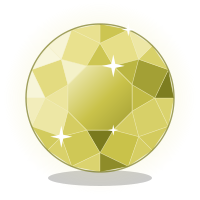
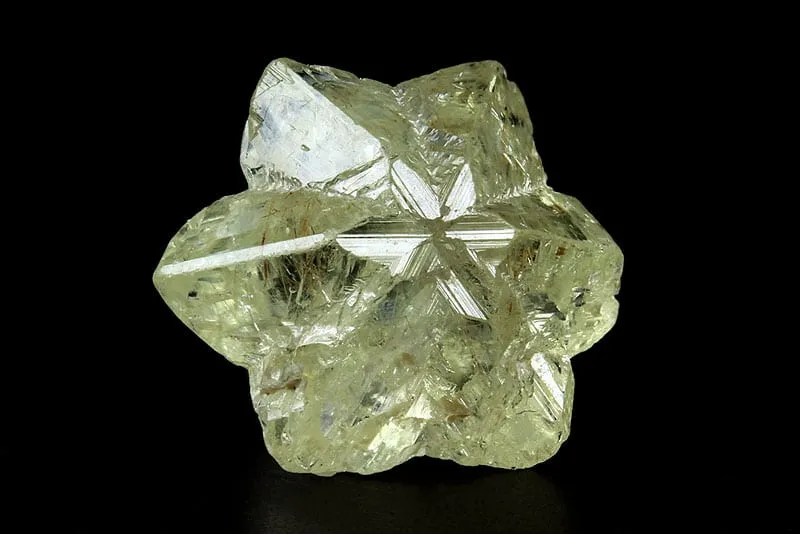

_1.jpg)
Sources
- Alexandrite Description (Gem Encyclopedia) · GIA
- Alexandrite History and Lore · GIA
- Alexandrite Quality Factors · GIA
- June Birthstones · GIA
- Chrysoberyl · Wikipedia
- Alexandrite effect · Wikipedia
- Birthstone · Wikipedia
- Handbook of Mineralogy: Chrysoberyl · Mineralogical Society of America
- The Curious Lore of Precious Stones (G. F. Kunz) · J. B. Lippincott Company; Project Gutenberg, 1913
- Andhra Pradesh · Wikipedia
External links
Draft: awaiting expert reviewReport an error ↗
On the same step

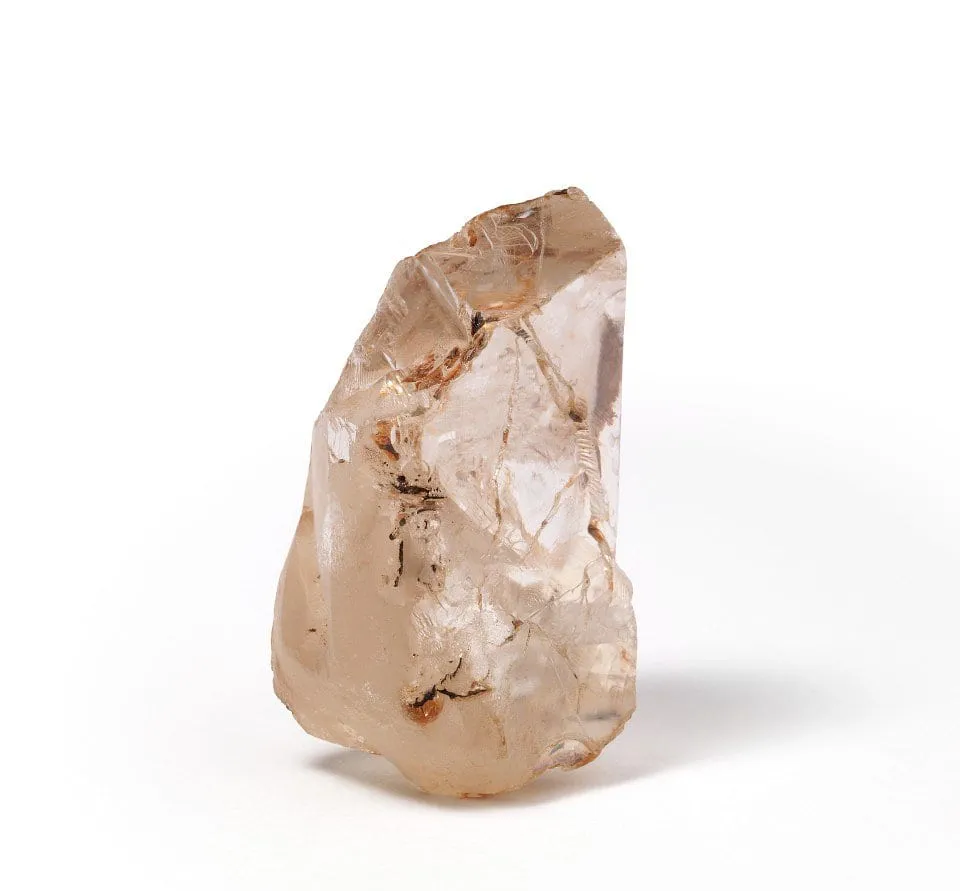
Diamond
Pure carbon and the hardest known natural mineral: it forms about 150–200 km deep and reaches the surface in volcanic eruptions.

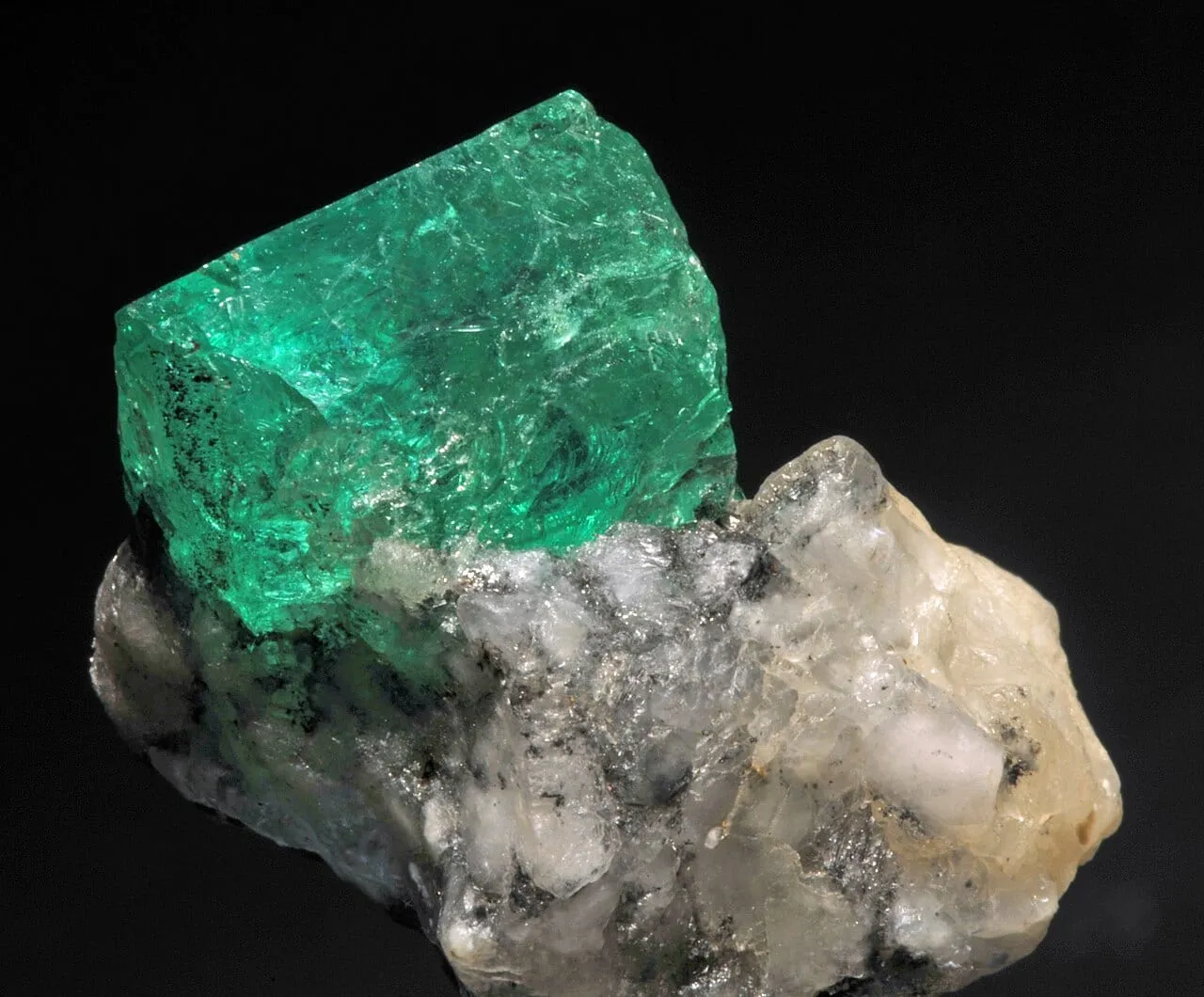
Emerald
Beryl turned green by chromium and vanadium: the world's most famous green gem, almost always full of inclusions.
Red beryl
One of the rarest gem minerals: raspberry-red beryl that forms in volcanic rock, not in pegmatite.