Mineral
Garnet
X₃Y₂(SiO₄)₃Granat
Not one mineral but a large family: best known for its reds, garnet turns up everywhere from sandpaper to fine jewellery.
Also known as: Almandine, pyrope, spessartine, grossular, andradite, uvarovite (group members)
- Gemstone
- Industrial

In short
Garnet is the name of a family of minerals that share the same crystal structure. Garnets are best known for their deep reds, but there are green, orange, yellow and black ones too. Because they are hard and tough, they are used both in jewellery and in abrasives such as sandpaper.
A family of minerals
Garnets share the same crystal structure but contain different metals. In the general formula, the X site holds calcium, magnesium, iron or manganese, and the Y site holds aluminium, iron or chromium. The most important gem species are deep red almandine and pyrope, orange spessartine, grossular (whose green variety is tsavorite) and andradite (whose green variety is demantoid). Green uvarovite usually forms crystals too small to cut.
How does it form, and what is it used for?
Most garnets form when rocks are transformed by heat and pressure (metamorphism); they are very common in mica schist and gneiss. Because it is hard and tough, crushed garnet is used for abrasive blasting, waterjet cutting, water filtration and sandpaper. According to the U.S. Geological Survey (USGS), the largest producers of industrial garnet are Australia, China and South Africa.
A link to Anatolia
Almandine takes its name from Alabanda, a stone-cutting centre in antiquity whose ruins lie near Çine in Aydın province, Türkiye. According to the USGS, garnet deposits in Türkiye have also been worked for the domestic market, although production figures are not reported.
How to recognise it
- 1
Crystals usually have twelve or twenty-four faces and look like small balls from a distance.
- 2
It has no cleavage, scratches glass (hardness 6.5–7.5) and feels heavy for its size.
- 3
It is common as dark red to brownish red grains in metamorphic rocks such as mica schist and gneiss.
- 4
Garnet species mix with one another, so only a gem laboratory can reliably tell which species a cut stone is.
Fakes and imitations
What shops usually don’t tell you:
- Garnet-and-glass doublets: a thin slice of garnet is fused on top of coloured glass. Seen from the side, the boundary between the two layers and a difference in lustre may be visible.
- Laboratory-made materials with the garnet structure, such as YAG and GGG, are not natural garnet minerals; they were once used as diamond imitations.
- Names such as “Cape ruby” and “Arizona ruby” are misleading trade names for pyrope garnet; these stones are not rubies.
- Red glass and red spinel can be confused with garnet.
Did you know?
Thousands of years ago Egypt’s pharaohs wore red garnet necklaces, which were buried with them in their tombs.
Some garnets change colour, looking different in daylight and in lamplight.
Where is it found?
Loading map…
- Barton mine, Gore Mountain, North Creek, New York, USA · Known localityGneiss with large almandine crystals; a large commercial deposit of abrasive garnet
- Northern Bohemia (around Třebenice), Czechia · Historic sourceFamous “Bohemian garnet” (pyrope) deposits, discovered around 1500
- Taita Hills, near Voi, Kenya · Known localityGreen grossular known as tsavorite
Locations are approximate to protect sites. Red dots mark places in Türkiye. Open in the big map →
Sources
- Handbook of Mineralogy: Almandine · Mineralogical Society of America
- Handbook of Mineralogy: Grossular · Mineralogical Society of America
- Garnet Description · GIA
- Mineral Commodity Summaries 2025: Garnet (Industrial) · U.S. Geological Survey, 2025
External links
Draft: awaiting expert reviewReport an error ↗
On the same step
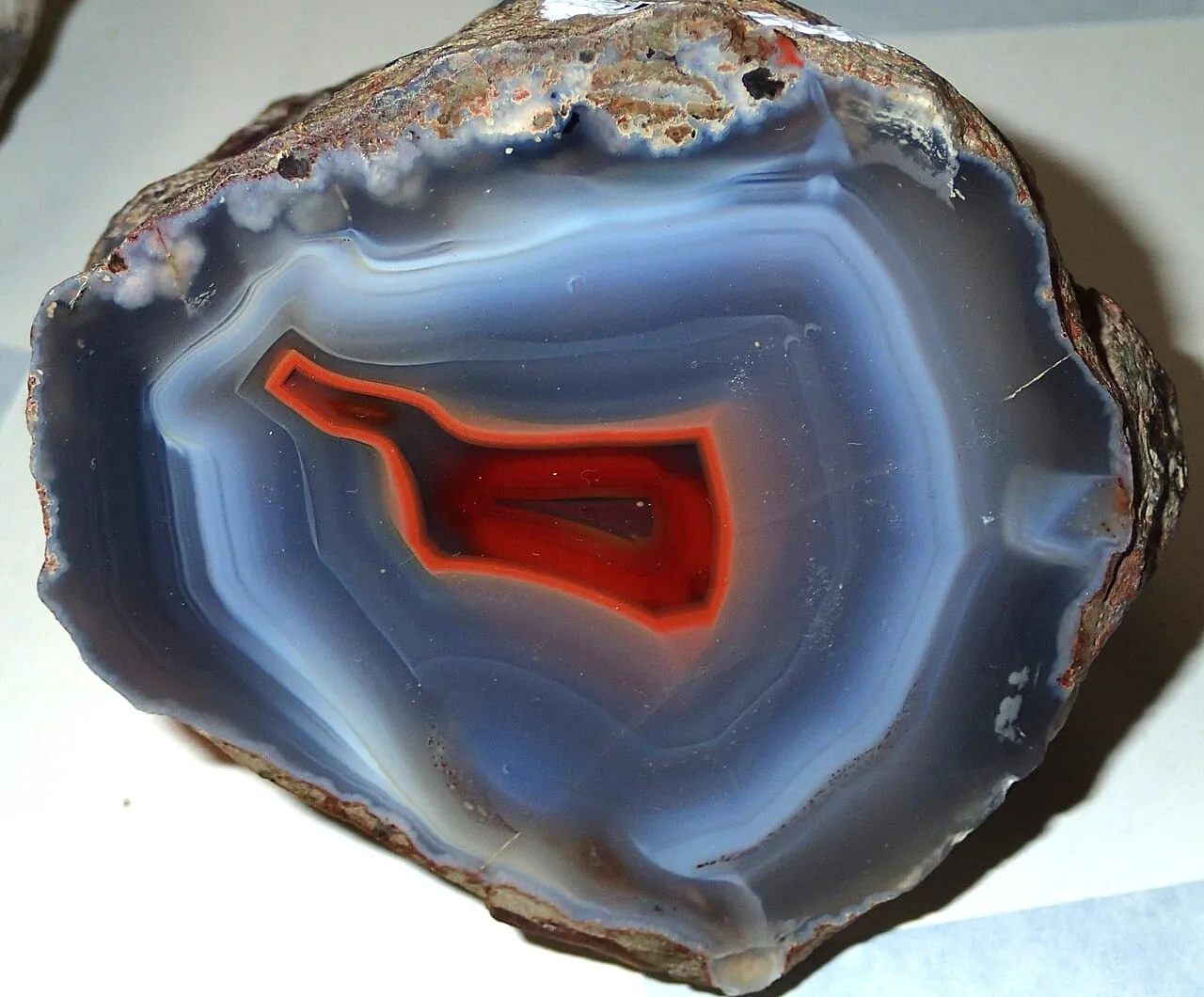
Agate
The banded variety of chalcedony: it grows layer by layer in hollows in volcanic rock and shows a new pattern every time it is cut.
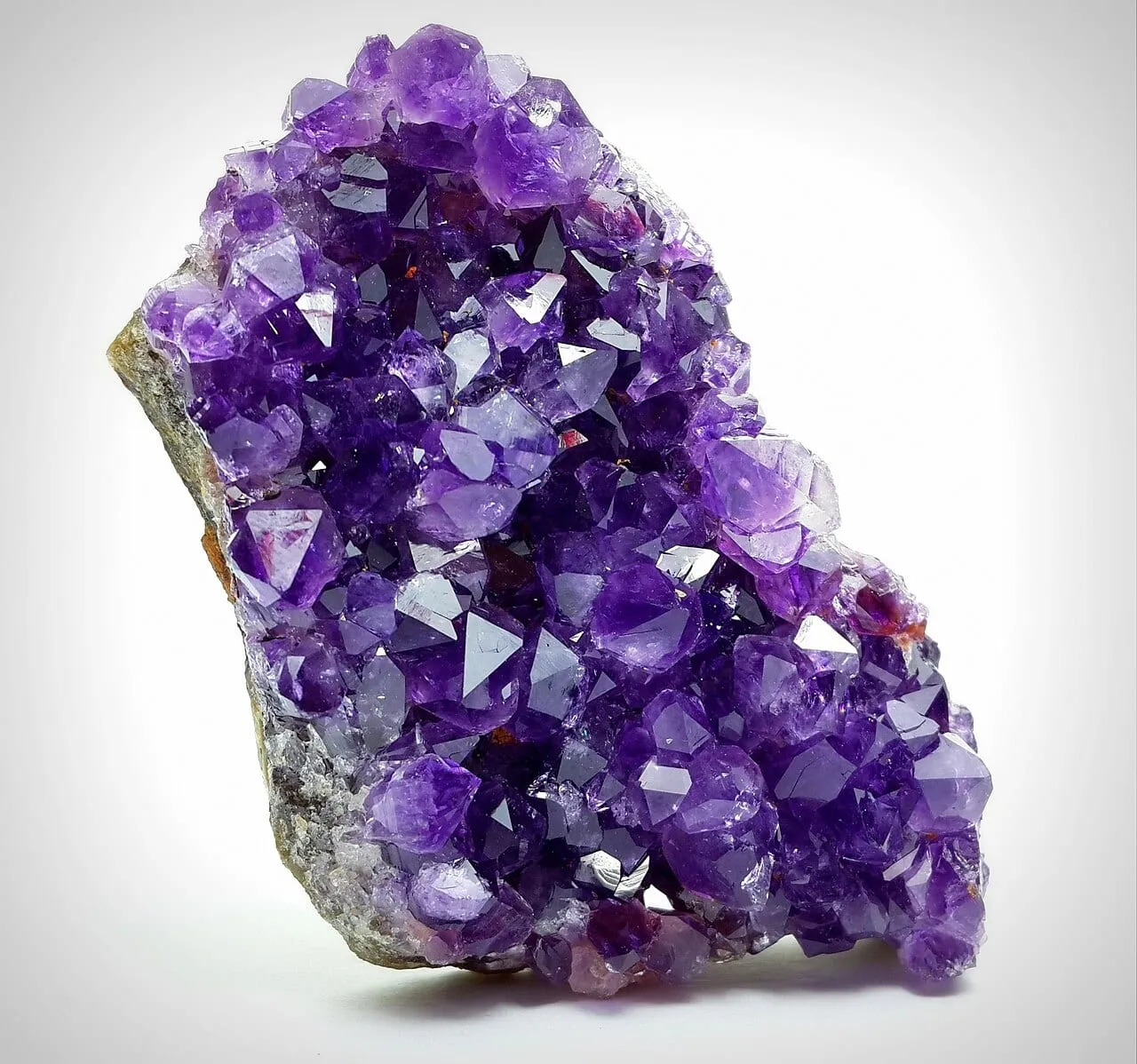
Amethyst
The purple variety of quartz, coloured by traces of iron working together with natural radiation.
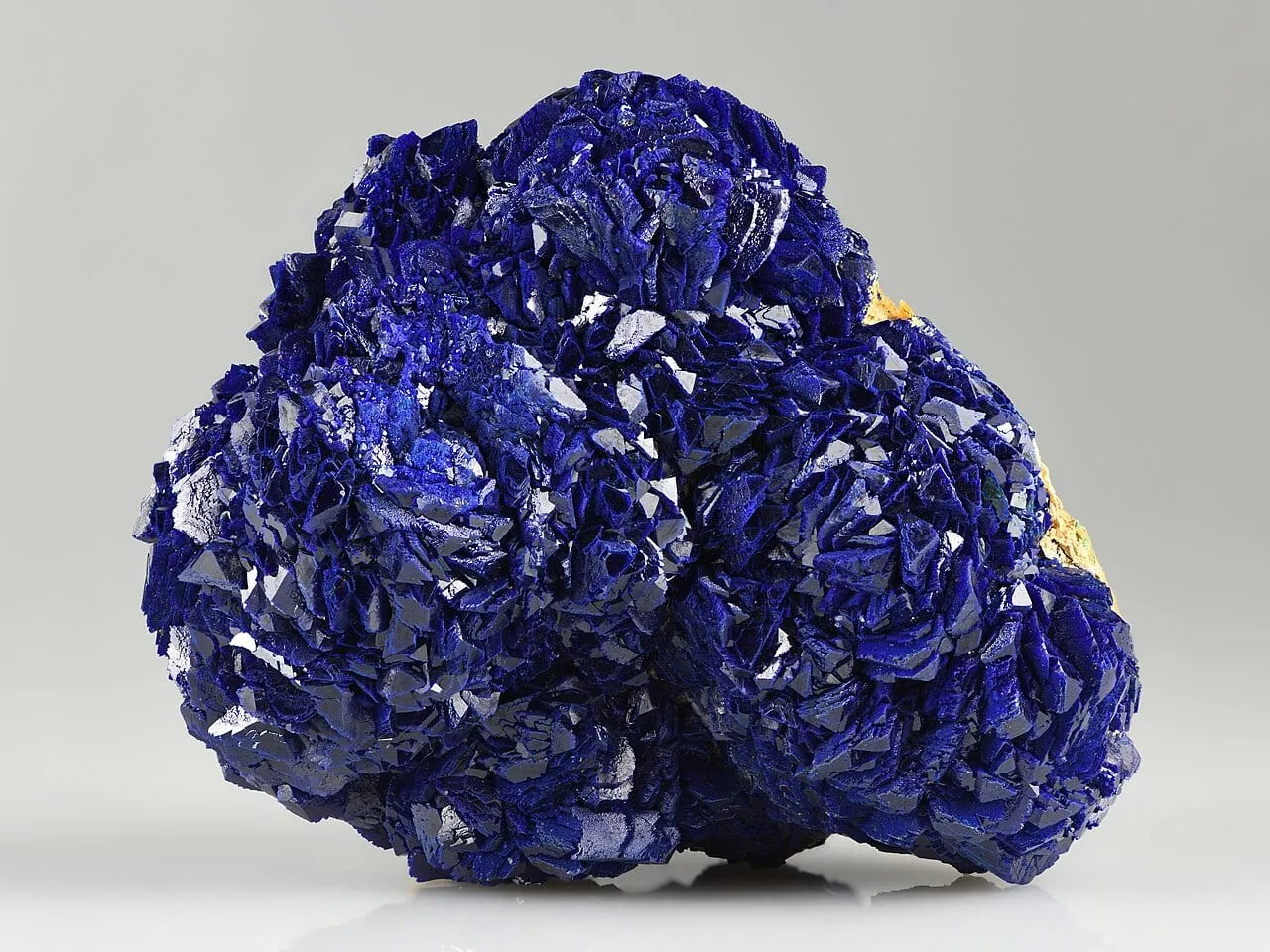
Azurite
A deep blue copper mineral that was the most important blue pigment of medieval and Renaissance painters.