Mineral
Tourmaline
XY₃Z₆(T₆O₁₈)(BO₃)₃V₃WTurmalin
A gem family that comes in almost every colour of the rainbow, sometimes several in one crystal, and becomes electrically charged when heated.
Also known as: Schorl (black tourmaline) · Elbaite · Dravite · Rubellite (pink to red tourmaline) · Indicolite (blue tourmaline) · Watermelon tourmaline (pink core, green rim)
- Gemstone

In short
Tourmaline is a family of boron-bearing minerals that share the same crystal structure. The most common kind is black, but there are green, pink, red, blue and yellow tourmalines too, and several colours can appear in a single crystal. When it is heated or squeezed, electric charges build up at its ends.
A family of minerals
Tourmaline is not a single mineral but a group of boron-bearing minerals with the same crystal structure. Its most common member is iron-rich, black schorl, which is frequent in granites and pegmatites. Most gem tourmalines are lithium-rich elbaite, while magnesium-rich dravite is usually brown.
A riot of colour
Tourmaline shows more colour variety than almost any other mineral. In the trade, pink to red stones are called rubellite and blue ones indicolite. Crystals that are pink inside and green outside look like a slice of watermelon when cut across, so they are called watermelon tourmaline. Since the late 1980s, the vivid blue to green, copper-coloured Paraíba tourmalines from the Brazilian state of Paraíba have been among the most sought-after kinds.
An electric crystal
Tourmaline is pyroelectric and piezoelectric: when it is heated, cooled or squeezed, opposite electric charges build up at the two ends of the crystal. That is why a heated tourmaline crystal can attract light particles such as dust and ash.
How to recognise it
- 1
Crystals are long prisms with a cross-section like a triangle with rounded corners, and they are marked by distinct lengthwise striations.
- 2
It has no prominent cleavage and scratches glass (hardness 7–7.5).
- 3
It is strongly pleochroic: looking down the long axis of a crystal, from its end, the colour often appears much darker than from the side.
- 4
Colour zoning is common: one crystal can be pink inside and green outside. Cut stones need a gem laboratory to determine species and treatments.
Fakes and imitations
What shops usually don’t tell you:
- The name “Paraíba” was first used for copper-bearing tourmalines from the Brazilian state of Paraíba; similar copper-bearing tourmalines were later found in Africa. The name alone does not prove where a stone came from, so ask for a laboratory report.
- The colour of some pink and yellow tourmalines comes from colour centres created by radiation, which may be natural or applied in a laboratory. Heat treatment and fracture filling are also used; treatments should be disclosed.
- Coloured glass can be used to imitate tourmaline.
Did you know?
Its name comes from toramalli, a word in Sinhalese (a language of Sri Lanka) meaning “mixed gems”. In 1554, a green tourmaline crystal found in Brazil was mistaken for emerald.
China’s Empress Dowager Cixi was so fond of pink tourmaline that much of the pink and red tourmaline mined in San Diego County, California, was shipped to China.
Where is it found?
Loading map…
- Araçuaí–Itinga–Salinas district, Minas Gerais, Brazil · Major depositA large district of gem tourmaline in pegmatites
- São José da Batalha, Paraíba, Brazil · Known localityVivid blue to green copper-coloured “Paraíba” tourmalines, known since the late 1980s
- San Piero in Campo, Elba, Italy · Historic sourceElbaite is named after this island
- Pala and Mesa Grande, San Diego County, California, USA · Known localityPegmatites famous for pink and red tourmaline
- Mount Mica, Paris, Maine, USA · Historic source
Locations are approximate to protect sites. Red dots mark places in Türkiye. Open in the big map →
Sources
- Handbook of Mineralogy: Elbaite · Mineralogical Society of America
- Handbook of Mineralogy: Schorl · Mineralogical Society of America
- Tourmaline Description · GIA
- Tourmaline History and Lore · GIA
External links
Draft: awaiting expert reviewReport an error ↗
On the same step
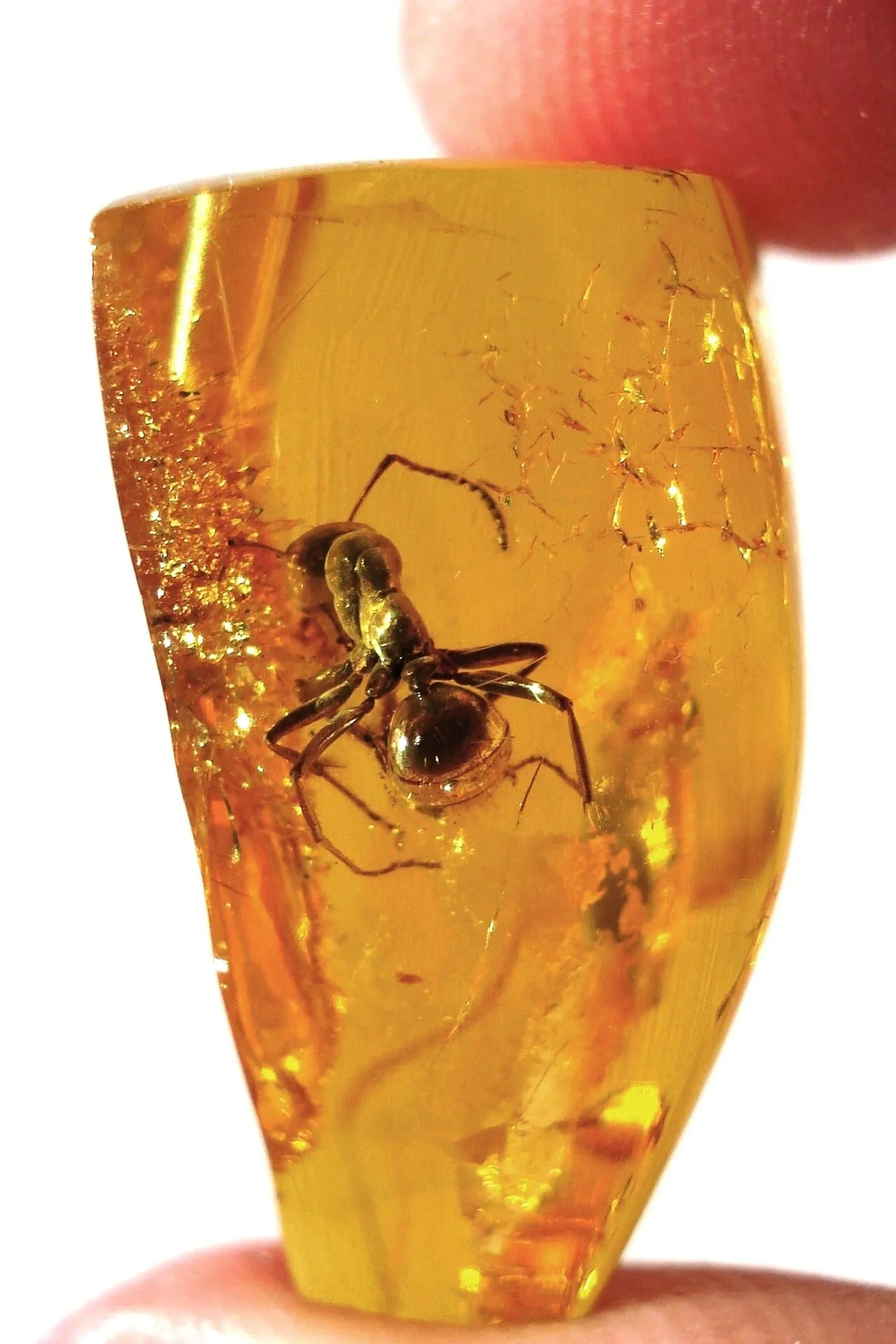
Amber
Tree resin fossilised over millions of years: a light, warm organic gem that sometimes holds prehistoric insects.
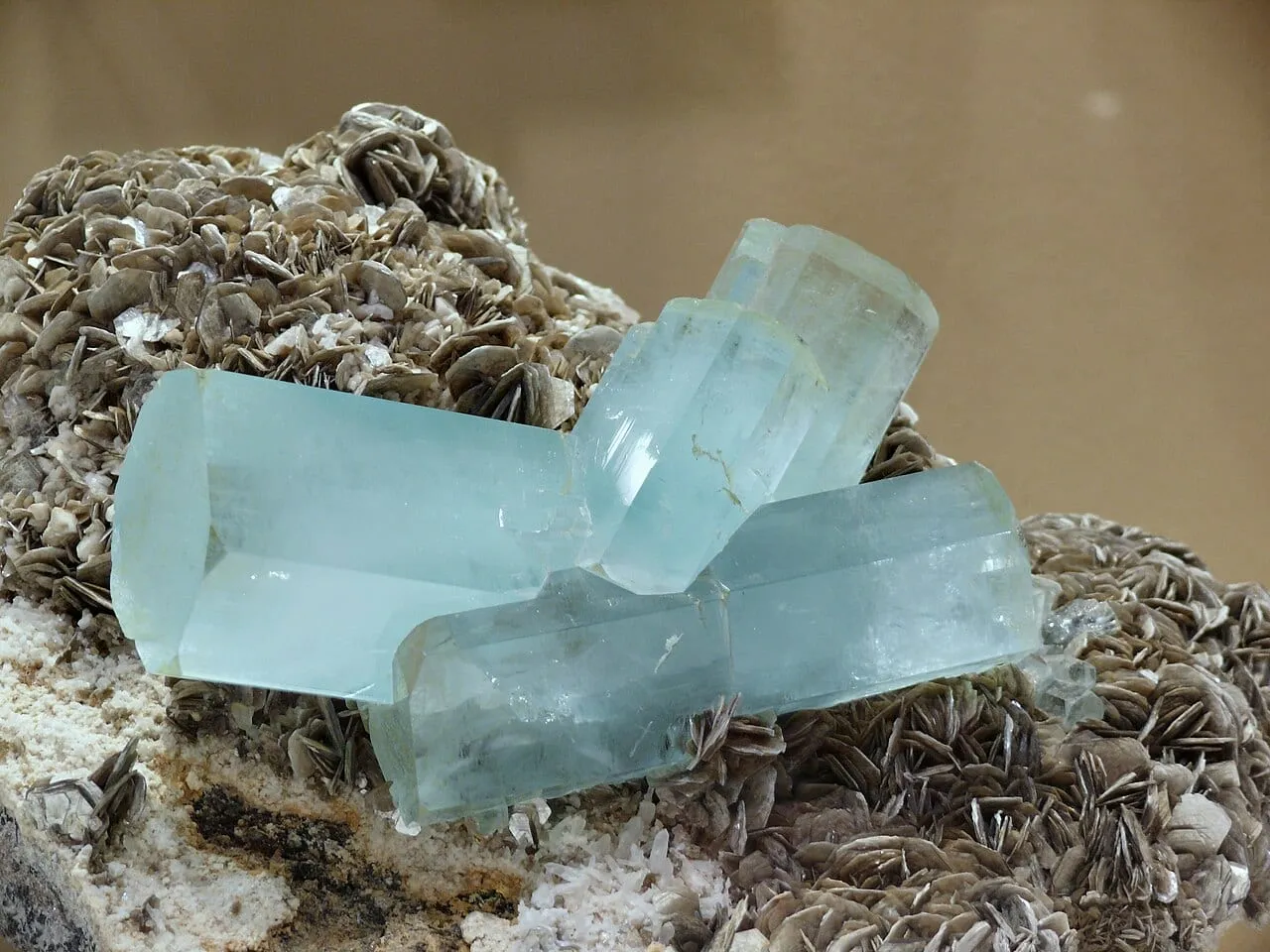
Aquamarine
The blue member of the beryl family, named after seawater: often found as large, clear, nearly flawless crystals.
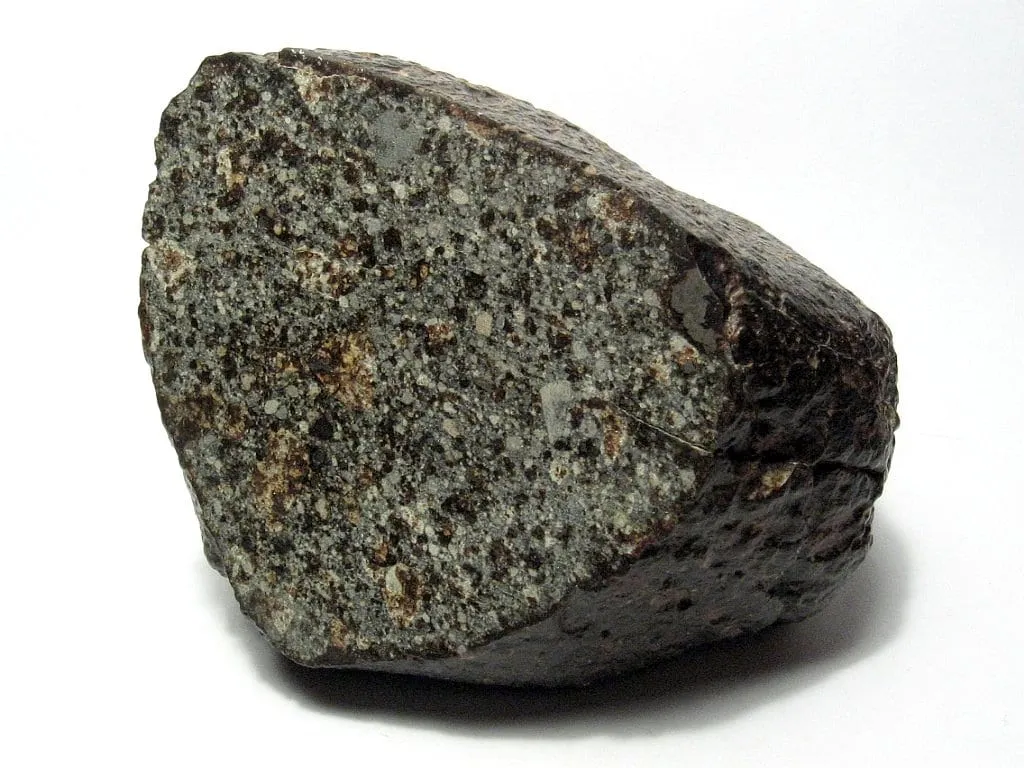
Chondrite
A leftover from the birth of the Solar System, full of tiny once-molten droplets, and the commonest kind of meteorite to fall to Earth.