VarietyA variety of Tourmaline
Paraíba tourmaline
XY₃Z₆(T₆O₁₈)(BO₃)₃V₃WParaíba turmalini
Neon blue-green tourmaline coloured by copper: found in Brazil's Paraíba State in the 1980s, it soon became the most valuable tourmaline.
Also known as: Cuprian elbaite · Copper-bearing tourmaline · Paraíba-type tourmaline
- Popularly: Semi-precious stone
In short
Paraíba tourmaline is neon blue, greenish blue or green elbaite tourmaline that owes its colour mainly to copper (and manganese). It was first found in the 1980s at a small mine in the Brazilian state of Paraíba and reached the international market in 1989; its “neon” or “electric” colours had never been seen in tourmaline before. It was later found in Nigeria, Mozambique and, in 2026, Ethiopia. Laboratories give the name to copper-bearing tourmalines of these colours whatever their origin.
Photos
How does it form?
Paraíba tourmaline, like the other gem tourmalines, forms in granite pegmatites: a pegmatite is a coarse-grained rock that crystallises slowly from the last, water-rich part of a magma. At the Batalha mine the tourmaline lies in a narrow, decomposed pegmatite that cuts through quartzite, together with quartz, feldspar altered to clay, and lepidolite. Copper does not usually become concentrated in pegmatites; the GIA researchers suggest that tourmaline offered the most favourable place in the crystal structure for copper as the pegmatite crystallised. In Mozambique, by contrast, the stones are dug from alluvial layers, made of gravel worn and carried away from the parent rock.
What is it used for?
- Jewellery: Its neon colour makes it a centre stone for rings, pendants and earrings. Its hardness (7–7.5) suits everyday jewellery; because of liquid inclusions, ultrasonic and steam cleaning are not recommended.
- Collecting: Crystals from the Batalha mine and large, clean cut stones are sought by collectors.
- Gemmology: Determining a stone’s origin in the laboratory from trace elements (copper, zinc, gallium, strontium, lead) is one of the key examples of origin determination in gemmology.
Discovery
The story began in 1982: Heitor Dimas Barbosa, who had once mined tourmaline in Minas Gerais, noticed brightly coloured specks in pegmatite samples shown to him by a local prospector. After months of searching, they found similar fragments in the waste of a small tantalum working at the foot of Serra da Frade hill. Barbosa and a team of about 15 miners dug for years in a dry, hot climate; in 1985–1987 the mine produced various green tourmalines, but the famous “electric” and “sapphire” blue stones were reached only in August 1987. The stones appeared on the international market in 1989.
Name and origin
The World Jewellery Confederation (CIBJO) accepted “Paraíba” as a trade name in 1999; by 2006 international bodies had standardised it as a variety name independent of origin. Today GIA determines whether a stone comes from Brazil, Nigeria or Mozambique from trace elements measured by laser ablation mass spectrometry: Brazilian stones contain more copper, Nigerian stones more strontium and lead, and Mozambican stones more gallium.
What determines its value?
In Paraíba tourmaline colour matters far more than clarity: a medium-toned, highly saturated blue with neon brightness is the most sought after, while green and pale stones are worth less. Inclusions are normal and matter little when the colour is strong, but fracture filling lowers value considerably. Stones from Brazil are valued much more highly than African ones, so a laboratory report stating origin matters. Heat treatment is common; large, clean stones are rare.
This information is educational, not buying, selling or investment advice. Value varies enormously with quality and treatment.
How to recognise it
- 1
Its colour is a neon-bright blue, greenish blue, turquoise or mint green; Mozambique also produces pink and purple stones.
- 2
Its hardness is 7–7.5, its refractive index about 1.603–1.655 and its specific gravity about 2.84–3.10; these values identify it as tourmaline.
- 3
Most stones contain inclusions; the most common are partially healed fractures.
- 4
Standard gemmological tests cannot prove that the colour comes from copper; that needs spectroscopy or chemical analysis in a laboratory. The stone's origin can also only be established by chemical analysis.
Fakes and imitations
What shops usually don’t tell you:
- Heat treatment: most Paraíba tourmalines are heated; heating removes the purple-pink component caused by manganese and turns the stone blue or green. Heat treatment is hard to detect with standard tests.
- Fracture filling: the clarity of some stones is improved by filling; this lowers value considerably and should be disclosed.
- Ordinary blue or green tourmalines without copper may be offered as Paraíba; a laboratory can tell them apart.
Myths and misconceptions
MythReal Paraíba tourmaline comes only from the Brazilian state of Paraíba.
FactLMHC, the joint committee of leading laboratories, gives the name “Paraíba tourmaline” to neon blue to green elbaite coloured by copper and manganese, whatever its origin. Such stones also come from Rio Grande do Norte, Nigeria, Mozambique and Ethiopia; origin is stated separately on the report.
MythEvery copper-bearing blue tourmaline is a Paraíba tourmaline.
FactThe name is given only to copper-bearing elbaite of certain colours. Gübelin and GIA, for example, do not classify copper-bearing liddicoatite tourmalines as Paraíba tourmaline, even when the colour is the same.
What is it believed to be good for?
This section reports beliefs; it is not health information. There is no scientific evidence for these claims and no stone replaces medical treatment.
The meanings people give this stone, and who holds them:
- Today crystal-therapy websites and stone sellers claim that Paraíba tourmaline is linked to the heart chakra, clears the mind and eases difficult decisions, strengthens intuition, calms the body and supports the immune system.
What science says
There is no scientific evidence that Paraíba tourmaline clears the mind, strengthens intuition or supports immunity. Because the stone only became known in the late 1980s, these claims come not from an old tradition but from recent crystal-therapy thinking; its neon colour is due to copper in the crystal.
Did you know?
A 1990 GIA study showed for the first time, in these stones, that copper can colour tourmaline; Paraíba tourmalines can contain up to 1.92 percent copper by weight.
The largest clean, neon-blue faceted Paraíba-type tourmaline from Mozambique known to the authors of a 2008 GIA article weighs 88.07 carats.
At the Batalha mine, diggers sank shafts up to 50 metres deep and narrow tunnels with hand tools, working by candlelight alone.
Where is it found?
Loading map…
- Batalha mine, São José da Batalha (Salgadinho), Paraíba, Brazil · Type localityOn Serra da Frade hill, about 4.5 km north-east of Salgadinho; the narrow, decomposed granitic pegmatite where copper-bearing tourmaline was first found
- Rio Grande do Norte State, Brazil · Known localityCopper-bearing tourmaline deposits were also found in this neighbouring state in the 1990s; shown at state level because the sources name no deposit
- Nigeria · Known localityCopper-bearing tourmaline was found in Nigeria in 2001 and at least three deposits became known; shown at country level because the sources name no deposit
- Mavuco (Chalaua), Alto Ligonha pegmatite district, Nampula, Mozambique · Major depositAlluvial deposits over about 3 km², some 95 km south-south-west of the city of Nampula; probably the largest known deposit of copper-bearing tourmaline. The point is derived from that distance and direction
- Ethiopia · Known localityIn 2026 GIA and Gübelin confirmed Ethiopia as the fourth source of copper-bearing tourmaline; shown at country level because the deposit's location has not been published
Locations are approximate to protect sites. Red dots mark places in Türkiye. Open in the big map →
Frequently asked questions
What is paraíba tourmaline?
Paraíba tourmaline is neon blue, greenish blue or green elbaite tourmaline that owes its colour mainly to copper (and manganese). It was first found in the 1980s at a small mine in the Brazilian state of Paraíba and reached the international market in 1989; its “neon” or “electric” colours had never been seen in tourmaline before. It was later found in Nigeria, Mozambique and, in 2026, Ethiopia. Laboratories give the name to copper-bearing tourmalines of these colours whatever their origin.
What is paraíba tourmaline used for?
Jewellery: Its neon colour makes it a centre stone for rings, pendants and earrings. Its hardness (7–7.5) suits everyday jewellery; because of liquid inclusions, ultrasonic and steam cleaning are not recommended. Collecting: Crystals from the Batalha mine and large, clean cut stones are sought by collectors. Gemmology: Determining a stone's origin in the laboratory from trace elements (copper, zinc, gallium, strontium, lead) is one of the key examples of origin determination in gemmology.
How hard is paraíba tourmaline?
It has a hardness of 7–7.5 on the Mohs scale. It scratches glass and steel; a steel knife cannot scratch it. Its specific gravity is 2.84–3.1 g/cm³.
Where is paraíba tourmaline found?
Its best-known localities: Batalha mine, São José da Batalha (Salgadinho), Paraíba, Brazil; Mavuco (Chalaua), Alto Ligonha pegmatite district, Nampula, Mozambique; Rio Grande do Norte State, Brazil; Nigeria; Ethiopia.
How can you tell if paraíba tourmaline is real?
Its colour is a neon-bright blue, greenish blue, turquoise or mint green; Mozambique also produces pink and purple stones. Its hardness is 7–7.5, its refractive index about 1.603–1.655 and its specific gravity about 2.84–3.10; these values identify it as tourmaline. Most stones contain inclusions; the most common are partially healed fractures. Heat treatment: most Paraíba tourmalines are heated; heating removes the purple-pink component caused by manganese and turns the stone blue or green. Heat treatment is hard to detect with standard tests.
Is paraíba tourmaline valuable?
On the “street to diamond” value ladder it sits on step 7 of nine: Precious stone. In Paraíba tourmaline colour matters far more than clarity: a medium-toned, highly saturated blue with neon brightness is the most sought after, while green and pale stones are worth less. Inclusions are normal and matter little when the colour is strong, but fracture filling lowers value considerably. Stones from Brazil are valued much more highly than African ones, so a laboratory report stating origin matters. Heat treatment is common; large, clean stones are rare.
What is paraíba tourmaline good for?
Today crystal-therapy websites and stone sellers claim that Paraíba tourmaline is linked to the heart chakra, clears the mind and eases difficult decisions, strengthens intuition, calms the body and supports the immune system. There is no scientific evidence that Paraíba tourmaline clears the mind, strengthens intuition or supports immunity. Because the stone only became known in the late 1980s, these claims come not from an old tradition but from recent crystal-therapy thinking; its neon colour is due to copper in the crystal. This section reports beliefs; it is not health information. There is no scientific evidence for these claims and no stone replaces medical treatment.
Family
_1.JPG)

Sources
- Gem-quality cuprian-elbaite tourmalines from São José da Batalha, Paraíba, Brazil (E. Fritsch et al.), Gems & Gemology 26(3) · GIA, 1990
- Copper-bearing (Paraíba-type) tourmaline from Mozambique (B. M. Laurs et al.), Gems & Gemology 44(1) · GIA, 2008
- Paraíba tourmaline: geographic origin determination (Y. Katsurada et al.), Gems & Gemology 55(4) · GIA, 2019
- Tourmaline Description · GIA
- Tourmaline Quality Factors · GIA
- Paraíba Tourmaline Value, Price, and Jewelry Information · International Gem Society
- GIA and Gübelin confirm Ethiopia as a new paraiba tourmaline source · JCK, 2026
- Salgadinho, Paraíba · Wikipedia
- Rio Grande do Norte · Wikipedia
Draft: awaiting expert reviewReport an error
On the same step

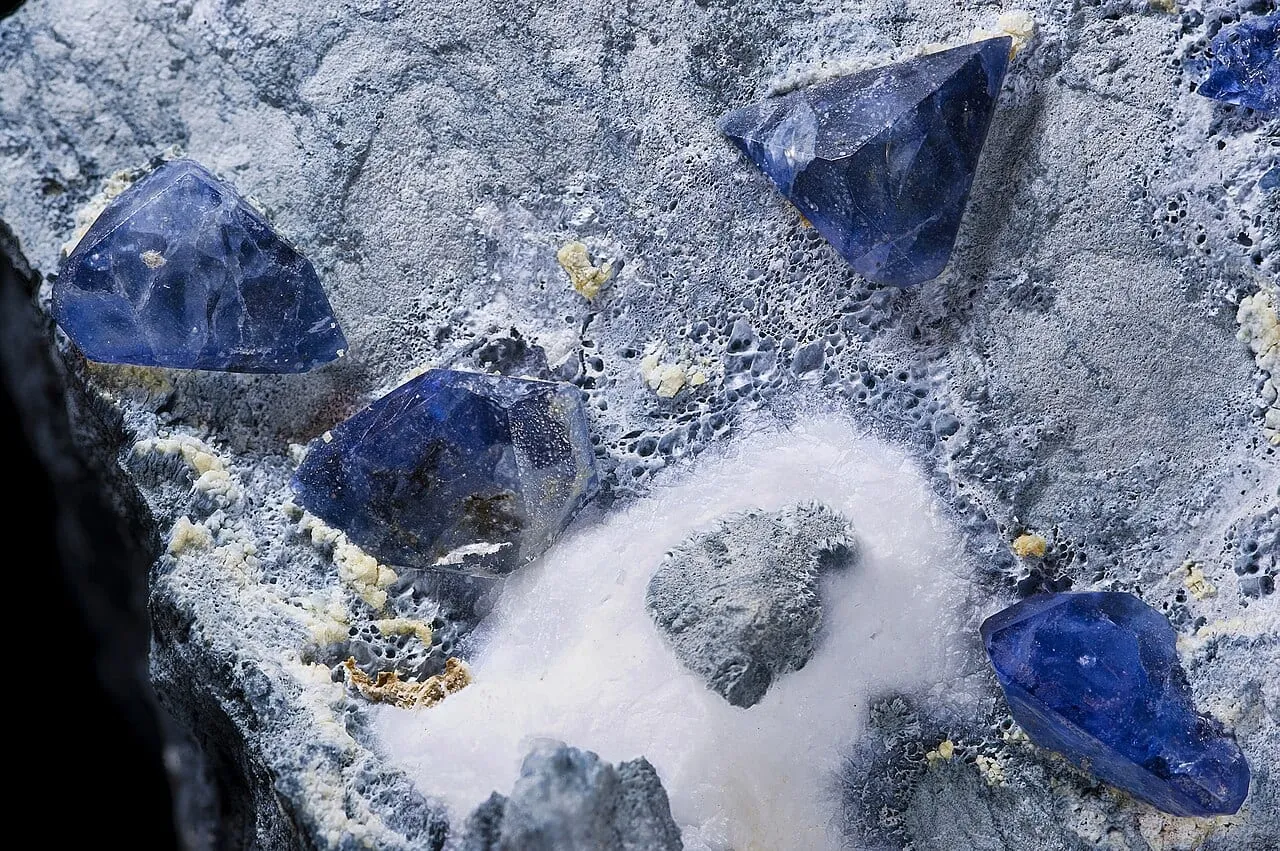
Benitoite
A sapphire-like blue stone whose gem crystals come from a single mine in the world: the official state gem of California.
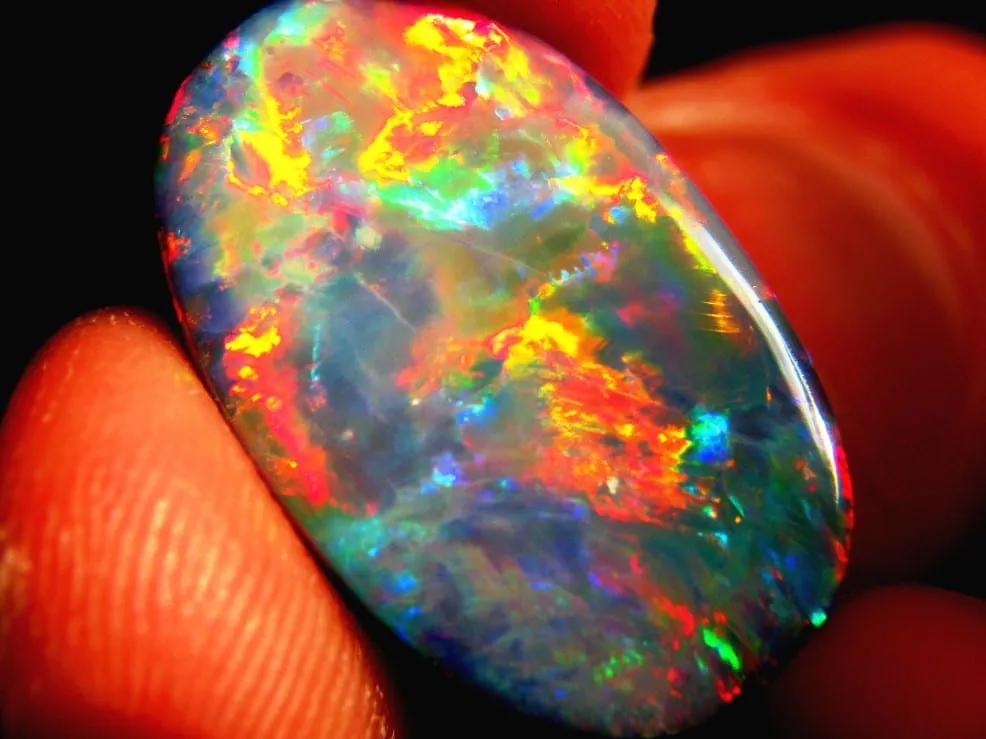
Black opal
Play-of-colour glowing against a dark grey or black body: the rarest and usually most valuable kind of opal, mostly from Lightning Ridge in Australia.
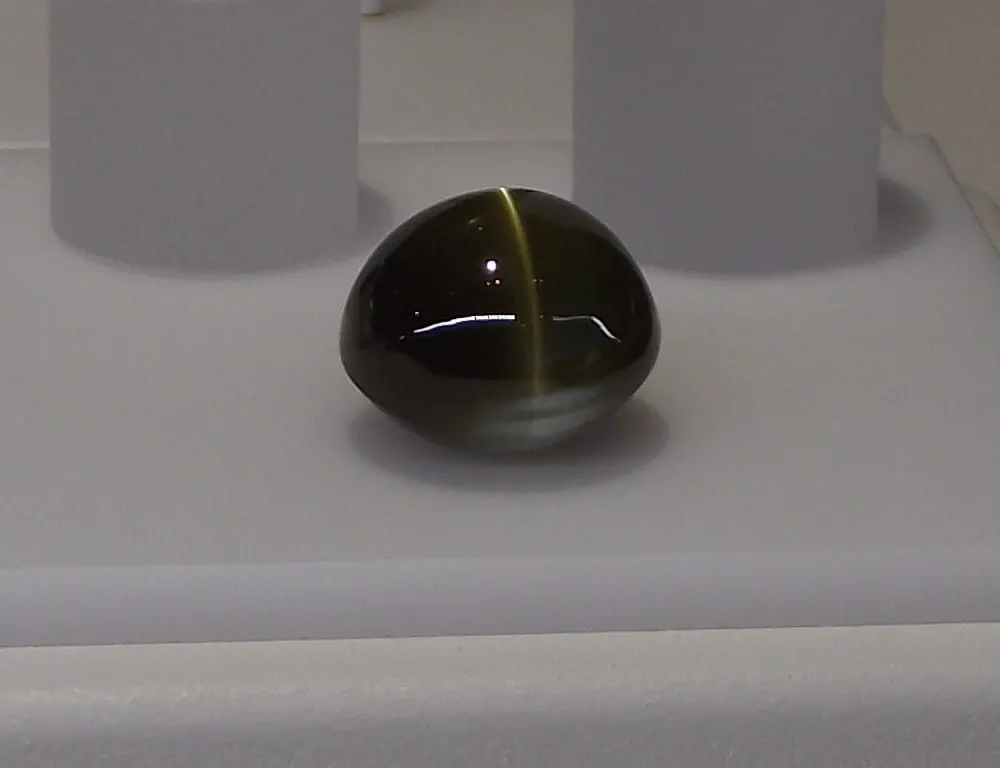
Cat's-eye chrysoberyl
Chrysoberyl that shows a sharp band of light gliding across its domed surface: the gem meant when people simply say “cat's eye”.