VarietyA variety of Tourmaline
Rubellite
XY₃Z₆(T₆O₁₈)(BO₃)₃V₃WRubellit
The pink to ruby-red variety of tourmaline: mistaken for ruby for centuries, and a favourite of the Chinese imperial court.
Also known as: Red tourmaline · Rubylite
- Popularly: Semi-precious stone
In short
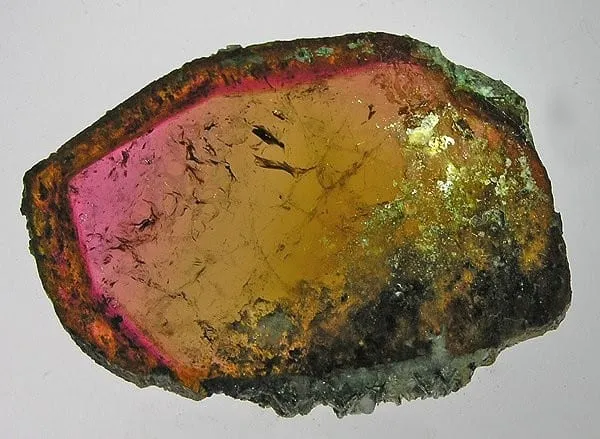
Rubellite is the trade name for pink, red, purplish red or orangy red tourmaline; most of these stones are elbaite, a lithium-bearing kind of tourmaline. The name comes from the Latin rubellus, “reddish”, and was first used in 1794. Its colour comes mainly from traces of manganese. Through history it has been confused with ruby, spinel and garnet; even the famous “Caesar's Ruby” among the Russian crown jewels is in fact a rubellite.
Photos
How does it form?
Rubellite, like the other gem tourmalines, forms in lithium-rich granite pegmatites: a pegmatite is a coarse-grained rock that crystallises slowly from the last, water-rich part of a magma. The crystals grow in cavities in this rock, called pockets, together with quartz, feldspar and lepidolite mica. According to GIA, manganese produces the pinks and reds of tourmaline, while some pink tourmalines owe their colour to colour centres created by natural or laboratory radiation. Red tourmalines trap many inclusions as they grow, which is why a completely clean rubellite is rare.
What is it used for?
- Jewellery: Rubellite is used as a faceted stone or cabochon in rings, pendants and earrings. Its hardness (7–7.5) suits everyday jewellery.
- Carving: In early 20th-century China, pink tourmaline from California was carved into snuff bottles and ornaments.
- Collecting: Bright red crystals from pegmatite pockets, on quartz or lepidolite, are museum and collectors’ pieces.
The stone mistaken for ruby
The name rubellite was proposed in 1794 by the mineralogist Richard Kirwan for pink tourmaline from the Ural Mountains. The stone itself was known in Roman times, but it was confused with other red stones such as garnet and spinel. The most famous example is “Caesar’s Ruby”: this 255.75-carat stone was part of the Swedish crown jewels between 1689 and 1777, when King Gustav III of Sweden gave it to Empress Catherine II of Russia. While inventorying the Russian crown jewels in 1922, the mineralogist Aleksandr Fersman found that it was not a ruby but a rubellite. It is still displayed as “Caesar’s Ruby” in the Diamond Fund in Moscow.
Main sources
According to GIA, the Cruzeiro mine in the Brazilian state of Minas Gerais produces about eight tonnes of tourmaline a year, a fifth of it rubellite. In Oyo State, Nigeria, a 2017 GIA report counted about 350 pits; miners descend 10–20 metres and blast the pegmatites to reach the pockets. Wikipedia also lists Afghanistan, Madagascar, Myanmar, Russia and the United States among the countries where rubellite is mined.
What determines its value?
Colour matters most for rubellite: an intense, pure red without brownish tones is the most sought after, while purplish red stones are more common. Because red tourmalines naturally grow with many inclusions, eye-visible inclusions are tolerated as long as the colour is strong and attractive. For stones of similar colour and clarity, value per carat rises as stones pass five carats. Heating and irradiation are common, so disclosure and a laboratory report matter.
This information is educational, not buying, selling or investment advice. Value varies enormously with quality and treatment.
How to recognise it
- 1
Its colour runs from pink to pure red and to purplish and orangy red; the shade can change when the stone is viewed from different directions (pleochroism).
- 2
Its hardness is 7–7.5 and it has no distinct cleavage; it is softer than ruby (9) and harder than glass.
- 3
Eye-visible inclusions are normal in red tourmaline; the most common are fine needles filled with liquid or gas. A completely clean red stone is rare.
- 4
It can be confused with ruby, spinel and red garnet. Its refractive index (about 1.61–1.67 in tourmaline) is clearly lower than that of ruby, and tourmaline is doubly refractive; a gem laboratory gives the certain answer.
Fakes and imitations
What shops usually don’t tell you:
- Heat treatment: low-temperature heating can remove a brownish tint from the colour. Because it leaves the inclusions unchanged, it is often undetectable.
- Irradiation: the red of pink tourmaline can be produced or deepened by irradiation. The colour is usually stable, but may fade after long exposure to bright light.
- Through history it has been confused with red stones such as ruby, spinel and garnet, and these may still be offered in each other's place.
Myths and misconceptions
MythA bright red stone is a ruby.
FactNot every red stone is a ruby. The 255.75-carat “Caesar's Ruby” among the Russian crown jewels was thought to be a ruby for centuries; in 1922 the mineralogist Aleksandr Fersman showed that it is a rubellite.
MythEvery pink tourmaline is a rubellite.
FactRubellite is a trade name, not an official mineral name, and there is no agreement on which colours it covers. Some include pink stones, while others keep the name for red, pinkish red and purplish red stones only.
What is it believed to be good for?
This section reports beliefs; it is not health information. There is no scientific evidence for these claims and no stone replaces medical treatment.
The meanings people give this stone, and who holds them:
- Today crystal-therapy websites and stone sellers claim that rubellite is linked to the heart chakra, increases love and passion, heals emotional wounds, balances the emotions and builds self-confidence.
What science says
There is no scientific evidence that rubellite increases love, balances emotions or builds self-confidence. Its red colour comes from traces of manganese in its crystal structure and from colour centres created by natural radiation; it is a physical property of the stone.
Did you know?
Between 1902 and 1910 about 120 tonnes of pink tourmaline went from San Diego County, California, to the Chinese imperial court, where the Empress Dowager Cixi was especially fond of it; it was carved into snuff bottles and set in jewellery. Cixi died in 1908, the Qing dynasty fell in 1912, and the trade ended.
In Oyo State, Nigeria, miners can sometimes recover a tonne of rubellite from a single large pocket in the pegmatites; single crystals can exceed 18 kilograms.
When tourmaline is heated, opposite electric charges build up at its two ends, so a warm rubellite crystal can attract light particles such as dust and ash.
Where is it found?
Loading map…
- Cruzeiro mine, São José da Safira, Minas Gerais, Brazil · Major depositAccording to GIA it produces about eight tonnes of tourmaline a year, a fifth of it rubellite
- Oyo State, Nigeria · Major depositRubellite is taken from pegmatite pockets in some 350 pits; the rough is taken to the city of Ibadan for grading
- Himalaya mine, Mesa Grande, San Diego County, California, USA · Historic sourceBetween 1902 and 1910 San Diego County shipped about 120 tonnes of pink tourmaline to the Chinese imperial court
- Madagascar · Known localityWikipedia lists it among the countries where rubellite is mined; shown at country level because the source names no deposit
- Myanmar · Known localityWikipedia lists Myanmar among the sources of rubellite, and the mineralogist Fersman suggested that “Caesar's Ruby” came from Burma. The point is placed at the tourmaline-bearing Mogok area
- Ural Mountains, Russia · Historic sourceThe name rubellite was proposed in 1794 for pink tourmaline from the Urals; the source says only “the Ural”, so the point is at region level (around Murzinka in the Central Urals)
Locations are approximate to protect sites. Red dots mark places in Türkiye. Open in the big map →
Frequently asked questions
What is rubellite?
Rubellite is the trade name for pink, red, purplish red or orangy red tourmaline; most of these stones are elbaite, a lithium-bearing kind of tourmaline. The name comes from the Latin rubellus, “reddish”, and was first used in 1794. Its colour comes mainly from traces of manganese. Through history it has been confused with ruby, spinel and garnet; even the famous “Caesar's Ruby” among the Russian crown jewels is in fact a rubellite.
What is rubellite used for?
Jewellery: Rubellite is used as a faceted stone or cabochon in rings, pendants and earrings. Its hardness (7–7.5) suits everyday jewellery. Carving: In early 20th-century China, pink tourmaline from California was carved into snuff bottles and ornaments. Collecting: Bright red crystals from pegmatite pockets, on quartz or lepidolite, are museum and collectors' pieces.
How hard is rubellite?
It has a hardness of 7–7.5 on the Mohs scale. It scratches glass and steel; a steel knife cannot scratch it. Its specific gravity is 2.82–3.32 g/cm³.
Where is rubellite found?
Its best-known localities: Cruzeiro mine, São José da Safira, Minas Gerais, Brazil; Oyo State, Nigeria; Himalaya mine, Mesa Grande, San Diego County, California, USA; Ural Mountains, Russia; Madagascar.
How can you tell if rubellite is real?
Its colour runs from pink to pure red and to purplish and orangy red; the shade can change when the stone is viewed from different directions (pleochroism). Its hardness is 7–7.5 and it has no distinct cleavage; it is softer than ruby (9) and harder than glass. Eye-visible inclusions are normal in red tourmaline; the most common are fine needles filled with liquid or gas. A completely clean red stone is rare. Heat treatment: low-temperature heating can remove a brownish tint from the colour. Because it leaves the inclusions unchanged, it is often undetectable.
Is rubellite valuable?
On the “street to diamond” value ladder it sits on step 6 of nine: Fine ornamental and collector stone. Colour matters most for rubellite: an intense, pure red without brownish tones is the most sought after, while purplish red stones are more common. Because red tourmalines naturally grow with many inclusions, eye-visible inclusions are tolerated as long as the colour is strong and attractive. For stones of similar colour and clarity, value per carat rises as stones pass five carats. Heating and irradiation are common, so disclosure and a laboratory report matter.
What is rubellite good for?
Today crystal-therapy websites and stone sellers claim that rubellite is linked to the heart chakra, increases love and passion, heals emotional wounds, balances the emotions and builds self-confidence. There is no scientific evidence that rubellite increases love, balances emotions or builds self-confidence. Its red colour comes from traces of manganese in its crystal structure and from colour centres created by natural radiation; it is a physical property of the stone. This section reports beliefs; it is not health information. There is no scientific evidence for these claims and no stone replaces medical treatment.
Family


Sources
- Rubellite · Wikipedia
- Tourmaline Description · GIA
- Tourmaline Quality Factors · GIA
- Tourmaline History and Lore · GIA
- Romancing the Source: Cruzeiro Mine, Brazil · GIA, 2015
- Gem News International: Tourmaline and sapphire mining in Nigeria, Gems & Gemology 53(1) · GIA, 2017
- The Unusual History of Caesar's Ruby · Gem-A (The Gemmological Association of Great Britain), 2020
- Shining a Light on Rubellite (R. G. Sikri) · Rapaport Magazine, 2022
- Tourmaline Value, Price, and Jewelry Information · International Gem Society
- The San Diego gemstone that ended up in China's imperial court · Times of San Diego, 2026
- Himalaya Mine (mine record) · Western Mining History
- Handbook of Mineralogy: Elbaite · Mineralogical Society of America
- São José da Safira · Wikipedia
- The chemical composition of tourmaline from Utö (Hj. Sjögren) · Geologische Bundesanstalt library (digitised reprint), 1916
- Turmalin · Vikipedi
- Mogok · Wikipedia
External links
Draft: awaiting expert reviewReport an error
On the same step
Achondrite
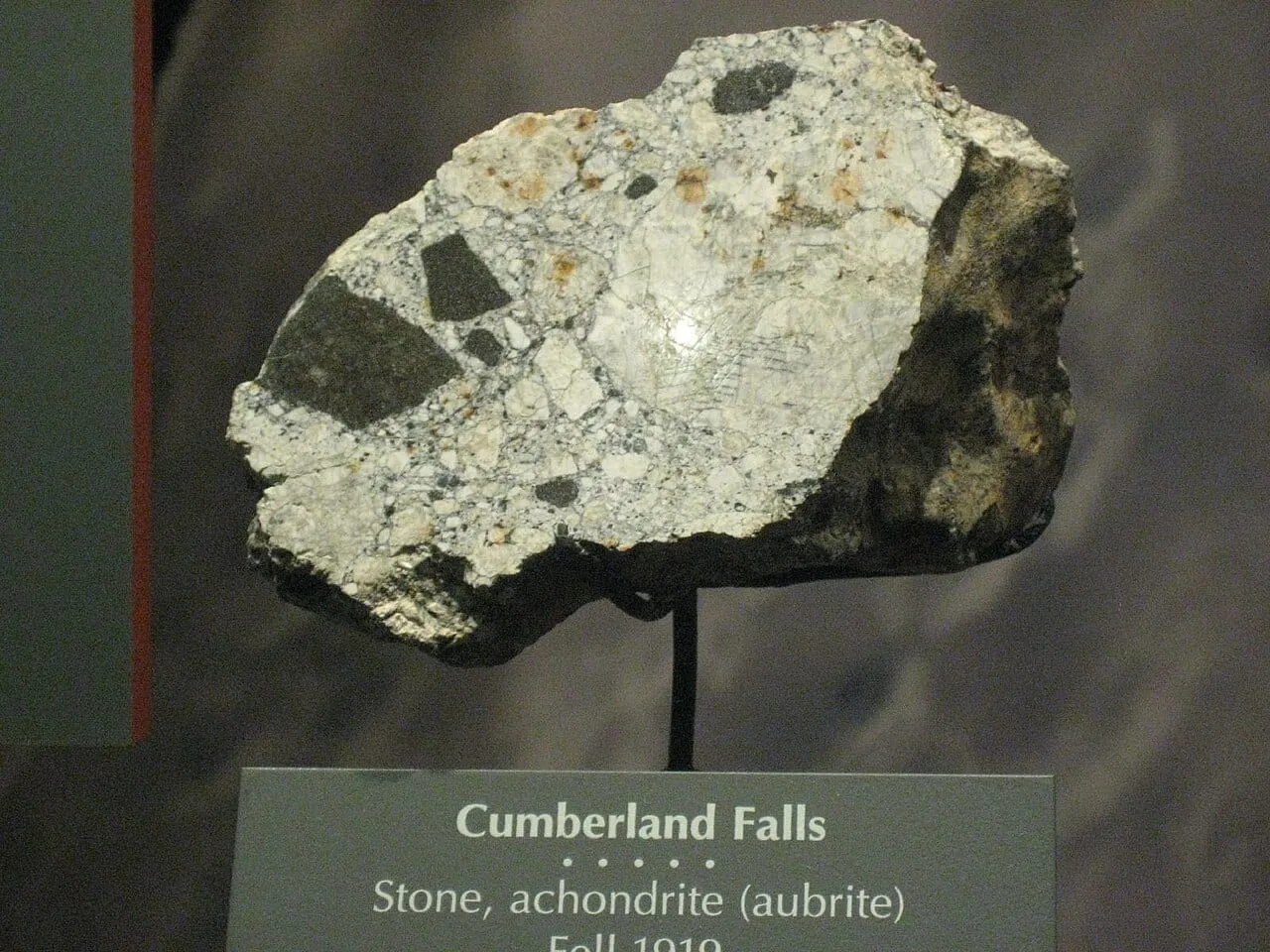
Stony meteorites with no chondrules: rock from melted asteroids, the Moon and Mars, and hard to recognise because they look like Earth rocks.
Amber
Tree resin fossilised over millions of years: a light, warm organic gem that sometimes holds prehistoric insects.
Ammolite
The rainbow-bright layer of fossil ammonite shell; of gem quality it comes only from the Canadian province of Alberta.