VarietyA variety of Quartz
Milky quartz
SiO₂Süt kuvars
One of the plainest and most plentiful forms of quartz: white quartz that looks cloudy as milk because of countless microscopic bubbles inside.
Also known as: Milk quartz · White quartz · Snow quartz
- Popularly: Ore and raw material
In short
Milky quartz is a milky white, cloudy variety of quartz that ranges from translucent to opaque; it is also known as “white quartz” or “milk quartz”. Chemically it is the same as clear rock crystal (SiO₂). The only difference is the countless fluid and gas bubbles, far too small to see, that were trapped as the crystal grew: they scatter light and make the stone look white. It is very plentiful in nature and is found mostly as veins cutting through rocks.
Photos
How does it form?
Milky quartz mostly forms from hot, silica-rich water filling cracks in rocks. In the Ouachita Mountains of Arkansas, milky quartz veins formed when open fissures were filled by hot water during the closing stages of mountain building, some 280 to 245 million years ago. As the crystal grows, countless microscopic cavities filled with liquid or gas are trapped inside. According to the Arkansas Geological Survey, this is the main difference between milky quartz and clear rock crystal: the cavities scatter light that would otherwise pass straight through the crystal, making the stone look white.
In these hot-water veins, gold and metal minerals such as galena and pyrite are sometimes deposited alongside the quartz. That is why milky quartz veins are occasionally found together with gold. In California’s Mother Lode belt, the vein quartz was deposited from water at about 320 °C, and these veins carry gold.
What is it used for?
- Industry: according to Ankara University course notes it is rarely used as an ornamental stone, but it is widely used in making ceramics and porcelain. Pure vein quartz from Russia’s Polar Urals is considered for growing single crystals and melting glass.
- Decoration and jewellery: it is used in carvings, beads, countertops and decorative tiles.
- Prospecting: gold prospectors follow milky white quartz veins, because gold is so often found with them.
- Collecting: well-formed crystals and pieces showing gold have a place in collections.
How it differs from rock crystal
Like rock crystal, amethyst, citrine, smoky quartz and rose quartz, milky quartz is a coarse-grained variety of quartz made of crystals you can see; all of them share the same internal structure and differ only in colour. Because it is so plentiful, milky quartz is among the least valuable of them. For clear quartz see the rock crystal page, for quartz in general the quartz page, and for the rock it is often confused with the quartzite page.
What determines its value?
Because milky quartz is so plentiful, it is worth less than other varieties of quartz. Its value comes mostly from its purity as an industrial raw material: it is used in making ceramics and porcelain, and high-purity vein quartz is used to grow single crystals and to melt glass. As an ornamental stone, an even white colour, freedom from cracks and a good polish matter. Well-formed crystals and pieces with visible gold are more sought after by collectors.
This information is educational, not buying, selling or investment advice. Value varies enormously with quality and treatment.
How to recognise it
- 1
It is milky white or cloudy white; little light passes through it, and you cannot see through it.
- 2
Its lustre is glassy, but the bubbles inside sometimes give it a slightly greasy sheen.
- 3
It is hard (7): it scratches glass, and a steel knife cannot scratch it. This sets it apart from white calcite and marble, which a knife scratches easily.
- 4
It mostly appears as white veins or large masses cutting through rock; it is very plentiful in nature.
Myths and misconceptions
MythMilky quartz and quartzite are the same stone.
FactSome sellers also call white quartz “quartzite”, but they are different: quartzite is a rock formed when quartz sandstone is transformed by heat and pressure, while milky quartz is a quartz crystal or vein that gets its white colour from microscopic fluid bubbles.
MythWhere there is a white quartz vein, there is gold.
FactMilky quartz is only occasionally found with gold in hot-water veins. That is why gold prospectors look for white quartz veins, but a vein on its own does not mean there is gold.
What is it believed to be good for?
This section reports beliefs; it is not health information. There is no scientific evidence for these claims and no stone replaces medical treatment.
The meanings people give this stone, and who holds them:
- Crystal-therapy sources present milky quartz (“snow quartz”) as a stone of spiritual cleansing and claim that it supports the immune system.
- Some of the same sources believe that the stone helps new mothers produce milk.
- Some crystal-therapy websites claim that milky quartz boosts self-confidence, sharpens the mind and helps meditation.
What science says
There is no scientific evidence that milky quartz supports immunity, increases milk supply or boosts self-confidence; its white colour comes only from microscopic bubbles that scatter light. Breastfeeding problems call for a doctor or midwife, and immune problems for a doctor.
Did you know?
In the Ouachita Mountains of Arkansas most of the quartz occurs as milky veins, which reach 60 feet wide in Arkansas and nearly 100 feet in Oklahoma.
In California's famous Mother Lode gold belt, the gold lies in veins made of ribboned masses of milky quartz up to 15 metres thick.
When milky quartz grows in bands together with amethyst, it forms an ornamental stone called “chevron amethyst”, with purple and white V-shaped stripes.
Where is it found?
Loading map…
- Ouachita Mountains, Arkansas and Oklahoma, USA · Major depositMost of the quartz here occurs as milky veins, reaching 60 feet wide in Arkansas and nearly 100 feet in Oklahoma
- Mother Lode, Sierra Nevada, California, USA · Major depositA 190 km gold belt; the gold lies in veins made of ribboned masses of milky quartz up to 15 m thick
- Subpolar and Polar Urals, Russia · Major depositWidespread resources of milky-white and transparent vein quartz and rock crystal, suitable for growing single crystals and melting glass
- Příbram, Central Bohemia, Czech Republic · Known localityAn old mining district with the most profitable silver mines of the Habsburg era; milky quartz specimens are known from here
Locations are approximate to protect sites. Red dots mark places in Türkiye. Open in the big map →
Frequently asked questions
What is milky quartz?
Milky quartz is a milky white, cloudy variety of quartz that ranges from translucent to opaque; it is also known as “white quartz” or “milk quartz”. Chemically it is the same as clear rock crystal (SiO₂). The only difference is the countless fluid and gas bubbles, far too small to see, that were trapped as the crystal grew: they scatter light and make the stone look white. It is very plentiful in nature and is found mostly as veins cutting through rocks.
What is milky quartz used for?
Industry: according to Ankara University course notes it is rarely used as an ornamental stone, but it is widely used in making ceramics and porcelain. Pure vein quartz from Russia's Polar Urals is considered for growing single crystals and melting glass. Decoration and jewellery: it is used in carvings, beads, countertops and decorative tiles. Prospecting: gold prospectors follow milky white quartz veins, because gold is so often found with them. Collecting: well-formed crystals and pieces showing gold have a place in collections.
How hard is milky quartz?
It has a hardness of 7 on the Mohs scale. It scratches glass and steel; a steel knife cannot scratch it. Its specific gravity is 2.65–2.66 g/cm³.
Where is milky quartz found?
Its best-known localities: Ouachita Mountains, Arkansas and Oklahoma, USA; Mother Lode, Sierra Nevada, California, USA; Subpolar and Polar Urals, Russia; Příbram, Central Bohemia, Czech Republic.
How can you tell if milky quartz is real?
It is milky white or cloudy white; little light passes through it, and you cannot see through it. Its lustre is glassy, but the bubbles inside sometimes give it a slightly greasy sheen. It is hard (7): it scratches glass, and a steel knife cannot scratch it. This sets it apart from white calcite and marble, which a knife scratches easily.
Is milky quartz valuable?
On the “street to diamond” value ladder it sits on step 3 of nine: Building and industrial stone. Because milky quartz is so plentiful, it is worth less than other varieties of quartz. Its value comes mostly from its purity as an industrial raw material: it is used in making ceramics and porcelain, and high-purity vein quartz is used to grow single crystals and to melt glass. As an ornamental stone, an even white colour, freedom from cracks and a good polish matter. Well-formed crystals and pieces with visible gold are more sought after by collectors.
What is milky quartz good for?
Crystal-therapy sources present milky quartz (“snow quartz”) as a stone of spiritual cleansing and claim that it supports the immune system. Some of the same sources believe that the stone helps new mothers produce milk. Some crystal-therapy websites claim that milky quartz boosts self-confidence, sharpens the mind and helps meditation. There is no scientific evidence that milky quartz supports immunity, increases milk supply or boosts self-confidence; its white colour comes only from microscopic bubbles that scatter light. Breastfeeding problems call for a doctor or midwife, and immune problems for a doctor. This section reports beliefs; it is not health information. There is no scientific evidence for these claims and no stone replaces medical treatment.
Family
.jpg)

Sources
- Quartz · Wikipedia
- Arkansas Quartz Crystals (J. M. Howard), Brochure Series 001 · Arkansas Geological Survey, 2008
- Milky Quartz · Amethyst Galleries, The Mineral Gallery
- Kuvars (N. Çelebioğlu, Z. Bektur, K. Türeli; MTA) · TMMOB Jeoloji Mühendisleri Odası
- Mücevher taşları (G. Gönen), ders notu · Ankara Üniversitesi Açık Ders Malzemeleri
- Snow Quartz, Gem Notes · Fire Mountain Gems and Beads
- Quartzite · Wikipedia
- Mother Lode · Wikipedia
- High quality quartz raw materials of Timan North Ural region (Kuznetsov, Burtsev & Lyutoev), Gornyi Zhurnal · Ore and Metals, 2013
- Příbram · Wikipedia
- Milky quartz - SiO2 locality - Příbram, Czech Republic (J. Helebrant) · Wikimedia Commons
Draft: awaiting expert reviewReport an error
On the same step
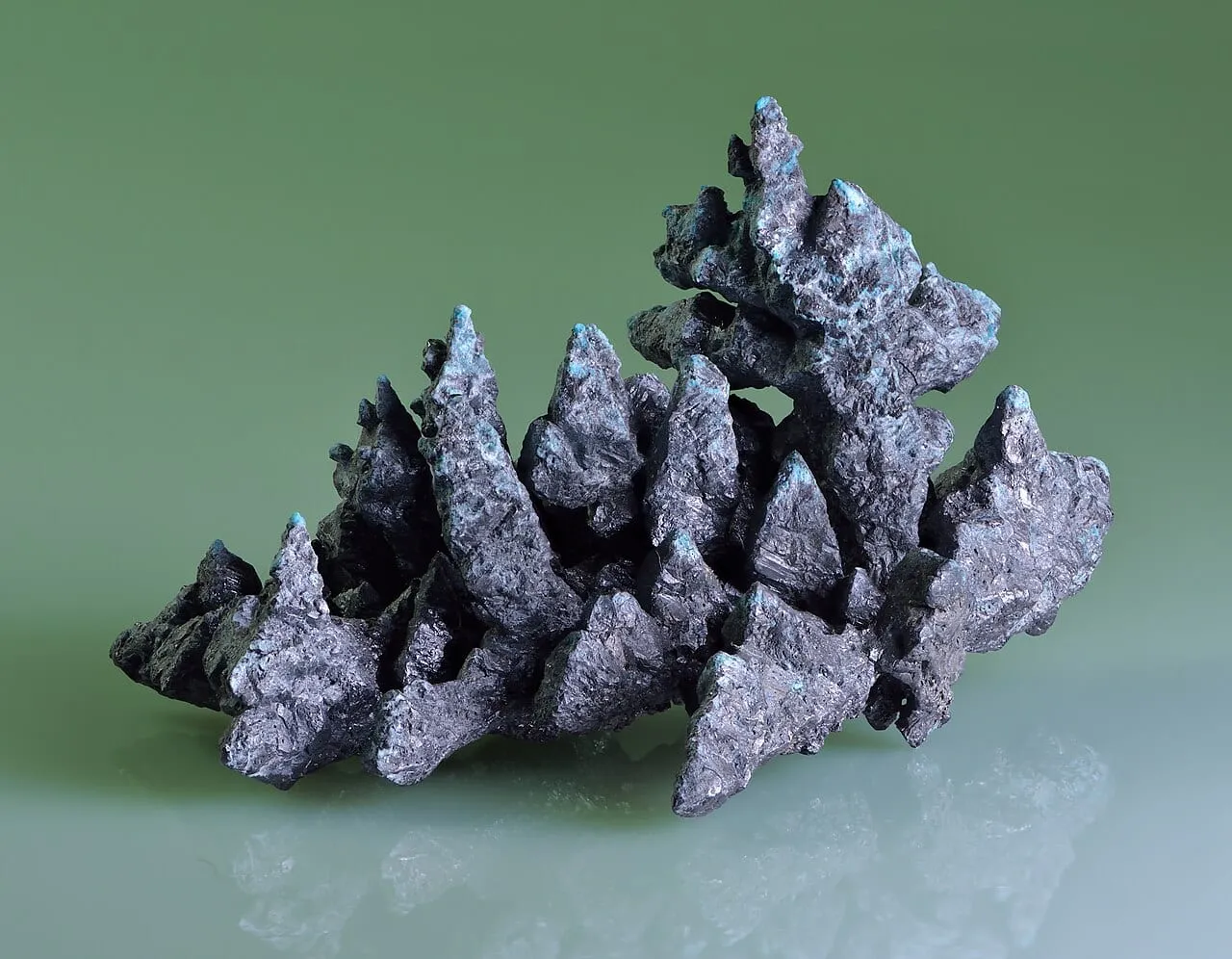
Acanthite
Silver's black sulfide: one of the world's main silver ores and the mineral that coats tarnished native silver.
Adamite
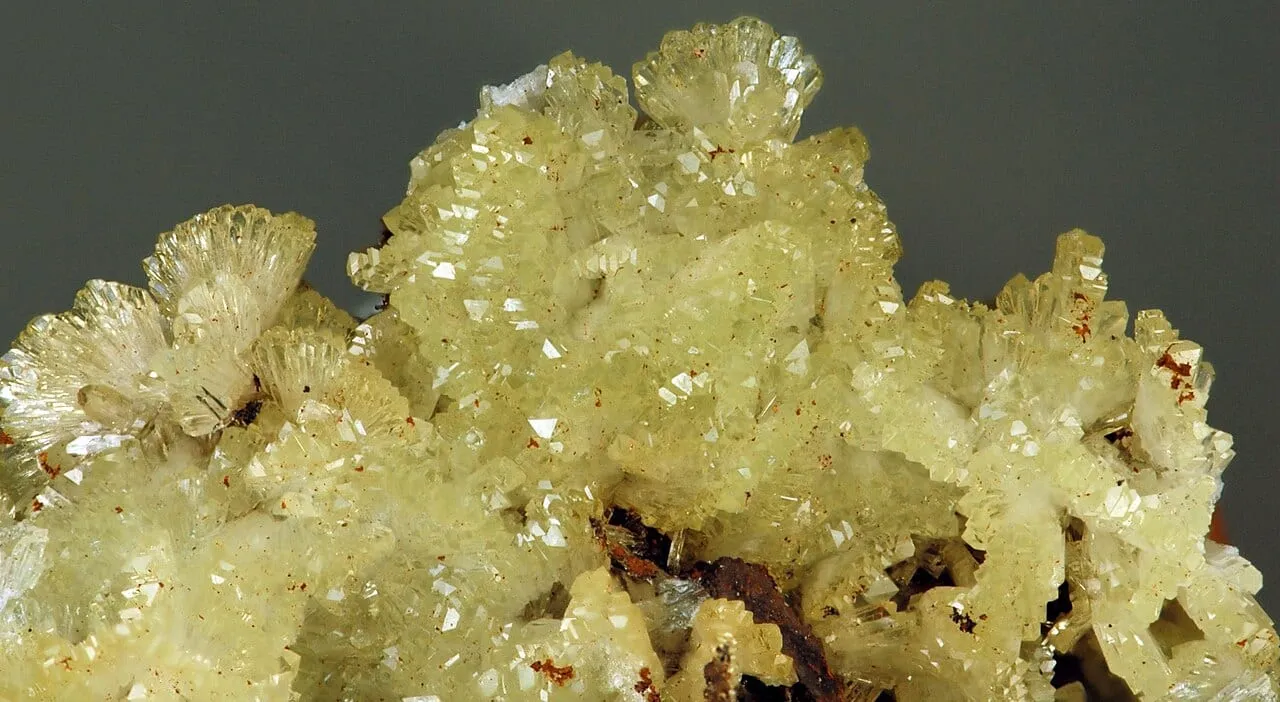
Zinc arsenate in fan-shaped crystals from honey yellow to green: some specimens glow under ultraviolet light.
Albite
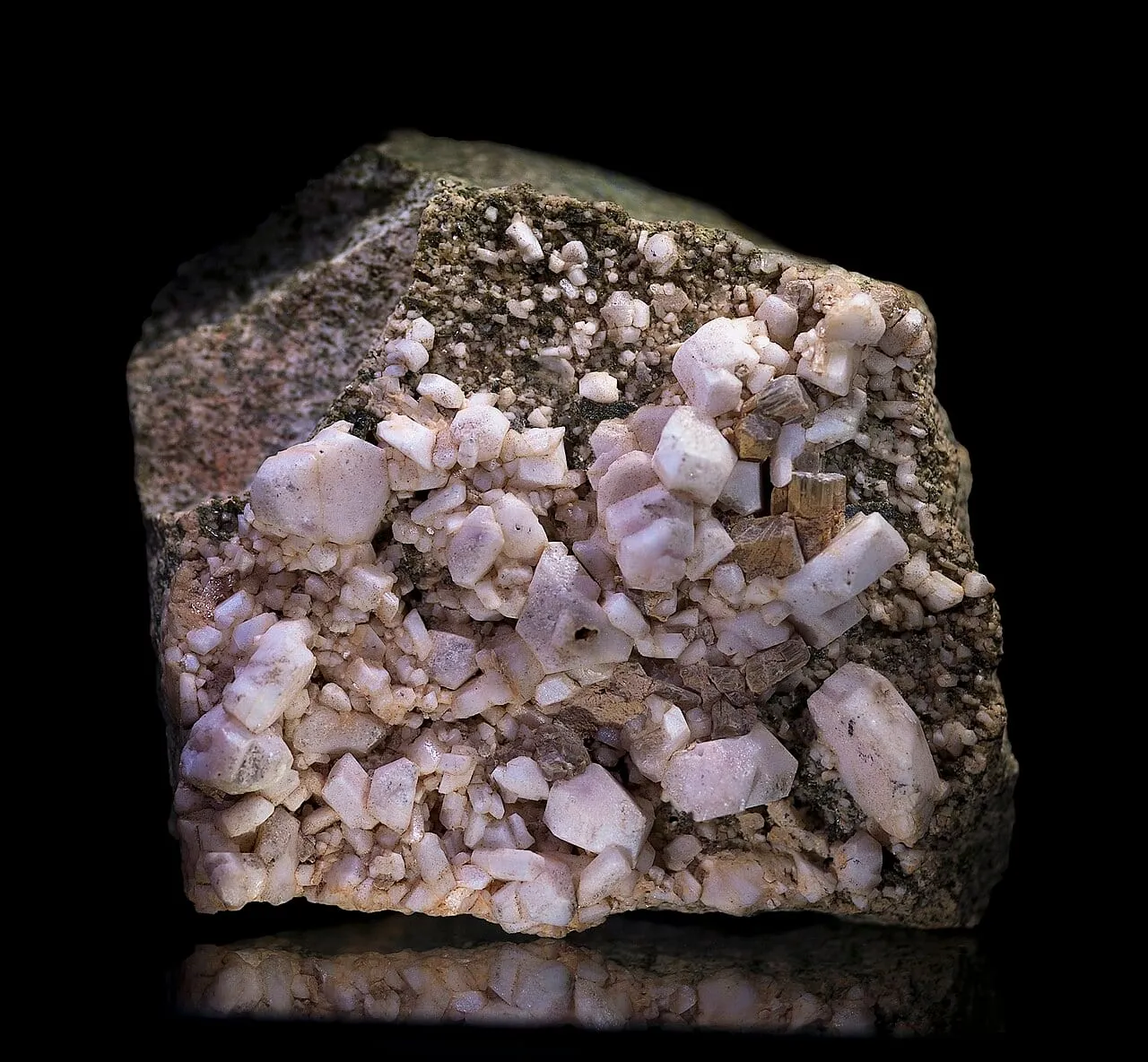
The white, sodium end of the feldspars: with its deposits at Çine–Milas, a glass and ceramics raw material that makes Türkiye one of the world’s main feldspar producers.